
Sign up to save your podcasts
Or



Based on Podcast App listening data
The ADHD internet is crowded and not all content is created equal. From unlicensed coaches to miracle cures and viral “hacks,” misinformation spreads fast and wide.
The problem is that many prominent voices have little to no formal training. And algorithmic incentives encourage creators to bait their audience.
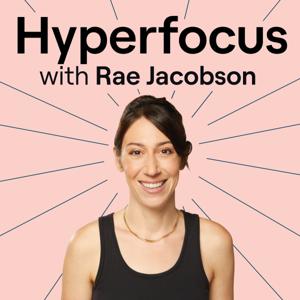
Cate Osborn, known online as @catieosaurus, joins Hyperfocus to explain how the ADHD content economy works. She looks at why grifting thrives and how power, profit, and trust in online mental health spaces affect our understanding of ADHD.
For more on this topic:
For a transcript and more resources, visit Hyperfocus on Understood.org. You can also email us at [email protected].
Getting your child the support they need at school shouldn’t feel like a fight. But for millions of families, it does. In Zero Reject, an investigative podcast from Understood.org, award-winning journalist Anya Kamenetz looks at how changing federal policies are reshaping special education — and what’s at stake for families trying to access the support their children are legally entitled to. Start listening now.
Understood is a nonprofit where millions of people who are navigating neurodivergence find clear guidance, practical tools, and people who get it. To help us continue this work, donate at u.org/give
Hosted by Simplecast, an AdsWizz company. See pcm.adswizz.com for information about our collection and use of personal data for advertising.
U.S. kids are more depressed, stressed, and anxious than ever. ADHD and autism diagnosis rates are steadily rising. What’s going on?
In this episode of Hyperfocus, journalist Jia Lynn Yang joins Rae to examine how major school policy shifts in the U.S. have changed what’s expected of kids, often with unintended — and serious — consequences.
Drawing from her New York Times reporting and her personal experience as a parent, Jia Lynn explores whether school itself may be contributing to the crisis — and what kids actually need to thrive.
For more on this topic:
For a transcript and more resources, visit Hyperfocus on Understood.org. You can also email us at [email protected].
Getting your child the support they need at school shouldn’t feel like a fight. But for millions of families, it does. In Zero Reject, an investigative podcast from Understood.org, award-winning journalist Anya Kamenetz looks at how changing federal policies are reshaping special education — and what’s at stake for families trying to access the support their children are legally entitled to. Start listening now.
Understood is a nonprofit where millions of people who are navigating neurodivergence find clear guidance, practical tools, and people who get it. To help us continue this work, donate at u.org/give
Hosted by Simplecast, an AdsWizz company. See pcm.adswizz.com for information about our collection and use of personal data for advertising.
If you have ADHD or autism, research shows you’re at a much higher risk for developing chronic pain — a connection many doctors and patients still don’t know about. In this episode of Hyperfocus, we talk with a doctor who’s trying to change that.
Dr. Michael Lenz, a Wisconsin-based pain specialist, explains what the medical community is discovering about the connection between ADHD, autism, and chronic pain, including conditions like fibromyalgia and migraines. He also shares stories from his practice, including times when treating a patient’s ADHD unexpectedly improved their chronic pain symptoms.
For more on this topic:
For a transcript and more resources, visit Hyperfocus on Understood.org. You can also email us at [email protected].
Getting your child the support they need at school shouldn’t feel like a fight. But for millions of families, it does. In Zero Reject, an investigative podcast from Understood.org, award-winning journalist Anya Kamenetz looks at how changing federal policies are reshaping special education — and what’s at stake for families trying to access the support their children are legally entitled to. Start listening now.
Understood is a nonprofit where millions of people who are navigating neurodivergence find clear guidance, practical tools, and people who get it. To help us continue this work, donate at u.org/give
Hosted by Simplecast, an AdsWizz company. See pcm.adswizz.com for information about our collection and use of personal data for advertising.
This week on Hyperfocus, Rae is in the guest seat for an appearance on Hacking Your ADHD, a podcast hosted by William Curb.
Listen for a fascinating conversation on a topic that’s really common in ADHD circles: the tendency to attribute everyday behaviors to ADHD.
For more resources, visit Hyperfocus on Understood.org. You can also email us at [email protected].
Getting your child the support they need at school shouldn’t feel like a fight. But for millions of families, it does. In Zero Reject, an investigative podcast from Understood.org, award-winning journalist Anya Kamenetz looks at how changing federal policies are reshaping special education — and what’s at stake for families trying to access the support their children are legally entitled to. Start listening now.
Understood is a nonprofit where millions of people who are navigating neurodivergence find clear guidance, practical tools, and people who get it. To help us continue this work, donate at u.org/give
Hosted by Simplecast, an AdsWizz company. See pcm.adswizz.com for information about our collection and use of personal data for advertising.
One of the most urgent ADHD research gaps has to do with ADHD and trans people. We know there are lots of trans folks with ADHD. But when it comes to understanding how best to treat them, it’s a whole different story.
That’s why we wanted to talk to someone who knows this experience well. Ivan Hsiao is the founder of Trans Health HQ. He joined this week’s Hyperfocus to share his own diagnosis story and to talk about what we do (and don’t) know about being trans with ADHD.
For more on this topic:
Timestamps:
(01:26) Ivan’s diagnosis story
(11:18) Trans broken arm syndrome
(13:56) What research is there on ADHD in trans people?
(17:23) How to practice better care
For a transcript and more resources, visit Hyperfocus on Understood.org. You can also email us at [email protected].
Getting your child the support they need at school shouldn’t feel like a fight. But for millions of families, it does. In Zero Reject, an investigative podcast from Understood.org, award-winning journalist Anya Kamenetz looks at how changing federal policies are reshaping special education — and what’s at stake for families trying to access the support their children are legally entitled to. Start listening now.
Understood is a nonprofit where millions of people who are navigating neurodivergence find clear guidance, practical tools, and people who get it. To help us continue this work, donate at u.org/give
Hosted by Simplecast, an AdsWizz company. See pcm.adswizz.com for information about our collection and use of personal data for advertising.
Last month, the Trump administration laid off over 460 people in the U.S. Department of Education. It included nearly everyone in the Office of Special Education Programs (OSEP), which enforces federal special education laws.
A federal judge has temporarily halted the layoffs, but it’s unclear what will happen next. For people who work in or rely on special education services — including 7.5 million kids — the chaos and worry have already begun.
So on this week’s Hyperfocus, we wanted to talk to smart people who could give us some perspective on what’s happening. What could it mean for families and for schools? And what does it say about how the administration views neurodivergent people in general?
Our guests are Meghan Whittaker, a former chief of staff at the U.S. Department of Education, and Julian Saavedra, an assistant principal.
For more on this topic:
Timestamps:
(03:04) A breakdown of the layoffs
(10:16) How worry is already hitting families and schools
(18:02) What to know about school vouchers
(29:50) “Find your space to serve”
For a transcript and more resources, visit Hyperfocus on Understood.org. You can also email us at [email protected].
Getting your child the support they need at school shouldn’t feel like a fight. But for millions of families, it does. In Zero Reject, an investigative podcast from Understood.org, award-winning journalist Anya Kamenetz looks at how changing federal policies are reshaping special education — and what’s at stake for families trying to access the support their children are legally entitled to. Start listening now.
Understood is a nonprofit where millions of people who are navigating neurodivergence find clear guidance, practical tools, and people who get it. To help us continue this work, donate at u.org/give
Hosted by Simplecast, an AdsWizz company. See pcm.adswizz.com for information about our collection and use of personal data for advertising.
ADHD just keeps finding itself in the news. It can feel like a lot for those of us who have it or care for someone who does.
Recently, Hyperfocus host Rae Jacobson sat down with a couple colleagues at Understood.org for a livestream to discuss the news and take community questions. Her guests were Dr. Andy Kahn, a licensed psychologist, and Dr. Keona “KJ” Wynne.
Together, they chatted about the controversy surrounding Tylenol, what we really know about the cause of neurodevelopmental disorders, and how to talk to your kids about scary or misleading messages in the news.
On this week’s Hyperfocus, we’re sharing that conversation in full.
For more on this topic:
Timestamps:
(01:10) Does Tylenol use during pregnancy cause neurodevelopmental disorders?
(15:32) Is ADHD being overdiagnosed?
(28:35) Are too many kids taking stimulant medications?
(41:01) How can we talk to our kids about scary or misleading media messages?
For a transcript and more resources, visit Hyperfocus on Understood.org. You can also email us at [email protected].
Getting your child the support they need at school shouldn’t feel like a fight. But for millions of families, it does. In Zero Reject, an investigative podcast from Understood.org, award-winning journalist Anya Kamenetz looks at how changing federal policies are reshaping special education — and what’s at stake for families trying to access the support their children are legally entitled to. Start listening now.
Understood is a nonprofit where millions of people who are navigating neurodivergence find clear guidance, practical tools, and people who get it. To help us continue this work, donate at u.org/give
Hosted by Simplecast, an AdsWizz company. See pcm.adswizz.com for information about our collection and use of personal data for advertising.
Inattentive ADHD often goes unnoticed. It’s an easier type of ADHD to miss because it’s more internal and less outwardly visible than its hyperactive, impulsive counterpart. But left unaddressed, inattentive ADHD can be just as disruptive.
Boys with the inattentive type are especially overlooked — they don’t match the stereotype of what an “ADHD boy” is supposed to look like.
So when Brandon Saiz wrote to us about his experience getting diagnosed with ADHD later in life, we knew we had to talk to him. After meeting with Brandon, it was clear his story needed to be shared.
Content warning: This episode includes discussion of suicide. Please skip it if that’s not something you’re up for right now.
For more on this topic:
Timestamps
(01:54) Brandon’s background
(09:23) How Brandon’s inattentive-type ADHD was overlooked
(14:00) On suicidal ideation and inattentive ADHD
(19:57) Brandon’s advice to others
For a transcript and more resources, visit the Hyperfocus page on Understood.org. We love hearing from our listeners! Email us at [email protected].
Getting your child the support they need at school shouldn’t feel like a fight. But for millions of families, it does. In Zero Reject, an investigative podcast from Understood.org, award-winning journalist Anya Kamenetz looks at how changing federal policies are reshaping special education — and what’s at stake for families trying to access the support their children are legally entitled to. Start listening now.
Understood is a nonprofit where millions of people who are navigating neurodivergence find clear guidance, practical tools, and people who get it. To help us continue this work, donate at u.org/give
Hosted by Simplecast, an AdsWizz company. See pcm.adswizz.com for information about our collection and use of personal data for advertising.
Artificial intelligence has cemented itself as the latest world-altering technology. It follows the same lineage as electricity, the television, the internet — the list goes on.
Depending on who you talk to, AI is the greatest thing ever or the thing that will destroy the world, with lots of room in the middle for discussion and experimentation.
But within the bigger AI fascination, there’s a smaller yet critical conversation about how this technology might help or harm people who learn and think differently. That’s why we brought in Dr. Amy Gaeta for this week’s “Hyperfocus.” She’s an AI ethicist and researcher who also has autism, giving her a unique insight that she shares on our latest episode.
For more on this topic
Timestamps
(03:40) AI in the workplace
(10:16) Disability justice and technology
(13:45) AI’s built-in bias against disability
(17:15) How to find helpful, safe AI uses
(21:08) Chatbot therapy
(25:14) What does the future hold for AI and neurodivergence?
For a transcript and more resources, visit the Hyperfocus page on Understood.org. We love hearing from our listeners! Email us at [email protected].
Getting your child the support they need at school shouldn’t feel like a fight. But for millions of families, it does. In Zero Reject, an investigative podcast from Understood.org, award-winning journalist Anya Kamenetz looks at how changing federal policies are reshaping special education — and what’s at stake for families trying to access the support their children are legally entitled to. Start listening now.
Understood is a nonprofit where millions of people who are navigating neurodivergence find clear guidance, practical tools, and people who get it. To help us continue this work, donate at u.org/give
Hosted by Simplecast, an AdsWizz company. See pcm.adswizz.com for information about our collection and use of personal data for advertising.
Craig Thomas is best known for his work on TV. He co-created the sitcom “How I Met Your Mother” and has written for “American Dad” and more. He’s penned songs for “Sesame Street” and essays for “The New Yorker.”
He’s less known for being a dad. For now, at least. He has a daughter, Celia, and a son, Elliot, who was born with Jacobsen syndrome, a genetic condition causing physical and developmental disabilities.
When Elliot was born, Craig’s career was taking off with “How I Met Your Mother.” “I was living an hour drama show at home and then driving to work and doing a sitcom,” Craig says. His upcoming novel, “That’s Not How It Happened,” is based in part on his family’s experience.
If you heard our series on the resurgence of the R-word, you’ll recognize Craig’s voice. The conversation with him was so good that we’re sharing more!
For more on this topic
Timestamps
(02:20) Craig’s backstory and current work
(09:45) How Craig relates to the disability community
(13:10) Disability and media depictions
(29:04) Comedy, the R-word, and why language matters
(39:10) On parenting a child with disabilities
For a transcript and more resources, visit the Hyperfocus page on Understood.org. We love hearing from our listeners! Email us at [email protected].
Getting your child the support they need at school shouldn’t feel like a fight. But for millions of families, it does. In Zero Reject, an investigative podcast from Understood.org, award-winning journalist Anya Kamenetz looks at how changing federal policies are reshaping special education — and what’s at stake for families trying to access the support their children are legally entitled to. Start listening now.
Understood is a nonprofit where millions of people who are navigating neurodivergence find clear guidance, practical tools, and people who get it. To help us continue this work, donate at u.org/give
Hosted by Simplecast, an AdsWizz company. See pcm.adswizz.com for information about our collection and use of personal data for advertising.
From the publisher's feed
1,326 Listeners

441 Listeners

2,513 Listeners
117 Listeners
109 Listeners
94 Listeners
34 Listeners

2,871 Listeners
246 Listeners
711 Listeners
629 Listeners
19 Listeners
175 Listeners

29 Listeners
176 Listeners
27 Listeners
98 Listeners
9 Listeners
54 Listeners
80 Listeners
2 Listeners

378 Listeners
2 Listeners