
Sign up to save your podcasts
Or



Based on Podcast App listening data
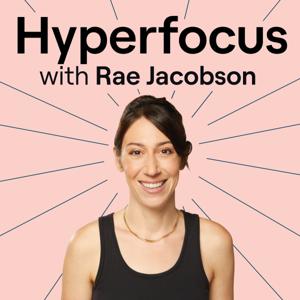
On this very special episode of Hyperfocus, host Rae Jacobson interviews three of these women — Sari Solden, Terry Matlen, and Dr. Ellen Littman — along with Dr. Michelle Frank, a psychologist taking up the torch for a new generation.
Together, they discuss how they met, their journey to legitimize ADHD in women, and what they hope for the future.
Related resources
Timestamps
(06:22) Discovering you aren’t alone
(13:18) The disconnect between academia and the rest of the world
(21:22) The benefits of treatment and community
(28:05) ADHD isn’t always a superpower
For a transcript and more resources, visit the Hyperfocus page on Understood.org.
We love hearing from our listeners! Email us at [email protected].
Getting your child the support they need at school shouldn’t feel like a fight. But for millions of families, it does. In Zero Reject, an investigative podcast from Understood.org, award-winning journalist Anya Kamenetz looks at how changing federal policies are reshaping special education — and what’s at stake for families trying to access the support their children are legally entitled to. Start listening now.
Understood is a nonprofit where millions of people who are navigating neurodivergence find clear guidance, practical tools, and people who get it. To help us continue this work, donate at u.org/give
Hosted by Simplecast, an AdsWizz company. See pcm.adswizz.com for information about our collection and use of personal data for advertising.
Join health and science journalist Danielle Elliot as she investigates the rise of women recently diagnosed with ADHD. Listen to Climbing the Walls now.
In honor of Mother’s Day weekend, we’re sharing an episode of our sibling podcast from Understood.org, ADHD Aha! The episode features our very own Rae Jacobson and, appropriately, it’s a conversation about motherhood. More specifically, it’s about being a mom (and a woman) with ADHD. Hope you enjoy, and see you in two weeks.
What makes being a mom with ADHD so hard? Navigating executive functions and emotional labor, for one. And feeling burned out when burnout isn’t an option — because there’s always something else that needs your very limited attention!
Talking about it with someone who just “gets it” is such a relief. In this episode, Laura talks to her friend and colleague Rae Jacobson, also a mom with ADHD. Listen to their conversation and insights on this bonus Mother’s Day episode.
Related resources
To get a transcript of this show and check out more episodes, visit the “ADHD Aha!” podcast page at Understood.
We’d love to hear from you. Email us at [email protected].
Getting your child the support they need at school shouldn’t feel like a fight. But for millions of families, it does. In Zero Reject, an investigative podcast from Understood.org, award-winning journalist Anya Kamenetz looks at how changing federal policies are reshaping special education — and what’s at stake for families trying to access the support their children are legally entitled to. Start listening now.
Understood is a nonprofit where millions of people who are navigating neurodivergence find clear guidance, practical tools, and people who get it. To help us continue this work, donate at u.org/give
Hosted by Simplecast, an AdsWizz company. See pcm.adswizz.com for information about our collection and use of personal data for advertising.
“Thriving” is often held up as something to work toward in life, the gold standard for existence. If you have a learning difference or you’ve experienced mental health issues or even just went through a tough time, you’ve probably gotten some advice on what it takes to thrive.
But for me, it’s never been clear what it means to thrive. It’s an abstract concept with many definitions. As someone with ADHD, it feels like thriving can be a codeword for hiding parts of myself that aren’t exactly desirable to the rest of the world.
Yet thriving remains a constant point of discussion in mental health. It’s a conversation my colleague Sarah Greenberg and I have been having on and off for years. That’s because Sarah’s been working on a new way to understand and measure thriving, and she has a take on it I’ve never heard before.
Sarah is the vice president for expertise and strategic design at Understood.org. She’s a licensed psychotherapist and has been a leader in digital mental health for many years. She’s also really smart, thoughtful, and has a very different perspective on thriving than I do.
So we decided it would be a good idea to record one of our conversations for an episode of Hyperfocus.
Related resources
Timestamps
(2:12) Are you thriving, or are you masking?
(5:11) Internal vs. external thriving
(23:04) The deficit model and erasure
(27:35) Privilege and thriving
For a transcript of this episode and more resources, visit the episode page on Understood.org.
We’d love to hear from you. Email us at [email protected].
Getting your child the support they need at school shouldn’t feel like a fight. But for millions of families, it does. In Zero Reject, an investigative podcast from Understood.org, award-winning journalist Anya Kamenetz looks at how changing federal policies are reshaping special education — and what’s at stake for families trying to access the support their children are legally entitled to. Start listening now.
Understood is a nonprofit where millions of people who are navigating neurodivergence find clear guidance, practical tools, and people who get it. To help us continue this work, donate at u.org/give
Hosted by Simplecast, an AdsWizz company. See pcm.adswizz.com for information about our collection and use of personal data for advertising.
We have a special treat for you this week on the usual off-week in our feed. It’s an episode of a brand new, investigative podcast called Climbing the Walls.
If you caught our last episode, you heard from the podcast’s host, Danielle Elliot. She’s been working with a team of us at Understood.org to put together the limited series, which just launched.
On Climbing the Walls, Danielle digs into the reasons behind the rise of ADHD diagnoses in women since the pandemic and uncovers what going undiagnosed for so long has cost women.
The first episode is called “I didn’t want to have ADHD.” Give it a listen and if you like what you hear, check out Climbing the Walls wherever you get your podcasts.
See you next week!
For a transcript of this episode and more resources, visit the Climbing the Walls page on Understood.
Getting your child the support they need at school shouldn’t feel like a fight. But for millions of families, it does. In Zero Reject, an investigative podcast from Understood.org, award-winning journalist Anya Kamenetz looks at how changing federal policies are reshaping special education — and what’s at stake for families trying to access the support their children are legally entitled to. Start listening now.
Understood is a nonprofit where millions of people who are navigating neurodivergence find clear guidance, practical tools, and people who get it. To help us continue this work, donate at u.org/give
Hosted by Simplecast, an AdsWizz company. See pcm.adswizz.com for information about our collection and use of personal data for advertising.
If you follow ADHD news, you might’ve heard that diagnosis rates in women nearly doubled during the pandemic. Danielle Elliot was one of them, receiving her diagnosis just before she turned 37.
Danielle is also a science and health journalist. So, she did the thing that many reporters are inclined to do — she began investigating this big, new thing in her life and how it fit into the world around her.
As she dug in deeper, she landed on two big questions relating to the pandemic diagnosis boom: Why women? And why now? Her answers culminated in a new podcast from Understood.org called Climbing the Walls. It’s a six-episode series, and the first installment is out now.
This week on Hyperfocus, Danielle visits the show to talk about her ADHD experience and what it’s like reporting a story where you’re one of the characters.
Related resources
Timestamps
(1:25) The origins of Danielle’s story
(7:50) Surprises during the reporting process
(12:05) What it felt like to get a diagnosis
(22:14) Danielle’s big takeaways from making the show
For a transcript and more resources, visit the Hyperfocus page on Understood.
We’d love to hear from you. Email us at [email protected].
Getting your child the support they need at school shouldn’t feel like a fight. But for millions of families, it does. In Zero Reject, an investigative podcast from Understood.org, award-winning journalist Anya Kamenetz looks at how changing federal policies are reshaping special education — and what’s at stake for families trying to access the support their children are legally entitled to. Start listening now.
Understood is a nonprofit where millions of people who are navigating neurodivergence find clear guidance, practical tools, and people who get it. To help us continue this work, donate at u.org/give
Hosted by Simplecast, an AdsWizz company. See pcm.adswizz.com for information about our collection and use of personal data for advertising.
It often seems that the more complex a subject is, the more people tend to oversimplify it.
If your social media feeds are anything like mine, that’s definitely the case. Especially when it comes to science.
One of those often-oversimplified things is dopamine. This neurotransmitter, or brain chemical, has become a target for catchy headlines promising new ways to “hack your dopamine.” Seriously. If you don’t believe me, type in “dopamine hacks” on YouTube and enjoy the endless scroll.
This week on Hyperfocus, we take a deep dopamine dive with psychologist Dr. Ari Tuckman and sort out fact from fiction.
Related resources
Timestamps
(3:01) What is dopamine?
(8:48) How do dopamine and ADHD relate?
(16:59) The truth behind dopamine “hacks”
(25:25) What a clinician wishes we knew
For a transcript and more resources, visit the Hyperfocus page on Understood.
We’d love to hear from you. Email us at [email protected]
Getting your child the support they need at school shouldn’t feel like a fight. But for millions of families, it does. In Zero Reject, an investigative podcast from Understood.org, award-winning journalist Anya Kamenetz looks at how changing federal policies are reshaping special education — and what’s at stake for families trying to access the support their children are legally entitled to. Start listening now.
Understood is a nonprofit where millions of people who are navigating neurodivergence find clear guidance, practical tools, and people who get it. To help us continue this work, donate at u.org/give
Hosted by Simplecast, an AdsWizz company. See pcm.adswizz.com for information about our collection and use of personal data for advertising.
We’re back with another episode from our Hyperfocus field trip to San Diego. While we were at the APSARD (American Professional Society of ADHD and Related Disorders) conference, one of the talks that really piqued our interest was on genetics and neurodevelopmental disorders, including ADHD.
Genetic science is tough to understand. And, as you’ll hear in this interview, we had a lot to learn and a lot of questions. Is ADHD genetic? And if it is, what does that mean for people who have it? What does it mean for treatment?
Luckily, Dr. Anne Arnett, a scientist at Boston Children’s Hospital and assistant professor of pediatrics at Harvard Medical school, was kind enough to brave a chilly, windy outdoor recording. In this conversation, she help us understand more about what we know (and what we don’t) about ADHD and genetics.
Related resources
Timestamps
(2:01) Is ADHD genetic?
(8:28) Genetic vs. environmental factors and ADHD co-morbidities
(11:50) What does the latest research mean for people with ADHD?
(13:55) Is there genetic testing for ADHD?
(18:56) Why bother with early detection?
(21:44) Anne’s goals for her research
For a transcript and more resources, visit the Hyperfocus page on Understood.
We’d love to hear from you. Email us at [email protected].
Getting your child the support they need at school shouldn’t feel like a fight. But for millions of families, it does. In Zero Reject, an investigative podcast from Understood.org, award-winning journalist Anya Kamenetz looks at how changing federal policies are reshaping special education — and what’s at stake for families trying to access the support their children are legally entitled to. Start listening now.
Understood is a nonprofit where millions of people who are navigating neurodivergence find clear guidance, practical tools, and people who get it. To help us continue this work, donate at u.org/give
Hosted by Simplecast, an AdsWizz company. See pcm.adswizz.com for information about our collection and use of personal data for advertising.
Earlier this year, Hyperfocus took a field trip to San Diego for an ADHD conference called APSARD, which stands for the American Professional Society of ADHD and Related Disorders (quite a mouthful).
A conference of ADHD professionals might not sound fascinating, but it was — and we learned a ton. But there was one person and one talk I really wanted to find: A keynote speech about how ADHD affects women’s bodies by Dr. Sandra Kooij.
What Sandra is doing is something so sensible and radical: Looking at ADHD as a whole-body issue. Digging into how it can affect women’s hormones, our health, and especially our hearts.
I find Sandra’s research fascinating and was thrilled when she agreed to sit down for a conversation with me. We didn’t waste any time and quickly set up a makeshift studio for this week’s episode of Hyperfocus.
Also, a quick note on the audio this week: We had to record this episode outside the conference hotel, on a bustling patio full of ADHD professionals and some noisy birds. So, please forgive the extraneous sounds.
Related resources
Timestamps
(4:07) Swedish registry study data on diseases in people with ADHD
(7:06) ADHD and hormones
(13:56) Cardiovascular disease in women
(20:21) Talking to your doctor about diseases related to ADHD
For a transcript of this episode and more resources, visit the Hyperfocus page on Understood.org.
We’d love to hear from you. Email us at [email protected]
Getting your child the support they need at school shouldn’t feel like a fight. But for millions of families, it does. In Zero Reject, an investigative podcast from Understood.org, award-winning journalist Anya Kamenetz looks at how changing federal policies are reshaping special education — and what’s at stake for families trying to access the support their children are legally entitled to. Start listening now.
Understood is a nonprofit where millions of people who are navigating neurodivergence find clear guidance, practical tools, and people who get it. To help us continue this work, donate at u.org/give
Hosted by Simplecast, an AdsWizz company. See pcm.adswizz.com for information about our collection and use of personal data for advertising.
ADHD medications have been in the news a lot lately, especially stimulants.
In this bonus episode of Hyperfocus, host and mental health journalist Rae Jacobson talks about two U.S. policy items that could affect people with ADHD.
First, an executive order from February 13 established the “Make America Healthy Again Commission.” The executive order specifically mentions ADHD and the rise in diagnoses and medication usage among children.
The order also requires the commission to “assess the prevalence of and threat posed by the prescription of selective serotonin reuptake inhibitors, antipsychotics, mood stabilizers, stimulants, and weight-loss drugs.”
Dr. Andy Kahn, a licensed psychologist, joins Rae to discuss the notion that people with ADHD, especially kids, are overmedicated.
Plus, Rae discusses proposed regulatory changes for controlled substances, including ADHD stimulants.
The Drug Enforcement Agency (DEA) issued its proposal on January 17, before the current administration took office. If accepted, the proposed changes would affect telehealth prescriptions for ADHD stimulant medications. The DEA is accepting comments through March 18.
Related resources
Timestamps
(0:38) What does the new executive order say about ADHD?
(4:04) What does “overmedicated” mean today?
(6:08) On stigma and ADHD
(9:56) What is the new DEA telehealth proposal?
For a transcript of this episode and more resources, visit the Hyperfocus episode page on Understood.
We love hearing from our listeners. Email us at [email protected].
Getting your child the support they need at school shouldn’t feel like a fight. But for millions of families, it does. In Zero Reject, an investigative podcast from Understood.org, award-winning journalist Anya Kamenetz looks at how changing federal policies are reshaping special education — and what’s at stake for families trying to access the support their children are legally entitled to. Start listening now.
Understood is a nonprofit where millions of people who are navigating neurodivergence find clear guidance, practical tools, and people who get it. To help us continue this work, donate at u.org/give
Hosted by Simplecast, an AdsWizz company. See pcm.adswizz.com for information about our collection and use of personal data for advertising.
Dr. Kathleen Nadeau is someone who I’d call one of the godmothers of ADHD in women. She was one of the first people to stand up to the medical establishment and say, “Yes, ADHD affects women and girls, and we need to do something about it.”
She persisted against the gatekeepers who’d call her and her peers “ADHD wannabes,” responding to their dismissal by writing books, conducting research, and being fierce advocates.
Dr. Nadeau is also one of my personal heroes, and someone I’ve looked up to for years. That’s all to say: I’m very excited to share with you this week’s episode of Hyperfocus.
Listen or watch as we discuss the history of ADHD in women and girls, what the DSM misses on ADHD, gender inequality in the medical community, and more.
Related resources
Timestamps
(1:55) Dr. Nadeau’s early days and “ADHD wannabes”
(14:33) How should we diagnose ADHD in women?
(16:30) Women being shut out of the medical establishment
(20:25) “Ask the women”
For a transcript of this episode and more resources, visit the Hyperfocus episode page on Understood.
We’d love to hear from you. Email us at [email protected].
Getting your child the support they need at school shouldn’t feel like a fight. But for millions of families, it does. In Zero Reject, an investigative podcast from Understood.org, award-winning journalist Anya Kamenetz looks at how changing federal policies are reshaping special education — and what’s at stake for families trying to access the support their children are legally entitled to. Start listening now.
Understood is a nonprofit where millions of people who are navigating neurodivergence find clear guidance, practical tools, and people who get it. To help us continue this work, donate at u.org/give
Hosted by Simplecast, an AdsWizz company. See pcm.adswizz.com for information about our collection and use of personal data for advertising.
From the publisher's feed
Ranked by our users in the last 21 days

1,339 Listeners

443 Listeners

2,516 Listeners
117 Listeners
109 Listeners

94 Listeners

33 Listeners

2,867 Listeners
247 Listeners
713 Listeners
629 Listeners

19 Listeners

170 Listeners

29 Listeners

173 Listeners

27 Listeners
98 Listeners
9 Listeners
57 Listeners
80 Listeners

2 Listeners

378 Listeners
2 Listeners