
Sign up to save your podcasts
Or



Based on Podcast App listening data
What happens when you’ve survived the chaos but still don’t feel safe inside your own skin?
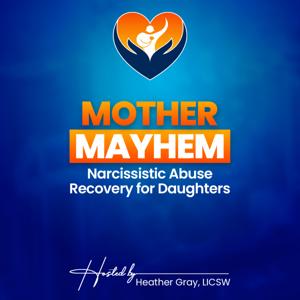
In this episode of Mother Mayhem, we unpack what it really means to reclaim safety, power, and self-trust after trauma, especially after growing up with a narcissistic or emotionally limited mother.
You’ll learn:
*Why your nervous system still scans for danger even when life is calm.
*How to tell the difference between trauma brain and wise mind.
*What integration actually looks like: when your body starts to believe what your wise mind already knows.
*How boundaries protect your peace (and why pushback means they’re working).
*Practical steps for rebuilding self-trust when control used to equal safety.
This is a look at the messy middle of healing, that in-between stage where trauma isn’t running the show anymore but it’s still backstage waiting for its cue.
If you’ve ever wondered why peace feels uncomfortable, why your body doesn’t believe your progress, or how to feel safe in your own story again, this episode is for you.
Find us at MayhemDaughters.com to learn more.
Sometimes it isn’t about trauma brain or nervous system talk. Sometimes it’s just about life being messy and complicated and still leaving you asking, what the hell am I supposed to do with this?
In this episode, I answer two big questions from a daughter:
Trust after rupture: What do you do when someone you love, someone you thought was safe, lashes out, apologizes, and takes responsibility…but you’re still hurt and not sure where to put it? We talk about what it means when trust gets shaken in relationships, how to stop pretending everything’s “fine,” and why real healing comes from honest conversations, not band-aids.
Self-doubt at work: What happens when you’re offered a leadership opportunity you’ve always wanted but instead of celebrating, you’re stuck in fear of messing it up, losing respect, or not being “ready”? I share the real talk about stepping into leadership, owning your power, and saying yes to more without waiting to feel 100% confident first.
If you’ve ever struggled with rebuilding trust, navigating self-doubt, or stepping into leadership while carrying the wounds of being a daughter of a narcissistic or emotionally limited mother, we’ve got you covered today.
You’ll walk away with:
-Clarity on why ruptures in close relationships matter (and what to do about them).-Practical ways to rebuild trust without gaslighting yourself.-Real talk on how to step into leadership even when fear and insecurity show up.-Encouragement to stop waiting to feel “ready” and start saying yes to the life you want.
Because sometimes it’s not trauma. It’s just life. And you still deserve to know what to do next.
Head to MayhemDaughters.com to join Group, our community, or to become a sponsor of the show.
What happens when you’ve spent a lifetime unseen, unchosen, and defined by someone else’s story?
In this episode of Mother Mayhem, a daughter asks: Who Am I, really?
Together, we explore:
Why daughters of narcissistic or emotionally limited mothers often feel dissociated or split from themselves
How dissociation shows up in daily life and gentle ways to come back into the present
Why listening and gathering resources without acting is a trauma response, not a failure
How to begin bridging head and heart after years of survival mode
What to do with rage and grief when confronting a mother won’t bring healing
How identity is reclaimed, not reinvented and why it’s never too late to begin
This episode offers both a clinical lens and a community one. It reminds daughters that healing happens in connection, not isolation.
If you’ve ever wondered who you are beyond the roles you were given, or how to carry rage and grief without being consumed by them, this conversation will meet you right where you are.
And if you’re looking to be a sponsor of the show or want to know more about connecting with other Mayhem daughters, you can find us at MayhemDaughters.com
Healing from childhood trauma isn’t a straight line. There’s a very messy middle. In this episode of Mother Mayhem, we explore what that messy middle really looks like for daughters of narcissistic or emotionally limited mothers.
We’ll talk about:
Regret in healing: Why it shows up, why it feels like such a gut punch, and how to reframe regret as a sign of growth instead of failure.
Relationships under pressure: How marriage, friendships, and partnerships can feel like they’re combusting when one person begins to heal.
The nervous system’s role: Why trauma brain makes joy feel unsafe, why peace is often the real goal, and why partners may misinterpret trauma responses as rejection or complaint.
The shock of change: How the people we chose in our fawning, conflict-avoiding, or numbed-out selves often feel destabilized when we start showing up differently.
Getting practical: From naming trauma brain in real time, to practicing repair, to re-choosing relationships with new self-awareness.
This conversation will help you understand why healing feels so raw, why regret can actually be a milestone, and how to navigate the bumps in relationships with clarity and compassion.
Whether you’re in the thick of regret, feeling misunderstood by your partner, or noticing how your healing is shaking up your closest connections, this episode will give you language, validation, and tools for the journey.
Resources & Next Steps
Learn more about the Mayhem Daughters community: MayhemDaughters.com.
Listen to earlier episodes on relationships and healing: Ep. 72 & Ep. 94
In this episode of Mother Mayhem, we’re talking about something every daughter eventually faces on the healing journey: the messy middle.
You’ve moved beyond survival mode: less hypervigilance, fewer shutdowns but freedom and peace still feel out of reach.
Instead, you’re navigating grief, anger, second-guessing, perfectionism, and the uncomfortable work of slowing down.
It’s confusing, frustrating, and messy. And yet…it’s where the deepest growth happens.
Together we’ll explore:
-Why grief and anger are essential parts of healing, not setbacks.
-How second-guessing shows up in the messy middle (and what to do about it).
-What it means to value rest, quiet, and connection without chaos.
-Practical ways to hold both grief and light through “Yes, And.”
-How to stop picking up every single thought trauma brain throws your way.
All of the questions in this episode came directly from daughters inside the Mayhem Daughters community.
If you want to have your own questions answered, hear from other daughters about their experiences, and find a safe, trauma-informed space to heal, visit MayhemDaughters.com
You are not alone in this messy middle. Let’s walk it together.
What happens when your body was never fully yours to begin with?
In this powerful episode we’re having a conversation many daughters have never had out loud about bodily autonomy, maternal boundary violations, and the silent, insidious ways that narcissistic or emotionally immature mothers can lay claim to their daughters' bodies.
We’re not just talking about “bad boundaries” here. We’re talking about unspoken abuse, the kind that hides behind phrases like “for your own good,” and leaves daughters confused, ashamed, and disconnected from their own bodies.
What it means when a mother claims ownership over her daughter’s body
Why so many daughters hesitate to use the word abuse, even when their bodies tell the truth.
Examples of physical invasiveness, coercion, and boundary-crossing framed as “care”
The nervous system responses (like freezing or bracing) that reveal stored trauma
Why healing often begins not with rage, but with quiet remembering and somatic truth
How to notice your body's signals and what it looks like to reclaim agency
This is not a checklist of symptoms. It’s a truth telling
This episode is tender. It may be activating. Go slowly. Bring water, take breaks, and, if at all possible, don’t listen alone.
Felt shame around sexuality, desire, or touch
Froze during intimacy, pelvic exams, or physical care
Been told you were “too sensitive” when something felt off
Had a mother who shared your private information, commented on your body, or touched you in ways that felt confusing or wrong
Struggled to name what happened because it wasn’t “overt” enough to count as abuse
You might relate if you’ve ever:
Felt shame around sexuality, desire, or touch
Froze during intimacy, pelvic exams, or physical care
Been told you were “too sensitive” when something felt off
Had a mother who shared your private information, commented on your body, or touched you in ways that felt confusing or wrong
Struggled to name what happened because it wasn’t “overt” enough to count as abuse
to learn about joining group, the community, or to share your story with the show.
Listener Note: This episode includes references to sexual trauma, emotional abuse, and boundary violations. Please take care of your nervous system and step away if you need to. You’re allowed to choose what you hold, and when.
Some daughters have lived through what many would call unthinkable: sexual abuse at the hands of their mothers. It’s a reality too painful to name, let alone process but that doesn’t make it any less real.
And if we want true healing for all daughters, we have to talk about the truths most people can’t hold.
In this powerful two-part episode, This week we talk to a daughter who has survived covert sexual trauma from her mother. Through her story, we begin to unpack the complex ways that maternal sexual abuse can occur.
I'll talk about:
What covert sexual trauma is and how it differs from more overt forms of abuse
How maternal sexual abuse distorts a daughter’s sense of self, safety, and bodily autonomy
Why daughters struggle with shame, confusion, and isolation around these experiences
How survivors can begin to reclaim their truth, their body, and their story
Why this episode, and this conversation, is a long-overdue step in healing the most silenced wounds
Whether this is your experience or not, listening with care will help deepen your understanding of the many forms the mother wound can take—and what it looks like to hold space for daughters living through the darkest parts of it
Visit MayhemDaughters.com for more information about joining group, our online community, or to share your story with the show.
What happens when you’ve gone no contact with your narcissistic mother… but your body still doesn’t feel safe?
This week, we hear from a daughter who has done all the right things. She’s named the abuse, set boundaries, gone to therapy, built a support network… and yet she still lives in fear of accidentally running into her mother.
Together, we explore what it means to feel stuck in trauma responses even after estrangement, and how daughters of narcissistic or emotionally limited mothers can begin to trust their bodies, honor their fear, and create protection without self-abandonment.
Why going no contact doesn’t always mean your nervous system feels safe
The difference between trauma brain and trauma wisdom
What to do if you run into your narcissistic parent in public
How to make a realistic safety plan without shame
The cost of avoidance—and how to choose it consciously
Why messy, imperfect reactions are actually protection
You’ve gone low or no contact and still feel like your mother has a hold on you
You’re a high-functioning daughter who feels like you “should be over it”
You’re tired of being hypervigilant, but scared to let your guard down
You’ve ever walked through a store scanning the aisles—just in case
You want support that honors your head work and your heart work
Why do relationships feel so confusing and hard?
If you grew up with a narcissistic or emotionally limited mother, you may have learned to associate closeness with danger and distance with safety.
This week,, we're talking about relational trauma, attachment wounds, and how childhood trauma shapes the way you show up in adult relationships.
We'll explore:
What relational trauma actually means and how it differs from single-event trauma
How disorganized attachment can leave you stuck in a painful push-pull cycle
Why your nervous system reacts to love, intimacy, and connection as threats
What it looks like to relate from survival mode, and how to begin shifting out of it
Why healing relational trauma requires relationship and how to do that without overwhelming yourself
Gentle, trauma-informed steps to stretch your capacity for safe, connected relationships
Whether you’re someone who over-functions in relationships, avoids intimacy altogether, or struggles to trust your own feelings, I get it. You’re protecting yourself in the only way your system knows how.
Resources:
Listen to Episode 105 first: Why You Feel This Way: Trauma, the Nervous System, & the Healing Journey
This week, we’re moving beyond the trauma buzzwords to explain why you feel the way you do and what it really means to begin healing from relational trauma.
You’ll learn:
What trauma looks like for daughters of narcissistic and emotionally limited mothers
The everyday symptoms of complex trauma (even if you’ve never been diagnosed)
How the nervous system responds to childhood trauma and why it’s not your fault
A five-phase healing framework that honors your pace and nervous system capacity
Why this work starts with your relationship to yourself, before anything else
Whether you’re just starting your trauma recovery journey or deep in the process, this episode offers clarity, compassion, and a way forward.
From the publisher's feed
Ranked by our users in the last 21 days

1,412 Listeners

330 Listeners

754 Listeners

453 Listeners
1,163 Listeners
782 Listeners

140 Listeners

32 Listeners
684 Listeners
1,738 Listeners

295 Listeners
381 Listeners
550 Listeners

83 Listeners
41 Listeners