
Sign up to save your podcasts
Or



You finally found the courage to speak about what happened. You shared your truth with the people closest to you. And instead of support, you got doubt, dismissal, and disbelief. If you've ever wondered why your version of events seems to carry less weight than the person who abused you, you're about to understand why—and it has nothing to do with whether your experience was real.
This episode explores the deeply troubling dynamic in narcissistic family systems and toxic relationships where the scapegoat's reality is systematically invalidated, even when multiple people have witnessed the same abuse.
• The calculated groundwork your abuser laid years before you ever spoke up that makes disbelief almost inevitable
• Why believing you would require something from others that most people aren't willing to give
• The uncomfortable role you've been assigned that makes your truth particularly threatening to the system
• What the aggressive dismissal of your reality actually reveals about how powerful your truth really is
If you've been told you're remembering things wrong, being too emotional, or holding grudges over normal family conflict, this episode will validate what you already know and expose the mechanisms designed to keep you silent. You'll discover why the system fights so hard to suppress your story—and what that fight reveals about its fragility.
🎓 **Online Course: Narcissistic Abuse Recovery** 👉 Start the Course
🤍**Coaching with Lynn** 1:1 Connect with Lynn - Coaching
🧘♀️ **Somatic Healing Audio Sessions** 👉 Listen Now
Hosted on Acast. See acast.com/privacy for more information.
You've felt it before—that moment when someone who hurt you offered just enough empathy to make you question your own pain, but not enough to actually change anything. That wasn't kindness. It was a calculated strategy designed to keep you trapped.
Redemptive masculinity is a pattern where abusers perform minimal empathy not to repair harm, but to excuse ongoing abuse while maintaining complete control. In narcissistic family systems and toxic relationships, this shallow understanding becomes a tool of manipulation—one that exploits your desperate need to feel heard and understood.
• The specific moment when minimal empathy stops being a gesture of care and becomes a weapon of control
• Why their "I understand how you feel" followed by zero behavioral change is a red flag you've been taught to ignore
• How scapegoated people become especially vulnerable to the manipulation of false empathy
• What your gut has been telling you all along about those hollow moments of seeming understanding
This episode uncovers how abusers weaponize your basic human need for empathy against you—and what genuinely transformed accountability actually requires. If you've ever felt gaslit after receiving an apology that somehow made you feel worse, this conversation names what's been happening and validates that your pain was always real.
🎓 **Online Course: Narcissistic Abuse Recovery** 👉 Start the Course
🤍**Coaching with Lynn** 1:1 Connect with Lynn - Coaching
🧘♀️ **Somatic Healing Audio Sessions** 👉 Listen Now
Hosted on Acast. See acast.com/privacy for more information.
That hollow apology you received after being hurt—where they said just enough to make you doubt your anger, but changed nothing about their behavior—wasn't a mistake on your part. It was a calculated strategy called redemptive masculinity, and it's one of the most effective ways abusers maintain control while appearing reformed.
In narcissistic family systems and toxic relationships, there's a distinct pattern where perpetrators perform minimal remorse not to repair harm, but to reset the power dynamic and silence your justified rage. This performative accountability is designed to exploit your natural human instinct to believe people can change—and it works devastatingly well.
• The specific language they use in half-hearted apologies that actually shifts blame back onto you—and why you weren't misreading it
• How a brief moment of fake vulnerability becomes a reset button they can press whenever accountability threatens their control
• The difference between performative remorse and genuine accountability that most abuse survivors miss until it's too late
• Why your gut feeling that their apology "felt off" was your intuition recognizing manipulation, not you being unforgiving
This episode dissects the weaponization of minimal remorse—exposing how abusers use your own capacity for forgiveness against you. You'll understand why those moments of apparent growth were actually maintenance moves designed to keep you engaged and confused. More importantly, you'll learn what genuine accountability actually requires, so you can stop accepting emotional crumbs from people who have no intention of changing.
If you've ever felt trapped by the cycle of offense-apology-reoffense, this episode names what's been happening and validates that your anger was always justified.
🎓 **Online Course: Narcissistic Abuse Recovery** 👉 Start the Course
🤍**Coaching with Lynn** 1:1 Connect with Lynn - Coaching
🧘♀️ **Somatic Healing Audio Sessions** 👉 Listen Now
Hosted on Acast. See acast.com/privacy for more information.
You've felt it for years—that nagging sense that something wasn't right, but couldn't quite name it. Now, suddenly, everything is clicking into place. Women everywhere are experiencing what many call "waking up" to patterns of blame, gaslighting, and scapegoating that have shadowed their most important relationships. But why now? Why are these dynamics suddenly impossible to ignore? This episode explores the psychological architecture of scapegoating and reveals why you were chosen to carry the shame that belonged to someone else.
• Discover the specific system abusers create to stay superior while keeping you focused on your own "flaws"
• Learn why the accusations you've heard repeatedly aren't observations about your character—they're strategic tools
• Understand the surprising reason scapegoats are often the most honest, independent, or empathetic people in the system
• Explore what happens when the person who controlled your narrative suddenly loses their monopoly on truth
This isn't about blame or judgment. It's about clarity. The moment you stop asking "What's wrong with me?" and start asking "What's wrong with this dynamic?" everything changes. If you've ever felt like you were walking on eggshells, absorbing accusations that never quite fit, or wondering why your authenticity was treated as a threat—this episode was created for you. You'll discover that your "wake-up" moment isn't a sign you're finally seeing the truth. It's a sign you're finally ready to trust what you already knew.
🎓 **Online Course: Narcissistic Abuse Recovery** 👉 Start the Course
🤍**Coaching with Lynn** 1:1 Connect with Lynn - Coaching
🧘♀️ **Somatic Healing Audio Sessions** 👉 Listen Now
Hosted on Acast. See acast.com/privacy for more information.
You've spent years believing you were the difficult one, the problem family member, the one who was too sensitive or dramatic. But what if everything you blamed yourself for was actually a calculated psychological mechanism designed to hide someone else's dysfunction?
In this episode, we're pulling back the curtain on family scapegoating—one of the most painful and confusing dynamics in narcissistic relationships. You'll discover why you were chosen for this role, what purpose it served for those around you, and most importantly, how to stop carrying blame that was never yours to carry.
This isn't about making excuses for your behavior. It's about understanding the system that was designed to keep you small, quiet, and responsible for everyone else's emotions.
• Why the person who scapegoated you chose you specifically—and what it says about your character, not your flaws
• The surprising reason scapegoating targets the most conscientious people in the family system
• How being blamed for things outside your control became a prison of false responsibility
• The question that will finally help you see where the real problems actually originated
If you've ever wondered why you can't seem to do anything right, why you're always the one everyone blames, or why you've spent decades trying to fix yourself when maybe it was never you that needed fixing—this episode will change how you understand your past and your role in it.
🎓 **Online Course: Narcissistic Abuse Recovery** 👉 Start the Course
🤍**Coaching with Lynn** 1:1 Connect with Lynn - Coaching
🧘♀️ **Somatic Healing Audio Sessions** 👉 Listen Now
Hosted on Acast. See acast.com/privacy for more information.
You're not imagining it. That bone-deep exhaustion you feel from constantly being blamed for other people's emotions? It's not a personal failing—it's a calculated system designed to keep you depleted and distracted.
For scapegoats in narcissistic families and relationships, emotional blame becomes the invisible weight that follows you everywhere. You didn't cause their anger, but somehow you're responsible for managing it. You didn't create their sadness, but their unhappiness becomes your fault. And the more you try to fix it, the more trapped you become in a cycle that was engineered to drain you.
• Discover the hidden mechanism that transforms your empathy into a weapon against you—and why the scapegoat always carries this burden
• Uncover the subtle difference between healthy accountability and emotional blame that keeps you stuck in an impossible role
• Recognize the exhaustion pattern that shows up across every area of your life—and what it's really protecting
• Learn why blaming you for their emotions is never about what you actually did
This isn't about being too sensitive or caring too much. This is about a system that needed someone to hold all the emotional responsibility so others could avoid theirs. And you were chosen not by accident—but because your empathy made you the perfect target.
If you've ever felt like you're drowning in other people's feelings while yours don't matter, this episode offers clarity that could change everything about how you see yourself and your relationships.
🎓 **Online Course: Narcissistic Abuse Recovery** 👉 Start the Course
🤍**Coaching with Lynn** 1:1 Connect with Lynn - Coaching
🧘♀️ **Somatic Healing Audio Sessions** 👉 Listen Now
Hosted on Acast. See acast.com/privacy for more information.
Most women grow up feeling something is wrong with them—too emotional, too sensitive, too much. But what if the problem was never you? Discover how narcissistic systems weaponize cultural conditioning and gendered shame to silence women and assign blame where it doesn't belong.
If you've been called dramatic for expressing valid concerns, hysterical for having normal emotions, or difficult for setting boundaries, this episode will shift how you understand your entire history.
• Why society's pre-existing bias against women becomes the perfect weapon in narcissistic relationships
• The hidden pattern that explains why daughters are scapegoated differently than sons
• How your emotional responses were actually valid signals—not character flaws
• What happens when you stop questioning yourself and start questioning the system that taught you to doubt
This isn't just about individual narcissists in your life. It's about understanding how larger cultural narratives get weaponized to keep women confined, controlled, and complicit in their own silencing. When you understand the system, everything changes.
You'll learn why the gaslighting felt so convincing, why the blame felt so heavy, and why your truth was so threatening. Most importantly, you'll discover what becomes possible when you stop internalizing the shame that was never yours to carry.
If you've spent years believing you were too much, too sensitive, or too emotional—this episode is for you. Your feelings weren't the problem. The system designed to discredit them was.
🎓 **Online Course: Narcissistic Abuse Recovery** 👉 Start the Course
🤍**Coaching with Lynn** 1:1 Connect with Lynn - Coaching
🧘♀️ **Somatic Healing Audio Sessions** 👉 Listen Now
Hosted on Acast. See acast.com/privacy for more information.
You remember something clearly. Someone you trusted insists it never happened. You leave the conversation questioning your own mind, wondering if you're too sensitive, too reactive, or simply remembering wrong. This is reality manipulation, and it's one of the most devastating tactics used against scapegoats in families and relationships.
In this episode, we expose the psychological mechanisms behind reality manipulation—the subtle and not-so-subtle ways people in positions of power rewrite events, reframe your emotions, and demand that you accept their version of reality over your lived experience. When you're the designated scapegoat, reality manipulation becomes a tool of control, keeping you trapped in self-doubt while they escape accountability.
But here's what most people don't understand: your confusion isn't a sign of weakness or instability. It's the predictable result of systematic psychological manipulation.
• The four primary tactics used to twist your perception of reality—and why the person using them depends on your continued self-doubt
• What happens in your brain when someone repeatedly undermines your ability to trust your own memories and emotions
• The hidden benefit the scapegoat-maker gets from keeping you confused and questioning yourself
• Why recognizing these patterns is the first step toward trusting yourself again—and what happens when you do
This episode is for anyone who's walked away from a conversation feeling like they're going crazy, for those who pre-edit their own experiences before sharing them, and for people ready to understand that their confusion was manufactured, not inevitable. Your perceptions are valid. Your memories matter. Your emotional responses make sense. And this episode will help you see why the people who need you to doubt yourself are the ones who benefit most from your confusion.
🎓 **Online Course: Narcissistic Abuse Recovery** 👉 Start the Course
🤍**Coaching with Lynn** 1:1 Connect with Lynn - Coaching
🧘♀️ **Somatic Healing Audio Sessions** 👉 Listen Now
Hosted on Acast. See acast.com/privacy for more information.
You felt it—that sting of resistance when you started succeeding, thinking independently, or moving forward with your life. The person who used to put you down suddenly became cold, critical, or hostile when you achieved something meaningful. But what if that resistance isn't random? What if it's actually a sign that you're breaking free from something far more damaging than you realized?
In this episode of the Narcissistic Abuse Recovery Podcast, we explore the unsettling truth about why abusers, narcissistic parents, and scapegoaters actively resist your growth, your ambition, and your ability to think critically. It's not jealousy. It's not about your success threatening theirs. It's about something much deeper—control, power, and the carefully constructed hierarchy they've built that depends entirely on keeping you small.
When you were assigned the role of the scapegoat, you served a very specific function. You absorbed the family's dysfunction so everyone else could feel superior. Your role required you to be the problem, the failure, the difficult one. But what happens when you step out of that role? What happens when you start succeeding, healing, and seeing clearly?
They can't afford for you to think too clearly. They can't tolerate your independence. Your critical thinking exposes the truth about who was really creating the problems all along.
This episode reveals:
• Why your progress feels like a direct threat to the person who scapegoated you—and it's not what you think
• The hidden mechanism that makes your ambition and success so dangerous to narcissistic systems
• How your critical thinking undermines the power structure that abuse was built on
• The specific ways resistance to your growth actually proves you're healing
• What it means when family members, partners, or authority figures suddenly become hostile after you start succeeding
You're not imagining the backlash. You're not crazy for noticing that growth feels risky in certain relationships. The resistance you're experiencing is real, it's purposeful, and it's trying to keep you trapped in a role that was never yours to play.
If you've ever wondered why the people closest to you seemed threatened by your progress, this episode holds the answers—and the validation you need to keep moving forward.
🎓 **Online Course: Narcissistic Abuse Recovery** 👉 Start the Course
🤍**Coaching with Lynn** 1:1 Connect with Lynn - Coaching
🧘♀️ **Somatic Healing Audio Sessions** 👉 Listen Now
Hosted on Acast. See acast.com/privacy for more information.
You've spent years managing everyone else's emotions while yours were dismissed or weaponized. This episode reveals the invisible pattern that kept you trapped in the scapegoat role and what you need to know to reclaim your emotional freedom.
• The hidden mechanism that makes scapegoats responsible for other people's moods—and why you believed it was your job
• Why expressing your own feelings was treated like a threat to family stability and what that really means about the system, not about you
• The devastating double bind that taught you to ignore your own emotions while becoming hypervigilant to everyone else's
• A shocking truth about whose problem their emotions actually are—and why you've been carrying the wrong burden
🎓 **Online Course: Narcissistic Abuse Recovery** 👉 Start the Course
🤍**Coaching with Lynn** 1:1 Connect with Lynn - Coaching
🧘♀️ **Somatic Healing Audio Sessions** 👉 Listen Now
Hosted on Acast. See acast.com/privacy for more information.
From the publisher's feed
Validate. Rebuild. Revolutionize | For Scapegoats | Dismantling…
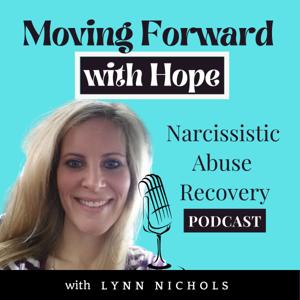
Discover a safe haven and a wellspring of insight with the Narcissistic Abuse Recovery Podcast. In this candid, relevant, and eye-opening show, host Lynn, author and passionate recovery advocate, guides you through the landscape of toxic relationships and covert narcissistic abuse dynamics. With honesty, depth, and tough love, Lynn helps you recognize subtle manipulation tactics and offers practical strategies to heal, rebuild, and reclaim your power.
Episodes dive deep into the complexities of narcissistic family systems, exploring roles like scapegoat and golden child, and shedding light on the pain of ostracization and family rejection. If you've been the family scapegoat—blamed, dismissed, and cast aside—this podcast validates your experience and provides a roadmap for breaking free from toxic family patterns. We tackle topics like going no contact, setting boundaries, understanding scapegoat dynamics, healing from family trauma, and uncovering covert manipulation that keeps you from thriving. Our conversations go beyond personal trauma to examine how narcissism is woven into broader cultural systems, including patriarchy's influence on gender roles and equality.
Available on all major podcast networks. Subscribe today.
This podcast exists to expose and challenge the systems that diminish, control, and silence. We focus on what has been overlooked, question what has been normalized, and create space for healing, clarity, and collective strength. Serving as a resource of hope, encouragement, and validation, so victims of narcissistic abuse can rebuild their lives and pursue dreams, visions, and intentional living.
Narcissistic Abuse Recovery Website: Visit our website at https://www.movingforwardafterabuse.com/
🔗 Additional Healing Resources & Support: 👉 movingforwardafterabuse.com
🎓 **Online Course: Narcissistic Abuse Recovery** 👉 Start the Course
🤍**Coaching with Lynn** 1:1 Connect with Lynn - Coaching
🧘♀️ **Somatic Healing Audio Sessions** 👉 Listen Now
📥 **Downloadables: Ebooks, Worksheets & More** 👉 Visit the Store
💬 **Join the Exclusive Community on Supercast** 👉 Become a Member
🎁 **Support the Show** 👉 Tip Jar
📱 **Connect on Social Media** 👉 Visit our Linktree
⭐ *****Benefiting from the Show? *****Leave us a Positive Review*****
Lynn is a trauma-informed narcissistic abuse recovery coach, author, and creator of the YouTube Channel, Wake the Elephant.
This podcast is for educational and informational purposes only. The content shared is not a substitute for professional mental health advice, diagnosis, or treatment. If you are experiencing a mental health crisis, please seek help from a qualified professional or contact a local crisis hotline.
Hosted on Acast. See acast.com/privacy for more information.
1,426 Listeners

330 Listeners
852 Listeners

758 Listeners

449 Listeners
1,163 Listeners
776 Listeners
513 Listeners
139 Listeners

39 Listeners
1,735 Listeners
292 Listeners
88 Listeners

84 Listeners

213 Listeners