
Sign up to save your podcasts
Or

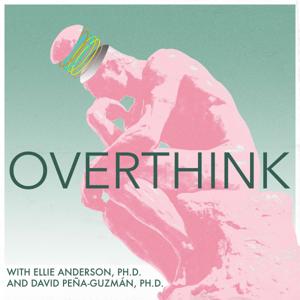

Why does much of the history of philosophy neglect the topic of birth? In episode 142 of Overthink, Ellie and David chat with Jennifer Banks about her book Natality: Toward a Philosophy of Birth. They think through the debate between pronatalism and antinatalism, and consider alternatives to these positions. They also discuss Hannah Arendt’s account of natality and what Mary Shelley’s Frankenstein tells us about the relationship between birth and monstrosity. What is birth, and why does it seem to defy so many of our concepts and categories? What’s the difference between being-born and giving-birth? And how would our view of ourselves change if we saw ourselves through the lens of a “philosophy of birth” (as opposed to, say, “a philosophy of death”)? In the Substack bonus segment, your hosts dive further into Hannah Arendt’s works, focusing on the link between her concept of natality and her ideas about the public/private distinction.
Works Discussed:
Hannah Arendt, The Human Condition
Jennifer Banks, Natality: Toward a Philosophy of Birth
Alison Stone, Being Born: Birth and Philosophy
Dean Spears and Michael Geruso, After the Spike: Population, Progress, and the Case for People
Marjolein Oele, “The Dissolution of the Pregnant City: A Philosophical Account of Early Pregnancy Loss and Enigmatic Grief”
See Privacy Policy at https://art19.com/privacy and California Privacy Notice at https://art19.com/privacy#do-not-sell-my-info.
 View all episodes
 By Ellie Anderson, Ph.D. and David Peña-Guzmán, Ph.D.

4.8
452452 ratings
Why does much of the history of philosophy neglect the topic of birth? In episode 142 of Overthink, Ellie and David chat with Jennifer Banks about her book Natality: Toward a Philosophy of Birth. They think through the debate between pronatalism and antinatalism, and consider alternatives to these positions. They also discuss Hannah Arendt’s account of natality and what Mary Shelley’s Frankenstein tells us about the relationship between birth and monstrosity. What is birth, and why does it seem to defy so many of our concepts and categories? What’s the difference between being-born and giving-birth? And how would our view of ourselves change if we saw ourselves through the lens of a “philosophy of birth” (as opposed to, say, “a philosophy of death”)? In the Substack bonus segment, your hosts dive further into Hannah Arendt’s works, focusing on the link between her concept of natality and her ideas about the public/private distinction.
Works Discussed:
Hannah Arendt, The Human Condition
Jennifer Banks, Natality: Toward a Philosophy of Birth
Alison Stone, Being Born: Birth and Philosophy
Dean Spears and Michael Geruso, After the Spike: Population, Progress, and the Case for People
Marjolein Oele, “The Dissolution of the Pregnant City: A Philosophical Account of Early Pregnancy Loss and Enigmatic Grief”
See Privacy Policy at https://art19.com/privacy and California Privacy Notice at https://art19.com/privacy#do-not-sell-my-info.

43,940 Listeners

43,628 Listeners

15,272 Listeners

10,742 Listeners
2,110 Listeners
147 Listeners
10,366 Listeners

1,461 Listeners

1,542 Listeners
315 Listeners

5,525 Listeners
585 Listeners
1,346 Listeners

523 Listeners

747 Listeners

146 Listeners

582 Listeners

205 Listeners

1,237 Listeners

574 Listeners

502 Listeners

194 Listeners
289 Listeners

2,528 Listeners
94 Listeners

0 Listeners

79 Listeners
234 Listeners
717 Listeners

11 Listeners
316 Listeners

8,838 Listeners

358 Listeners

39 Listeners

27 Listeners