
Sign up to save your podcasts
Or



Based on Podcast App listening data
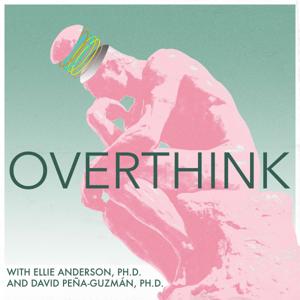
From snoozing puppies kicking their legs to controversial octopi who change colors while asleep, nonhuman dreaming fascinates us. Science says that sleeping animals experience “reality simulations,” rich dreamscapes which they navigate as conscious agents. Inspired by David’s book When Animals Dream (fresh off the press!), this episode kicks off a 3-part series tracing his thrilling investigation into the nature and philosophical implications of animal dreaming. Episode 52 introduces David’s argument that animals’ capacity to dream reveals the need to radically rethink animals as conscious beings with complex inner lives.
Works Discussed:
David Peña-Guzmán, When Animals Dream
Nature (S38 E1), PBS TV
Elizabeth Preston, "Was Heidi the Octopus Really Dreaming?"
William Lauder Lindsay, Mind in the Lower Animals in Health and Disease
Sigmund Freud, The Interpretation of Dreams
Evan Thompson, Waking, Dreaming, Being
Maurice Merleau-Ponty, Phenomenology of Perception
Charles Darwin, The Descent of Man
Peter Godfrey-Smith, Other Minds
Ratatouille (2007)
Support the show
Substack | overthinkpod.substack.com
Website | overthinkpodcast.com
Instagram & Twitter | @overthink_pod
Email | [email protected]
YouTube | Overthink podcast
See Privacy Policy at https://art19.com/privacy and California Privacy Notice at https://art19.com/privacy#do-not-sell-my-info.
Generational differences emerge in subtle ways, but how do we identify these? And how does the new generation of youth culture Gen Z is defining differ from Ellie and David’s generation of millennials? Feeling a bit out of touch, Ellie and David interview Overthink production assistants Anna Solomon and Sam Hernandez to tell them all about Gen Z values.
Works Discussed
Jose Ortega y Gasset, El tema de nuestro tiempo
William Strauss and Neil Howe, Generations
William Strauss and Neil Howe, The Fourth Turning
Bobby Duffy, The Generation Myth
Mark Bauerlein, The Dumbest Generation
Support the show
Substack | overthinkpod.substack.com
Website | overthinkpodcast.com
Instagram & Twitter | @overthink_pod
Email | [email protected]
YouTube | Overthink podcast
See Privacy Policy at https://art19.com/privacy and California Privacy Notice at https://art19.com/privacy#do-not-sell-my-info.
What do Freudian slips, Josie and the Pussycats, and solving math problems have in common? Psychoanalysis claims to have some answers! Sigmund Freud suggests that unconscious desires, fears, and trauma influence us without us being conscious of them. In pop culture, the unconscious is often depicted as the realm of dirty thoughts and subliminal messages, but does the unconscious actually even exist? In episode 50 (!), Ellie and David explore the unconscious and the existentialist challenge to it from Jean-Paul Sartre.
Works Discussed
Sigmund Freud, “The Unconscious”
Jean-Paul Sartre, Being and Nothingness
Josie and the Pussycats (2001)
The Exorcist (1973)
Karl Popper, Conjectures and Refutations: The Growth of Scientific Knowledge
Stanislas Dehaene, The Code of Consciousness
Jacques Hadamard, An Essay on the Psychology of Invention in the Mathematical Field
Jacques Derrida, “Freud and the Scene of Writing”
Support the show
Substack | overthinkpod.substack.com
Website | overthinkpodcast.com
Instagram & Twitter | @overthink_pod
Email | [email protected]
YouTube | Overthink podcast
See Privacy Policy at https://art19.com/privacy and California Privacy Notice at https://art19.com/privacy#do-not-sell-my-info.
Why do humans in every known culture love juicy gossip? Some theorists say gossip evolved as the modern version of picking fleas off our friends, reassuring those around us of our shared social bonds. Others argue that it reinforces social norms by outlining what behaviors are bad, or even scandalous. In episode 49, Ellie and David gossip about gossip — when is it wrong to gossip, and when might it be the ethical choice? Many scholars throughout history have condemned gossip as idle chitchat that slanders others, but some feminist and decolonial thinkers have reclaimed its utility for fighting against systems of oppression that exclude them from formal modes of communication. Episode 49 spills the tea on gossip.
Works Discussed
Sipping with Socrates, “Socrates’ view of gossip”
Immanuel Kant, Anthropology
Thomas Aquinas, Summa Theologica
Soren Kierkegaard, The Present Age: On the Death of Rebellion
The Bible, 1 Timothy 5:13
Megan L. Robbins and Alexander Karan, “Who Gossips and How in Everyday Life?”
Robin Dunbar, Grooming, Gossip, and the Evolution of Language
Giambattista Vico, The New Science
Baumeister, Roy F., Liqing Zhang, and Kathleen D. Vohs, “Gossip as Cultural Learning”
Survivor
Ranajit Guha, Elementary Aspects of Peasant Insurgency in Colonial India
Sissela Bok, Secrets: On the Ethics of Concealment and Revelation
Support the show
Substack | overthinkpod.substack.com
Website | overthinkpodcast.com
Instagram & Twitter | @overthink_pod
Email | [email protected]
YouTube | Overthink podcast
See Privacy Policy at https://art19.com/privacy and California Privacy Notice at https://art19.com/privacy#do-not-sell-my-info.
We’re always worried about being productive enough with our time, but where does this compulsion come from? In episode 48, Ellie and David examine productivity culture and the drive to produce. Although research says longer hours don’t equal more productivity, capitalism encourages us to always be working, even at the cost of our mental and physical health. How does this inefficient approach to work (and our lives outside of it) stifle our growth and creativity? According to Twitter memes and Bifo, refusing productivity for lazy relaxation on the beach may be a revolutionary rejection of productivity culture, but Adorno contends that laziness recycles us into merely consuming commodities for capitalism instead of producing them. What can a creative, process-based approach offer us that a productivist one cannot, and what value might there be in just producing less?
Works Cited
Amelia Horgan, “The ‘Dark Academia’ Subculture Offers a Fantasy Alternative to the Neoliberal University”
John Pencavel, “The Productivity of Working Hours”
Shainaz Firfiray, “Long hours at the office could be killing you – the case for a shorter working week”
Economic Policy Institute, “The Productivity-Pay Gap”
Foucault, History of Madness
Franco Berardi, Futurability
Herbert Marcuse, One-Dimensional Man
Theodor Adorno, Minima Moralia: Reflections from Damaged Life
Mihály Csikszentmihalyi, Flow: The Psychology of Optimal Experience
Cal Newport, “It’s Time to Embrace Slow Productivity”
Mark Fisher, Capitalist Realism
Support the show
Substack | overthinkpod.substack.com
Website | overthinkpodcast.com
Instagram & Twitter | @overthink_pod
Email | [email protected]
YouTube | Overthink podcast
See Privacy Policy at https://art19.com/privacy and California Privacy Notice at https://art19.com/privacy#do-not-sell-my-info.
Is rage a bad thing? Philosophers usually frame anger as an unhealthy or even immoral emotion that leads us away from compassion and towards violence, but episode 47 guest Myisha Cherry's new book makes The Case for Rage as a powerful tool for anti-racist work. Before their discussion with Dr. Cherry, Ellie and David discuss contrasting theories of anger from Martha Nussbaum and Buddhism. Can rage be rooted in love rather than hate, and drive us towards a more just world?
Works Discussed
Myisha Cherry, The Case for Rage: Why Anger is Essential to Anti-Racist Struggle
Peter Sloterdijk, Rage and Time
Martha Nussbaum, Anger and Forgiveness: Resentment, Generosity, Justice
Aeschylus, The Oresteia
Shantideva, Bodhicaryāvatāra
Emily McRae, "Metabolizing Anger: A Tantric Buddhist Solution to the
Problem of Moral Anger"
Silvan Tomkins, Exploring Affect
Audre Lorde, “The Uses of Anger: Women Responding to Racism”
Myisha Cherry and Owen Flanagan, The Moral Psychology of Anger
Martin Luther King Jr., “Letter from a Birmingham Jail”
Amia Srinivasan, “The Aptness of Anger”
Support the show
Substack | overthinkpod.substack.com
Website | overthinkpodcast.com
Instagram & Twitter | @overthink_pod
Email | [email protected]
YouTube | Overthink podcast
See Privacy Policy at https://art19.com/privacy and California Privacy Notice at https://art19.com/privacy#do-not-sell-my-info.
Is it really better to exist than not exist? With rampant climate destruction, income inequality, and suffering in the world, some have begun to question whether it is ethical to create new life, knowing it will suffer. In episode 46 of Overthink, Ellie and David explore the intellectual tradition of anti-natalism. Why did Schopenhauer think that life was ultimately dominated by suffering, and why did Nietzsche think he was so wrong? How has anti-natalism emerged out of the trend of pessimism, and how can we be optimistic about generating new life in what can at times be such a hard world?
Works Discussed
Soul (2020)
Capernaum (2018)
David Benatar, Better Never to Have Been: The Harm of Coming into Existence
Arthur Schopenhauer, The World as Will and Representation
Elizabeth Harman, “Critical Study of David Benatar. Better Never to Have Been: The Harm of Coming into Existence (Oxford: Oxford University Press, 2006)
Thaddeus Metz, “Are Lives Worth Creating?”
Friedrich Nietzsche, The Birth of Tragedy
Théophile de Giraud, The Art of Guillotining the Procreators: Anti-Natalist Manifesto
Plato, The Laws
Support the show
Substack | overthinkpod.substack.com
Website | overthinkpodcast.com
Instagram & Twitter | @overthink_pod
Email | [email protected]
YouTube | Overthink podcast
See Privacy Policy at https://art19.com/privacy and California Privacy Notice at https://art19.com/privacy#do-not-sell-my-info.
Have you ever hugged a tree? In episode 45 of Overthink, Ellie and David head into nature to explore the philosophical side of trees. Often, trees have been ignored, even as they populate so much of the space around us. Why did Socrates say he could learn nothing from trees, and why did Nietzsche write so romantically about them? Deleuze and Guattari criticize trees for being too vertically organized, but Michael Marder argues that they're far more cooperative than we ever imagined. In that spirit, trees are clearly alive, but Peter Wohlleben goes as far as to say they could possibly be intelligent, and even have language of their own. Does that mean that trees deserve rights? Ellie and David get into the root of it in episode 45!
Works Discussed
Richard Powers, The Overstory
Plato, Phaedrus
Martin Buber, I and Thou
Aristotle, De Anima
Plotinus, Enneads
Hans Jonas, The Phenomenon of Life
Peter Wohlleben, The Hidden Life of Trees: What They Feel, How They Communicate
Massimo E. Maffei and Wilhelm Boland, “The Silent Scream of the Lima Bean”
Monica Gagliano et al., “Learning by association in plants”
Monica Gagliano et al., “Plants learn and remember: let’s get used to it”
Simona Ginsburg and Eva Jablonka, The Evolution of the Sensitive Soul: Learning and the Origins of Consciousness
Christopher Stone, “Should Trees Have Standing?”
Gilles Deleuze and Felix Guattari, A Thousand Plateaus
Friedrich Nietzsche, The Birth of Tragedy
Michael Marder, “In (Philosophical) Defense of Trees”
Support the show
Substack | overthinkpod.substack.com
Website | overthinkpodcast.com
Instagram & Twitter | @overthink_pod
Email | [email protected]
YouTube | Overthink podcast
See Privacy Policy at https://art19.com/privacy and California Privacy Notice at https://art19.com/privacy#do-not-sell-my-info.
Are the straights okay? In episode 44 of Overthink, Ellie and David dive into “heteropessimism,” the sense of disillusionment or even shame associated with heterosexuality. From viral TikTok videos to studies showing that women are less dissatisfied than men in heterosexual relationships, post #metoo society is reckoning with the everyday sexism of many relationships. Ellie and David explore the reasons for heteropessimism, consider alternatives such as political lesbianism and boys' education, and ask: how can we be attracted to things that are bad for us, and how can we break out of a heteropessimistic approach to love?
Works Discussed
Asa Seresin, “On Heteropessimism”
Lena Gunnarsson, The Contradictions of Love
Mari Ruti, Penis Envy and Other Bad Feelings: The Emotional Costs of Everyday Life
Lauren Berlant, Cruel Optimism
Sandra Bartky, Femininity and Domination
Lauren Berlant and Lee Edelman, Sex, Or the Unbearable
Andrea Long Chu, “The Impossibility of Feminism”
Pauline Harmange, Moi les hommes, je les déteste
Jack Halberstam, In A Queer Time and Place
Ronald F. Levant, Philip A. Allen, and Mei-Ching Lien, “Alexithymia in Men: How and when do emotional processing deficiencies occur?”
Ronald Levant, “Desperately Seeking Language: Understanding, Assessing, and Treating Normative Male Alexithymia”
Lauren Papp, Chrystyna D. Kouros, and E. Mark Cummings, “Demand-Withdraw patterns in marital conflict in the home”
D.L. Vogel, S.R. Wester, M. Heesacker, and S. Madon, “Dating relationships and the demand/withdraw pattern of communication”
Stephanie Coontz, “How to Make Your Marriage Gayer”
Support the show
Substack | overthinkpod.substack.com
Website | overthinkpodcast.com
Instagram & Twitter | @overthink_pod
Email | [email protected]
YouTube | Overthink podcast
See Privacy Policy at https://art19.com/privacy and California Privacy Notice at https://art19.com/privacy#do-not-sell-my-info.
Some podcasts only talk the talk, but David and Ellie walk the walk (or talk the walk?) in episode 43 by diving into the philosophy of walking. Walking is a complex sociocultural practice that raises fascinating questions about history, power, and freedom. Why did our ancestors transition from walking on all fours to walking on two legs, and how did this shape our evolution as a species? Why have so many philosophers throughout history (from Aristotle to Rousseau) insisted on incorporating walks into their daily routines? And how do systems of oppression—such as classism, racism, sexism, transphobia, and ableism—mold our experience of walking, determining where and even how we can walk?
*correction: when Ellie says "James DeSilva," she meant "Jeremy DeSilva"! Our apologies to the author of First Steps.
Works Discussed
Charles Baudelaire, “The Painter of Modern Life”
Frédéric Gros, A Philosophy of Walking
Gayle Salamon, The Life and Death of Latisha King: A Critical Phenomenology of Transphobia
Jane Jacobs, The Death and Life of Great American Cities
Jennifer McDuff and Alison Phinney, "Walking With Meaning: Subjective Experiences of Physical Activity in Dementia"
Jeremy DeSilva, First Steps: How Upright Walking Made us Human
Jo Livingstone and Lovia Gyarkye, "Death to the Flâneur"
Lauren Elkin, Flâneuse: Women Walk the City in Paris, New York, Tokyo, Venice and London
Marily Oppezzo and Daniel L. Schwartz, "Give Your Ideas Some Legs: The Positive Effect of Walking on Creative Thinking"
Michel de Certeau, "Walking in the City"
Quill R. Kukla, "City Spaces, Pace Bias, and the Production of Disability"
Support the show
Substack | overthinkpod.substack.com
Website | overthinkpodcast.com
Instagram & Twitter | @overthink_pod
Email | [email protected]
YouTube | Overthink podcast
See Privacy Policy at https://art19.com/privacy and California Privacy Notice at https://art19.com/privacy#do-not-sell-my-info.
From the publisher's feed
The best of all possible podcasts, Leibniz would say. Putting big ideas in dialogue with the everyday, Overthink offers accessible and fresh takes on philosophy from enthusiastic experts.…
Hosted by professors Ellie Anderson (Pomona College) and David M. Peña-Guzmán (San Francisco State University).
Ranked by our users in the last 21 days

43,827 Listeners

43,362 Listeners

15,235 Listeners

10,727 Listeners

2,112 Listeners

144 Listeners
10,144 Listeners

1,461 Listeners

1,540 Listeners

314 Listeners

5,527 Listeners
582 Listeners

1,343 Listeners
525 Listeners

745 Listeners
145 Listeners

582 Listeners

201 Listeners

1,237 Listeners

580 Listeners

502 Listeners

194 Listeners

285 Listeners

2,502 Listeners

94 Listeners

0 Listeners

79 Listeners
234 Listeners
712 Listeners

11 Listeners

315 Listeners

8,792 Listeners

360 Listeners

39 Listeners

26 Listeners