
Sign up to save your podcasts
Or

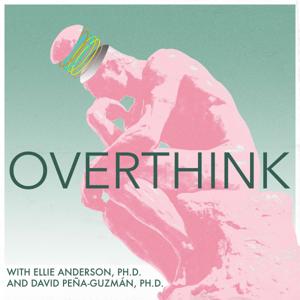

We’re always worried about being productive enough with our time, but where does this compulsion come from? In episode 48, Ellie and David examine productivity culture and the drive to produce. Although research says longer hours don’t equal more productivity, capitalism encourages us to always be working, even at the cost of our mental and physical health. How does this inefficient approach to work (and our lives outside of it) stifle our growth and creativity? According to Twitter memes and Bifo, refusing productivity for lazy relaxation on the beach may be a revolutionary rejection of productivity culture, but Adorno contends that laziness recycles us into merely consuming commodities for capitalism instead of producing them. What can a creative, process-based approach offer us that a productivist one cannot, and what value might there be in just producing less?
Works Cited
Amelia Horgan, “The ‘Dark Academia’ Subculture Offers a Fantasy Alternative to the Neoliberal University”
John Pencavel, “The Productivity of Working Hours”
Shainaz Firfiray, “Long hours at the office could be killing you – the case for a shorter working week”
Economic Policy Institute, “The Productivity-Pay Gap”
Foucault, History of Madness
Franco Berardi, Futurability
Herbert Marcuse, One-Dimensional Man
Theodor Adorno, Minima Moralia: Reflections from Damaged Life
Mihály Csikszentmihalyi, Flow: The Psychology of Optimal Experience
Cal Newport, “It’s Time to Embrace Slow Productivity”
Mark Fisher, Capitalist Realism
Support the show
Substack | overthinkpod.substack.com
Website | overthinkpodcast.com
Instagram & Twitter | @overthink_pod
Email | [email protected]
YouTube | Overthink podcast
See Privacy Policy at https://art19.com/privacy and California Privacy Notice at https://art19.com/privacy#do-not-sell-my-info.
 View all episodes
 By Ellie Anderson, Ph.D. and David Peña-Guzmán, Ph.D.

4.8
452452 ratings
We’re always worried about being productive enough with our time, but where does this compulsion come from? In episode 48, Ellie and David examine productivity culture and the drive to produce. Although research says longer hours don’t equal more productivity, capitalism encourages us to always be working, even at the cost of our mental and physical health. How does this inefficient approach to work (and our lives outside of it) stifle our growth and creativity? According to Twitter memes and Bifo, refusing productivity for lazy relaxation on the beach may be a revolutionary rejection of productivity culture, but Adorno contends that laziness recycles us into merely consuming commodities for capitalism instead of producing them. What can a creative, process-based approach offer us that a productivist one cannot, and what value might there be in just producing less?
Works Cited
Amelia Horgan, “The ‘Dark Academia’ Subculture Offers a Fantasy Alternative to the Neoliberal University”
John Pencavel, “The Productivity of Working Hours”
Shainaz Firfiray, “Long hours at the office could be killing you – the case for a shorter working week”
Economic Policy Institute, “The Productivity-Pay Gap”
Foucault, History of Madness
Franco Berardi, Futurability
Herbert Marcuse, One-Dimensional Man
Theodor Adorno, Minima Moralia: Reflections from Damaged Life
Mihály Csikszentmihalyi, Flow: The Psychology of Optimal Experience
Cal Newport, “It’s Time to Embrace Slow Productivity”
Mark Fisher, Capitalist Realism
Support the show
Substack | overthinkpod.substack.com
Website | overthinkpodcast.com
Instagram & Twitter | @overthink_pod
Email | [email protected]
YouTube | Overthink podcast
See Privacy Policy at https://art19.com/privacy and California Privacy Notice at https://art19.com/privacy#do-not-sell-my-info.

43,956 Listeners

43,622 Listeners

15,271 Listeners

10,740 Listeners

2,112 Listeners

147 Listeners
10,361 Listeners

1,461 Listeners

1,541 Listeners

315 Listeners

5,526 Listeners
586 Listeners

1,346 Listeners

523 Listeners

747 Listeners

146 Listeners

582 Listeners

205 Listeners
1,237 Listeners

574 Listeners

502 Listeners

194 Listeners

289 Listeners

2,528 Listeners

94 Listeners

0 Listeners

79 Listeners
234 Listeners

717 Listeners

11 Listeners
316 Listeners

8,842 Listeners

358 Listeners
39 Listeners

27 Listeners