
Sign up to save your podcasts
Or

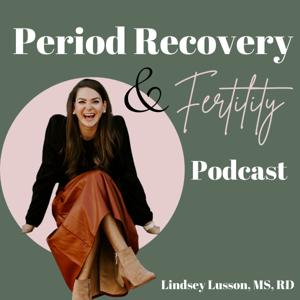


You finally work up the courage to ask your OB about getting your period back naturally, and the answer is “Keep doing what you’re doing, but this could take years. You might as well start fertility treatment.” If you’ve heard some version of that, this episode is for you. Across 400+ women, Lindsey has never once looked at a client’s labs and thought, “This is going to take you years.” On average, her clients get their period back in about 8 weeks, and 85% get it back within 90 days. Weeks and months, not years.
In this episode, Lindsey walks through how she reads a hormone panel, why she can usually estimate someone’s recovery timeline from her labs, and why the numbers alone will never tell you what to actually change. Then she shares two real client stories, with their real lab values: Haley, who hadn’t had a natural period in 15 years, and Caroline, who’d gone more than 10.
In this episode, we cover:
The hormones Lindsey looks at first (estradiol, LH, FSH, androgens, and vitamin D) and what each one tells her about where you are
The HA spectrum: what it looks like when your brain has gone almost quiet compared to when your body is right on the edge of ovulating
How starting labs can predict your timeline, and why one client took 15 weeks while another took just 5
Why your labs show where you are but not why you’re there, and how you can sit at “almost ovulating” for months or even years if nothing changes
Haley’s story: “clean” eating for her skin, food rules she didn’t recognize as rules, and why not having a period at 90 days didn’t mean her plan had failed
How one testosterone result could have sent Haley down the PCOS path, and the clue that showed it was actually her hormones surging right before ovulation
Caroline’s story: a 10/10 stress level, a quiet fear of weight gain, and why knowing what your body needs isn’t the same as being able to do it
Why “close to ovulating” isn’t the same as “ready for pregnancy”
The biggest takeaway: your labs are a snapshot, not a sentence. They can tell you how suppressed your hormones are and give you a sense of your timeline, but they can’t tell you what needs to change. That comes from connecting your numbers to your food, your training, your stress, and the rules you don’t even realize you’re following. When someone connects those dots, recovery happens in weeks and months, not years.
If you’ve been sitting in your labs wondering what they mean, or you’ve been doing everything “right” and still don’t have your period back, the Missing Period Assessment is open now. You’ll get your hormone labs reviewed, your food log analyzed, a personalized video breakdown from Lindsey, a custom plan, and a 1:1 strategy call with the lead dietitian. Enrollment closes Thursday, October 22 at midnight Central, and this is the last time it’s opening this year.
Links & Resources
Enroll in the Missing Period Assessment (closes October 22)
Book a Discovery Call
Take the Fertility Fix for the Fit Girl Quiz
Learn More About Lindsey
Join the Email List
When you hear “food freedom,” you probably picture one of two things. Either the donuts-for-breakfast, cake-for-dinner free-for-all that's all over social media, or the quieter version your favorite wellness accounts are selling: eat whatever you want… as long as it's 90% whole foods, portion controlled, and “in moderation.” One sounds like chaos. The other sounds balanced, but look closely and it's just more food rules wearing a cuter outfit.
In the final part of the Food Rules and Your Fertility series, Lindsey redefines what food freedom actually is (hint: it was never about what's on your plate) and speaks directly to the three women most likely listening right now: the one who just had the lightbulb moment, the one who's already tried everything and doesn't believe she can change, and the one who wants to know if all this work will actually get her pregnant.
This episode wraps up the series, so if you haven't listened yet, start with Episode 115, Episode 116, and Episode 117 first.
In this episode, we cover:
Why real food freedom happens in your head, not on your plate and what it looks like when food takes up almost zero space in your brain
The two biggest myths about food freedom, and why “food freedom with strings attached” is just more food rules in disguise
Why realizing you have food rules is the fastest part of the process, and how to keep that clarity from cooling off into “that was a good episode”
Why past attempts with a dietitian, a therapist, or going “all in” on your own may not have worked — and why that isn't a character flaw
How food rules, resistance to body changes, and constant food noise tell your body it isn't a safe time to make a baby
Why your period was never proof of a healthy cycle, and what your options really look like when ovulation is missing
A real-life picture of food freedom: a spontaneous weekend getaway with no workout plan, no menu research, and no fight in your own head
This episode is the final part of the Food Rules and Your Fertility series. Up next, Lindsey has one more mini series to share and she's saved the best for last.
The biggest takeaway: food freedom isn't a rulebook or an all-or-nothing free-for-all. It's quiet. It's food taking up so little space in your head that you can say yes to the spontaneous trip, order what actually sounds good, and come home remembering the trip instead of managing it. That's what's on the other side of this work — not just a period or a positive pregnancy test, but your actual life, back in your own hands.
Wherever you're standing after this series, there's a next step for you. If you just had your mind blown, book a discovery call. If you're not sure you're ready yet, get on the email list and keep listening. And if you need proof before you can believe any of this, join the waitlist for the Missing Period Assessment, opening October 15th.
Mentioned in this episode:
Episode 115 – Food Rules and Your Fertility (Part 1: What Food Rules Actually Are)
Episode 116 – Food Rules and Your Fertility (Part 2: Naming Your Food Rules)
Episode 117 – Food Rules and Your Fertility (Part 3: Common Pitfalls)
Episode 112 – All About Ovulation: Why Your Period Is Not Proof You Ovulated
Episode 114 – Do You Need Medication to Ovulate?
Links & Resources
Book a Discovery Call
Take the Fertility Fix for the Fit Girl Quiz
You did the homework. You named a food rule, maybe two, and you started challenging it you added the snack back, skipped tracking for a day, even had the bagel you hadn't touched in a decade. And at first it felt fine. But a few weeks in, something feels off: your period still isn't back, you haven't ovulated, or you got one cycle and then stalled right back out.
In part 3 of the Food Rules and Your Fertility series, Lindsey names the most common pitfalls that quietly stall period recovery, even when you're doing “everything right.” None of these mean you're doing it wrong or not trying hard enough most of them are subtle by design, which is exactly why they're worth naming out loud instead of circling for months hoping you catch them on your own.
This episode builds on parts 1 and 2, so if you haven't listened yet, start with Episode 115 and Episode 116 first.
In this episode, we cover:
Why a food rule doesn't have to be about food to still be running the show and how to spot when it's relocated to weighing, comparison, or avoiding help
The eight most common pitfalls keeping women stuck, including eating only “whole foods,” never actually naming your food rules, avoiding fear foods, the “unicorn” mindset, calling it “intuitive eating” while still under-eating, controlling your weight, ignoring sleep and stress, and comparison
How to tell the difference between a genuine food preference and a fear-driven rule
Why quasi-recovery (getting your cycle back without ever naming the underlying rules) isn't the same as full recovery
This episode is part three of the Food Rules and Your Fertility series. In Episode 118, Lindsey wraps up the series with Part 4: Finding Food Freedom, walking through how to actually start letting go of these rules.
The biggest takeaway: awareness without a decision is just a more informed version of staying stuck. Before you do anything else today, go back through the list of pitfalls and name the one that's actually yours not the easiest one, the one you felt your stomach drop on. Say it out loud, write it down, or tell one person. That's the assignment.
If you recognized yourself in more than one of these, that's not a sign something is wrong with you it's a sign it's time to get honest about what's really driving your food decisions. Grab your list from the Part 2 homework, get some accountability, and meet Lindsey back for Part 4.
Mentioned in this episode:
Episode 115 – Food Rules and Your Fertility (Part 1: What Food Rules Actually Are)
Episode 116 – Food Rules and Your Fertility (Part 2: Naming Your Food Rules)
Episode 109 – Orthorexia Deep Dive: Why “Clean Eating” Can Tank Your Hormones
Food Freedom and Fertility – Alliance for Eating Disorders support
Links & Resources
Take the Fertility Fix for the Fit Girl Quiz
Food Freedom Fertility Society
Picture this: it's your birthday, and underneath the excitement there's a twinge of dread because you know dessert, family dinners, and “what will people think” are all coming with it. It's not just birthdays. Every holiday brings the same tug-of-war between excitement and anxiety, and if celebrations feel more like a threat than a gift, that's not “just being health conscious.” Those are your food rules running the show.
This episode is part two of the Food Rules and Your Fertility series. Last episode named what food rules actually are today Lindsey gets specific, walking through the ten most common food rules she sees in her practice, why “just eat intuitively” isn't the fix yet, and a simple homework activity to help you start untangling your own.
In this episode, we cover:
How to tell the difference between a food rule and genuinely liking to eat healthy and why it comes down to your level of distress, not the food itself
A homework activity to help you identify your own food rules and what would change in your life if you let go of them
This episode is part two of the Food Rules and Your Fertility series. In Episode 117, Lindsey wraps up the series by walking through how to actually start letting go of these rules and moving toward a more peaceful relationship with food.
The biggest takeaway: figuring out whether you have a food rule or just a preference isn't about the food itself, it's about the distress you feel when you can't follow it. Once you start noticing one rule, the floodgates open, and you'll likely be shocked at how many you actually have. Awareness is step one, and just listening to this episode already puts you ahead of most women.
If you heard yourself in even one or two of these rules, that's not a sign something is wrong with you, it's a sign it's time to start naming them. Grab a notebook, do the homework in this episode, and meet Lindsey back for Part 3.
Mentioned in this episode:
Episode 86 – What Every Woman Needs to Know About Carbs and Fertility
Episode 109 – Why Clean Eating Can Tank Your Hormones (orthorexia deep dive)
Food Freedom and Fertility – Alliance for Eating Disorders support
Links & Resources
Take the Fertility Fix for the Fit Girl Quiz
Food Freedom Fertility Society
If you've ever felt a flicker of panic before a dinner out, or noticed quiet rules running in the background of what you “allow” yourself to eat, this episode is for you.
This episode kicks off a new three-part series, Food Rules and Your Fertility, unpacking how these quiet, often invisible rules run in the background of your biggest trips and your most ordinary Tuesdays and how they can quietly suppress your hormones too.
In this episode, we cover:
What a food rule actually is, and why almost every one starts out as something genuinely healthy before it turns rigid and restrictive
Why your body can't tell the difference between a real threat and a made-up one, and what that means for your hormones when you restrict, skip meals, or panic over food
How survival mode shuts down the exact signals your hypothalamus sends to your ovaries, and why “survival mode does not equal fertility mode”
The under-the-radar signs you might still be under-fueling even after correcting an obvious energy deficit, like a low resting heart rate, waking between 2–4am, and estrogen that won't climb above 30 pg/mL
How under-fueling impacts your digestion (including SIBO, bloating, and slowed transit time), your mental and emotional health, your muscles and bones, and your nervous system
What the Minnesota Starvation Experiment revealed about food obsession, mood, and mental health—even in men with no prior history of disordered eating
Why you don't need to be in a measurable energy deficit for food restriction to impair your working memory and focus
The hidden, ritual-like behaviors around food that can be red flags for disordered eating, even when they feel like “just being healthy”
This episode is part one of the Food Rules and Your Fertility series. In Episode 116, Lindsey gets specific—walking through the ten most common food rules she sees in her practice, a simple homework activity to help you identify your own, and the pitfalls of jumping straight into intuitive eating for period recovery.
The biggest takeaway: almost every food rule started as something genuinely healthy, but the moment flexibility disappears and guilt shows up, your body reads it as a threat, not health. And your body will always choose keeping you alive over helping you conceive every single time.
If you've caught yourself in the clean eater, the macro tracker, or the calorie queen, that's not a sign something is wrong with you. It's a sign your body has been running on a rulebook it never should have needed.
Links & Resources
Take the Fertility Fix for the Fit Girl Quiz
Food Freedom Fertility Society
If you're standing at the crossroads between fertility treatment and working on restoring your fertility naturally, this episode is for you.
The episode closes out the series with three sets of questions: ones to ask yourself, ones to bring to your reproductive endocrinologist, and ones to bring to your dietitian or root-cause practitioner, so you can move forward from a place of real information rather than defaulting to “what medication do we add next.”
In this episode, we cover:
Why ovulatory dysfunction isn't always just about under-fueling, and how autoimmune thyroid disease or PCOS can be a separate issue, or one made worse by under-fueling
The real first question to ask when someone isn't ovulating: not “what medication fixes this,” but “why isn't this happening”
How Clomid and Letrozole actually work, and why Letrozole has become the preferred first-line option for most women
Why women who are under-fueled often already have a thinner uterine lining, and what that means when you add a medication that suppresses estrogen further
Why a short luteal phase can still show up even when ovulation is confirmed, and the questions worth asking if you're bleeding within a week of ovulating on medication
What the fertility intervention ladder can look like in practice: Letrozole, dose increases, Menopur, Estrace, trigger shots, and timed intercourse or IUI
Why there's no established medical standard for when to escalate from oral medication to injectables, and how a PCOS vs. HA misdiagnosis can send treatment in the wrong direction
Three sets of questions to ask yourself, your reproductive endocrinologist, and your dietitian or root-cause practitioner
This episode is the final part of the All About Ovulation series. If you haven't listened to Episode 112, where Lindsey covers why bleeding isn't the same thing as ovulating, or Episode 113, where she introduces the HA Spectrum, start there first, since today's episode builds directly on both.
The biggest takeaway: medication has a real place in fertility care, but it's a tool, not a starting point. The question is never just “how do we make ovulation happen.” It's “why isn't it happening, and what does my body actually need?”
If you've been on the fertility treatment merry-go-round without anyone asking why ovulation stopped in the first place, that's not a sign you're doing something wrong. It's a sign you're missing a plan built around your actual body, not just the next prescription.
Links & Resources:
If your period shows up every month like clockwork, it's easy to assume your hormones are fine.
But a regular cycle is not the same thing as healthy ovulation.
In this episode, Lindsey continues the All About Ovulation series and introduces what she calls the HA Spectrum, a framework for understanding that ovulatory dysfunction is not a light switch. It's not simply "ovulating" or "not ovulating." There is a whole range in between, from a completely healthy cycle all the way to full hypothalamic amenorrhea (HA), and most women have no idea where they actually fall on it.
Many women rule themselves out of this conversation entirely. They picture HA as something that only happens to underweight women, athletes, or people with an eating disorder, and since that's not them, they assume it doesn't apply. But you can be much closer to the HA end of the spectrum than you think, even with a period that looks completely regular on paper. If you're curious whether you fall closer to HA or PCOS, Lindsey has covered that distinction in several past episodes: 48, 74, 102, and 108.
In this episode, we cover:
What ovulatory dysfunction actually is, and why it exists on a spectrum rather than a yes-or-no state
The four points on that spectrum: ovulatory eumenorrhea, subclinical ovulatory disturbances, oligomenorrhea, and hypothalamic amenorrhea
Why a "totally normal" 29-day cycle can hide the same root issue as a missing period
Why subclinical ovulatory disturbances matter, including their link to bone loss, mood, sleep, and cardiovascular health
Why normal labs don't rule out an ovulation problem
The real root cause of functional ovulatory dysfunction: your brain deciding now isn't a safe time to reproduce
The main drivers: low energy availability, overtraining or under-fueling around exercise, psychological stress, and dieting history
Why you do not have to be underweight, have an eating disorder, or be a competitive athlete for this to apply to you
Self-check questions to help you figure out where you might fall on the spectrum
What recovery actually requires beyond "eat more" — training load, digestion, stress, blood sugar, sleep, and your relationship with food
Why recovery isn't linear, and why guessing at one change at a time often drags the timeline out longer
This episode is part two of the All About Ovulation series. If you haven't listened to Episode 112 yet, where Lindsey covers progesterone and why bleeding isn't the same thing as ovulating, start there first, since today's episode builds directly on it.
The biggest takeaway: ovulatory dysfunction isn't a light switch, it's a spectrum, and you can be a lot closer to the HA end of it than you think, even with a cycle that looks completely regular. A period is a good sign, but it isn't proof your body is fully hormonally healthy or fertile.
If today had you nodding along, or you've been piecing this together on your own for months without much to show for it, that's not a sign you're doing something wrong. It's a sign you're missing a plan built around your actual body, not just general advice.
Links & Resources:
Most women are taught that getting a period is the main event of the menstrual cycle.
But the truth is, ovulation is the main event.
In this episode, Lindsey kicks off the All About Ovulation mini series and breaks down why ovulation matters for fertility, hormones, and long-term health.
She explains why bleeding does not always mean you ovulated, why progesterone matters far beyond pregnancy, and how hormonal birth control can suppress ovulation while masking underlying hormonal issues.
In this episode, we cover:
● Why ovulation is the main event of the menstrual cycle
● Why getting a period does not always mean you ovulated
● How ovulation leads to progesterone production
● Why progesterone matters for mood, sleep, bones, heart health, and fertility
● Why hormonal birth control suppresses ovulation
● Why a pill bleed is not the same as a true period
● How birth control can mask missing, irregular, or painful periods
● What to know about birth control, nutrient depletion, AMH, SHBG, gut health, and thyroid markers
● Why missing cycles after coming off the pill are a sign to look deeper
● Why labs are helpful, but do not always show the full picture
Ovulation is not just about getting pregnant.
It is a monthly sign that your body has enough safety, energy, and hormonal communication to support reproductive health.
And if you are not ovulating, you are not making meaningful amounts of progesterone — a hormone your brain, bones, heart, mood, sleep, and fertility all depend on.
Hormonal birth control can be helpful and necessary for many women, but women deserve informed consent around what it does in the body.
The goal is not just to bleed.
The goal is a healthy, ovulatory cycle that supports your fertility, hormones, and long-term health.
If you are missing your period, coming off birth control, or trying to understand your labs, Lindsey is hosting a $27 live training on July 16th called Read Between The Labs
If you’ve gotten your period back after hypothalamic amenorrhea, it can feel like the finish line.
And honestly, it is a huge milestone. Getting a bleed again can be such a powerful sign that your body is responding to more nourishment, more rest, and a safer internal environment.
But getting your period back and being fully recovered are not always the same thing.
You may have gained weight, started eating more, stopped tracking calories, gotten a few cycles, or reintroduced some fear foods and still feel like food, exercise, and body image are taking up way too much mental space.
Or maybe you feel more mentally free, but your cycle is still missing, irregular, inconsistent, or showing signs that ovulation and progesterone are not fully restored yet.
In this episode, we cover:
● Why getting your period back does not always mean you are fully recovered● The difference between physical recovery and mental recovery● Why some women get one bleed but struggle to get consistent cycles after● What regular, predictable cycles should look like after HA recovery● Why ovulation matters more than simply bleeding● How BBT can help confirm whether ovulation is actually happening● What a healthy luteal phase looks like and why it matters for fertility● Why very short or light periods may signal that hormones are still rebuilding● The role of fertile cervical mucus as a sign of hormonal health● Why minimal PMS can be a marker of improved cycle health● Why mental recovery is just as important as physical recovery● How disordered eating, food rules, and perfectionism often show up in HA recovery● Why food should take up less brain space over time● What it looks like to feel flexible around restaurants, travel, social plans, and fun foods● Why being able to rest, skip workouts, and let life interrupt exercise is a major recovery milestone● How exercise can shift from body control to enjoyment, energy, and support● Why bad body image days do not have to become diet plans● How full recovery helps your identity expand beyond food, exercise, and your body
Physical recovery matters.
A regular cycle, consistent ovulation, a healthy luteal phase, enough cervical mucus, and a period that lasts more than a couple of days are all important signs that your body is becoming hormonally safer and more supported.
If you are ready for that level of recovery, we would love to support you inside the Food Freedom Fertility Society. The program application is linked in the show notes.
Temp Drop Affiliate Link
When you’ve been told that you’re “so healthy,” but your period is still missing, it can feel confusing, frustrating, and incredibly lonely.
You may be eating well, exercising, seeing doctors, running labs, trying to “do the right thing,” and still not getting answers. And when every provider tells you nothing is wrong but your body still isn’t ovulating it can leave you wondering if IVF, medications, or fertility treatments are your only option.
In this episode, Lindsey is joined by Alex, a former client who is now 21 weeks pregnant after recovering her period and ovulation naturally.
Alex shares her story of losing her period during a stressful season of school, intermittent fasting, weight loss, and intense exercise and how years of being told she was healthy kept her stuck in confusion. After seeing multiple providers, trying to piece together recovery on her own, and wrestling with the fear of body changes, Alex eventually joined the program and began learning what her body truly needed to feel safe again.
This conversation is an honest look at the emotional, physical, and mindset work of period recovery. Alex opens up about food rules, body image, surrendering control, navigating miscarriage, continuing to fuel her body after getting her period back, and the power of having support instead of trying to figure it all out alone.
This episode is a powerful reminder that getting your period back is not always about simply “eating more and exercising less.” It is about understanding your body, addressing the beliefs and habits that are keeping you stuck, and learning how to nourish yourself consistently enough to support ovulation, fertility, and pregnancy.
In this episode, we cover:
Alex’s story of losing her period during dental school, stress, intermittent fasting, weight loss, and exercise
Why being told “you’re so healthy” can keep women stuck without answers
The frustration of seeing multiple providers and still not getting to the root cause
Why Alex felt in her gut that fertility medications and IVF were not the first answer for her
How she tried to recover her period on her own before realizing she needed more support
Why eating breakfast and “eating more” still was not enough at first
How high-protein, low-carb, clean eating can still leave the body under-fueled
The fear of adding more carbs, fun foods, and flexibility into her diet
Why surrendering control around food became one of the biggest turning points
How body changes and weight gain impacted Alex emotionally
The mindset shift that helped her stop doing recovery at 60% and fully commit
How Alex got her period back around the 90-day mark after going all in
If you are missing your period, struggling to ovulate, or feeling like you’ve been doing everything “right” without getting answers, Alex’s story is such an important reminder: your body is not broken.
There is a reason your period is missing.
And even if recovery feels uncomfortable, even if your body changes, even if surrendering control feels scary you do not have to figure it out alone.
Your body can heal. Your cycle can come back. Ovulation can return. And with the right support, nourishment, and consistency, pregnancy may be possible naturally.
There is always a reason your period is missing, and it is possible to support your body in finding its way back to ovulation and fertility. Watch Lindsey’s free training, How to Get Pregnant with a Missing Period, to learn how healthy, active women can restore ovulation naturally and create the conditions for pregnancy.
From the publisher's feed
795 Listeners
1,352 Listeners

242 Listeners
1,106 Listeners
108 Listeners
6 Listeners
73 Listeners
404 Listeners
93 Listeners

2,706 Listeners

589 Listeners

155 Listeners
54 Listeners
113 Listeners

138 Listeners