
Sign up to save your podcasts
Or



Based on Podcast App listening data
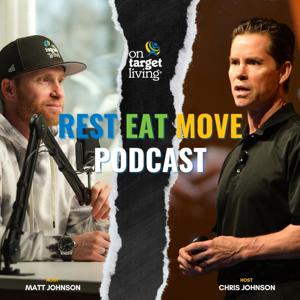
In this episode of Rest, Eat, Move, Matt sits down with healthcare and insurance expert Eric Hannah to unpack why health insurance has become so expensive and confusing—and how employers and individuals can navigate the system more effectively. They discuss hidden healthcare costs, wasteful pricing differences, misaligned financial incentives, self-funded employer health plans, direct primary care, and ways to shop for prescriptions. Eric emphasizes that health insurance is fundamentally a tool for financing medical care, not a guarantee that every healthcare service will be affordable or efficient. The conversation highlights the importance of price transparency, building a relationship with a primary care provider, asking better questions before agreeing to treatment, and using healthcare benefits strategically. Their shared vision is a system that delivers better care, lower costs, and greater accountability through smarter choices, aligned incentives, and improved technology.#HealthInsurance
#HealthcareSystem
#HealthcareCosts
#PreventiveHealth
#HealthAndWellness
ontargetliving.com
In this episode of Rest, Eat, Move, Matt sits down with Tina Marsh Dalton, a Wake Forest University professor and health economist, to explore why the U.S. spends so much on healthcare while continuing to struggle with chronic disease. Tina explains how the healthcare system evolved from addressing infectious diseases to specializing in medical treatment, and why today's growing need for chronic disease prevention requires a different approach. They discuss rising healthcare costs, insurance incentives, the limitations of clinical trials for long-term health outcomes, and emerging models like direct primary care. The central message: healthcare and health are not the same thing. Building a healthier future will require prioritizing prevention, improving access to personalized care, and taking greater responsibility for everyday health choices.#HealthAndWellness
#HealthcareReform
#PreventiveHealthcare
#Longevity
#HealthyLiving
ontargetliving.com
In this episode of Rest, Eat, Move, Matt and Chris explore how to simplify movement and make it a sustainable part of everyday life. They discuss why people struggle to stay active, including time constraints, lack of knowledge, and the belief that exercise has to be exhausting or time-consuming. Matt shares a practical approach to lifelong movement built around five key elements: dynamic warm-ups, restorative movements, cardiovascular activity, strength training, and play. They emphasize the importance of mobility, balance, proper technique, and body awareness while encouraging listeners to build simple, consistent habits that support longevity, prevent limitations, and improve both physical and mental health. The central message: movement doesn't have to be complicated to change your future health.#HealthAndWellness
#HealthyAging
#Fitness
#Longevity
#PersonalGrowth
ontargetliving.com
In this Rest, Eat, Move episode, Chris answers a series of unscripted questions about his lifelong approach to health, fitness, nutrition, recovery, and longevity. He shares his non-negotiable daily habits—including hydration, wheatgrass, cod liver oil, oatmeal, mobility work, and strength training—while reflecting on lessons learned from decades of bodybuilding. The conversation also covers overtraining and recovery, body weight and hydration, social media and health misinformation, the evolution of his workout routine, TRT and steroids, macronutrients, and his philosophy that sustainable health comes from consistent habits rather than extreme hacks. A recurring theme is curiosity, prevention, and learning how to apply health science practically.
#Health #Wellness #Longevity #Nutrition #Fitness
ontargetliving.com
This episode of Rest, Eat, Move explores why no single health marker—whether Apo B, LDL, insulin, calcium score, cortisol, or another lab value—should be viewed in isolation. The conversation argues for looking at trends and the “big picture,” combining blood work with foundational measures such as resting heart rate, blood pressure, breathing, sleep, nutrition, movement, and how you actually feel. Matt and Chris emphasize shifting from simply reacting to abnormal numbers toward understanding what may be driving them and focusing on sustainable behaviors that support long-term health.#HealthAndWellness #HeartHealth #Cholesterol #ApoB #HealthyLivingontargetliving.com
Episode 330 of Rest, Eat, Move explores why knowing what to do for better health isn't enough—we have to value the outcome enough to change our behavior. Matt explains how habitual beliefs are shaped by our experiences, environment, and the people around us, and how those beliefs drive the habits that ultimately determine our health outcomes. Using examples from sleep, movement, nutrition, phone use, and his grandparents' strong sense of what they valued, he challenges listeners to ask three questions: Do I truly value this? Do I believe the action will make a meaningful difference? And what's getting in the way? The episode ultimately encourages greater self-awareness, finding a personal “why,” and being willing to make small but intentional sacrifices today for better health and longevity tomorrow.#Health
#Wellness
#HealthyHabits
#Longevity
#Mindsetontargetliving.com
This episode explores the hidden impact of chronic stress, mental exhaustion, and poor recovery habits in modern life. Matt explains how constant stimulation from phones, information overload, and lack of intentional rest are keeping people trapped in “fight or flight” mode, affecting sleep, digestion, anxiety, focus, and long-term health. Through practical tools like breathwork, sleep planning, micro-breaks, movement, magnesium-rich nutrition, and reclaiming personal “space,” the episode emphasizes that recovery is not a luxury but a daily practice. The core message is that stress is often less about external circumstances and more about how we react—and that small, consistent habits can dramatically improve mental clarity, emotional regulation, and overall well-being.
#StressRelief
#MentalHealth
#SleepBetter
#SelfImprovement
#nervoussystem
ontargetliving.com
In this episode of the Rest, Eat, Move Podcast, Matt explores the growing popularity of GLP-1 medications, peptides, hormone replacement therapy, TRT, and other “optimization” technologies through the lens of Limitless. The central message is to “know your numbers” and ask better health questions before reaching for an easy button—including understanding cholesterol/lipids, glucose and A1C, triglyceride-to-HDL ratio, homocysteine, inflammation, thyroid, vitamin D, kidney function, and hormone levels. The episode argues that while medications and emerging therapies can be powerful medical tools, long-term health should also focus on the fundamentals: rest, eat, move, lifestyle, sleep, exercise, nutrition, stress management, and establishing personal health baselines over time.
#GLP1
#Longevity
#HormoneHealth
#MetabolicHealth
#HealthyAging
ontargetliving.com
This episode of Rest, Eat, Move breaks down what “organic” really means—and why it shouldn’t automatically be equated with healthier, safer, or higher-quality food. The discussion explains that USDA Organic is primarily a regulated production and supply-chain standard, with stronger traceability requirements introduced for organic imports in 2024. Matt compares organic, conventional, local, traditional, and “beyond organic” sourcing, using examples such as spirulina, chlorella, wheatgrass, apples, and cod liver oil. The central takeaway is that organic is one layer of quality, not the entire quality story: consumers should also consider source, processing, testing, purity, traceability, nutritional value, and the specific product.
#Organic
#Nutrition
#HealthyEating
#FoodQuality
#Supplements
ontargetliving.com
In this episode of Rest, Eat, Move, the focus is on the gap between knowing what to do and actually doing it. The conversation explores how health information, expert advice, podcasts, supplements, fitness trends, and wellness strategies can create information overload without necessarily changing behavior. Rather than focusing on what we intend to do or what we think we do, the episode challenges listeners to examine their actual behaviors over the past seven days—including sleep, nutrition, exercise, alcohol, screen time, stress, and recovery. The key message is simple: your health is built by what you repeatedly do, not by what you know.#Health
#Wellness
#HealthyHabits
#Nutrition
#Fitnessontargetliving.com
From the publisher's feed

31,916 Listeners

43,363 Listeners

39,018 Listeners

7,194 Listeners

11,736 Listeners

7,196 Listeners
1,997 Listeners

3,415 Listeners

9,155 Listeners

7,909 Listeners

130 Listeners

29,128 Listeners

26,558 Listeners
216 Listeners

3,144 Listeners