
Sign up to save your podcasts
Or

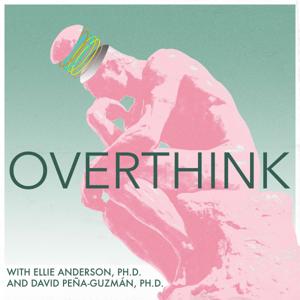

Have you ever tasted music or experienced numbers as having genders? If so, you might be a synesthete! Synesthesia refers to subjective experiences in which a stimulus associated with one sensory modality (e.g., vision) is experienced as having properties associated with an entirely different modality (e.g. sound, texture, or smell). This “mixing” of the senses raises fascinating questions about human experience and the life of the mind. In episode 33, Ellie and David discuss the science and philosophy of synesthesia while poking fun at people who brag about being synesthetes at parties. Are synesthetes born or made? What forms of synesthesia exist? And how might one go about cultivating synesthetic perception?
Works Discussed
Donielle Johnson, Carrie Allison, and Simon Baron-Cohen, “The Prevalence of
Synesthesia: The Consistency Revolution”
Simon Baron-Cohen, “Is There a Normal Phase of Synaesthesia in Development?”
David Abram, The Spell of the Sensuous
Kenneth Peacock, “Instruments to Perform Color-Music: Two Centuries of Technological Experimentation”
Anina Rich, interview in "Synesthesia" episode of All in the Mind podcast
Jamie Ward and Peter Meijer. “Visual Experiences in the Blind Induced by an Auditory Sensory Substitution Device”
Jerry Fodor, The Modularity of Mind
Adam Wager, “The Extra Qualia Problem: Synaesthesia and Representationism”
John Locke, An Essay Concerning Human Understanding
Support the show
Substack | overthinkpod.substack.com
Website | overthinkpodcast.com
Instagram & Twitter | @overthink_pod
Email | [email protected]
YouTube | Overthink podcast
See Privacy Policy at https://art19.com/privacy and California Privacy Notice at https://art19.com/privacy#do-not-sell-my-info.
 View all episodes
 By Ellie Anderson, Ph.D. and David Peña-Guzmán, Ph.D.

4.8
452452 ratings
Have you ever tasted music or experienced numbers as having genders? If so, you might be a synesthete! Synesthesia refers to subjective experiences in which a stimulus associated with one sensory modality (e.g., vision) is experienced as having properties associated with an entirely different modality (e.g. sound, texture, or smell). This “mixing” of the senses raises fascinating questions about human experience and the life of the mind. In episode 33, Ellie and David discuss the science and philosophy of synesthesia while poking fun at people who brag about being synesthetes at parties. Are synesthetes born or made? What forms of synesthesia exist? And how might one go about cultivating synesthetic perception?
Works Discussed
Donielle Johnson, Carrie Allison, and Simon Baron-Cohen, “The Prevalence of
Synesthesia: The Consistency Revolution”
Simon Baron-Cohen, “Is There a Normal Phase of Synaesthesia in Development?”
David Abram, The Spell of the Sensuous
Kenneth Peacock, “Instruments to Perform Color-Music: Two Centuries of Technological Experimentation”
Anina Rich, interview in "Synesthesia" episode of All in the Mind podcast
Jamie Ward and Peter Meijer. “Visual Experiences in the Blind Induced by an Auditory Sensory Substitution Device”
Jerry Fodor, The Modularity of Mind
Adam Wager, “The Extra Qualia Problem: Synaesthesia and Representationism”
John Locke, An Essay Concerning Human Understanding
Support the show
Substack | overthinkpod.substack.com
Website | overthinkpodcast.com
Instagram & Twitter | @overthink_pod
Email | [email protected]
YouTube | Overthink podcast
See Privacy Policy at https://art19.com/privacy and California Privacy Notice at https://art19.com/privacy#do-not-sell-my-info.

43,970 Listeners

43,617 Listeners

15,257 Listeners
10,743 Listeners
2,114 Listeners
146 Listeners
10,332 Listeners
1,461 Listeners
1,538 Listeners
313 Listeners

5,526 Listeners
586 Listeners

1,347 Listeners
523 Listeners

747 Listeners
146 Listeners
581 Listeners

205 Listeners

1,238 Listeners

574 Listeners

502 Listeners

194 Listeners
289 Listeners

2,522 Listeners
94 Listeners
0 Listeners

79 Listeners
233 Listeners
717 Listeners

12 Listeners
316 Listeners
8,845 Listeners

359 Listeners
39 Listeners

27 Listeners