
Sign up to save your podcasts
Or



Is your neck causing your migraines—or are your migraines causing your neck pain?
It's a question that sparks plenty of debate, especially among people who've found relief from migraines after receiving treatment for their neck.
In this episode of the Headache Doctor Podcast, Dr. Taves challenges the common “chicken or the egg” explanation and explores why the neck may play a bigger role in migraines than many people realize.
He explains the connection between the upper cervical spine, trigeminal nerve pathways, and the brain's interpretation of pain. You'll learn why neck dysfunction may contribute to headaches and migraines, even when MRIs or X-rays appear normal.
Dr. Taves also discusses the limitations of focusing exclusively on symptom management and why he believes evaluating neck movement, joint restrictions, and muscle tension can reveal important pieces of the migraine puzzle.
If you've been told your neck pain is simply another symptom of your migraines, this episode offers a different perspective—and questions worth asking about your treatment.
👉 Get your questions about migraines, neck pain, and potential contributing factors answered inside our FREE Virtual Headache & Migraine Community: https://www.skool.com/headache-freedom/about
Novera: Headache Center
Have you ever noticed your headache appears when you get home—or disappears while you're away, only to return a day or two after you come back?
In this episode of the Headache Doctor Podcast, Dr. Taves explores how your home environment may be contributing to headaches and migraines and the small, everyday factors that are easy to overlook. Pasted markdown
Rather than searching for one single trigger, Dr. Taves explains how multiple environmental factors can add up and gradually push you over your headache or migraine threshold.
You'll learn what to consider in your:
Dr. Taves also introduces a simple “100-point” threshold analogy to explain how poor sleep, stress, neck tension, skipped meals, screens, and other seemingly small factors can combine until your body crosses into headache or migraine territory. Pasted markdown
Plus, in Ask the Headache Doctor, he answers questions about headaches triggered by barometric pressure and persistent one-sided pain above the ear.
👉 Get your questions about migraine triggers and your environment answered inside our FREE Virtual Headache & Migraine Community: https://www.skool.com/headache-freedom/about
Novera: Headache Center
Could the way you breathe be making it harder for your body to recover from headaches and migraines?
In this episode of the Headache Doctor Podcast, Dr. Taves explores an often-overlooked piece of the headache puzzle: breathing. Not as the root cause of headaches, but as a factor that can influence your nervous system, sleep, muscle tension, stress response, and overall threshold for pain.
He breaks down why nasal breathing matters, how mouth breathing and poor sleep can create a cycle of increased pain sensitivity, and how breathing patterns can influence the body's fight-or-flight and rest-and-digest responses.
You'll also learn about overbreathing and CO₂ tolerance, how breathing can recruit muscles in the neck and shoulders thousands of times throughout the day, and simple strategies Dr. Taves recommends trying—including box breathing and a CO₂ tolerance step test.
The goal isn't to claim that changing your breathing will eliminate migraines. It's to identify another factor you can work on to help your body recover, regulate stress, and potentially raise its tolerance for pain.
👉 Get your questions about headaches, migraines, and the factors that may be affecting your pain threshold answered inside our FREE Virtual Headache & Migraine Community: https://www.skool.com/headache-freedom/about 👉
Novera: Headache Center
Do you have a headache every day that never seems to fully go away? It may feel like it started out of nowhere—but there may have been signs building long before your headaches became constant.
In this episode of the Headache Doctor Podcast, Dr. Taves explains why daily headaches start, why they can become so persistent, and what it takes to begin breaking the cycle.
He breaks down how occasional headaches or migraines can progress into daily pain and explores factors that may push the system past its threshold—including neck, jaw, and shoulder dysfunction, stress, poor sleep, illness, inflammation, and changes in general health.
You'll also learn about central sensitization—when the brain becomes increasingly sensitive to pain signals—and why recovering from long-standing daily headaches often requires addressing both the underlying source of pain and the brain's heightened response to it.
Dr. Taves also discusses the role of medication, lifestyle, movement, sleep, nutrition, stress, and why a comprehensive plan may be necessary when headaches have been present for months or years.
👉 Get your questions about daily headaches and chronic migraines answered inside our FREE Virtual Headache & Migraine Community: https://www.skool.com/headache-freedom/about
Novera: Headache Center
Sharp, burning, stabbing, or electrical pain in the back of your head, scalp, or behind your eye may lead to a diagnosis of occipital neuralgia or trigeminal neuralgia. But does that mean the nerve itself is the underlying problem?
In this episode of the Headache Doctor Podcast, Dr. Taves explains how to tell whether your symptoms may involve more than the nerve—and why your neck could be an important part of the picture.
He breaks down the anatomy behind occipital and trigeminal nerve pain, referred pain, and the trigeminal cervical complex. He also shares clues that may point toward neck involvement, including restricted neck movement, symptoms triggered by posture or prolonged sitting, tenderness at the base of the skull, and pain that begins in the neck and travels upward.
You’ll also learn why Dr. Taves cautions against assuming that relief from a nerve block, injection, medication, or ablation proves the nerve itself was the original source of the problem—and what he recommends looking at instead.
Plus, in Ask the Headache Doctor, Dr. Taves responds to people who spent years trying to get providers to recognize the connection between their neck pain and headaches or migraines.
👉 Get your questions about occipital neuralgia, trigeminal neuralgia, and neck-related headaches answered inside our FREE Virtual Headache & Migraine Community: https://www.skool.com/headache-freedom/about 👉
Novera: Headache Center
If you’ve been diagnosed with vestibular migraine—or you live with ongoing dizziness, vertigo, or that constant “on a ship” feeling—there may be an important part of the picture that hasn’t been fully evaluated.
In this episode of The Headache Doctor Podcast, Dr. Taves explains why our healthcare system can miss the underlying cause of vestibular migraine—and what to look for instead.
He breaks down the three systems your brain relies on for balance and orientation:
While the inner ear is often evaluated thoroughly, and vision is sometimes considered, Dr. Taves explains why neck function is frequently overlooked—even though your brain depends on information from the neck to understand where your head and body are in space.
You’ll also learn:
Plus, in Ask the Headache Doctor, Dr. Taves answers questions about food triggers and migraine threshold, and explains how Novera’s neck treatment approach differs from chiropractic manipulation.
👉 Get your questions about vestibular migraine, dizziness, and neck-related headaches answered inside our FREE Virtual Headache & Migraine Community: https://www.skool.com/headache-freedom/about
Novera: Headache Center
What if chronic pain isn't simply something to silence—but a message your body is trying to send?
In this episode of the Headache Doctor Podcast, Dr. Taves sits down with Leigh Brandon, author of Beyond the Pain, functional medicine provider, manual therapist, and C.H.E.K practitioner, to explore why some people remain stuck in chronic pain despite medications, injections, exercises, or even surgery.
Leigh breaks chronic pain down into four potential root-cause categories:
They also discuss why pain can be protective rather than simply harmful, how the nervous system can remain hypersensitive after an injury has healed, and practical ways to start identifying patterns behind your own symptoms.
If you've been in pain for years and feel like you've already tried everything, this conversation offers a different framework for understanding what your body may be telling you.
👉 Get your questions about chronic pain, headaches, migraines, and finding the root cause answered inside our FREE Virtual Headache & Migraine Community: https://www.skool.com/headache-freedom/about
Novera: Headache Center
What does it actually mean if you have migraine with aura vs. migraine without aura—and should that distinction determine how you approach treatment?
In this episode of the Headache Doctor Podcast, Dr. Taves explains why visual disturbances, light and sound sensitivity, numbness, and other neurological symptoms can feel alarming, but focusing entirely on those symptoms may keep you from asking a more important question: What's making the system so sensitive in the first place?
You'll learn:
Plus, in Ask the Headache Doctor, Dr. Taves answers questions about treating the upper neck with cervical instability and why Botox may work for migraines for years before seemingly stopping.
👉 Get your questions about migraine with aura, unusual migraine symptoms, neck-related headaches, and finding the root cause answered inside our FREE Virtual Headache & Migraine Community: https://www.skool.com/headache-freedom/about 👉
Novera: Headache Center
What if your migraine diagnosis isn't necessarily wrong—but it isn't telling you the whole story?
In this episode of the Headache Doctor Podcast, Dr. Taves shares five clues that your headaches or migraines may have an overlooked neck-related component. Instead of looking only at symptoms like nausea, light sensitivity, throbbing, and one-sided pain, he explains why it's important to ask what's actually driving your nervous system to become so sensitive in the first place.
The 5 clues he breaks down are:
Dr. Taves also explains why normal X-rays, MRIs, or CT scans don't necessarily tell you how well your neck is moving or functioning—and why these clues may warrant a closer look at the neck, jaw, and shoulders.
Plus, in Ask the Headache Doctor, Dr. Taves answers questions about distinguishing cervicogenic headaches from migraines and the role hormonal changes may play in migraine threshold.
If you've had migraines for years, tried medication after medication, and still feel like you're missing an explanation, this episode will give you five specific things to consider.
👉 Get your questions about migraine diagnosis, neck-related headaches, and finding the root cause answered inside our FREE Virtual Headache & Migraine Community: https://www.skool.com/headache-freedom/about 👉
Novera: Headache Center
Could what’s happening in your gut be affecting how vulnerable you are to migraines?
In this episode of the Headache Doctor Podcast, Dr. Taves sits down with functional health practitioner Taylor Knese of Mod Health Co. to explore the connection between gut health, hormones, stress, inflammation, and migraine threshold.
They break down how the gut communicates with the brain, why digestion and bowel movements can offer clues about your overall health, and how imbalances involving estrogen, histamine, stress, and the gut microbiome may contribute to a lower migraine threshold.
You’ll learn:
If you’ve focused on your headaches but never considered your digestion, hormones, or gut health, this conversation may help you see another piece of the migraine puzzle.
Special Offer from Mod Health Co: Use discount code DRTAVES with Mod Health Co. to receive the listener discount mentioned in this episode.
👉 Get your questions about gut health, hormones, migraine triggers, and improving your migraine threshold answered inside our FREE Virtual Headache & Migraine Community: https://www.skool.com/headache-freedom/about 👉
Novera: Headache Center
From the publisher's feed
Even after trying medication, lifestyle changes, and other “research-backed treatments” for migraine symptoms, does nothing feel like it’s really solving the issue?
The Headache Doctor…
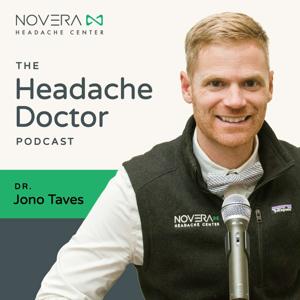
Dr. Taves, founder of the podcast and owner of Novera: Headache Center believes you deserve to feel in control of your health again — with more symptom-free days and less worry over when the next migraine will hit. Physical therapy for the neck at his clinic has decreased headache and migraine symptoms for hundreds of people.
Each week he dives into a topic related to headaches and migraines, or interviews experts to help you be informed as you manage your headaches and migraines.
Hit “subscribe” to be the first to know about new episodes!
P.S. – Outside of this podcast, Dr. Taves has provided superb education in the form of a detailed masterclass with videos which can be found on his website (www.noveraheadachecenter.com). His clinic also provides health coaching for patients out of state, and of course - in person care if you’re in Colorado!
*Disclaimer: This advice is not meant to be a substitute for advice from a medical professional regarding diagnosis, prognosis, or treatment. Always seek advice from your physician, physical therapist, or other qualified healthcare provider with questions you may have regarding a healthcare condition. Reliance on the information provided within this podcast is done solely at your own risk.

771 Listeners

7,182 Listeners

1,066 Listeners
2,019 Listeners

579 Listeners

4,863 Listeners
9,155 Listeners

7,935 Listeners

2,508 Listeners

130 Listeners

755 Listeners

832 Listeners

29,171 Listeners

1,676 Listeners
3,136 Listeners