
Sign up to save your podcasts
Or



Based on Podcast App listening data
When we say “natural,” it’s easy to imagine free play and child-led sessions where the therapist simply follows along. But natural doesn’t mean unplanned. Behind every playful moment is an opportunity for intentional teaching, and the best play-based sessions are those that blend spontaneity with strategy.
In this conversation, we talk about how to plan for play in a way that still feels natural and fun. We compare it to hosting a birthday party—you wouldn’t invite a group of kids and hope for the best without games or structure! The same goes for ABA sessions. Following a child’s lead doesn’t mean letting them bounce from toy to toy. It means embedding purposeful teaching moments within what they love most.
We share practical ways to create this balance, from using assessments like the Early Start Denver Model to identify meaningful goals to organizing the environment so motivation and learning opportunities flow naturally. You’ll hear how we think through contriving the environment, following motivation rather than chaos, and using every playful moment with purpose.
What’s Inside:
Mentioned in This Episode:
Episode 118: Generalization and Maintenance of Skills in ABA
HowToABA.com/join
How to ABA on YouTube
Find us on Facebook
Follow us on Instagram
ABA has often been seen as a field rooted in compliance: sit still, follow directions, and finish the task. But is that really the foundation for meaningful progress? We believe the future of ABA lies not in control, but in connection. In this conversation, we reframe what it means to support learners with compassion, trust, and respect.
We share why focusing on relationships first creates lasting change and how boundaries can be set with kindness instead of fear. You’ll hear stories from our own families, like navigating curfews with teenagers, that show the power of mutual respect over punishment. We also break down how approaches like Dr. Gregory Hanley’s Practical Functional Assessment and Skills-Based Treatment highlight safety, trust, and dignity as the true starting point for learning.
Instead of teaching “compliance” as a first skill, we explore what it looks like to prioritize happy, relaxed, and engaged learners. Because when learners feel safe and connected, they’re far more willing to take risks, build skills, and grow with us.
What’s Inside:
Mentioned in This Episode:
Hanley's Skill-Based Treatment Explained: A Practical Guide for Educators
HowToABA.com/join
How to ABA on YouTube
Find us on Facebook
Follow us on Instagram
Reassessments often sneak up on us, and it can feel like just another box to check. But when used well, they are one of the most powerful tools we have to make sure our programming is meaningful and effective. In this conversation, we explore how progress monitoring and reassessment work hand in hand and why they should never feel like wasted time.
We share stories from our own experiences as BCBAs and parents, where skipping reassessment led to missed progress and frustration. It is a reminder that stepping back from the day-to-day details allows us to see the bigger picture: Are the skills we are targeting still relevant? Has the learner mastered more than our programs reflect? Or do we need to break things down further to move forward?
We also discuss when to reassess, whether it is at regular intervals, during IEP seasons, or when progress has plateaued, and how those conversations can keep teams aligned on meaningful goals. Progress monitoring gives us session-by-session insights, while reassessment offers that essential zoomed-out view of a learner’s overall trajectory.
What’s Inside:
Mentioned In This Episode:
Episode 082: BCBA Collaboration Tips
HowToABA.com/join
How to ABA on YouTube
Find us on Facebook
Follow us on Instagram
What does it mean when the work you love starts leaving you drained or detached? That’s the reality of burnout, and in the field of ABA, it’s more common than we think. In this conversation, we look at how self-compassion can be one of the strongest defenses against burnout and why it doesn’t mean you care any less about your job.
We break down what burnout really is, how to spot the early signs, and why recognizing it as a signal, not a failure, is key. You’ll hear how strategies like job crafting, building mentoring relationships, and rethinking self-care can help you restore balance and resilience.
From practical shifts in your daily routine to reconnecting with your values, we share ways to protect your energy and rediscover joy in your work. Burnout may be common, but it does not have to stay that way.
What’s Inside:
Mentioned In This Episode:
HowToABA.com/join
Play with Purpose: Integrating ESDM and Naturalistic Teaching in Autism Intervention
How to ABA on YouTube
Find us on Facebook
Follow us on Instagram
What does it look like to take developmental goals off the page and bring them to life during play, snack time, or cleanup? That’s the beauty of the Early Start Denver Model (ESDM). In this conversation, we explore how natural routines create powerful learning opportunities without forcing children to stop playing or sit at a table.
We share why ESDM is such a strong fit for very young learners and how it breaks down early milestones like pointing, joint attention, and requesting into teachable steps. More than a checklist of targets, it is about building pivotal skills that open the door to lifelong learning. And because it blends developmental norms with ABA strategies, it helps us meet kids exactly where they are, while keeping interactions fun and meaningful.
From sensory social routines to embedding goals into everyday moments, we talk through practical ways you can use ESDM strategies with your own learners. You will also hear how this approach makes teaching more engaging for both kids and practitioners.
What’s Inside:
Mentioned In This Episode:
HowToABA.com/join
Play with Purpose: Integrating ESDM and Naturalistic Teaching in Autism Intervention
How to ABA on YouTube
Find us on Facebook
Follow us on Instagram
Assessments are more than forms to complete or boxes to tick. They are the foundation for building programs that truly matter to our learners. In this conversation, we unpack how to move beyond surface-level evaluations and use assessments as powerful tools for understanding strengths, identifying gaps, and setting meaningful goals.
Too often, assessments get mistaken for curriculum, leading to cookie-cutter programs that don’t reflect the individual needs of the learner. We discuss how to avoid this trap by reframing assessments as a starting point, not the destination. You’ll hear strategies for finding the right balance between thoroughness and efficiency, so learners don’t lose months of programming while assessments drag on.
We also talk about the importance of clinical judgment: why assessments belong in the hands of BCBAs and how to use results to shape goals that connect directly to the learner’s real-world needs. If you’ve ever felt bogged down by assessment requirements or questioned how to make them more meaningful, this episode will help you approach them with clarity and confidence.
What’s Inside:
Mentioned In This Episode:
Measuring What Matters: Meaningful Outcomes with the MOTAS Assessment CEU Event
HowToABA.com/join
How to ABA on YouTube
Find us on Facebook
Follow us on Instagram
Assessments are essential in ABA, but are we always using them the right way? Too often, assessments become a box-checking exercise rather than a true guide to meaningful intervention. In this conversation, we revisit the foundations of ABA assessments and explore how to move beyond simply filling in grids and scoring sheets.
We look at some of the most widely used tools, including the ABLLS, VB-MAPP, and Early Start Denver Model, and share how to choose the right one for your learner. You’ll learn why assessments are not the same as curriculum, and how mistaking one for the other can lead to cookie-cutter programs that miss individual needs. Instead, we highlight how assessments should serve as a starting point, giving you a baseline to individualize treatment goals and track progress over time.
You’ll also hear updates on newer tools like the MOTAS (Meaningful Outcomes Treatment and Assessment Scale) and the IGL (Inventory of Good Learner Repertoires), which can help bridge the gap between assessment data and real-world functional progress.
If you’ve ever wondered how to make assessments feel less overwhelming and more impactful, this episode will give you practical strategies and a fresh perspective.
What’s Inside:
Mentioned In This Episode:
Check out our blog on assessments
Measuring What Matters: Meaningful Outcomes with the MOTAS Assessment CEU Event
HowToABA.com/join
How to ABA on YouTube
Find us on Facebook
Follow us on Instagram
What does it take to grow an ABA practice while creating tools that transform the way we assess and support learners? In this conversation with Dr. Anika Hoybjerg, CEO of ABA Education Center and co-creator of The MOTAS assessment, we explore her inspiring journey in the field and the innovations she is bringing to ABA.
Anika shares how her early experiences in Special Olympics and school psychology shaped her perspective and how personal connections to autism led her to open one of Utah’s largest ABA centers. She also takes us inside the creation of The MOTAS, a comprehensive assessment tool designed to build independence and self-advocacy for learners of all ages. From teaching digital safety to fostering self-advocacy in IEP meetings, The MOTAS provides a framework that goes beyond basic life skills to prepare individuals for real-world success.
If you are looking for fresh ideas on assessment, practical strategies for promoting independence, and inspiration from a leader who balances compassion with innovation, this episode is for you.
What’s Inside:
Mentioned In This Episode:
ABA Education Center
Measuring What Matters: Meaningful Outcomes with the MOTAS Assessment CEU Event
HowToABA.com/join
How to ABA on YouTube
Find us on Facebook
Follow us on Instagram
Hard conversations are part of ABA practice, whether it is addressing a parent’s concerns or coaching a staff member. These moments can feel stressful, yet when handled with empathy and clarity, they can actually build trust and strengthen relationships.
In this episode, we share practical ways to approach these discussions with confidence, compassion, and purpose. You will learn why avoiding them often makes problems grow, how soft skills like active listening and humility can shift the tone, and strategies to set boundaries while keeping collaboration strong. We also touch on current research in compassionate ABA and humble behaviorism, showing why these skills are essential for effective practice.
What’s Inside:
Mentioned In This Episode:
HowToABA.com/join|
How to ABA on YouTube
Find us on Facebook
Follow us on Instagram
Episode 133: The BST Model – Behavioral Skills Training
Being a skilled BCBA isn’t just about assessments and behavior plans. It’s also about human connection. In this episode, we dive into the soft skills that elevate clinical practice, from building trust with caregivers to using plain language and active listening. We explore what compassionate care really looks like in everyday interactions and share personal stories, practical examples, and lessons learned from years in the field.
The conversation also covers the power of empathy, body language, and cultural humility, as well as how self-awareness and flexibility can improve both your outcomes and your relationships. Whether you're leading a team, supporting a family, or sitting with a child during a tough moment, this episode reminds us that compassion and competence go hand in hand and that showing up with kindness can make all the difference.
What’s Inside:
Mentioned In This Episode:
HowToABA.com/join
How to ABA on YouTube
Find us on Facebook
Follow us on Instagram
Join our CEU Event: Compassionate Competence
From the publisher's feed
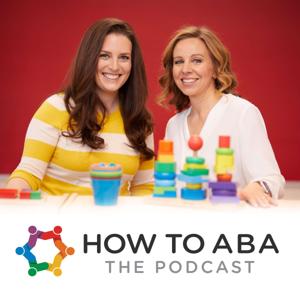
We are Shira and Shayna and we are so excited to bring you our first podcast episode of How to ABA! We are both BCBAs with over twenty years of experience, and as you can imagine, we have created…
Ranked by our users in the last 21 days
1,330 Listeners

626 Listeners

8,891 Listeners
417 Listeners
5,116 Listeners
438 Listeners
164,509 Listeners

25,782 Listeners
1,323 Listeners
15 Listeners

422 Listeners
87 Listeners

19,270 Listeners
28 Listeners
17 Listeners