
Sign up to save your podcasts
Or

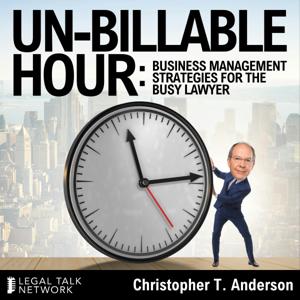


In this episode of the Un-Billable Hour’s Seat at the Table:
The money often shows up later than the work does. Nobody told you that. Practicing law and producing results that help real people with real problems are wonderful things. But you are also a business, and people depend on you, and cash flow matters. Here’s where it gets tough.
So how do you know from looking at the bottom line, how a firm – your firm – is really doing? Is it making money? What percent of revenue should go to payroll or marketing, where are your leaks?
This episode of Seat at the Table features money experts Amira Hasenbush, Brooke Lively, and Joy Lutz as they share insights with Christopher T. Anderson and get into the nitty gritty of running a law firm that not only produces results for clients but also produces profits for the owners.
Hear how a firm can look profitable on paper but still not produce profits. Taxes, expenses, debt, billing “slippage,” and collection slowdowns all add up. Are you seeing the big picture? Cash flow, payroll, unintended outflows, and bookkeeping are all vital to your bottom line. Learn how to train yourself for profit.
Mentioned in This Episode:
Clio Legal Trends Report
Lawpay
ClioCon 2026, Oct. 26-27, 2026
Legal Talk Network Unbillable Hour
…And of course Wimpy!
In this episode, a little about production and a little about you. When you sit down at your desk, are you doing billable legal work – the real work – or are you doing administrative tasks?
Guest Gina Cotner is the founder and CEO of Athena Executive Services, a virtual assistant firm that frees busy professionals from mundane tasks so they can focus on serving clients, solving problems, and growing their business.
If you’ve been told (maybe over and over) that you need to delegate, you’ve probably never been told how. This may be the episode that helps you untangle that problem and finally take that first step.
Cotner shares how she helps attorneys work with assistants and build the trust that opens up space for additional billable hours instead of routine administration. If you’ve been told to delegate but can’t let go, Cotner’s insights learned through years of experience helping busy executives turn over tasks may be what you’ve needed to hear.
In this episode of the Un-Billable Hour’s Seat at the Table: How do you know when a hire isn’t working out (hint: you already know) and then pull the trigger and let them go?
You saw the signs. You knew it was coming. But now it’s time to take action and let an employee go. And if we all know the mantra “hire slow, fire fast,” we also know lawyers don’t always follow that rule. We can be way, way too slow to fire when an employee just isn’t working out.
So how do you know when the time has come? Our panel of legal management and HR pros digs in. As one panelist says, “If you wake up three mornings in a row thinking about somebody who’s not your spouse, they’ve got to go.” You know when someone is taking up too much time and derailing the office. The problem isn’t recognizing the problem, it’s not recognizing that you’ve already recognized the problem.
Have a plan, specific policies, metrics, management consultations, and a process for firing someone before you reach that point. Without clarity, even experienced HR professionals struggle.
Every process should account for your firm’s vulnerability. Labor laws, password management, access to client documents, even physical access to your office with keys or key cards should all be part of the process before the termination discussion. Dig into an episode today that can help your firm prepare for the future!
REFERENCES MENTIONED:
ClioCon 2026, Oct. 26-27, 2026
Legal Talk Network Unbillable Hour
Growing your business starts with you, and your front door is your web presence. The beating heart of your business is your technology. Guest Colleen Joyce is the CEO of the lawyer-client matching platform Lawyer.com and the founder of the Lawyer Growth Summit gathering.
Joyce shares how she started working with lawyers who didn’t know a lot about even their own website and expanded to begin helping attorneys and firms build their brand online and make themselves more accessible to potential clients.
Running a law firm requires marketing, it’s letting the world know who you are and how you can solve problems. But how you market online matters. Every dollar counts, and tracking your spend is vital. Know where you are reaching clients, and where you may need guidance.
If your firm isn’t growing, it’s stuck. Are you changing things up? Are you reinventing yourself and your presentation? What are you doing right, and what could you do better with just a few small tweaks? (Oh yes, AI fits into this, too).
In this episode of the Un-Billable Hour’s Seat at the Table:
First, what is “firm culture?” The personality and backbone of the firm? Is it what happens when the boss isn’t around? Is it what people say about your firm when you’re not in the room? Every firm has a culture, whether you know it or not.
Guests Lori Brown-Simmons, Hannah Hembree Bell, and Ben Hockema are experienced professionals who share their thoughts with host Christopher T. Anderson on building a healthy firm culture.
For a lot of firms, “culture,” is an afterthought, if it’s thought about at all. But every firm develops a culture, either by accident or intentionally. (Intentionally is better). Understanding your firm’s culture, its mission, values, and goals helps everyone work together, collaborate, and even helps your firm from making a hire that may look good on paper but “wasn’t a good fit.”
Do you have the right people in the right seats? Do your clients represent you and your goals? You can be a team with a recognized reputation, or you can be an office with a bunch of lawyers chasing billable hours. An intentional culture is the difference.
Mentioned in This Episode:
Clio
ClioCon 2026, Oct. 26-27, 2026
Legal Talk Network Unbillable Hour
When it comes to your firm’s – and your clients’ – security, AI is changing the game. Cybersecurity isn’t new but how it fits in with AI is.
Guest Nick Martin is a recognized expert and leader in cybersecurity. The cloud, data portals, and connectivity all impact how we treat data and client relationships. It’s complicated. Where’s your data? Who’s backing it up? Who can access it?
Martin is the CEO of cybersecurity firm FileScience. He breaks down the evolution of cybersecurity and secure storage of data, even when there’s a power outage or an online hacking attempt. The game has changed, and both your case and your client’s security are at risk around the clock.
Is your firm living with a false sense of security? Do you understand your security measures? Are you potentially liable for a security breach. You need to know, and you can’t put it off. Don’t miss this episode!
Mentioned in This Episode:
Clio legal solutions
MyCase
Actionstep legal
NetDocuments
iManage
Microsoft SharePoint
Smokeball
Google Threat Intelligence
"Public Officials Separate Workplace and Personal Online Lives. Hackers Don't Care," Wall Street Journal
In this episode of the Un-Billable Hour’s Seat at the Table:
If you’ve done well with your marketing and you’ve delighted clients who are happy to refer new clients, maybe it’s time to hire some additional team members. Host Christopher T. Anderson brings in regular guest Rob Leitner along with HR and management pros Laytoamb Wiggins, Lori Brown-Simmons, and Jeff Levin for a seat at the table to discuss how to approach the hiring process, and the pitfalls to avoid.
Successful hiring starts before you post a help wanted sign. Start by understanding what you want. What does the perfect hire do? What outcomes do you need? If you don’t know what you want, you won’t get it. The best job postings attract candidates you want and weed out mediocre candidates. Don’t waste your time or theirs.
Once you’ve developed an intentional job description, make time during the interview to understand not only what the candidate already knows, but also the candidate’s capacity to learn, grow, and adapt. Developed a “score sheet” that helps you accurately compare candidates consistently. Create an interview plan before you welcome the first candidate – and stick with it.
What about signing bonuses, compensation (yes, be upfront), intangible benefits like flexible schedules and bonuses? These things matter, put them first in your posting. Hiring is tough, and failure comes with costs both financial and cultural. Hear how Christopher and the panel find ways to get the job of hiring for the job done right.
REFERENCES MENTIONED:
“10 Best Human Resources Information Systems (HRIS) of 2025,” Wellness360
Clio
ClioCon 2026, Oct. 26-27, 2026
Legal Talk Network Unbillable Hour
Special thanks to our sponsors Wyzer Staffing and CallRail.
What happens when your firm grows faster than your infrastructure can support? Growing pains. It’s a good problem to have, it means your firm is prospering. But you can’t ignore the issue.
Guest Lori Brown-Simmons is a law firm operations executive and founder of Fractional Firm Advisors, offering fractional COO and CFO leadership to growing firms, helping them scale in an orderly, profitable manner.
She explains how midsize firms often experience what she calls “profit squeeze,” when a growing firm is starting to experience the same issues as bigger firms, but without the tech, the leverage or confidence to raise rates, and the human capital to maintain control, standards, efficiency, and momentum.
Simply attracting more clients might mean your business is “growing,” but it’s not scaling sustainably. As a firm grows up, it’s easy to leak efficiencies by setting rates incorrectly, using outdated workflow, skimping on tech, missing opportunities to outsource through fractional employees and virtual assistants, and even making mistakes with real estate and office space. (And yes, AI fits in here, too. It’s not going away).
Mentioned in This Episode:
Legal Talk Network
In this episode of the Un-Billable Hour’s Seat at the Table:
Take a “seat at the table,” with host Christopher T. Anderson and guests as they share the nuances of customer experience, client satisfaction, and going beyond achieving a desired outcome.
What is “customer satisfaction?” As attorneys, we may think that means handling a case with efficiency and competency. But clients want, maybe need, more. Empathy, guidance, and a process that makes them feel heard and that their attorney cares about their problem.
In this episode of a Seat at the Table, Christopher is joined by experienced and successful attorneys Ruby L. Powers and Amira Hasenbush and legal marketing guru, former attorney, and co-host of the Legal Talk Network’s Lunch Hour Legal Marketing podcast Gyi Tsakalakis.
Hear ideas for delivering a delightful experience. Build trust and connections (and earn repeat business and referrals). Getting a good outcome these days is table stakes, you’re expected to do your job. The A+ in experience is the client who leaves feeling appreciated, recognized, and supported.
Technology is great. AI is changing the game. But no tech replaces a human who doesn’t just pretend to care, but really does care. It doesn’t matter what you think you’re delivering. What matters is what your clients feel you’re delivering.
Mentioned in This Episode:
AI Companion
Querious
Fireflies AI
Hona AI
Case Status AI
“Cues: Master the Secret Language of Charismatic Communication,” by Vanessa Van Edwards
“Unreasonable Hospitality: The Remarkable Power of Giving People More Than They Expect,” by Will Guidara
Clio
ClioCon 2026, Oct. 26-27, 2026
Legal Talk Network Unbillable Hour
Money, profit, probably isn’t the only reason you own a law firm. But it is an important part of it. Guest Ben Hockema is a financial planner who specializes in helping business leaders focus on long-term profits and understand why focusing on, and delivering, profit is so important.
Hockema’s company, Illuminate Wealth Management, works closely with law firms and their owners. Perhaps no one told you owning a law firm is owning a business. But the reality is you can’t effectively serve clients without focusing on your business and making it work. Law school may teach you the law, but no firm functions without profits. It’s important that you build a firm that pays you first.
A profitable firm starts with your mindset. If you’re distracted by financial insecurity, if your firm isn’t delivering the profits that allow you to practice without worry, you aren’t doing your best work. The profit-first mindset isn’t about being selfish, it’s about eliminating distractions.
Hear how Hockema helps law-firm owners reshape their understanding of how a firm works. Generating sustainable profit is a leadership decision, a conscious goal, not simply what’s left over at the end of the month. Consider these vital tips that can change your thinking (and understand the biggest mistake law firms make).
Mentioned in This Episode:
“Profit First,” by Michael Michalowicz
Clio legal software
Legal Talk Network
From the publisher's feed
486 Listeners
14 Listeners
11 Listeners
137 Listeners

22 Listeners

116 Listeners

8 Listeners
9 Listeners

39 Listeners

54 Listeners

35 Listeners
26 Listeners
9 Listeners
34 Listeners

62 Listeners

200 Listeners

639 Listeners

47 Listeners

7,124 Listeners

94 Listeners
36 Listeners
89 Listeners

45 Listeners

51 Listeners

13,066 Listeners

32 Listeners

26,557 Listeners

6 Listeners

116 Listeners
5 Listeners

51 Listeners
7 Listeners