
Sign up to save your podcasts
Or



Based on Podcast App listening data
What if worrying is just your mind’s way of trying to stop you from worrying?
In this episode, I pull apart the myth that positive thinking can cure anxiety. The alarm in the body and the worries in the mind feed each other in a loop that never ends. Childhood separation leaves a mark when you aren’t seen, heard, or protected, and that’s where the alarm takes root. Growing up with a father who had schizophrenia, I learned to escape into worry as my coping strategy. The real healing began when I turned toward the younger version of myself and felt what I’d spent years running from.
You’ll Learn:
Timestamps:
[00:00] Introduction
[03:31] How unmet needs in childhood turn sensitivity into lifelong alarm
[04:04] How the alarm anxiety cycle traps us in worry
[09:32] The deeper separation between mind, body and inner child that fuels anxiety
[10:28] The neuroscience of how alarm in the body fuels anxiety in the mind
[13:50] Reconnecting with the inner child through feeling the body’s alarm
[19:13] Healing anxiety by feeling the body’s alarm and reconnecting with the inner child
Resources Mentioned:
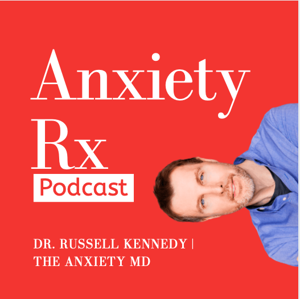
Anxiety Rx by Russell Kennedy | Book or Audiobook
Find more from Russell:
Russell Kennedy | LinkedIn
Russell Kennedy | Facebook
The Anxiety MD | Website
The Anxiety MD | Instagram
The Anxiety MD | YouTube
What if the real scam isn’t the robocall, but the idea that your worth is measured in dollars?
In this episode, the lie that money can replace human connection takes center stage. A medical system built on billing codes pushed me to trade care for speed, and that disconnection fueled my own anxiety. Scams, ads, and constant grabs for attention keep the nervous system on high alert. The “monetization fairy” gets called out for what it is, and simple practices bring us back to intrinsic value and genuine human connection.
You’ll Learn:
Timestamps:
[00:00] Introduction
[07:54] Why medicine became transactional and drove me to burnout
[09:49] Why doctors are losing trust and connection with patients
[13:42] Chasing status and money only makes anxiety worse
[17:09] How scams and scarcity keep the nervous system in alarm
[20:34] Practical ways to replace monetization with genuine connection
[25:49] Your value is not transactional
Find more from Russell:
Russell Kennedy | LinkedIn
Russell Kennedy | Facebook
The Anxiety MD | Website
The Anxiety MD | Instagram
The Anxiety MD | YouTube
What if being “too sensitive” isn’t a flaw but the hidden root of your anxiety?
In this episode, I unpack what it really means to be a highly sensitive person and why that trait so often shows up alongside chronic anxiety. I walk through Dr. Elaine Aron’s DOES framework and how depth of processing, overstimulation, emotional reactivity, and sensing subtleties can both fuel alarm and unlock creativity. You’ll hear how childhood experiences shape sensitivity into either anxiety or resilience, why re-parenting is essential, and how creativity becomes a pathway to healing. I also share practical ways to stop shaming sensitivity, honour it as a gift, and turn it into strength instead of suffering.
You’ll Learn:
Timestamps:
[00:00] Introduction
[02:15] Understanding highly sensitive people and the link to chronic anxiety
[06:39] How emotional exhaustion and people pleasing shape highly sensitive people
[07:32] Harnessing creativity and right-brain healing for highly sensitive people
[11:05] Parenting strategies to support and repair highly sensitive children
[12:15] Reparenting the inner child with the SHOULD framework for healing sensitivity
[15:25] Embracing sensitivity as a source of healing and personal strength
Resources Mentioned:
The Highly Sensitive Person by Dr. Elaine Aron | Book or Audiobook
Find more from Russell:
Russell Kennedy | LinkedIn
Russell Kennedy | Facebook
The Anxiety MD | Website
The Anxiety MD | Instagram
The Anxiety MD | YouTube
Ever pushed yourself to eat clean and work out, hoping it would calm your anxiety, only to feel even worse? Here’s why it happens…
In this episode, I dig into why gut health, exercise, and diets, while helpful, aren’t the cure for chronic anxiety. They can lower the intensity, but they don’t touch the root. The real work is creating safety in your nervous system and reconnecting with the younger version of you that still carries the alarm. I talk about the trap of chasing quick fixes, how hypervigilance keeps us stuck, and why small daily practices of safety can shift everything. By building that foundation, all the other healthy habits finally have a place to stick.
You’ll Learn:
Timestamps:
[00:00] Introduction
[02:59] Why gut health alone won’t heal chronic anxiety
[06:49] Building safety as the real foundation for healing anxiety
[12:31] Why focusing only on gut health misses the deeper work of anxiety healing
[17:10] Healing anxiety by creating safety and reconnecting with the inner child
[20:47] Why safety and inner child connection must come before gut health and exercise in healing anxiety
[23:49] Healing anxiety by reconnecting your adult and child self through safety
Find more from Russell:
Russell Kennedy | LinkedIn
Russell Kennedy | Facebook
The Anxiety MD | Website
The Anxiety MD | Instagram
The Anxiety MD | YouTube
What if burnout isn’t failure, but your body’s protective shutdown?
In this episode, I open up about burning out as a doctor and why it went far beyond just being tired. Burnout showed up as a split between my mind pushing forward and the younger part of me saying, “I can’t do this anymore.” The mask of “Dr. Russell Kennedy” gave me income, status, and validation, but it also crushed my sense of self.
I get into how burnout differs from stress and depression, and why rest only scratches the surface before it pulls you back under. Healing started when I finally listened to the alarm in my body, reconnected with the child in me, and practiced things like yoga nidra, breath work, and inner child work.
You’ll Learn:
Timestamps:
[00:00] Introduction
[01:17] How chasing external validation led to burnout and identity loss
[06:39] The cost of tying identity to caregiving and medicine
[10:10] When identity and overwork lead to burnout and breaking points
[14:25] The difference between depression and burnout as self-betrayal
[16:22] How people pleasing and endless demands drive burnout
[17:47] Healing burnout by reconnecting with the younger self and body
Find more from Russell:
Russell Kennedy | LinkedIn
Russell Kennedy | Facebook
The Anxiety MD | Website
The Anxiety MD | Instagram
The Anxiety MD | YouTube
What if the very things that feel like they’re protecting you are actually keeping you stuck?
In this episode, I break down the five unconscious strategies that block healing from anxiety. I call it MADDS: medication, addiction, distraction, dissociation, and suppression. Each of these starts as a survival tool, but over time they numb us, disconnect us from our bodies, and cut us off from the younger self that needs our attention. I get real about the role medication plays, why worry itself can become addictive, and how dissociation becomes a default setting for many of us. Most importantly, I show how awareness, acceptance, and compassion can start to break the cycle so we can finally move toward real healing instead of just coping.
You’ll Learn:
Timestamps:
[00:00] Introduction
[03:30] The role and limits of medication in healing anxiety
[09:17] How addictions and worry become coping mechanisms for anxiety
[13:00] How distraction masks anxiety and deepens disconnection
[14:58] How dissociation protects us from pain but blocks healing
[17:10] How suppression of emotions leads to disconnection and illness
[19:11] How awareness and self-compassion break the cycle of anxiety coping strategies
Find more from Russell:
Russell Kennedy | LinkedIn
Russell Kennedy | Facebook
The Anxiety MD | Website
The Anxiety MD | Instagram
The Anxiety MD | YouTube
Why does manifestation backfire when you need it most?
In this episode, I look at why affirmations and vision boards don’t land when your body is stuck in protection and alarm. That state makes it almost impossible to think positively, no matter how many times you repeat the words. The nervous system drives what you’re able to manifest, and when it’s wired for survival, positivity just slides off while negativity sticks. Real tools like hypno meditations, visualization, and the physiological sigh can shift the body out of alarm so the mind can believe what it’s saying. That’s when manifestation stops feeling fake and starts working.
You’ll Learn:
Timestamps:
[00:00] Introduction
[02:02] Living in self-protection blocks manifestation. Focus on connection instead.
[05:32] Rewiring the unconscious mind with visualization and hypno meditations
[08:17] The science behind the chronic alarm system and why it blocks manifestation and reinforces negativity
[11:04] How to align your body and mind before working on manifestation
[14:48] Using somatic practices and inner child work to make manifestation real
[16:49] Healing anxiety by reconnecting with love and creating a positive echo chamber
Resources Mentioned:
MBRX Program by Russell Kennedy | Website
Anxiety Rx by Russell Kennedy | Book or Audiobook
Find more from Russell:
Russell Kennedy | LinkedIn
Russell Kennedy | Facebook
The Anxiety MD | Website
The Anxiety MD | Instagram
The Anxiety MD | YouTube
In this episode, I cover why chaos feels so familiar and why we keep getting pulled into it even when it makes us anxious.
Today’s uncertainty from news, politics, money issues, AI, and climate change mirror the unpredictability many of us grew up with. That early wiring can make us attracted to chaos, even as it increases our alarm. The pull of distraction, overstimulation, and loneliness keep the body’s alarm system activated… but what helps? Reconnecting with the younger version of ourselves who didn’t feel safe, meeting their needs now, and finding ways to calm our alarm from the inside, no matter what’s happening in the world — this is a good place to start.
You’ll Learn:
Timestamps:
[00:00] Introduction
[02:00] Why uncertainty fuels anxiety by mirroring childhood chaos
[07:36] How childhood scarcity shapes money anxiety and safety beliefs
[09:41] How AI fatigue and overstimulation trigger old childhood fears
[12:19] How healing loneliness through self-connection reduces anxiety
[15:11] How climate grief and ancestral trauma mirror childhood powerlessness
[18:43] How connecting with your inner child creates peace in a chaotic world
Resources Mentioned:
Anxiety Rx by Russell Kennedy | Book or Audiobook
Find more from Russell:
Russell Kennedy | LinkedIn
Russell Kennedy | Facebook
The Anxiety MD | Website
The Anxiety MD | Instagram
The Anxiety MD | YouTube
In this episode, I unpack why your TikTok anxiety hacks might actually be keeping you stuck.
I get into the good, the bad, and the harmful when it comes to viral mental health content, like anxiety dance trends, “cortisol cocktails,” and trauma confessionals set to sad songs. I talk about why these things can help in the short term, but also why they fall short if you’re serious about actually healing your anxiety. I explain how most of these trends miss the deeper point: your anxiety isn’t just in your head; it lives in your body. And if you’re only reaching for quick fixes, you’re probably just kicking the anxiety can down the road.
You’ll Learn:
Timestamps:
[00:00] Introduction
[02:44] The TikTok anxiety song trend and its impact on mental health
[04:48] The TikTok anxiety dance trend and its benefits and drawbacks
[07:58] The "It’s just anxiety" TikTok trend and how it impacts coping and healing
[10:44] DIY sensory hacks for anxiety
[14:14] Therapeutic life hack trends and why comfort is not the same as healing
[15:39] Misinformation and misuse of therapy language on TikTok
Resources Mentioned:
MBRX Program by Russell Kennedy | Website
Find more from Russell:
Russell Kennedy | LinkedIn
Russell Kennedy | Facebook
The Anxiety MD | Website
The Anxiety MD | Instagram
The Anxiety MD | YouTube
What if someone can make you feel something, and the real problem is pretending they can’t?
In this episode, I talk about a phrase I used to hear all the time: “Nobody can make you feel anything.” I break down why I no longer believe that’s true, and what actually happens in the brain and body when we’re triggered. I get into how emotional responses are often reflexive, how easily anxiety hijacks intense feelings, and why staying grounded in the body, not the mind, is what really gives us choice.
You’ll Learn:
Timestamps:
[00:00] Introduction
[11:31] Why intense emotions often get mistaken for anxiety and feed the victim loop
[14:26] How to break the fear habit by practicing emotional awareness and response
[17:01] Why intense emotions shut down your rational brain and how to stay in control
[20:37] How to stay grounded and choose your response when you're triggered
[21:54] How to train your body to stay calm during emotional overwhelm
Find more from Russell:
Russell Kennedy | LinkedIn
Russell Kennedy | Facebook
The Anxiety MD | Website
The Anxiety MD | Instagram
The Anxiety MD | YouTube
From the publisher's feed
Ranked by our users in the last 21 days

2,591 Listeners
11,782 Listeners
12,708 Listeners
2,515 Listeners

8,502 Listeners

3,605 Listeners
4,096 Listeners

7,997 Listeners
27,851 Listeners
368 Listeners

29,187 Listeners

2,024 Listeners
1,060 Listeners

19,271 Listeners
429 Listeners