Coaching for Leaders

Coaching for Leaders

By Dave StachowiakBusinessCareersManagement
Download on the App Store
  • Ranking

    7th

    on Management

  • Favorites

    3,379

    Followers

  • Typical duration

    38 min

    per episode

  • If it hooks

    47%

    finish an episode

Based on Podcast App listening data

Coaching for Leaders episodes

  • 630: Better Ways to Lead Brainstorming, with Jeremy Utley
    Jeremy Utley: Ideaflow
    Jeremy Utley is the Director of Executive Education at the Stanford d.school, and an Adjunct Professor at Stanford’s School of Engineering, where he has earned multiple favorite professor distinctions from graduate programs. He co-teaches two celebrated courses, Leading Disruptive Innovation (d.leadership) and LaunchPad, which focus on creating real-world impact with the tools of design & innovation.
    He is also on the teaching teams of d.org, an organizational design course, and Transformative Design, a course that turns the tools of design onto graduate students’ lives. One of the most prodigious collaborators at the d.school, Jeremy has taught alongside the likes of Lecrae, Dan Ariely, Laszlo Bock, and Greg McKeown. He is the author along with Perry Klebahn of Ideaflow: The Only Business Metric That Matters.
    Brainstorming sessions often emerge to address a problem requiring new ideas or innovation. However, the way many of us approach brainstorming vastly limits what’s possible for our teams and organizations. In this conversation, Jeremy and I discuss where leaders go wrong and some of the most helpful mindsets and tactics to do better.
    Key Points
    We tend to like cognitive closure. That often stops us from moving forward more substantially during brainstorming.
    The Idea Ratio shows that 2000 ideas are needed for every one idea that goes to market. Most teams and organizations vastly underestimate this.
    Set the expectation that brainstorming is a process, not a single event. That will help you surface vastly more useful ideas.
    Gather initial suggestions before a session to avoid favoring extroverts and early anchoring on what’s said initially. A useful way to make this is ask the language, “How might we…?”
    Warm-up exercises can substantially help put team members in the right mindset for creativity, especially for those with busy schedules moving between contexts.
    Resources Mentioned
    Ideaflow: The Only Business Metric That Matters by Jeremy Utley and Perry Klebahn
    Jeremy Utley's website
    Interview Notes
    Download my interview notes in PDF format (free membership required).
    Related Episodes
    How to Be Present, with Dan O’Connor (episode 399)
    The Way to Nurture New Ideas, with Safi Bahcall (episode 418)
    How to Build an Invincible Company, with Alex Osterwalder (episode 470)
    Discover More
    Activate your free membership for full access to the entire library of interviews since 2011, searchable by topic. To accelerate your learning, uncover more inside Coaching for Leaders Plus.

    40 min
  • 629: How to Grow Your Business, with Donald Miller
    Donald Miller: How to Grow Your Small Business
    Donald Miller is The New York Times bestselling author of Building a StoryBrand and Business Made Simple. He has helped thousands of businesses grow with his powerful framework. In 2010, Don started the business he’d always dreamed of. Although his business was doing ok, he quickly realized it wasn’t what he thought it would be. Everything depended on him, and he was drowning in the mundane day-to-day.
    For years, his business struggled to produce dependable, predictable results. Over years of fits and false starts, Don grew his business from nothing to nearly $20 million. In the end, he realized there were six key parts of a business, and if they were managed well, the business would fly far and fast. He’s captured those lessons in his book How to Grow Your Small Business: A 6-Step Plan to Help Your Business Take Off*.
    A huge percentage of businesses fail before they have any significant success. One key trigger is failure to market the business effectively. In this conversation Donald and I discuss how to power the marketing engine of your business by using the key elements of the StoryBrand framework.
    Key Points
    Most small businesses think more about how their marketing will look rather than what their marketing will say.
    People are attracted to what helps them survive and thrive…and it helps to communicate those message simply.
    People buy products and services to solve problems, not because they care that much about the business.
    The customer is the hero. Never play the hero; always play the guide.
    People who are insecure talk about themselves. People who are confident talk about others. Talk about yourself only in the context of how it helps the customer.
    Resources Mentioned
    How to Grow Your Small Business: A 6-Step Plan to Help Your Business Take Off* by Donald Miller
    Interview Notes
    Download my interview notes in PDF format (free membership required).
    Related Episodes
    Serve Others Through Marketing, with Seth Godin (episode 381)
    How Leaders Build, with Guy Raz (episode 491)
    How to Quit Bad Stuff Faster, with Annie Duke (episode 607)
    Discover More
    Activate your free membership for full access to the entire library of interviews since 2011, searchable by topic. To accelerate your learning, uncover more inside Coaching for Leaders Plus.
    40 min
  • 628: How to Read an Income Statement, with Brian Feroldi
    Brian Feroldi: Financial Statements Explained Simply
    Brian Feroldi is a financial educator, YouTuber, and author. He has been intensely interested in money, personal finance, and investing ever since he graduated from college. His mission statement is to spread financial wellness. He loves to help other people do better with their money, especially their investments.
    Brian has written more than 3,000 articles on stocks, investing, and personal finance for The Motley Fool. In 2022, Brian’s book Why Does The Stock Market Go Up? was published. The mission of the book is to demystify the stock market. It was written to explain how the market works in plain English. He's also the co-creator of the course, Financial Statements Explained Simply.
    Most of us are not accountants, but whether you work in a small business, a large corporation, a non-profit, or a government agency, the numbers define what resources that we have. Being able to understand and speak the language of financial statements is essential for leaders who want to influence decisions. In this episode, Brian and I review how to understand and read one of the most important reports for any organization: the income statement.
    Key Points
    A few hours of focus on the fundamentals of financial statement can provide you understanding and influence throughout your career.
    An income statement (also called a profit and loss statement or P&L) shows revenue, expenses, and profit over a period of time. It’s similar to your personal budget.
    Revenue minus cost of goods sold is gross profit.
    Subtracting operation expenses from gross profit give you an organization’s operating income or EBIT (earnings before income and taxes).
    Depreciation spreads out the cost of tangible assets (equipment, vehicles, buildings) their useful lives. Amortization does the same thing for intangible assets (loans, copyrights, patents).
    The “bottom line” is literally the bottom line at the end, either net income or net loss.
    Resources Mentioned
    Brian Feroldi’s newsletter
    Financial Statements Explained Simply (course)
    Related Episodes
    Improve Your Financial Intelligence, with Joe Knight (episode 244)
    How to Approach Corporate Budgeting, with Jody Wodrich (episode 355)
    Dumb Things Smart People Do With Money, with Jill Schlesinger (episode 396)
    Discover More
    Activate your free membership for full access to the entire library of interviews since 2011, searchable by topic. To accelerate your learning, uncover more inside Coaching for Leaders Plus.
    39 min
  • 627: How to Influence Through Your Questions, with Kwame Christian
    Kwame Christian: American Negotiation Institute
    Kwame Christian is a best-selling author, business lawyer, and CEO of the American Negotiation Institute. Following the viral success of his TED talk, Kwame released his best-seller Finding Confidence in Conflict: How to Negotiate Anything and Live Your Best Life back in 2018. He’s also a regular Contributor for Forbes and the host of the number one negotiation podcast in the world, Negotiate Anything, which currently has over 5 million downloads worldwide.
    Under his leadership, the American Negotiation Institute has coached and trained several Fortune 500 companies on applying the fundamentals of negotiation to corporate success. He's also the author of the book How to Have Difficult Conversations About Race and the creator of Negotiable, an Online Community to Learn to Negotiate Anything.
    We often think about questions as a way to discover more — but have you also considered how your questions might influence? Kwame Christian and I discuss three key steps in order to persuade better through your intentional questions.
    Key Points
    Rapport questions help you make a connection with the other party and establish a baseline for how they communicate.
    A helpful place to begin on rapport is noticing something that you genuinely admire or are curious about in the other party.
    When gaining information, start broadly and then pull the thread when the other party leads you down a path. Beware that your role/position can cause people to say more than they otherwise might.
    “What would it take?” is often a helpful way to illuminate a path forward.
    Even if you ultimately are more directive, laying the foundation through questions allows the other party to be heard and understood.
    Interview Notes
    Download my interview notes in PDF format (free membership required).
    Related Episodes
    These Coaching Questions Get Results, with Michael Bungay Stanier (episode 237)
    How to Ask Better Questions, with David Marquet (episode 454)
    The Way Out of Major Conflict, with Amanda Ripley (episode 529)
    Discover More
    Activate your free membership for full access to the entire library of interviews since 2011, searchable by topic. To accelerate your learning, uncover more inside Coaching for Leaders Plus.

    40 min
  • 626: The Starting Point for Repairing Trust, with Henry Cloud
    Henry Cloud: Trust
    Henry Cloud is an acclaimed leadership expert, clinical psychologist and a New York Times bestselling author. His 45 books, including the iconic Boundaries, have sold nearly 20 million copies worldwide. He has an extensive executive coaching background and experience as a leadership consultant, devoting the majority of his time working with CEOs, leadership teams, and executives to improve performance, leadership skills, and culture.
    Henry's work has been featured and reviewed by The New York Times, Wall Street Journal, Boston Globe, Publisher’s Weekly, Los Angeles Times, and many other publications. Success Magazine named him in the top 25 most influential leaders in personal growth and development, alongside Oprah, Brené Brown, Seth Godin and others. He is a frequent contributor to CNN, Fox News Channel, and other national media outlets. Henry is the author of Trust: Knowing When to Give It, When to Withhold It, How to Earn It, and How to Fix It When It Gets Broken*.
    When someone betrays your trust, what do you do next? In this conversation, Henry and I explore the five factors of trust and the importance of each one of them in our relationships. Then, we look at the starting point for rebuilding trust after a betrayal, beginning with you and your own support network.
    Key Points
    Five factors are key for trust: understanding, motive, ability, character, and track record.
    Repairing trust is not clean or orderly. The first step is about you, not the person who betrayed you.
    Leaders who have a support network already in place are better able to take a pause and work through emotion and anger.
    An authentic apology from someone should articulate the event itself, demonstrate their empathy for how the event felt to you, and appreciate the consequences of their actions.
    Forgiving someone does not mean you trust them.
    Resources Mentioned
    Trust: Knowing When to Give It, When to Withhold It, How to Earn It, and How to Fix It When It Gets Broken* by Henry Cloud
    Interview Notes
    Download my interview notes in PDF format (free membership required).
    Related Episodes
    The Art of Constructing Apologies, with Sandra Sucher (episode 535)
    The Path Towards Trusting Relationships, with Edgar Schein and Peter Schein (episode 539)
    How to Approach a Reorg, with Claire Hughes Johnson (episode 621)
    Discover More
    Activate your free membership for full access to the entire library of interviews since 2011, searchable by topic. To accelerate your learning, uncover more inside Coaching for Leaders Plus.

    39 min
  • 625: How to Release Some Control, with Morra Aarons-Mele
    Morra Aarons-Mele: The Anxious Achiever
    Morra Aarons-Mele is the host of The Anxious Achiever, a top-10 management podcast that helps people rethink the relationship between their mental health and their leadership. Morra founded Women Online and The Mission List, an award-winning digital-consulting firm and influencer marketing company dedicated to social change, in 2010 and sold her business in 2021.
    She helped Hillary Clinton log on for her first internet chat and has launched digital campaigns for President Obama, Malala Yousafzai, the United Nations, the CDC, and many other leading figures and organizations. She is the author of The Anxious Achiever: Turn Your Biggest Fears into Your Leadership Superpower*.
    In this conversation, Morra and I discuss some key tactics that help leaders release just a bit of control. Since control is often driven by fear, we can let go of some control by making small shifts in our practices, awareness, and planning. We also explore how to set boundaries that will help us lead in ways that are more helpful to others — and ourselves.
    Key Points
    Control is often caused by fear. Optimism can be a bit of an antidote to it.
    Adopt a practice mindset by making small shifts to endure uncomfortable things.
    Practice open awareness throughs surrender; the opposite of controlling and micromanaging.
    Get clear on scheduling, deadlines, longer term career goals. Those provide a healthy illusion of control.
    Create a distinction between having an emotion and being the emotion.
    Begin setting boundaries by noticing when you are moving from comfort to discomfort.
    Resources Mentioned
    The Anxious Achiever: Turn Your Biggest Fears into Your Leadership Superpower* by Morra Aarons-Mele
    The Anxious Achiever podcast
    Interview Notes
    Download my interview notes in PDF format (free membership required).
    Related Episodes
    Four Steps to Get Unstuck and Embrace Change, with Susan David (episode 297)
    Effective Delegation of Authority, with Hassan Osman (episode 413)
    Align Your Calendar to What Matters, with Nir Eyal (episode 431)
    Discover More
    Activate your free membership for full access to the entire library of interviews since 2011, searchable by topic. To accelerate your learning, uncover more inside Coaching for Leaders Plus.
    37 min
  • 624: How to Make Smarter Investments in Your Learning, with Jill Schlesinger
    Jill Schlesinger: The Great Money Reset
    Jill Schlesinger is an Emmy Award winning Business Analyst for CBS News. She appears on CBS radio and television stations nationwide covering the economy, markets, investing and anything else with a dollar sign. Jill is the host of the Jill on Money podcast and of the nationally syndicated radio show, Jill on Money, which won the 2018 and 2021 Gracie Award for Best National Talk Show.
    Jill is a frequent speaker on a variety of topics, including macroeconomic, market and demographic trends; workplace issues for women and LGBT employees in financial services; and how to create authentic branding. She is the author of The Dumb Things Smart People Do With Their Money and her most recent book, The Great Money Reset: Change Your Work, Change Your Wealth, Change Your Life*.
    In this conversation, Jill and I examine the decision-making process that many of us use when considering advanced degrees or certifications. We discuss some of the common missteps that people make in educational investments and identity three key steps that can help us do better. Plus, we encourage leaders to get clear on their goals and outcomes and alternative ways to fund major educational investments.
    Key Points
    Every situation is different. Examining your situation is more helpful than relying on an assumption that all educational investments are wise.
    Identify the precise skills, knowledge, or credential you hope to gain by going back to school and how your career with benefit.
    Remember that the cost of tuition does not always reflect the full cost such as lost salary or time out of the workforce.
    Explore cheaper options if they still archive your overall objectives. A cheaper degree from a less prestigious university may meet 95% of the outcomes you want.
    Consider how your employer may support your educational investments. Some companies will consider sponsoring some of your educational expenses if you make a formal request.
    Resources Mentioned
    The Great Money Reset: Change Your Work, Change Your Wealth, Change Your Life* by Jill Schlesinger
    Interview Notes
    Download my interview notes in PDF format (free membership required).
    Related Episodes
    Four Rules to Get Control of Your Money, with Jesse Mecham (episode 356)
    Dumb Things Smart People Do With Money, with Jill Schlesinger (episode 396)
    The Way Into Better Conversations About Wealth, with Kristin Keffeler (episode 606)
    Seven Steps to Landing Professional Development Funding (MemberCast)
    Discover More
    Activate your free membership for full access to the entire library of interviews since 2011, searchable by topic. To accelerate your learning, uncover more inside Coaching for Leaders Plus.
    41 min
  • 623: How to Align an Employee to a Role, with Jonathan Raymond
    Jonathan Raymond: Good Authority
    Jonathan spent 20 years building careers in business development and personal growth before realizing he could have the best of both worlds by starting his own company. Now, he uses those skills to advise CEOs and organizational leaders on how to create a people-first culture that drives results.
    As the founder of Refound, his goal is to provide clients with a partner they can trust and programs that gives managers an experience of how they can make work a better place, one conversation at a time. He’s the author of the book Good Authority: How to Become the Leader Your Team Is Waiting For*. He's also the creator of the Accountability Dial, used daily by many of our members and listeners to open up more healthy dialogue inside of their teams and organizations.
    It may seem like you’ve had the same conversation about 17 times, but again you have an employee asking you, “Wait? Is this thing we’re talking about supposed to be part of my job?” You again clarify their role, but you’re also thinking in the back of your mind, “Really? We’re having this conversation again?” In this episode, Jonathan and I discuss four questions to ask of yourself — and your employee — to align them with the role.
    Key Points
    Mangers often complain that employees do not have clarity on their roles.
    Separate the role from the person. Depersonalizing the role actually helps you to have a better alignment conversation.
    What do you want employees to be owning, thinking about, and worrying about? Those are windows into the Soul of the Role.
    There are three steps to role alignment: defining the role, aligning the role with the employee, and sustaining the dialogue about the role.
    Four questions that will help you define a role:
    What is the purpose of this role?
    What makes someone successful in this role?
    What are three priorities for this role in the next 90 days?
    Where are their decision-making rights?
    Resources Mentioned
    Refound Academy: Good Authority, Good Alignment, and Good Accountability courses
    Good Authority: How to Become the Leader Your Team Is Waiting For* by Jonathan Raymond
    Interview Notes
    Download my interview notes in PDF format (free membership required).
    Related Episodes
    Effective Delegation of Authority, with Hassan Osman (episode 413)
    How to Balance Care and Accountability When Leading Remotely, with Jonathan Raymond (episode 464)
    How to Lead and Retain High Performers, with Ruth Gotian (episode 567)
    Discover More
    Activate your free membership for full access to the entire library of interviews since 2011, searchable by topic. To accelerate your learning, uncover more inside Coaching for Leaders Plus.

    40 min
  • How to Get Traction With a New Habit (5 of 5)
    Lesson 5: Calibrate With Stakeholders
    Feedback from stakeholders verifies traction on your new habit. Here’s how to get consistent, fast feedback to ensure you’re on track.
    An Example Question

    Twice a month, I say to either an employee or my boss: “I’m working on asking better questions. What’s one question I should ask you the next time we talk?”

    Academy Applications Close Friday, March 24th
    The Academy is an intimate cohort of participant leaders who work personally with me to accelerate their leadership development and organizational results. Discover more and submit your application by Friday, March 24th.
    Resources

    Feedforward: Coaching For Behavioral Change by Marshall Goldsmith

    Related Episodes

    Three Steps To Soliciting Feedback, with Tom Henschel (episode 107)
    How to Get Way Better at Accepting Feedback, with Sheila Heen (episode 143)

    Discover More
    Activate your free membership for full access to the entire library of interviews since 2011, searchable by topic.
    10 min
  • How to Get Traction With a New Habit (4 of 5)
    Lesson 4: Keep Yourself Motivated
    Indicators can help keep you determine if you’re on the right track. This lesson helps you create these indicators that are critical for your success.
    Examples of Indicators

    I’m starting to hear things I wasn’t hearing before.
    I’m getting fewer questions asking for my input or clarification.
    I’m noticing employees taking the first step to solve a problem, before coming to me.

    Academy Applications Close Friday, March 24th
    The Academy is an intimate cohort of participant leaders who work personally with me to accelerate their leadership development and organizational results. Discover more and submit your application by Friday, March 24th.
    Discover More
    Activate your free membership for full access to the entire library of interviews since 2011, searchable by topic.
    7 min

About Coaching for Leaders

From the publisher's feed

Leaders aren’t born; they’re made. Many leaders reach points in their careers where what worked yesterday doesn’t work today. This Monday show helps leaders thrive at these key inflection points.…

Best of Coaching for Leaders

Ranked by our users in the last 21 days

More shows like Coaching for Leaders

The Look & Sound of Leadership by Essential Communications - Tom Henschel

The Look & Sound of Leadership

1,165 Listeners

The Learning Leader Show With Ryan Hawk by Ryan Hawk

The Learning Leader Show With Ryan Hawk

1,344 Listeners

Teaching in Higher Ed by Bonni Stachowiak

Teaching in Higher Ed

375 Listeners

HBR IdeaCast by Harvard Business Review

HBR IdeaCast

149 Listeners

Big Swings Only by Kwame Christian Esq., M.A.

Big Swings Only

711 Listeners

How to Be Awesome at Your Job by How to be Awesome at Your Job

How to Be Awesome at Your Job

1,031 Listeners

Worklife with Molly Graham by TED

Worklife with Molly Graham

9,071 Listeners

Speak Up: Develop Your Executive Presence & Leadership Communication Style by Laura Camacho

Speak Up: Develop Your Executive Presence & Leadership Communication Style

96 Listeners

Maxwell Leadership Executive Podcast by John Maxwell

Maxwell Leadership Executive Podcast

376 Listeners

Inside the Strategy Room by McKinsey & Company

Inside the Strategy Room

176 Listeners

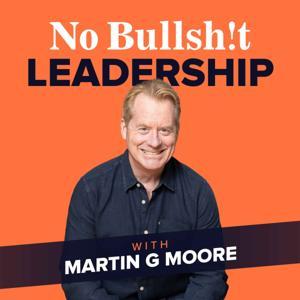
No Bullsh!t Leadership by Martin G Moore

No Bullsh!t Leadership

126 Listeners

The Anxious Achiever by Morra Aarons-Mele

The Anxious Achiever

565 Listeners

Think Fast Talk Smart: Communication Techniques by Matt Abrahams, Think Fast Talk Smart

Think Fast Talk Smart: Communication Techniques

817 Listeners

A Bit of Optimism by Simon Sinek

A Bit of Optimism

2,211 Listeners

Coaching Real Leaders by Muriel Wilkins

Coaching Real Leaders

670 Listeners

HBR On Leadership by Harvard Business Review

HBR On Leadership

156 Listeners