
Sign up to save your podcasts
Or




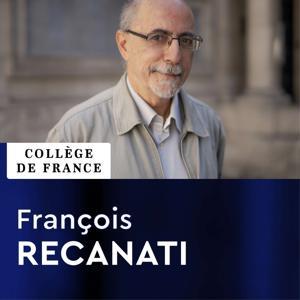
François Recanati
Philosophie du langage et de l'esprit
Collège de France
Année 2023-2024
Colloque - Indexical Dynamics : Content-Bearers and Indexicality
Colloque organisé par François Recanati, Professeur du Collège de France, chaire Philosophie du langage et de l'esprit
Intervenant(s)
Tadeusz Ciecierski, University of Warsaw
One potential conservative reaction to the concept of indexicality of content involves a theory that treats indexicality as a property inherent to content-bearers. While this view aligns intuitively with linguistic cases, as indexicality is commonly seen as a property of expressions, it requires further elucidation when applied to intentional (mental) states as content-bearers. In this paper, I aim to present a theory that elucidates the indexicality of attitudes and other mental states by examining the properties of the bearers or vehicles of content.
The theory I shall present departs from an account of indexicality rooted in Frege's philosophy, specifically a hybrid expression view (cf. Frege, 1956). Various versions of this view (cf. Künne, 1992; Künne, 2010; Textor, 2007, 2015; Kripke, 2008; Penco, 2013; Ciecierski, 2019) share the common feature of conceiving content-bearers as complex objects. These objects, in addition to narrowly conceived components (linguistic expressions in the case of utterances or mental representations/forms in the case of mental states), consist of contextual elements such as the speaker, time of utterance, or place of utterance. Recognizing the differences in these content-bearers allows for the expression of a single standard and non-indexical content through appropriately contextually coordinated bearers, while different non-indexical contents are expressible by uncoordinated bearers. One potential advantage of this theory is its uniform treatment of linguistic and mental indexicality.
However, the theory is not immune to objections (cf. Perry, 1977, 491; Kaplan, 1989, 538). A notable challenge arises in explaining the intuition that an individual who loses track of time, like Rip van Winkle, shares the same thought when considering that today is sunny (on a day d in 1789) and when thinking that yesterday was sunny (on a day d' in 1800). One response to this challenge (cf. Tichy, 1986, 40; Textor, 2011, 168) suggests that a person who loses track of time fails to accurately capture the content of the thought that yesterday was sunny (on a day d' in 1800). While successful in addressing the challenge, this response rejects the initial intuition entirely and contradicts the idea of the transparency of mental content.
To address this problem, I propose the internalistic version of the hybrid expression view of indexicality. While the standard hybrid expression view adopts an externalistic perspective, claiming that a hybrid expression (content-bearer) consists of a vehicle and an aspect of the relevant externally existing context of utterance (Externalistic Hybridity Claim), the internalistic version posits that a hybrid expression consists of a vehicle and an aspect of the relevant mental representation of a possible context of utterance (Internalistic Hybridity Claim). Accepting Internalistic Hybridity allows for a nuanced treatment of cases where individuals are "lost in time." For instance, Rip van Winkle, while entertaining the thought that yesterday was sunny, grasps the content of the hybrid representation consisting of a vehicle (the mental counterpart of "yesterday") and the representation of the time of utterance corresponding to d+1 1789. Consequently, he fails to grasp the content that it was sunny on d'-1 1800, but he apprehends a different yet related content. His mistake in content attribution is a result of a factual error—selecting the wrong context as actual. This analysis aligns with the intuitive transparency of mental content: Rip van Winkle grasps the appropriate content and maintains a disposition to differentiate between it and the content expressed had the time of utterance been located on a specific day in 1800.
After presenting the view, in the final sections of the paper, I will argue that Internalistic Hybridity is consistent with direct reference.
François Recanati
Philosophie du langage et de l'esprit
Collège de France
Année 2023-2024
Colloque - Indexical Dynamics : Knowing How to Keep Track of Particulars
Colloque organisé par François Recanati, Professeur du Collège de France, chaire Philosophie du langage et de l'esprit
Intervenant(s)
Taku Uchiyama, Georg-August-University, Göttingen
We often do the same thing by doing different things, while we also do different things by doing the same thing. The former is the case when we think of a particular object (place, time, people, etc.) while we move on from one context to another. For example, to think of a particular day d as time passes, we need to think of d differently, i.e., as tomorrow, today, and yesterday. Despite those differences at a local level, the thought remains the same because it depends on the same ability to keep track of d over time (Evans 1981). How can such a cognitive capacity be best understood? On the functionalist's view, it can be understood as a disposition to interact with things in ways appropriate for changing contexts. However, such an externalist's approach fails to capture the content of thoughts at issue, which is supposed to be essentially indexical. In contrast, the internalist's view does respect the content. Still, it fails to account for its indexical nature because such an account either leads to an infinite regress or amounts to be circular. This paper aims to provide a hybrid view. The view is basically internalistic because it reflects the content of indexical thoughts. At the same time, it appeals to the functional and dispositional notion of ability. The resulting view adequately characterizes the ability that underlies the indexical content of thoughts.
For that aim, I first examine the externalist's approach to the ability and determine its limitations. Drawing on Perry (1986), I argue that the approach can only justify ascribing perspectival contents to the subject, not indexical ones. Second, I turn to the internalist's approach and illustrate its problem as a dilemma that intellectualists also face when they specify knowledge-how as propositional knowledge. The dilemma has the same source: the paradox of self-reference: the problem of accommodating a viewpoint into the picture observed from the very viewpoint. To overcome this problem, one needs some special representational means that represents itself without objectifying itself. So, I finally appeal to the notion of a hybrid proper name developed by Künne (1992) and Kripke (2008). According to them, indexicals constitute proper names together with contextual constituents that serve as self- referring designations. Given this idea, the ability to keep track of things amounts to the ability to apply them as a (part of) hybrid proper name. As such, it provides perspectival thoughts with indexical contents without causing the dilemma, hence the ability that can account for the indexical content of thoughts.
François Recanati
Philosophie du langage et de l'esprit
Collège de France
Année 2023-2024
Colloque - Indexical Dynamics : Dynamic Content and the Prospects for a Three-level Account of Content
Colloque organisé par François Recanati, Professeur du Collège de France, chaire Philosophie du langage et de l'esprit
Intervenant(s)
Bernardo Marques, ENS de Paris
In recent decades, a compelling factor contributing to the popularity of referentialist accounts lies in their apparent ability to reconcile their main tenets with Frege's original insights about cognitive significance. To achieve this integration, numerous referential accounts have embraced a two-level understanding of content, exemplified by Perry's articulation of a division between 'reflexive' and 'referential' content. (Kaplan, 1978; Perry, 1977; Recanati, 1993)
The primary challenge faced by these accounts is commonly known as the 'cognitive dynamics' problem (Evans, 1981; Kaplan, 1989). At its core, this challenge involves the task of elucidating how an individual can maintain a propositional attitude amidst changes in spatial or temporal locations, all the while employing distinct indexical terms (Prosser, 2005). Two-dimensional approaches, as advocated by Kaplan, Recanati and Perry, appear to falter in the face of this challenge, as they contend that each indexical term possesses a distinct character, and this character, in turn, determines the psychological role of thoughts and is equated with the mode of presentation. (Prosser, 2019) This has convinced many theorists that a solution to the challenge of cognitive dynamics must individuate a singular mode of presentation in a way that does not dependent on a particular indexical term.
Throughout my paper, my goal is to address this difficulty through the distinction of three levels of content for any utterance. I posit the hypothesis that an additional level of content can resolve certain issues for which a two-level account seems insufficient. I support this claim with two categories of motivations — historical and explanatory. Historically, I draw attention to the notable resemblance between the two-level framework proposed by Perry, Kaplan, and Recanati and the three-level model pioneered by Peirce. Peirce's three-level account distinguishes an immediate, a dynamic, and a final interpretant (Atkin, 2008). This leads me to establish a parallel between Peirce's immediate and final interpretant and Perry's reflexive and referential content, respectively. Additionally, I also notice the absence in Perry's framework of an equivalent to Peirce's dynamic interpretant.
In this paper, I argue that Peirce's notion of dynamic interpretant offers a compelling starting point for addressing the problem of cognitive dynamics within a referentialist framework. Since two- dimensional accounts fall short in fixating a singular mode of presentation for different indexes amidst changes in spatial and temporal location that express the same propositional attitude, I propose that this explanatory gap can be filled by a dynamic content. I define 'dynamic content' as a type of content that captures the perspectival features of a subject, corresponding to a contextual instantiation at a personal level. Therefore, in a dynamical situation, even if the characters differ due to the use of different indexes, the modes of presentations are not necessarily different. This is because the dynamic content remains the same, suggesting that both the character and the dynamic content contribute to determine the psychological role of thought and the mode of presentation. In this sense, I argue that the dynamic content provides the required resources to address the challenge of cognitive dynamics.
François Recanati
Philosophie du langage et de l'esprit
Collège de France
Année 2023-2024
Colloque - Indexical Dynamics : Indexicals: A Problem for Chalmers' Two-Dimensional Semantics
Colloque organisé par François Recanati, Professeur du Collège de France, chaire Philosophie du langage et de l'esprit
Intervenant(s)
Stefan Rinner, University of Duisburg-Essen
In the last twenty years, Chalmers has argued for a two-dimensional seman- tics, according to which every expression (of the sort that is a candidate to have an extension) is associated with a primary intension and a secondary intension. A primary intension is a function from scenarios (epistemically possible worlds) to extensions. A secondary intension is a function from (metaphysically) possible worlds to extensions. Starting from this, Chalmers maintains that a sentence S is metaphysically necessary iff the secondary intension of S is true at all worlds, and a sentence S is epistemically necessary iff the primary intension of S is true at all scenarios. I will call this 'Chalmers' Two-Dimensional Semantics'.
In this talk, I will present an argument against Chalmers' Two-Dimensional Semantics. First, I will argue with Chalmers that in connection with indexicals his two-dimensional semantics leads to the problem of how scenarios could best represent the information who I (the speaker) am, where I am, and what time it is now. I will call this 'the problem of indexicality'. For Chalmers, the natural solution to the problem of indexicality is to identify scenarios with centered worlds: ordered tuples of worlds, individuals, places, and times, with the individual, the place, and the time being the center of the world. According to such a solution, two arbitrary tokens of 'now' and 'here' (respectively) have the same primary intension, picking out the time/place marked at the center of any given scenario. Against this, I will object that there are a posteriori true, i.e. epistemically contingent, utterances of both 'Now = now' and 'Here = here'. I will call this 'the problem of a posteriori truths'. I will argue that as long as Chalmers' Two-Dimensional Semantics entails a compositionality principle for primary intensions the centered worlds account does not provide a solution to the problem of a posteriori truths. It will follow that an advocate of Chalmers' Two-Dimensional Semantics has to come up with an alternative candidate for scenarios which provides both a solution to the problem of indexicality and a solution to the problem of a posteriori truths. Since identifying scenarios with centered worlds seems to be the natural solution to the problem of indexicality, this will undermine Chalmers' Two-Dimensional Semantics. Concluding, I will discuss possible alternatives to a two-dimensional account of indexicals, starting from the theory of direct reference.
François Recanati
Philosophie du langage et de l'esprit
Collège de France
Année 2023-2024
Colloque - Indexical Dynamics : Ephemeral Episodes, Durable Contents
Colloque organisé par François Recanati, Professeur du Collège de France, chaire Philosophie du langage et de l'esprit
Intervenant(s)
Maria de Ponte Azkarate, University of the Basque Country
Kepa Korta, University of the Basque Country
In this paper I discuss two approaches to certain context-sensitive cognitive episodes, focusing on temporal indexicals and tense. The first approach is David Kaplan's (1979, 1989). The second is the reflexive-referential approach used by Korta and Perry in Critical Pragmatics (2011). I argue for the second approach.
I take utterances and beliefs to be cognitive episodes: Things or events that occur in space and time, that have cognitive contents, and have causes and effects (Perry, 2019, 2020, de Ponte, Korta and Perry, 2023). I consider what seems to be an issue of detail. On Kaplan's approach, contexts are sets, quadruples of a speaker, time, location and world, and episodes (utterances) do not appear in the theory, but are modeled by pairs of expressions and contexts. An expression has a character (meaning); an expression-in-context has a content (proposition or component thereof.) On the reflexive-referential theory, episodes appear in the theory; they are what the theory is about. Speaker-of, time-of, and location-of are roles, that is, functions from an episode to the object that stands in the appropriate relation.
I argue that this difference is more significant that it might seem. The reflexive-referential theory inherits a key insight of Kaplan's theory, and of John Perry's earlier view: the distinction between different ways in which information can be discovered, believed and asserted. But the inclusion of episodes has several advantages. First, it has advantages for understanding the relation between the content of cognitive episodes, their causal roles and their cognitive significance. Second, it accounts for —and makes use of— the fact that episodes have many other properties in addition to having speakers, locations, and times, that can be relevant to understanding their cognitive significance.
Reflexive-referential theory has its roots on Frege (and Russell), but it supposes a clear departure from his views (its starting point is Perry's (1979) rejection of the doctrine of propositions, defended by Frege and Russell). I believe, however, that it is actually more amiable to Frege's program than the interpretation given by the so-called neo-Fregeans (most notably, Evans, 1981). In particular, I argue that the issue of cognitive dynamics can be dealt with in the reflexive- referential account.
François Recanati
Philosophie du langage et de l'esprit
Collège de France
Année 2023-2024
Colloque - Indexical Dynamics : Dynamic Modes of presentations
Colloque organisé par François Recanati, Professeur du Collège de France, chaire Philosophie du langage et de l'esprit
Intervenant(s)
François Recanati, Professeur du Collège de France, chaire Philosophie du langage et de l'esprit
In a famous passage Frege wrote:
"If someone wants to say today what he expressed yesterday using the word 'today', he will replace this word with 'yesterday'. Although the thought is the same, the verbal expression must be different in order that the change of sense which would otherwise be effected by the differing times of utterance may be cancelled out."
What Frege says here is compatible with two possible views. On one view, indexicality is not an intrinsic property of certain thoughts, but a property of certain linguistic expressions or, rather, of the relation between these expressions and the thoughts they (contribute to) express: indexical sentences express thoughts only with respect to context, and different indexical expressions have to be used to express the same thought in different contexts. On another view, indexicality is 'essential' (Perry): it is a property of thoughts themselves and not merely of their linguistic expression. According to this view there are indexical thoughts, corresponding to the indexical sentences that express them. Still, it is possible to hold, with Frege, that 'the thought is the same' when you think of a certain day as 'today' and when, the following day, you think of it as 'yesterday'. Although indexical, the thought that is expressed is 'dynamic' and stays the same through the change of context, despite lower-level differences (Evans).
The second view is attractive but it raises the issue of 'cognitive dynamics' (Kaplan): when does an indexical thought become another thought because of a contextual change, and when does it stay the same despite the change? This workshop is devoted to that issue, and to the more general issue of the nature of indexical thought.
I propose a couple of revisions to the standard criterion of difference for modes of presentation attributed to Frege. First, we need to broaden the scope of the criterion so that not merely the thoughts of a given subject at a given time may or may not involve the same way of thinking of some object, but also the thoughts of a subject at different times. Second, we need to 'relativize' the criterion of difference to particular subjects in particular situations. Thanks to these revisions, we can make sense of Evans' notion of a dynamic mode of presentation that persists through time despite lower-level changes. I show how this idea can be cashed out in the mental file framework.
Esther Duflo
Collège de France
Pauvreté et politiques publiques
2023-2024
Colloque - Approches expérimentales en éducation – Learning Together for Children's Learning: An Interdisciplinary Convening : Mathématiciens sur les marchés : que nous dit la déconnexion entre l'école et la vie
Session 2 – College, an Opportunity and a Challenge
Colloque organisé par Esther Duflo, Professeur du collège de France, chaire Pauvreté et politiques publiques.
Avec le soutien de la Fondation du Collège de France et de ses mécènes.
Esther Duflo, Professeur du Collège de France
Esther Duflo
Collège de France
Pauvreté et politiques publiques
2023-2024
Colloque - Approches expérimentales en éducation – Learning Together for Children's Learning: An Interdisciplinary Convening : Développer la cohésion sociale au collège : résultats de plusieurs expérimentations
Session 2 – College, an Opportunity and a Challenge
Colloque organisé par Esther Duflo, Professeur du collège de France, chaire Pauvreté et politiques publiques.
Avec le soutien de la Fondation du Collège de France et de ses mécènes.
Élise Huillery, Université Paris-Dauphine
Élise Huillery est professeure des Universités en économie à l'université Paris-Dauphine, chercheuse affiliée au Laboratoire J-PAL (Abdul Latif Jameel Poverty Action Lab) et au LIEPP Sciences Po (Laboratoire interdisciplinaire d'évaluation des politiques publiques). Elle est nominée en 2014 pour le prix du meilleur jeune économiste français, est membre du Conseil d'analyse économique auprès du Premier ministre de 2016 à 2021, puis du conseil scientifique de l'Éducation nationale depuis 2021. Elle obtient un financement européen ERC pour mener ses travaux sur les inégalités sociales d'éducation de 2022 à 2027.
Esther Duflo
Collège de France
Pauvreté et politiques publiques
2023-2024
Colloque - Approches expérimentales en éducation – Learning Together for Children's Learning: An Interdisciplinary Convening : Groupes de besoins, groupes de niveau, enseignement personnalisé : que dit la recherche
Session 2 – College, an Opportunity and a Challenge
Colloque organisé par Esther Duflo, Professeur du collège de France, chaire Pauvreté et politiques publiques.
Avec le soutien de la Fondation du Collège de France et de ses mécènes.
Marc Gurgand, CNRS - École d'économie de Paris et École normale supérieure-PSL
Marc Gurgand est ancien élève de l'École normale supérieure et docteur en économie de l'École des hautes études en sciences sociales (EHESS). Il est directeur de recherche au CNRS, professeur à l'École d'économie de Paris et directeur du département d'économie de l'École normale supérieure-PSL. Il est également directeur scientifique de J-PAL Europe et anime l'Équipement structurant pour la recherche IDEE. Ses domaines de recherche portent sur les politiques sociales et l'économie de l'éducation, principalement au travers d'expérimentations sociales randomisées.
From the publisher's feed
Colloques interdisciplinaires du Collège de France
Événements de la vie scientifique de l'établissement, les colloques, dont le programme comprend à la fois des professeurs du Collège…

209 Listeners

2,448 Listeners

13 Listeners

22 Listeners

104 Listeners

0 Listeners
1 Listeners

5 Listeners
0 Listeners

0 Listeners

1 Listeners

227 Listeners

114 Listeners

66 Listeners

110 Listeners

62 Listeners

75 Listeners

24 Listeners

0 Listeners

0 Listeners

34 Listeners

19 Listeners

0 Listeners
0 Listeners

1 Listeners

0 Listeners

3 Listeners

0 Listeners

0 Listeners

0 Listeners

0 Listeners

0 Listeners

0 Listeners
0 Listeners

0 Listeners