
Sign up to save your podcasts
Or



What do dying people wish for near the end of their lives? Devon Comp knows. He's sat with countless numbers of them as a hospice chaplain. And there's one consistent request: they wish they were more present.
More time with their kids. More time focusing on what matters. Another chance to tell someone what they meant to them. One woman even longed to hear the birds more.
But no one has ever wished they drank more. They chased their addiction more. Money? Fleeting.
Devon joins this episode of "Confessions" to talk about what people facing death can teach those still finding reasons to postpone change. This conversation follows a man who kept welcoming company as cancer took his ability to speak, grieving parents who needed more than a Bible verse, and a man whose drinking made more sense once someone learned what had happened to his wife.
For host Jon Seidl, the conversation reaches into an uncomfortable part of recovery: facing how much life alcohol muted while he was using it to cope. And for those who profess hope in Jesus, Devon presses a further question: How much of that hope is actually reaching the way they live?
Read Devon’s writing: Safe Haven
Follow Devon: @devon_comp
Read about his move into nursing: “A Change in Badge.”
Explore the FREE Veritas Recovery Community to connect with people on a similar journey
Get Gospel-centered addiction recovery resources and help at veritasrecovery.org
Follow Jon: @jonseidl
Order Jon's book: Confessions of a Christian Alcoholic
Watch this episode ad-free at The Vertias Daily
We explore:
—When alcohol stops being the problem and starts becoming “the cure”
—The resentment, loneliness, and purposelessness underneath Doug's drinking
—The look from Abby that finally broke through his denial
—Why Doug believes getting sober became an act of sacrificial love
—The fears that come with imagining life without alcohol
—Why replacing one addiction with another isn't true freedom
—What rebuilding trust actually looked like in Doug and Abby's marriage
—Why healing required more than simply stopping drinking
—What it means to fully surrender at the feet of Jesus
Music licensed through Soundstripe.
Code: S0O6ZGXSLBEYFQP2
Support the Show: https://www.jonseidl.com/
Discover more Christian podcasts at lifeaudio.com and inquire about advertising opportunities at lifeaudio.com/contact-us.
Doug Johnson knew his drinking had gotten bad. There were bottles of whiskey disappearing over a weekend, around $1,000 a month going toward alcohol, Everclear mixed into sweet tea, and drinking at 10 in the morning. But he still wasn't ready to admit it was a problem.
Then came "the look"—the moment his wife, Abby, looked at him and had seemingly lost all hope after making one request: don't get drunk. She needed to know their kids were going to be safe while she was gone. Despite his promise, he could see she felt she was rolling the dice.
At last, he couldn't ignore it. And it started him on a path not to sobriety, but to Jesus in a new way.
In this episode, Doug joins Jon Seidl to talk about the resentment, loneliness, and purposelessness that helped turn alcohol into what he calls “the cure”; how addiction affected his marriage to popular pro-life advocate Abby Johnson; his faith; why he believes getting sober became an act of sacrificial love; and what it took to rebuild trust.
Five years after his last drink, Doug explains why freedom wasn't ultimately about replacing alcohol with something else, but rather fully surrendering at the feet of Jesus.
Follow Doug on Facebook: https://www.facebook.com/dougontap
Watch Unplanned
Learn more about Abby Johnson's work: https://abortionworker.com
Listen to the the episode with Ian Faulkner here
Explore the FREE Veritas Recovery Community to connect with people on a similar journey
Get Gospel-centered addiction recovery resources and help at veritasrecovery.org
Follow Jon: @jonseidl
Order Jon's book: Confessions of a Christian Alcoholic
Watch this episode ad-free at The Vertias Daily
We explore:
—When alcohol stops being the problem and starts becoming “the cure”
—The resentment, loneliness, and purposelessness underneath Doug's drinking
—The look from Abby that finally broke through his denial
—Why Doug believes getting sober became an act of sacrificial love
—The fears that come with imagining life without alcohol
—Why replacing one addiction with another isn't true freedom
—What rebuilding trust actually looked like in Doug and Abby's marriage
—Why healing required more than simply stopping drinking
—What it means to fully surrender at the feet of Jesus
Music licensed through Soundstripe.
Code: YHZVVVG2E2F5M08J
Support the Show: https://www.jonseidl.com/
Discover more Christian podcasts at lifeaudio.com and inquire about advertising opportunities at lifeaudio.com/contact-us.
Charles Reed was drunk in the delivery room when his daughter was born. Afterward, he told his wife he was going for a walk—but he went straight to a liquor store. Becoming a father hadn’t made him stop. So what finally did—and what would following Jesus require afterward?
For years, Charles could close a big deal at work while hiding how badly alcohol and drugs were running his life. He was wildly talented and successful, but he kept crossing lines he once swore he’d never cross. By the time his family could see the full picture, he was organizing his days around the next drink.
Then Charles describes something he hadn’t been looking for: an encounter with Jesus that he says removed his desire to drink in an instant.
That wasn't the end of his journey, but rather the start of it. After all, his wife had heard all the promises before. He had trust to rebuild, habits to confront, and a family that needed him to show up.
In this episode of Confessions of a Christian Alcoholic, Charles joins Jon Seidl to talk about the fear beneath his addiction, the limits of “I would never do that,” and the daily work of recovery even after a miraculous moment.
Follow Charles on Instagram: @hendrieehill
Learn more about America's Keswick here
Listen to the the episode with Arman and hear his story here
Explore the FREE Veritas Recovery Community to connect with people on a similar journey
Get Gospel-centered addiction recovery resources and help at veritasrecovery.org
Follow Jon: @jonseidl
Order Jon's book: Confessions of a Christian Alcoholic
Watch this episode ad-free at The Vertias Daily
We explore:
— Why becoming a father didn’t make Charles stop drinking
— How fear shaped his relationship with alcohol long before he recognized addiction
— What professional success allowed him to hide
— How “I would never do that” became another line he crossed
— The encounter with Jesus Charles says removed his desire to drink
— Why a miraculous experience still left daily recovery work to do
— How ordinary acts of responsibility helped rebuild his wife’s trust
— What his story offers families who are still praying for change
Music licensed through Soundstripe.
Code: 2R0FYQ1ZWZYBPXV3
Support the Show: https://www.jonseidl.com/
Discover more Christian podcasts at lifeaudio.com and inquire about advertising opportunities at lifeaudio.com/contact-us.
Emily White is an addiction counselor who once filled a CamelBak with alcohol to walk to class, collected a nine-month sobriety chip while secretly drinking, and was eventually kicked out of rehab. She knew recovery language—and enough Christianity to look the part—but she was still trying to become presentable before coming fully to Jesus.
After more than a year in sober living, Em followed every instruction she had been given and still relapsed when a friend hurt her feelings. The program had given her tools, but it had not given her an unshakable anchor. At the end of herself, she walked into Watermark Community Church with drugs in her car and told a volunteer she needed a miracle.
What followed was not instant transformation. Christians listened without panicking, let her arrive broken, and kept showing up while the Holy Spirit worked. Then a parking-lot question—"What would it mean to go two feet in?"—became an act of life-changing, full surrender.
Em shares why recovery communities must make room for mess, how families can love without relying on a formula, and what it looks like to endure discomfort without escaping it. Seven and a half years into sobriety, she now helps others find the hope she once believed was impossible while serving as a licensed counselor at the Austin Stone.
Learn more about re:gen here
Em's counseling practice
Follow Em on Instagram: @em_whitey
Explore the FREE Veritas Recovery Community to connect with people on a similar journey
Get Gospel-centered addiction recovery resources and help at veritasrecovery.org
Follow Jon: @jonseidl
Order Jon's book: Confessions of a Christian Alcoholic
Watch this episode ad-free at The Vertias Daily
We explore:
— Why alcohol felt necessary before it became deadly
— How a nine-month sobriety chip concealed a double life
— What Em’s relapse revealed about anchoring recovery in a program
— Why the church must be able to sit with people’s mess without panicking
— How families can establish boundaries without relying on a universal formula
— What “two feet in” surrender looked like in an Austin hotel parking lot
— How Em now experiences discomfort without needing to escape it
Support the Show: https://www.jonseidl.com/
Discover more Christian podcasts at lifeaudio.com and inquire about advertising opportunities at lifeaudio.com/contact-us.
Karla Adkins was successful, active in church, and working in health care—and yet she was dying from alcohol-related liver failure. When Karla’s doctor called and asked if she was OK, Karla said she thought she was dying. Her doctor was honest: “I think you are too.”
Yet even surviving liver failure wasn’t enough to make Karla stop drinking and find true freedom. Months later, she returned to drinking because she had never addressed the reasons she needed alcohol in the first place.
In this episode, the author and sobriety coach joins host Jon Seidl to discuss alcohol addiction, anxiety, relapse, and the comparison trap that keeps people convinced their drinking isn’t bad enough to be a "real" problem.
Karla also shares how she gave alcohol jobs, why shame kept her silent, and how science, compassionate support, radical vulnerability, and above all her faith in Jesus helped her pursue something deeper than sobriety.
Get Karla's book: And She Came Tumbling Down: Breaking the Bonds of Alcohol and Creating a Life of Freedom
Visit Karla's website
Follow Karla on Instagram: @karlakadkins
Explore the FREE Veritas Recovery Community to connect with people on a similar journey
Get Gospel-centered addiction recovery resources and help at veritasrecovery.org
Follow Jon: @jonseidl
Order Jon's book: Confessions of a Christian Alcoholic
Watch this episode ad-free at The Vertias Daily
We explore:
— How anxiety first made alcohol feel like an answer for Karla
— What it means to give alcohol a “job”
— Why successful people can still experience life-threatening addiction
— How cognitive dissonance allows us to explain away dangerous drinking
— Why comparing quantities can keep people from seeking help
— The moment Karla discovered that her liver was failing
— Why shame made exposure feel more frightening than death
— How Karla returned to alcohol after her first hospitalization
— Why consequences alone cannot create lasting freedom
— What alcohol does to anxiety, sleep, and the brain
— The importance of compassionate, judgment-free support
— Why sobriety and freedom are not the same thing
— How science, community, vulnerability, and faith can work together
— What Gospel-centered recovery offers beyond “just pray more”
Support the Show: https://www.jonseidl.com/
Discover more Christian podcasts at lifeaudio.com and inquire about advertising opportunities at lifeaudio.com/contact-us.
When chronic illness took away Natasha Kennedy’s ability to eat, alcohol became the one comfort she believed she had left. Instead of gorging on food, alcohol became her new gluttony. The illustrator behind the beloved children's FatCat series and author of the incredible new book Lacking Nothing: The Year I Lost My Ability to Eat and Found Satisfaction in Christ joins Jon Seidl for an unflinching conversation about alcohol addiction, chronic pain, Christian recovery, fasting, and finding satisfaction in Christ when life leaves an aching emptiness.
Natasha was still seeking Jesus, encouraging others, raising her children, and trying to remain faithful. But she had quietly given alcohol a job: It was her reward, her pain relief, her escape, and the one thing she believed she still deserved.
Then her husband came home during a freezing power outage and found their young daughter outside in only a diaper. Natasha could no longer avoid what alcohol was costing her.
She and Jon discuss the lie that alcohol makes life better, why removing one addiction can leave us vulnerable to another, and what Natasha calls a “fasting mindset”—the daily decision to experience lack without immediately numbing or filling it.
Her story isn’t about suffering disappearing. It’s about discovering, in the middle of pain and ongoing illness, that Jesus isn’t merely enough. He is the feast.
Get Natasha's new book: Lacking Nothing: The Year I Lost My Ability to Eat and Found Satisfaction in Christ
Visit Natasha's website
Follow Natasha on Instagram: @natashakennedu
Heather Kopp's book: Sober Mercies
Get Gospel-centered addiction recovery resources and help at veritasrecovery.org
Follow Jon: @jonseidl
Order Jon's book: Confessions of a Christian Alcoholic
Watch this episode ad-free at The Vertias Daily
We explore:
— How chronic illness caused Natasha to lose her ability to eat
— Why losing food involved grief, identity, creativity, and comfort
— How alcohol became Natasha’s reward, medication, and escape
— Why active Christian faith does not make someone immune to addiction
— The night Natasha realized her drinking was endangering her children
— Why eliminating one coping mechanism can lead us to replace it with another
— What Natasha means by developing a “fasting mindset”
— How her husband and friends supported her recovery
— The lie that alcohol makes life better
— Why recovery allowed Natasha to become more present for her family
— Finding satisfaction in Christ while pain and chronic illness continue
— Why addressing addiction today is less costly than waiting for tomorrow
Support the Show: https://www.jonseidl.com/
Discover more Christian podcasts at lifeaudio.com and inquire about advertising opportunities at lifeaudio.com/contact-us.
What do you do when you love someone who won't stop drinking or give up their addiction? Dr. Brenda Fann Katula knows that frustration well. She understood alcohol addiction, withdrawal, and relapse. But none of that could fix her husband.
In Part 2 of this two-part interview, Brenda takes us through the final stage of her former husband's destructive behavior. From an intervention, to hallucinations, to putting on a front and doing what she could to protect her kids.
But more important than the story, she explains her deepest crisis from this period: her spiritual one. Angry that God hadn’t healed her husband or restored their family, Brenda stopped praying personal prayers and tried to solve everything herself—until exhaustion forced her to surrender. She eventually recognized, though, that her prayers had an interesting through line: they all focused almost entirely on changing her husband rather than asking God for the healing, strength, and wisdom she needed.
We talk about her faith, her frustration, and her final surrender.
We also discuss boundaries, gaslighting, unanswered prayer, repeated forgiveness, identity in Christ, and the thing her husband left behind that went from a painful reminder to a powerful retreat.
This important interview is crucial for friends and family members looking for hope.
Listen to Part 1 here.
Follow Brenda on Instagram: @brendafannkatula
Article: What does it actually look like to forgive?
Get Caroline Beidler's book for loved ones, When You Love Someone in Recovery
Get Gospel-centered addiction recovery resources and help at veritasrecovery.org
Follow me: @jonseidl
Order my book, Confessions of a Christian Alcoholic
Watch this episode ad-free at The Vertias Daily
We explore:
— Why Brenda staged an intervention after her husband threatened to drive to daycare intoxicated
— How severe alcohol withdrawal led to hallucinations, a hospital escape, and an ICU ventilator
— Why Brenda pressured a doctor to keep her husband from driving their children
— What happened when unanswered prayer became anger at God
— How Brenda’s prayers shifted from changing her husband to asking God to heal and strengthen her
— Why recognizing gaslighting doesn’t eliminate the need for personal self-examination
— How forgiveness can be repeated without calling the damage acceptable
— Why her husband’s alcoholism increased her empathy for patients with addiction
— How an unfinished treehouse became a place of study, service, and redemption
Support the Show: https://www.jonseidl.com/
Discover more Christian podcasts at lifeaudio.com and inquire about advertising opportunities at lifeaudio.com/contact-us.
Dr. Brenda Fann Katula knew how to recognize alcohol addiction in an exam room. But when alcoholism took over her own home, the family physician who understood the diagnosis could not figure out how to make her husband choose sobriety—or explain to her nine-year-old son why Daddy wouldn't stop drinking.
The warning signs had been there from the beginning, like the handle of rum she expected to last for weeks disappearing in a weekend. Over time, his drinking escalated to a handle a day, a blood-alcohol level of 0.4 (enough to kill some people), severe withdrawal, hidden bottles, hospital stays, confused in a cornfield, and eventually death.
In Part 1 of this incredible two-part interview, Brenda explains the turning points that forced her to confront the truth, the safety plans she created for her children, and what she wishes she had done differently. She also explain one of the hardest, but most important, realizations the loved one of an addict / alcoholic can make: “I can’t work harder at his sobriety than he is."
Her husband had lost his parents and older sister in a car accident when he was ten and carried unresolved trauma, depression, anxiety, and PTSD. Now, Brenda is doing what she can to make sure the cycle of hurt, pain, and addiction doesn't claim another victim—whether that's the addict, or those he or she leaves behind.
We also talk about boundaries, enabling, church support, and what loved ones can do when they want recovery more than the person struggling does.
It's an important episode for anyone who loves someone who struggles with an addiction and is asking, "What do I do when my friend, loved one, sibling, or spouse won't stop drinking?"
Follow Brenda on Instagram: @brendafannkatula
Get Caroline Beidler's book for loved ones, When You Love Someone in Recovery
Get Gospel-centered addiction recovery resources and help at veritasrecovery.org
Follow me: @jonseidl
Order my book, Confessions of a Christian Alcoholic
Watch this episode ad-free at The Vertias Daily
We explore:
— Why a physician could recognize alcoholism in her patients but resist seeing it in her marriage
— How childhood trauma, depression, anxiety, and PTSD contributed to her husband’s drinking
— What a 0.4 blood-alcohol level revealed about the severity of his dependence
— How gaslighting caused Brenda to question her judgment and chase his accusations
— The three moments that forced her to admit something had to change
— How Brenda protected her children without teaching them to hate their father
— Why love, medical knowledge, and hard work could not produce his sobriety
— How recovering alcoholics in their church recognized the signs and showed up
Support the Show: https://www.jonseidl.com/
Discover more Christian podcasts at lifeaudio.com and inquire about advertising opportunities at lifeaudio.com/contact-us.
Podcaster Jeanette Tapley doesn’t call herself an alcoholic. But after one sober month, she realized she had a problem with her drinking—and that the second glass of wine she couldn't say no to was doing a job she was hesitant to admit: It gave her the foggy relief she wanted when life felt heavy. Her Christian faith then forced a hard question: Why did alcohol feel easier than trusting God?
"I don't have a drinking problem; I have a problem with my drinking," she explains about what she discovered.
Jeanette’s story isn’t about a dramatic rock bottom. It’s about recognizing an unhealthy relationship before it becomes a catastrophe. In this episode, she shares how grief, stress, and family pain gradually turned drinking, scrolling, and other distractions into ways of checking out. That's something we all do, isn't it?
We talk openly about boundaries, accountability, and obedience that helped Jeanette respond to conviction; why Christians often give alcohol a pass as a coping mechanism; why the Gospel invites us to get curious before the world thinks we have a problem; and also why Jeanette still has a drink from time to time.
She also opens up about leaving her successful role as a Christian podcaster, facing her fear that changing direction meant failure, and following God into an unexpected new career as a flight attendant.
Get Jeanette's newsletter: https://jeanettetapley.com
Follow her on Instagram: @jeanettefreakingtapley
Get Gospel-centered addiction recovery resources and help: veritasrecovery.org
Follow me: @jonseidl
Order my new book, Confessions of a Christian Alcoholic
Watch this episode at The Vertias Daily
We explore:
— The difference between having a drinking problem and having a problem with your drinking
— Why Jeanette wanted the foggy relief that came with a second glass of wine
— How grief, stress, and family pain can gradually turn life into a series of coping mechanisms
— Why immediate relief can feel easier than trusting God
— The boundaries, accountability, and obedience that helped Jeanette change
— Why Jeanette still drinks occasionally—and why I cannot
— Leaving Christian podcasting and following God into an unexpected new career
Support the Show: https://www.jonseidl.com/
Discover more Christian podcasts at lifeaudio.com and inquire about advertising opportunities at lifeaudio.com/contact-us.
What do you do when God seems silent? How do you even hear God's voice? International speaker and author Em Tyler knows what it's like to struggle to hear God. She joins host Jon Seidl for an honest conversation about hearing God, abiding in Christ, prayer, and discerning the Holy Spirit.
For those struggling with addiction or walking in recovery, these aren’t abstract questions. Sometimes we’re asking God for new direction while overlooking what He has already made clear.
Em explains why Christian maturity actually means becoming more dependent on Jesus, not less, and how Scripture, humility, ordinary promptings, forgiveness, and simple obedience help us recognize His voice. Hearing God doesn’t have to be mysterious. Sometimes it looks like trusting Him enough to do the next right thing.
Connect with Em: https://www.emtyler.com/
Listen to her "Grow +Go Podcast": https://emtyler.substack.com/podcast
Read Em's writing: https://emtyler.substack.com/
Follow her on Instagram: @helloemtyler
Get Gospel-centered addiction recovery resources and help: veritasrecovery.org
Follow me: @jonseidl
Order my new book, Confessions of a Christian Alcoholic
Watch this episode at The Vertias Daily
We Explore:
— What abiding in Christ actually looks like in everyday life
— Why Christian maturity means becoming more dependent on Jesus, not less
— How to discern God’s voice without pretending certainty
— What God’s silence may reveal about obedience and surrender
— How Scripture helps us test what we think we’re hearing
— Why forgiveness, reconciliation, and restoration are not the same thing
Support the Show: https://www.jonseidl.com/
Discover more Christian podcasts at lifeaudio.com and inquire about advertising opportunities at lifeaudio.com/contact-us.
From the publisher's feed
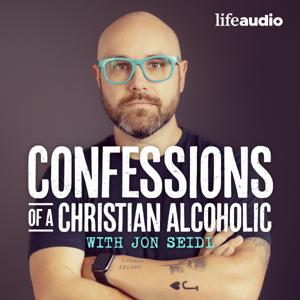
Jon Seidl is the bestselling Christian author who became an alcoholic, not the other way around. It's usually the other way around. Or is it? "Confessions of a Christian alcoholic" (based on the…
Ranked by our users in the last 21 days

227,418 Listeners

15,961 Listeners

1,688 Listeners

8,597 Listeners
1,710 Listeners

11,733 Listeners

4,741 Listeners

94 Listeners

609 Listeners
2,029 Listeners

140 Listeners

69,548 Listeners

2,884 Listeners

175 Listeners

262 Listeners

195 Listeners

487 Listeners
41 Listeners

378 Listeners
180 Listeners

2,459 Listeners

126 Listeners

53 Listeners

29,068 Listeners

64 Listeners

31 Listeners
905 Listeners

18,912 Listeners
617 Listeners

20 Listeners
28 Listeners
39 Listeners
7 Listeners

2 Listeners

15 Listeners