
Sign up to save your podcasts
Or



Based on Podcast App listening data
Send a question or comment via text message
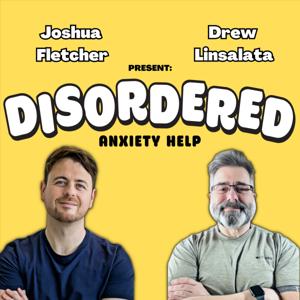
In this listener participation episode, Drew and Josh tackle your questions about recovery while celebrating inspiring stories from the community.
Questions explored in this episode:
Why does my anxiety disorder feel like it's protecting me? When you're struggling with OCD, panic disorder, or health anxiety, your threat response can feel like a cult leader in your head—insisting it has your back, showing you "the truth," and making it incredibly risky to walk away. We break down why this happens and what you can do about it.
What about rolling panic attacks? One listener shares their experience of a vacation derailed by cascading panic attacks that wouldn't stop. We explain why panic attacks can roll from one into the next, what fuels this cycle, and how following anxiety's instructions in the moment keeps the wheel turning.
How do I handle competing voices in my head? As you progress in recovery, you may notice different voices—one saying "freak out now" and another saying "wait, let's see what's happening here." We discuss what these voices represent and how to work with them.
Other topics: Managing health anxiety when you're actually sick, dealing with rejection without letting it fuel future anxiety, and why thinking about "what could have been" isn't grief—it's just overthinking.
Did It Anyways from listeners include:
Key takeaway: The simplest description of anxiety disorder recovery? Getting really good at leaving it the hell alone. That means resisting the urge to fix, control, or prevent uncomfortable feelings, and instead doing what non-anxious you would do—even while you're feeling scared.
----
Want to talk about this episode, interact with us, and communicate with others that are sharing your experience? We're hanging out in the Disordered Community Space
https://disordered.fm/community
----
The Disordered Guide to Health Anxiety is available now:
https://www.disordered.fm/the-disordered-guide-to-health-anxiety/
---
Struggling with worry and rumination that you feel you can't stop or control? Check out Worry and Rumination Explained, a two hour pre-recorded workshop produced by Josh and Drew.
-----
Got questions or did it anyways to share? Send us an email or voicemail on our website.
https://disordered.fm
---
Disclaimer: Disordered is not therapy or a replacement for therapy. Listening to Disordered does not create a therapeutic relationship between you and the hosts or guests of the podcast. Information here is provided for psychoeducational purposes. As always, please consult your mental health and/or medical care providers. If you are having a mental health crisis, always reach out immediately for in-person help.
Send a question or comment via text message
When you're at your child's birthday party, your wedding day, or on a much-anticipated vacation, do you find yourself feeling anxious instead of joyful—and then getting frustrated with yourself for "not feeling the right way"? In this episode, Drew and Josh explore one of the most common traps in anxiety recovery: judging yourself for having the "wrong" emotions.
You'll hear about how people struggling with panic disorder, agoraphobia, OCD, and other anxiety challenges often add a second layer of suffering by criticizing themselves for not feeling grateful, happy, or calm in moments when they think they "should" be. Josh and Drew discuss how this pattern shows up during holidays, special events, and everyday situations, and why trying to control or optimize your emotions typically backfires.
The conversation covers:
You'll also hear inspiring "Did It Anyway" stories from listeners who pushed forward despite uncomfortable feelings, including someone who hadn't left their house in days but went to a holiday event anyway, and a new mother who faced her lifelong fear during an emergency C-section.
This episode may be particularly helpful if you're heading into holiday gatherings, family events, or any situation where you're putting pressure on yourself to feel a certain way. The guys remind us that recovery isn't measured by the absence of symptoms—it's measured by your willingness to be with them.
----
Want to talk about this episode, interact with us, and communicate with others that are sharing your experience? We're hanging out in the Disordered Community Space
https://disordered.fm/community
----
The Disordered Guide to Health Anxiety is available now:
https://www.disordered.fm/the-disordered-guide-to-health-anxiety/
---
Struggling with worry and rumination that you feel you can't stop or control? Check out Worry and Rumination Explained, a two hour pre-recorded workshop produced by Josh and Drew.
-----
Got questions or did it anyways to share? Send us an email or voicemail on our website.
https://disordered.fm
---
Disclaimer: Disordered is not therapy or a replacement for therapy. Listening to Disordered does not create a therapeutic relationship between you and the hosts or guests of the podcast. Information here is provided for psychoeducational purposes. As always, please consult your mental health and/or medical care providers. If you are having a mental health crisis, always reach out immediately for in-person help.
Send a question or comment via text message
One of the most terrifying fears in anxiety disorders is the fear of losing your mind. In this episode, Drew and Josh explore dementophobia - the fear of insanity - and why it's so common among people experiencing panic disorder, OCD, agoraphobia, and health anxiety.
The guys discuss how the brain's threat response can turn inward when it can't find an external danger, creating the believable (but inaccurate) story that you must be going crazy. They explore why symptoms like depersonalization and derealization can fuel this fear, and how the disorder creates a "checking state" where you're constantly scanning for signs of mental deterioration.
In this episode:
Key principle: Your brain only needs to find a believable story - it doesn't have to be accurate. The intensity of your fear only confirms that you're afraid, not that the danger is real.
Remember that while this fear is genuinely terrifying, there is no path from anxious to insane. Recovery involves learning to move through these frightening moments rather than compulsing against them.
----
Want to talk about this episode, interact with us, and communicate with others that are sharing your experience? We're hanging out in the Disordered Community Space
https://disordered.fm/community
----
The Disordered Guide to Health Anxiety is available now:
https://www.disordered.fm/the-disordered-guide-to-health-anxiety/
---
Struggling with worry and rumination that you feel you can't stop or control? Check out Worry and Rumination Explained, a two hour pre-recorded workshop produced by Josh and Drew.
-----
Got questions or did it anyways to share? Send us an email or voicemail on our website.
https://disordered.fm
---
Disclaimer: Disordered is not therapy or a replacement for therapy. Listening to Disordered does not create a therapeutic relationship between you and the hosts or guests of the podcast. Information here is provided for psychoeducational purposes. As always, please consult your mental health and/or medical care providers. If you are having a mental health crisis, always reach out immediately for in-person help.
Send a question or comment via text message
Drew and Josh announce the release of their first co-written book, The Disordered Guide to Health Anxiety, and dive deep into the many faces of health anxiety. From the resource gatherer constantly Googling symptoms to the optimizer obsessing over perfect health metrics, they explore how health anxiety shows up differently for different people - and why it's fundamentally about the anxiety, not the health itself.
You'll hear real stories from listeners navigating health anxiety, including someone who faced their driving fears while expecting a second child, and discussions about the difference between panic disorder's health fixation and health anxiety disorder. Drew and Josh tackle tough questions about managing anxiety while waiting for actual medical test results, explaining why the emotions are justified but the compulsions aren't helpful.
The episode covers the compulsive behaviors that keep health anxiety alive - from fitness watch monitoring to constant symptom checking - and why overcoming health anxiety doesn't mean achieving certainty about your health. It means learning to respond differently when those fears arise. The guys also discuss the role of courage in recovery and why turning your back on health-based compulsions can feel reckless and irresponsible, even when it's the right move.
Whether you're the person who can't stop researching symptoms or the one too terrified to see a doctor, this episode offers a realistic look at what health anxiety actually is and how people move forward with it.
Get The Disordered Guide To Health Anxiety:
https://disordered.fm/bluebook
----
Want to talk about this episode, interact with us, and communicate with others that are sharing your experience? We're hanging out in the Disordered Community Space
https://disordered.fm/community
----
The Disordered Guide to Health Anxiety is available now:
https://www.disordered.fm/the-disordered-guide-to-health-anxiety/
---
Struggling with worry and rumination that you feel you can't stop or control? Check out Worry and Rumination Explained, a two hour pre-recorded workshop produced by Josh and Drew.
-----
Got questions or did it anyways to share? Send us an email or voicemail on our website.
https://disordered.fm
---
Disclaimer: Disordered is not therapy or a replacement for therapy. Listening to Disordered does not create a therapeutic relationship between you and the hosts or guests of the podcast. Information here is provided for psychoeducational purposes. As always, please consult your mental health and/or medical care providers. If you are having a mental health crisis, always reach out immediately for in-person help.
Send a question or comment via text message
In this episode of Disordered, the guys delve into the common anxiety symptoms of dizziness and lightheadedness. They share personal experiences, discuss the impact of these symptoms on daily life, and explore coping mechanisms such as interoceptive exposure and mindfulness.
The conversation also highlights community wins, listener questions, and the importance of awareness in managing anxiety. The hosts encourage listeners to challenge their fears and practice being present in their experiences.
Takeaways
----
Want to talk about this episode, interact with us, and communicate with others that are sharing your experience? We're hanging out in the Disordered Community Space
https://disordered.fm/community
----
The Disordered Guide to Health Anxiety is available now:
https://www.disordered.fm/the-disordered-guide-to-health-anxiety/
---
Struggling with worry and rumination that you feel you can't stop or control? Check out Worry and Rumination Explained, a two hour pre-recorded workshop produced by Josh and Drew.
-----
Got questions or did it anyways to share? Send us an email or voicemail on our website.
https://disordered.fm
---
Disclaimer: Disordered is not therapy or a replacement for therapy. Listening to Disordered does not create a therapeutic relationship between you and the hosts or guests of the podcast. Information here is provided for psychoeducational purposes. As always, please consult your mental health and/or medical care providers. If you are having a mental health crisis, always reach out immediately for in-person help.
Send a question or comment via text message
Agoraphobia. Is it fear of open spaces? Do people with agoraphobia always fear open spaces? What even is agoraphobia and how to I overcome it?
This week we're looking at the complexities of agoraphobia, exploring its definitions, connections to panic disorder, and the fear of open spaces. We're sharing some personal experiences and insights on how navigate through these challenges, emphasizing the importance of exposure therapy (what a surprise) and understanding that specific triggers mostly don't matter.
We also include a few great did-it-anyways, including flying with an anxiety disorder, a primary fear for many struggling with agoraphobia.
Takeaways
----
Want to talk about this episode, interact with us, and communicate with others that are sharing your experience? We're hanging out in the Disordered Community Space
https://disordered.fm/community
----
The Disordered Guide to Health Anxiety is available now:
https://www.disordered.fm/the-disordered-guide-to-health-anxiety/
---
Struggling with worry and rumination that you feel you can't stop or control? Check out Worry and Rumination Explained, a two hour pre-recorded workshop produced by Josh and Drew.
-----
Got questions or did it anyways to share? Send us an email or voicemail on our website.
https://disordered.fm
---
Disclaimer: Disordered is not therapy or a replacement for therapy. Listening to Disordered does not create a therapeutic relationship between you and the hosts or guests of the podcast. Information here is provided for psychoeducational purposes. As always, please consult your mental health and/or medical care providers. If you are having a mental health crisis, always reach out immediately for in-person help.
Send a question or comment via text message
Sometimes life throws real challenges at you. Medical issues. Loss. Uncertainty. The kind of stuff that makes anxiety feel completely justified. So how do you move forward when you're genuinely scared AND dealing with actual difficult circumstances?
In this episode, we share some of the most powerful "did it anyway" stories we've ever received. From someone facing serious health challenges to a marathon runner dealing with panic attacks, these listeners show us what it really means to engage with life even when things are legitimately hard.
We talk about why waiting to "fix yourself" before living your life doesn't work, how to handle the reality that feelings don't always indicate actual danger, and what it means to let both the good and difficult parts of life exist at the same time. You don’t have to be fearless. But you can do what matters even while you're afraid.
If you're struggling with the gap between how you feel and what you want to do with your life, this episode might help you see that moving forward is possible, even when it feels impossible.
----
Want to talk about this episode, interact with us, and communicate with others that are sharing your experience? We're hanging out in the Disordered Community Space
https://disordered.fm/community
----
The Disordered Guide to Health Anxiety is available now:
https://www.disordered.fm/the-disordered-guide-to-health-anxiety/
---
Struggling with worry and rumination that you feel you can't stop or control? Check out Worry and Rumination Explained, a two hour pre-recorded workshop produced by Josh and Drew.
-----
Got questions or did it anyways to share? Send us an email or voicemail on our website.
https://disordered.fm
---
Disclaimer: Disordered is not therapy or a replacement for therapy. Listening to Disordered does not create a therapeutic relationship between you and the hosts or guests of the podcast. Information here is provided for psychoeducational purposes. As always, please consult your mental health and/or medical care providers. If you are having a mental health crisis, always reach out immediately for in-person help.
Send a question or comment via text message
Panicogenic Relaxation: Why You Feel Anxious When Feeling Calm
You're finally feeling better. The anxiety has lifted. You're relaxed and calm for the first time in months or even years. So why does that feel so weird? And why are you suddenly anxious about feeling calm?
In this episode, Drew and Josh explore "panicogenic relaxation". This is a common experience in anxiety disorder recovery where feeling normal, neutral, or relaxed can trigger concern or even high anxiety and panic. When you've been anxious for so long, that heightened state becomes your predictable default. The absence of anxiety can feel unfamiliar, strange, or even threatening.
In this episode, we discuss:
We also share inspiring "Did It Anyway" stories from the community, including someone who kept pushing through fatigue to go to new places, and another who took their first step away from 13 years of self-medication.
----
Want to talk about this episode, interact with us, and communicate with others that are sharing your experience? We're hanging out in the Disordered Community Space
https://disordered.fm/community
----
The Disordered Guide to Health Anxiety is available now:
https://www.disordered.fm/the-disordered-guide-to-health-anxiety/
---
Struggling with worry and rumination that you feel you can't stop or control? Check out Worry and Rumination Explained, a two hour pre-recorded workshop produced by Josh and Drew.
-----
Got questions or did it anyways to share? Send us an email or voicemail on our website.
https://disordered.fm
---
Disclaimer: Disordered is not therapy or a replacement for therapy. Listening to Disordered does not create a therapeutic relationship between you and the hosts or guests of the podcast. Information here is provided for psychoeducational purposes. As always, please consult your mental health and/or medical care providers. If you are having a mental health crisis, always reach out immediately for in-person help.
Send a question or comment via text message
When anxiety and its relentless inner critic take hold, one of the most profound losses is the belief and trust in your own capability. In this episode, Drew and Josh explore how to rebuild self-trust after anxiety disorders erode your confidence in handling life's challenges.
The conversation centers on stories from listeners who confronted their worst-case scenarios—from emergency medical situations while struggling with agoraphobia and panic disorder, to managing health anxiety during actual illness, to facing feared social situations despite OCD. Each story illustrates a crucial truth: the anticipation is almost always worse than the actual experience, and we're far more capable than anxiety tells us we are.
The guys discuss why simply deciding to believe in yourself doesn't work, and what actually does: the unglamorous, minute-by-minute work of doing the scary things anyway. They examine how anxiety functions like a conspiracy theory about yourself, predicting catastrophic outcomes that rarely materialize. The hosts also explore how well-meaning but misguided advice to avoid difficult situations or regulate away uncomfortable feelings can actually undermine self-belief rather than restore it.
This episode emphasizes that rebuilding confidence isn't about making anxiety disappear—it's about discovering through lived experience that you can handle difficult emotions, uncomfortable sensations, and challenging situations. The path back to self-belief requires compassion, patience, and a willingness to challenge the loud but ultimately unreliable predictions of fear and doubt.
Grounded in acceptance and commitment therapy (ACT) and mindfulness-based approaches, this conversation offers a realistic, evidence-based perspective on recovery that honors both the difficulty of the journey and the resilience we all possess.
----
Want to talk about this episode, interact with us, and communicate with others that are sharing your experience? We're hanging out in the Disordered Community Space
https://disordered.fm/community
----
The Disordered Guide to Health Anxiety is available now:
https://www.disordered.fm/the-disordered-guide-to-health-anxiety/
---
Struggling with worry and rumination that you feel you can't stop or control? Check out Worry and Rumination Explained, a two hour pre-recorded workshop produced by Josh and Drew.
-----
Got questions or did it anyways to share? Send us an email or voicemail on our website.
https://disordered.fm
---
Disclaimer: Disordered is not therapy or a replacement for therapy. Listening to Disordered does not create a therapeutic relationship between you and the hosts or guests of the podcast. Information here is provided for psychoeducational purposes. As always, please consult your mental health and/or medical care providers. If you are having a mental health crisis, always reach out immediately for in-person help.
Send a question or comment via text message
In this episode, Drew and Josh explore the powerful role of the internal critic—affectionately named "Craig"—in maintaining anxiety disorders and interfering with recovery. They discuss how this nagging inner voice criticizes, questions, and doubts us, often telling us we're doing things wrong or that we'll never be who we hope to be.
Let's examine where Craig the Critic comes from, including family dynamics, conditional affection, societal pressures, and social media comparisons. The episode explains how this critical voice drives us toward impossible standards and fuels the "should" statements that keep us stuck: "You should be feeling this," "You should be better by now," or "You should be like everyone else."
The guys discuss how Craig the Critic shows up across different anxiety presentations—from OCD to agoraphobia to panic disorder—and how this voice can block the learning that happens during exposure work. They explore how the internal critic constantly demands we fix, control, and change our anxiety rather than learning to respond differently to it.
A key theme in this episode is compassion as the antidote to self-criticism, how moving toward what matters to us—guided by our values rather than Craig's demands—helps us break free from the cycle of criticism and avoidance. We're also tackling the common misconception that we need harsh self-criticism to keep us in check, when in reality, it often keeps us trapped in disordered patterns.
The episode features inspiring "Did It Anyway" stories from listeners who faced their fears despite Craig's objections, including someone starting a new job, another taking their children on challenging outings, and a future firefighter who completed a demanding physical fitness test while experiencing panic symptoms.
Topics Covered:
This episode may be particularly helpful for those who struggle with perfectionism, harsh self-judgment, or feeling like they're failing at recovery.
----
Want to talk about this episode, interact with us, and communicate with others that are sharing your experience? We're hanging out in the Disordered Community Space
https://disordered.fm/community
----
The Disordered Guide to Health Anxiety is available now:
https://www.disordered.fm/the-disordered-guide-to-health-anxiety/
---
Struggling with worry and rumination that you feel you can't stop or control? Check out Worry and Rumination Explained, a two hour pre-recorded workshop produced by Josh and Drew.
-----
Got questions or did it anyways to share? Send us an email or voicemail on our website.
https://disordered.fm
---
Disclaimer: Disordered is not therapy or a replacement for therapy. Listening to Disordered does not create a therapeutic relationship between you and the hosts or guests of the podcast. Information here is provided for psychoeducational purposes. As always, please consult your mental health and/or medical care providers. If you are having a mental health crisis, always reach out immediately for in-person help.
From the publisher's feed
Ranked by our users in the last 21 days

2,589 Listeners
1,799 Listeners
1,436 Listeners
1,217 Listeners
829 Listeners
753 Listeners

2,509 Listeners
1,381 Listeners

3,611 Listeners

430 Listeners
585 Listeners
364 Listeners

364 Listeners

18,949 Listeners
198 Listeners