
Sign up to save your podcasts
Or

By TruStory FM


4.6
9393 ratings


The podcast currently has 222 episodes available.
The most played episodes among Podcast App listeners.
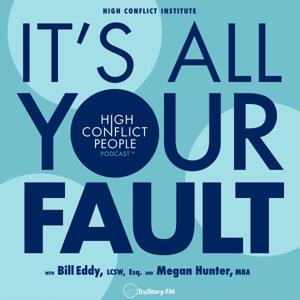
One of our favorite deep dives, revisited: why do some people go from calm to enraged in seconds flat, while others barely flinch? Bill and Megan dig into the science — and it might change how you think about jogging off your anger. Bill Eddy and Megan Hunter, co-founders of the High Conflict Institute, dive deep into the complex relationship between anger and high conflict personalities. This illuminating episode explores why some people experience instant rage while others maintain better emotional control, particularly in challenging interpersonal situations. The Science Behind Anger Management Recent research from Ohio State University challenges common beliefs about anger management techniques. Contrary to popular advice, activities like venting or intense physical exercise may not effectively reduce anger. Instead, the key lies in lowering physiological arousal through specific calming techniques. Bill and Megan explore these findings while discussing the brain's role in emotional regulation, particularly focusing on the relationship between the amygdala and prefrontal cortex. Different Personalities, Different Anger Patterns The episode provides valuable insights into how various personality types experience and express anger differently. Bill explains how people with different personality traits may process and display anger in distinct ways, from calculated responses to uncontrolled emotional outbursts. This understanding is crucial for developing effective interaction strategies. Connection and Anger Management Bill and Megan discuss the surprising effectiveness of human connection in managing anger. Whether through eye contact, using someone's name, or engaging in group activities, the power of connection emerges as a key factor in de-escalating high conflict situations. Questions we answer in this episode:Why do some people go from calm to enraged so quickly?How do different personality types experience and express anger?What anger management techniques actually work?How does early childhood development affect adult anger patterns?What role does human connection play in managing anger?Key Takeaways:Not all traditional anger management techniques are effectiveDifferent personality types express anger in distinct waysHuman connection can be a powerful tool for de-escalating angerEarly childhood experiences significantly impact adult anger patternsUnderstanding anger triggers is crucial for better managementThis episode provides essential insights for anyone dealing with high conflict personalities or seeking to better understand anger management. Through research-backed discussion and practical examples, Bill and Megan offer valuable strategies for managing anger in both personal and professional contexts. Links & Other Notes: BOOKSOur New World of Adult BulliesThe Archaeology of Mind: Neuroevolutionary Origins of Human EmotionsARTICLESA meta-analytic review of anger management activities that increase or decrease arousal: What fuels or douses rage?Breathe, don't vent: Turning down the heat is key to managing angerOUR NEWSLETTERGet our updates.SPEAKING ENGAGEMENTSInvite us to speak.OUR WEBSITE: https://www.highconflictinstitute.com/Submit a Question for Bill and MeganAll of our books can be found in our online store or anywhere books are sold, including as e-books.You can also find these show notes at our site as well.Note: We are not diagnosing anyone in our discussions, merely discussing general patterns of behavior. Nor are we providing legal of therapeutic advice. Please seek the assistance of your local professionals to seek help. (00:00) - Welcome to It's All Your Fault (00:42) - Catching Up (02:48) - Anger and Ways to Get Rid of It (06:16) - HCP Types and Anger (11:28) - Conscious vs. Unconscious (12:38) - Anger and the Brain (17:24) - Learning Self Restraint (18:59) - Study Highlights (20:27) - Difficult for HCPs (22:14) - More Research (30:03) - Archaelogy of the Mind (37:46) - Reminders & Coming Next Week: Being Assertive

When someone in a high conflict relationship insists their partner is entirely uncaring, is that the whole truth — or a sign of something else going on underneath? This episode puts one hypothetical high conflict case through two very different lenses to find out. Bill Eddy, LCSW, JD, and Megan Hunter, MBA, sit down with psychoanalyst Dr. Anthony Mazzella to compare the CARS Method with a psychoanalytic approach to containment, splitting, and setting limits that actually hold. They work the same scenario side by side — a spouse convinced her husband is entirely rejecting her — to show where connecting and EAR statements line up with clinical containment, and where the two approaches genuinely split. Whether you’re in HR, mediation, or your own living room, you’ll walk away with two working models for the same hard moment. It’s All Your Fault is produced by TruStory FM. Full Show Notes & Resources Submit Questions | Bookstore | Website Important Notice: Our discussions focus on behavioral patterns rather than diagnoses. For specific legal or therapeutic guidance, please consult qualified professionals in your area. (00:00) - Welcome to It's All Your Fault (00:37) - On Today’s Episode (01:14) - Meet Dr. Anthony Mazzella (05:28) - Where He’s Landed (06:31) - His Approach to HCPs (09:54) - Different Views (11:58) - Disregulated to Regulated State of Mind (14:35) - Example (17:00) - Initial Steps (19:45) - Comparison (22:58) - Coming Up with Solutions (25:26) - HR Setting (30:20) - Differences (33:05) - Reality Testing (34:30) - Being More Mindful (37:29) - Responding and Confronting (40:20) - Setting Limits (44:33) - Talking Through the Process (51:46) - Recap (54:19) - Treatment of Narcissism (56:30) - Types of Narcissists and Hope for Treatment (57:25) - Finding Dr. Mazzella (59:02) - Wrap Up
In this classic episode from the archives, Bill and Megan sit down with retired Judge Bruce R. Cohen, who spent 24 years as a family law attorney and nearly 20 years on the bench in Arizona's Superior Court, for a rare look at family court from both sides. Judge Cohen pulls back the curtain on how judges actually weigh a case, why the old assumptions about gender bias no longer hold up, and what separates a parent who gets heard from one who doesn't. Judge Cohen unpacks how the "best interests of the child" standard actually gets applied in the courtroom, sharing personal stories — including the memorable "Bonnie story" — that show how presence and genuine humanity shape better outcomes for families. The conversation turns practical: rather than laying out a chronological case history or trying to prove who's "right," Judge Cohen explains that success in family court comes down to demonstrating your ability to meet your children's needs. Bill and Megan dig into how understanding your jurisdiction's specific factors — and letting go of assumptions about judicial bias — can make or break a case. Judicial Insights Addressed:How judges actually determine a child's best interestsWhy gender bias in family court looks different today than it used toWhat separates a "high conflict" case from a routine oneHow jurisdiction-specific factors shape a judge's decisionsCourtroom Strategies That Work:Focus on your children's needs and your ability to meet them, not a blow-by-blow of the pastShow up authentically rather than playing to assumed biasKnow your jurisdiction's specific best-interest factors before you walk inCredibility grows when you acknowledge your own weaknesses, not just the other side'sAim your case at future solutions, not past grievancesDrawing on decades on both sides of the bench, Judge Cohen offers a rare, practical look at what actually works in family court — insight you won't get from most legal advice. Combined with Bill and Megan's expertise, this is a conversation worth revisiting anytime you're preparing to walk into a courtroom. Additional Resources Books & Expert Publications:Managing High Conflict People in CourtThe Future of Family CourtMeet the Judge:Judge Bruce R. Cohen (ret.) bioClasses & Consultations:New Ways for Families® online class for parentsConflict Influencer™ online group for parents or anyone1:1 Consultation with Bill Eddy/Megan HunterStay Connected:Sign up for our newsletterVisit High Conflict InstituteSubmit a question for Bill and MeganAll of our books can be found in our online store or anywhere books are sold, including as e-books.You can also find these show notes at our site as well.Note: We are not diagnosing anyone in our discussions, merely discussing general patterns of behavior. Nor are we providing legal or therapeutic advice. Please seek the assistance of your local professionals to seek help. (00:00) - Welcome to It's All Your Fault (01:02) - Welcome Judge Bruce R. Cohen (Ret.) (01:29) - Judge Cohen’s Background (06:01) - Connecting (08:28) - The Bonnie Story (13:18) - Time in Court (14:20) - Bill’s Time in Court (16:59) - Communicate Simply (27:29) - Best Interest Factors (29:50) - Gender Issues (35:31) - Control What You Can Control (37:07) - Identify Needs of Child (39:22) - High Conflict Cases (43:55) - Reminders & Coming Next Week: Answering Listener Questions
High conflict behavior doesn't just disrupt your team—it follows leaders home, costs organizations hundreds of thousands of dollars, and gets worse when managers react without a plan. The question Part 3 of this four-part workplace series answers is the one every leader eventually faces: once you know conflict is in the room, what do you actually do? Bill Eddy, LCSW, JD, and Megan Hunter, MBA, co-founders of the High Conflict Institute in Scottsdale, Arizona, are joined again by Michael Lomax, JD, lawyer, mediator, and HCI speaker and trainer. Together they walk through the BIFF response for hostile emails and verbal exchanges, EAR statements for de-escalating in the moment, the CARS method—Connect, Analyze, Respond, Set Limits—for structuring any high conflict conversation, and New Ways for Work® coaching as a measurable alternative to suspension. Whether you're managing a difficult employee, caught between HR and your team, or working under a difficult boss, these are the tools that shift the dynamic without making things worse. It's All Your Fault is produced by TruStory FM. Full Show Notes & Resources Submit Questions | Bookstore | Website Watch this episode on YouTube Important Notice: Our discussions focus on behavioral patterns rather than diagnoses. For specific legal or therapeutic guidance, please consult qualified professionals in your area. (00:00) - Welcome to It's All Your Fault (02:02) - Why Smart People Get Drawn Into These Conflicts (08:00) - BIFF Method (12:46) - Other Ways It’s Applied (17:20) - CARS Method (25:50) - What If It's the Boss? (29:11) - Solutions and Methods of Application (39:37) - Wrap Up
High conflict at work rarely announces itself. By the time it becomes a formal HR complaint or a leadership crisis, the patterns were visible much earlier—and the tools most organizations rely on to stay fair often make things worse, not better. Bill Eddy, LCSW, JD, and Megan Hunter, MBA, co-founders of the High Conflict Institute in Scottsdale, Arizona, are joined by Michael Lomax, JD, HCI speaker, trainer, and attorney, for Part 2 of a four-part workplace series. They break down the WEB method for early conflict assessment—Words, Emotions, Behavior—and explain why HR's focus on neutrality and incident-by-incident handling can inadvertently protect the person driving the conflict while penalizing the target. It's All Your Fault is produced by TruStory FM. Full Show Notes & Resources Submit Questions | Bookstore | Website Watch this episode on YouTube Important Notice: Our discussions focus on behavioral patterns rather than diagnoses. For specific legal or therapeutic guidance, please consult qualified professionals in your area. (00:00) - Welcome to It's All Your Fault (01:48) - Assessing Workplace Conflict Early and Accurately (04:53) - Potential Costs of Getting It Wrong (09:13) - Patterns of Behavior (18:56) - Documenting Impact (20:38) - Personality Disorders (21:57) - Reactivity Drives Response (25:29) - Managing Difficult HCPs (31:02) - What to Assess First (35:30) - Wrap Up
The podcast currently has 222 episodes available.

443 Listeners

1,412 Listeners

8 Listeners

2,516 Listeners

1,528 Listeners

21 Listeners

37 Listeners

1,163 Listeners

572 Listeners
775 Listeners

216 Listeners
38 Listeners

29 Listeners

12 Listeners

752 Listeners

44 Listeners

283 Listeners

690 Listeners

19,329 Listeners

293 Listeners

61 Listeners

85 Listeners

4 Listeners

2 Listeners

8 Listeners

0 Listeners

69 Listeners

6 Listeners

0 Listeners

5 Listeners

8 Listeners

0 Listeners

0 Listeners
2 Listeners