
Sign up to save your podcasts
Or



You finally say no to something you've always said yes to. And suddenly, you're the villain. That moment isn't an accident. That's a system protecting itself.
When women reclaim autonomy—deciding their time, energy, and choices belong to them—something shifts. Not just in the relationship or family, but in the entire structure that's been counting on their compliance. But here's what nobody tells you: that resistance? That backlash? That's actually proof of something important.
This episode explores what happens when you stop being the emotional glue, the family's connector, the office housework manager, the friend who always absorbs everyone's problems. What happens when you:
• Stop managing your partner's emotional life and he has to learn his own emotional regulation
• Decide family gatherings aren't your responsibility to orchestrate and smooth over
• Refuse the unpaid "office housework" that keeps systems running but never gets you promoted
• Say no to being the friend who listens to everyone but rarely gets asked how she's doing
The discomfort you feel when you set these boundaries? The guilt? The anger from people who depended on your compliance? Research shows these aren't character flaws or signs you're being selfish. They're structural responses to a power shift.
You'll discover why systems don't protest when they adjust—they protest when they lose access to unpaid labor. Why relationships feel unstable when both people suddenly have autonomy instead of one person's flexibility carrying the whole dynamic. Why honoring your own needs reads as betrayal in spaces built on your self-erasure.
But most importantly, you'll understand this: you're not the problem when claiming autonomy creates disruption. You're revealing the problem. You're showing what the current structure actually depends on to survive. And that changes everything about how you interpret the resistance you're facing.
If you've felt guilty for needing time to yourself, selfish for having boundaries, or like you were doing something wrong by refusing to keep managing everyone else's life—this episode will reframe that moment for you. Because understanding the system doesn't make the disruption easier. But it does make it make sense.
Your autonomy matters. Your time has value. Your energy isn't infinite. And yes, claiming that will shake things up. The question is: are you ready to let it?
**Get our Latest New Release Scapegoated - You Were Never The Problem: The Hidden Truth About Narcissistic Family Systems, Emotional Survival, and Finding Yourself on the Other Side**https://amzn.to/41N6w2s🎓 **Online Course: Narcissistic Abuse Recovery** 👉 Start the Course
🤍**Coaching with Lynn** 1:1 Connect with Lynn - Coaching
🧘♀️ **Somatic Healing Audio Sessions** 👉 Listen Now
Hosted on Acast. See acast.com/privacy for more information.
You tell yourself you could leave, but the numbers don't work. The math never adds up. And you've started to wonder if that's really about your choices, or something bigger.
This episode explores one of the most insidious ways control operates—not through threats or locked doors, but through economic structures that make independence feel impossible. We're talking about the systems that create financial vulnerability as a natural byproduct of how work gets valued, how care gets distributed, and what society expects from women.
https://movingforwardafterabuse.com/womens-education/
But this isn't just economic theory. This is about:
• Why the wage gap exists and what it means for your actual financial security
• The invisible labor that's quietly draining your time, energy, and career trajectory
• How cultural expectations create financial pressure that feels like personal failure
• Why staying in harmful situations often has nothing to do with weakness and everything to do with math
• The difference between individual negotiation and systemic barriers you can't talk your way through
• How patriarchal economics operates in plain sight without anyone naming it
• What single mothers face when the system hits from every direction
• The way financial uncertainty becomes a tool of control without anyone wielding it intentionally
You might hear yourself in these patterns. The moments when you felt stuck. The exhaustion of working full-time while managing everything else. The guilt about not being ambitious enough or saving well enough—when really, you were running into structural barriers that affect millions of women across every income level and background.
What changes when you stop blaming yourself for a system that wasn't built with your financial independence in mind? What becomes possible when you recognize that your financial story isn't a personal failure—it's you encountering documented patterns in how patriarchy operates?
This episode walks through the research, the data, and the invisible architecture that shapes women's economic reality. Not to depress you, but to help you see clearly. Because recognizing the system is where the power to change it begins.
If you've ever felt trapped by finances you couldn't escape, if you've stayed somewhere because leaving felt impossible, if you've internalized messages that your financial situation is your personal failure—this episode is a conversation you need to hear. Listen for the moment when something you thought was wrong with you suddenly makes sense as something wrong with the system.
**Get our Latest New Release Scapegoated - You Were Never The Problem: The Hidden Truth About Narcissistic Family Systems, Emotional Survival, and Finding Yourself on the Other Side**https://amzn.to/41N6w2s🎓 **Online Course: Narcissistic Abuse Recovery** 👉 Start the Course
🤍**Coaching with Lynn** 1:1 Connect with Lynn - Coaching
🧘♀️ **Somatic Healing Audio Sessions** 👉 Listen Now
Hosted on Acast. See acast.com/privacy for more information.
You've felt it. That moment when you speak up and suddenly you're too much. Too demanding. Difficult. But what if the problem isn't you—what if it's the system itself?
There's a particular exhaustion that comes from apologizing for existing in the quiet, everyday moments. When you say no without explaining. When you stop accommodating someone else's comfort at the expense of your own. When you claim autonomy. And the room shifts. The energy changes. You're labeled difficult, cold, selfish.
Research consistently shows there's a cost to women claiming autonomy. A social penalty. But it's not random. It's not personal. It's structural.
This episode explores the documented patterns that show how patriarchal systems maintain control—not through dramatic moments, but through the quiet enforcement of prescribed roles:
• How the same ambition looks different depending on who's pursuing it
• What happens when women set boundaries without permission
• The impossible standards placed on mothers who refuse complete self-sacrifice
• How women police other women to keep hierarchies stable
• Why the pushback increases with visibility
• What the labels—difficult, cold, too much—really mean about power and control
• How to recognize when resistance reveals where power is threatened
You'll discover why your hesitation before claiming space isn't weakness—it's a learned response to real consequences. You'll understand that the resistance you encounter when you make autonomous choices isn't proof something's wrong with you. It's proof the system is working exactly as designed to maintain control.
But here's what changes when you see the pattern clearly: the penalties women face for autonomy stop being personal failures and start being structural resistance. The pushback becomes information. Your awareness becomes power.
This episode isn't about forcing yourself through discomfort or ignoring the real costs women navigate daily. It's about seeing the design beneath the shame. It's about understanding that when someone calls you difficult for setting a boundary, when they withdraw approval for making an independent choice, when they tell you you're too much for existing fully—they're revealing exactly where control was assumed.
If you've ever felt the exhaustion of apologizing for your own autonomy, if you've noticed the double standards in how ambition, boundaries, and sacrifice are interpreted, if you've wondered why claiming space feels so costly—this episode is for you. Listen to understand not just what's happening, but why. And more importantly, what that understanding makes possible.
**Get our Latest New Release Scapegoated - You Were Never The Problem: The Hidden Truth About Narcissistic Family Systems, Emotional Survival, and Finding Yourself on the Other Side**https://amzn.to/41N6w2s🎓 **Online Course: Narcissistic Abuse Recovery** 👉 Start the Course
🤍**Coaching with Lynn** 1:1 Connect with Lynn - Coaching
🧘♀️ **Somatic Healing Audio Sessions** 👉 Listen Now
Hosted on Acast. See acast.com/privacy for more information.
There's a specific kind of invisible trap that springs when your deepest cultural values become the chains holding you in harm. You're not just dealing with one person's controlling behavior—you're facing entire belief systems designed to keep you silent, dependent, and trapped.
If you've grown up in a community where honor, family loyalty, and a woman's role as keeper of family reputation are non-negotiable, you know this conflict intimately. You've likely experienced it as:
• Pressure to forgive abuse because divorce would shame your family
• The message that your suffering is noble, even spiritual
• Limits on your education, money, and support systems outside family
• Religious or cultural teachings that frame submission as godly
• The weaponization of values you actually respect—honor, family, tradition
• Fear of ostracism, loss of your children, or physical danger if you leave
• Arranged marriage frameworks that make leaving feel like breaking a sacred contract
• Authority figures telling you to stay, pray more, be more patient
What makes this so insidious is that the values themselves aren't wrong. Honoring your elders, maintaining family connections, respecting cultural traditions—these can be beautiful, meaningful parts of your identity. The trap happens when these values get weaponized. When "keep the family together" means absorbing damage in silence. When "what will people say" matters more than whether you're safe. When your worth is only tied to your role and compliance.
This episode dives into what researchers and cultural scholars have documented about these dynamics. You'll discover how patriarchal systems operate across cultures, religions, and communities—not with obvious force, but through carefully crafted shame, social consequences, and enforced dependence. The mechanism is the same everywhere, even if the language and rituals differ.
You'll walk away understanding something crucial: cultural identity and personal safety don't have to be in opposition. You can honor where you came from while protecting yourself. You can respect your family's values while rejecting the parts that cause harm. You can maintain cultural connections while setting boundaries. And most importantly—you didn't fail your culture by wanting safety. Your culture failed you by making harm acceptable as long as it stayed quiet.
This isn't blame. It's clarity. And clarity is the first step toward freedom.
If you've ever felt trapped between loyalty to your community and loyalty to yourself, if you've been told that leaving would bring shame, if you've internalized the message that your suffering is what makes you a good woman—this episode is for you. You'll finally understand that the conflict you feel isn't a personal failing. It's a system working exactly as it was designed to work. And understanding that system is how you start to dismantle it.
🎓 **Online Course: Narcissistic Abuse Recovery** 👉 Start the Course
🤍**Coaching with Lynn** 1:1 Connect with Lynn - Coaching
🧘♀️ **Somatic Healing Audio Sessions** 👉 Listen Now
Hosted on Acast. See acast.com/privacy for more information.
There's a particular exhaustion that comes from needing approval before your choices feel valid. From second-guessing decisions about your body, your money, your time. From somewhere deep inside knowing that autonomy wasn't really yours to claim.
This episode pulls back the curtain on something most women have experienced but rarely see named directly: the systematic ways patriarchal systems and controlling relationships strip away your legitimate power to make independent decisions.
You'll explore what the research actually shows about how autonomy gets restricted:
• The historical and ongoing legal structures designed to limit women's decision-making authority
• Why abusive partners make financial control and reproductive coercion their first targets
• The cultural conditioning that makes you justify spending your own money or choosing your own healthcare
• How women face real consequences—social, economic, relational—when they assert independence
• The specific ways this shows up in everyday life, from career choices to family dynamics to relationship exits
• Why the system labels women's autonomy as selfishness while treating men's autonomy as normal
• The difference between having options and having legitimate power to choose among them
This isn't abstract philosophy. It's the daily, tangible ways you've learned to hand over decision-making power that was always yours to keep. It's the moment you realized you were more worried about someone else's reaction than whether a choice was right for you.
When you understand how autonomy gets stripped away, you start recognizing where it's happened in your own life. And more importantly, you see that reclaiming it isn't one dramatic moment—it's a series of small sovereignties that add up to a life you're actually choosing, not just enduring.
You'll walk away understanding why your autonomy matters so much to the systems that want to control you. Why women's independence is a threat to structures that depend on compliance. And what it actually means to treat your own choices as fundamentally valid—not because you've earned permission, but because they're yours to make.
This conversation cuts to the core of why so many women feel like passengers in their own lives. If you've ever questioned whether your preferences were legitimate, whether your choices would upset someone important, or whether your own authority over your life was really yours—this episode is for you. Listen now and discover what happens when women start taking that power back.
**Get our Latest New Release Scapegoated - You Were Never The Problem: The Hidden Truth About Narcissistic Family Systems, Emotional Survival, and Finding Yourself on the Other Side**https://amzn.to/41N6w2s🎓 **Online Course: Narcissistic Abuse Recovery** 👉 Start the Course
🤍**Coaching with Lynn** 1:1 Connect with Lynn - Coaching
🧘♀️ **Somatic Healing Audio Sessions** 👉 Listen Now
Hosted on Acast. See acast.com/privacy for more information.
That moment when someone close to you says something that makes your stomach drop. You try to explain how you feel, and suddenly you're defending yourself against accusations you never saw coming. You walk away confused, doubting your own reaction, wondering if maybe you really are too much. What if that confusion isn't accidental? What if it was installed?
Women know this moment too well. And there's a reason it shows up so consistently—not because of individual bad actors, but because patriarchal systems have trained an entire generation of women to carry emotional responsibility that was never theirs to carry in the first place.
In this episode, we're exploring how cultural conditioning shapes vulnerability to emotional manipulation across every context of women's lives:
• Romantic relationships—where boundaries get flipped into character flaws and guilt becomes a tool for control
• Workplace dynamics—where competence and kindness get leveraged to extract endless labor
• Family systems—where tradition and obligation override your feelings and perspective
• The gaslighting mechanism—how questioning your own reality keeps power protected
Research in social psychology and gender studies documents that women are socialized from childhood to prioritize relationships, manage emotions, and maintain harmony while internalizing the belief that their worth is tied to how well they care for others. This creates a fundamental imbalance before you ever step into a relationship. You've been trained to notice emotional cues, to smooth things over, to question your own perspective when conflict arises. That training makes you vulnerable to manipulation because you're already doing the work of managing someone else's emotional landscape.
But here's what changes everything: understanding that these dynamics don't exist in a vacuum. Emotional manipulation thrives in environments where one group holds more power and the other has been trained to accept less. Women aren't inherently vulnerable because of some personal flaw. Women are targeted because the culture already conditioned them to doubt themselves.
When you listen to this episode, you'll walk away with a fundamentally different understanding of why you respond the way you do when someone flips your reality. You'll see the system underneath the confusion—not to blame yourself, but to stop absorbing harm as proof you're the problem. You'll learn to recognize the difference between genuine self-awareness and the self-doubt that was strategically installed. Most importantly, you'll understand that your sensitivity is awareness, your reactions to harm are appropriate, and your memory isn't faulty just because it contradicts someone else's convenience.
This isn't about individual relationships. This is about the broader cultural systems that condition women to stay small, stay quiet, and keep everyone else comfortable. The reframe comes when you realize those rules were never about your wellbeing. They were about control. And questioning them isn't selfish—it's survival. If you've ever felt that sinking feeling when someone close to you says something that makes no sense, followed by the impulse to doubt yourself first, this episode names what's actually happening. Your job now is to decide whose reality you're going to trust—the one installed by a system designed to protect itself, or the one your own experiences keep showing you. Listen now to understand how patriarchal conditioning shapes emotional vulnerability and discover what shifts when you finally stop agreeing that you're the problem.
🎓 **Online Course: Narcissistic Abuse Recovery** 👉 Start the Course
🤍**Coaching with Lynn** 1:1 Connect with Lynn - Coaching
🧘♀️ **Somatic Healing Audio Sessions** 👉 Listen Now
Hosted on Acast. See acast.com/privacy for more information.
Have you noticed your world getting smaller? That you're checking in before making plans, questioning decisions you used to make without hesitation, and can't quite point to when it started happening?
This episode explores one of the most insidious patterns operating in intimate relationships—one that doesn't announce itself through big explosive moments but through quiet, persistent pressure. It creeps in so gradually that you start to wonder if you're imagining it, or worse, if it's somehow your fault.
The episode dives deep into what researchers call coercive control and examines the cultural foundations that allow it to flourish. You'll hear about:
• How individual small actions become patterns of systematic control over time
• The way cultural conditioning disguises restriction as protection and monitoring as care
• Why you find yourself apologizing for things you haven't done wrong
• The connection between isolation and your ability to trust your own judgment
• How decision-making becomes a minefield when someone subtly undermines your competence
• The financial dynamics that keep you seeking permission like you're asking for an allowance
• Why your nervous system learned to scan for potential conflict before it happens
But this isn't just about naming what's happening to you. The real insight comes in understanding that coercive control exists because of systems—not because of your personal failures, sensitivity, or difficulty. It thrives where patriarchal conditioning has already taught you that your needs are negotiable while someone else's are fixed. It exploits the cultural foundation that positioned women to accommodate, smooth over, and manage everyone's emotions but their own.
Listening to this episode means stepping into a different kind of clarity. It's not about blame—not toward yourself and not necessarily toward him. It's about seeing how patterns that were designed to be invisible actually work. About understanding why your discomfort isn't oversensitivity but information. About recognizing that your shrinking world is your awareness system firing correctly, noticing what was always meant to go unnoticed.
You'll come away with a framework for observing these dynamics without shame. A language for what you've been feeling but couldn't quite name. And most importantly, a shift from "what's wrong with me?" to "what patterns are operating here?" That distinction changes everything about how you see yourself and your choices moving forward.
If you've felt the disorientation of looking up one day and not recognizing your own life, if you've wondered when you stopped trusting yourself, if isolation has crept in so quietly you're not sure when it happened—this episode is speaking directly to your experience. Listen now and discover what happens when you stop blaming yourself and start seeing the systems. The space that always belonged to you is waiting.
🎓 **Online Course: Narcissistic Abuse Recovery** 👉 Start the Course
🤍**Coaching with Lynn** 1:1 Connect with Lynn - Coaching
🧘♀️ **Somatic Healing Audio Sessions** 👉 Listen Now
Hosted on Acast. See acast.com/privacy for more information.
You notice yourself softening your tone before you even speak. A pattern emerges: your thoughts get met with silence, your boundaries turn into negotiations, and somehow you're always the one managing someone else's discomfort. You're not imagining it. There's a name for what's happening.
Welcome to a conversation about the systems underneath the struggles. This episode explores how patriarchal conditioning creates specific dynamics in relationships—patterns that researchers and cultural scholars have documented extensively but that most of us navigate without naming them.
You'll discover what's actually happening when:
• You share an opinion and experience that hollow silence that signals your perspective just evaporated from the conversation
• Setting a reasonable boundary somehow becomes a defense of why you have needs at all
• Expressing a feeling flips into you managing someone else's defensiveness
• The phrase "you're overthinking" or "you're too emotional" dismisses not just what you said, but your ability to trust your own perception
• You catch yourself editing yourself—not because what you're about to say is unkind, but because you've learned to anticipate resistance
This isn't about individual bad behavior or personal relationship failures. This is about how power structures teach some people their perspective is the default and others that their job is to provide comfort. How gender socialization from childhood creates a baseline expectation: one person's inner world is central, the other's is support staff.
The research is clear on what happens when this dynamic goes unchecked. Women report walking on eggshells, choosing words carefully, managing tone constantly. Over time, you lose touch with your own inner compass. You've spent so much energy anticipating reactions that you genuinely don't know what you think or feel anymore. The original thought gets buried under layers of self-editing. And the system maintains itself so quietly you might not even notice it's working.
But here's what shifts when you start seeing the pattern: You stop trying to fix yourself. You start recognizing the system you've been navigating. That clarity matters because it changes everything about how you move forward.
Listen in as Lynn explores the specific ways patriarchal conditioning operates in intimate relationships—not to blame individual partners, but to help you understand what you're experiencing. To validate that your perception isn't the problem. To show you how recognizing these dynamics is the first step toward reclaiming your autonomy and your voice. This is the conversation that helps you stop wondering what's wrong with you and start seeing clearly how power operates in your relationships.
🎓 **Online Course: Narcissistic Abuse Recovery** 👉 Start the Course
🤍**Coaching with Lynn** 1:1 Connect with Lynn - Coaching
🧘♀️ **Somatic Healing Audio Sessions** 👉 Listen Now
Hosted on Acast. See acast.com/privacy for more information.
You bring up a concern and somehow end up feeling worse, more confused, questioning whether it even happened. That's not an accident.
This episode explores something most people never fully see: how controlling behaviors aren't isolated incidents or personality flaws. They're patterns that patriarchal systems have normalized and embedded so deeply into relationships that they feel like just how love works.
Lynn walks you through the mechanisms that make this happen:
• The deflection that turns your hurt into your defensiveness—suddenly you're proving your right to feel instead of discussing what happened
• The systematic erosion of trust in your own perception that happens when someone tells you your reality isn't real
• The silence and emotional withdrawal that punishes you for the exact thing you've been culturally conditioned to fear most: abandonment
• The unpredictable cycles of warmth and coldness that keep you working harder, trying to figure out what changed, what you did wrong
• The projection that makes your boundaries into selfishness, your concerns into overreaction, your voice into the problem
What connects all of these? They shift reality. They position you as the problem. They keep you focused on managing someone else's emotions while doubting your own.
Feminist scholarship and decades of research show us that these controlling patterns don't exist in a vacuum. They're taught. They're cultural. They thrive in systems where one person's needs and reality are positioned as more legitimate than another's. When women are socialized to be emotional managers, when men are taught to hold emotional authority, when everyone learns that women's worth depends on maintaining connection at any cost—that's when these patterns become invisible. That's when manipulation stops feeling like manipulation and starts feeling like love.
But here's what matters right now: You're not imagining what you see. The cultural lie is that you're too sensitive, too demanding, too much. The reality is that you've been taught to accept treatment that nobody should accept. And when you finally notice it, you're told the noticing is the problem.
This episode isn't about solutions yet. It's about clarity. It's about recognizing these patterns not as individual relationship failures but as predictable, structural dynamics that operate across countless relationships. It's about understanding that your confusion isn't a personal failing—it's a designed outcome.
If you've ever walked away from a conversation feeling smaller and more confused than when you entered it, if you've questioned whether your hurt even matters, if you've found yourself managing someone else's emotions while yours go unseen—this episode is for you. Listen now to understand what's really happening, and start recognizing the difference between love and conditioning.
🎓 **Online Course: Narcissistic Abuse Recovery** 👉 Start the Course
🤍**Coaching with Lynn** 1:1 Connect with Lynn - Coaching
🧘♀️ **Somatic Healing Audio Sessions** 👉 Listen Now
Hosted on Acast. See acast.com/privacy for more information.
You've been following rules you never agreed to. Rules that shift depending on who's enforcing them. When you speak up, you're difficult. When he does, he's passionate. When you prioritize yourself, you're selfish. When he does, it's normal. You've felt the weight of these invisible contradictions your whole life, but you've been blaming yourself for not managing them perfectly enough.
Here's what changes everything: Understanding that patriarchy isn't about individual bad men or personal failure. It's a system. A structure. An entire framework built into laws, institutions, workplaces, and intimate relationships that consistently organizes power in one direction.
This episode explores:
• The difference between sexism as individual behavior and patriarchy as systemic design—and why that distinction rewrites your entire understanding of your own experience
• The invisible labor you've been doing your whole life: emotional labor, domestic labor, relational management—the work that keeps systems running while you're told it doesn't count
• The double bind trap that makes it impossible to win: Be assertive, but not aggressive. Be competent, but not threatening. Be strong, but not intimidating. What feminist scholarship reveals about these designed contradictions
• How your nervous system learned to fear your own needs: The childhood conditioning that made your safety feel dependent on other people's approval—and how narcissistic relationships exploit this exact pattern
• Why you internalized the voice that says you're asking for too much: The gender socialization that happens so early and so deeply it feels like your own thinking
• The difference between the rules you see and the rules you've absorbed: How patriarchy operates not just through policies and laws, but through the stories you believe about what's normal, possible, and acceptable for someone like you
When you start seeing these patterns as systemic instead of personal, something shifts. The shame loosens. The self-blame loses its grip. Because it's not that you failed to follow the rules correctly. It's that the rules were never designed for your freedom in the first place.
You'll walk away from this episode understanding how power actually gets organized—not in some abstract, academic way, but in the specific ways it's shaped your relationships, your choices, and your sense of what you deserve. You'll start seeing the patterns that have kept you stuck, not as evidence of your failure, but as evidence of a system designed to constrain you. And that clarity? It changes everything about how you move forward.
This is the episode for anyone who's been told they're too much, too demanding, too sensitive, or asking for too much. For anyone who's questioned their own sanity while trying to meet impossible standards. For anyone who's felt the exhaustion of doing invisible work while being told it doesn't matter. Listen now and start untangling what's yours to fix from what's theirs to defend.
🎓 **Online Course: Narcissistic Abuse Recovery** 👉 Start the Course
🤍**Coaching with Lynn** 1:1 Connect with Lynn - Coaching
🧘♀️ **Somatic Healing Audio Sessions** 👉 Listen Now
Hosted on Acast. See acast.com/privacy for more information.
From the publisher's feed
Validate. Rebuild. Revolutionize | For Scapegoats | Dismantling…
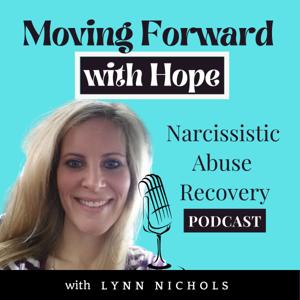
Discover a safe haven and a wellspring of insight with the Narcissistic Abuse Recovery Podcast. In this candid, relevant, and eye-opening show, host Lynn, author and passionate recovery advocate, guides you through the landscape of toxic relationships and covert narcissistic abuse dynamics. With honesty, depth, and tough love, Lynn helps you recognize subtle manipulation tactics and offers practical strategies to heal, rebuild, and reclaim your power.
Episodes dive deep into the complexities of narcissistic family systems, exploring roles like scapegoat and golden child, and shedding light on the pain of ostracization and family rejection. If you've been the family scapegoat—blamed, dismissed, and cast aside—this podcast validates your experience and provides a roadmap for breaking free from toxic family patterns. We tackle topics like going no contact, setting boundaries, understanding scapegoat dynamics, healing from family trauma, and uncovering covert manipulation that keeps you from thriving. Our conversations go beyond personal trauma to examine how narcissism is woven into broader cultural systems, including patriarchy's influence on gender roles and equality.
Available on all major podcast networks. Subscribe today.
This podcast exists to expose and challenge the systems that diminish, control, and silence. We focus on what has been overlooked, question what has been normalized, and create space for healing, clarity, and collective strength. Serving as a resource of hope, encouragement, and validation, so victims of narcissistic abuse can rebuild their lives and pursue dreams, visions, and intentional living.
Narcissistic Abuse Recovery Website: Visit our website at https://www.movingforwardafterabuse.com/
🔗 Additional Healing Resources & Support: 👉 movingforwardafterabuse.com
🎓 **Online Course: Narcissistic Abuse Recovery** 👉 Start the Course
🤍**Coaching with Lynn** 1:1 Connect with Lynn - Coaching
🧘♀️ **Somatic Healing Audio Sessions** 👉 Listen Now
📥 **Downloadables: Ebooks, Worksheets & More** 👉 Visit the Store
💬 **Join the Exclusive Community on Supercast** 👉 Become a Member
🎁 **Support the Show** 👉 Tip Jar
📱 **Connect on Social Media** 👉 Visit our Linktree
⭐ *****Benefiting from the Show? *****Leave us a Positive Review*****
Lynn is a trauma-informed narcissistic abuse recovery coach, author, and creator of the YouTube Channel, Wake the Elephant.
This podcast is for educational and informational purposes only. The content shared is not a substitute for professional mental health advice, diagnosis, or treatment. If you are experiencing a mental health crisis, please seek help from a qualified professional or contact a local crisis hotline.
Hosted on Acast. See acast.com/privacy for more information.
1,427 Listeners

332 Listeners
851 Listeners

759 Listeners

449 Listeners

1,164 Listeners
775 Listeners
512 Listeners
139 Listeners

39 Listeners
1,734 Listeners
293 Listeners
87 Listeners

84 Listeners

213 Listeners