
Sign up to save your podcasts
Or



You have probably found yourself apologizing for things you absolutely did not do, blaming yourself for family chaos, a partner's outburst, or someone else's mistakes. But your compulsion to say sorry is not a sign of actual fault. It is evidence of how you were conditioned to absorb guilt that was never yours to carry.
This pattern did not develop randomly. In narcissistic family systems and relationships, scapegoats learn early that taking the blame keeps the peace, prevents punishment, and protects the person in power from ever having to face accountability. It becomes survival behavior. And survival behavior is extraordinarily hard to unlearn because for a long time, it actually worked.
What they never wanted you to realize:
The conditioning runs deeper than most survivors initially understand. This automatic response becomes so embedded that you might apologize for having normal needs, for setting boundaries, or for someone else's inability to handle honest feedback. The guilt feels real because it was designed to feel real. That is the whole point.
Signs the scapegoat pattern is running your life:
In this episode, we explore the psychological mechanics behind scapegoat guilt, how narcissistic systems weaponize apologies, and the specific moment when you can break free from automatic blame-taking. You will discover what your compulsion to apologize is actually revealing about the balance of accountability in your most important relationships and what it means about your worth.
This is not about learning to apologize better. It is about learning when you do not owe an apology at all. Press play.
🎓 **Online Course: Narcissistic Abuse Recovery** 👉 Start the Course
🤍**Coaching with Lynn** 1:1 Connect with Lynn - Coaching
🧘♀️ **Somatic Healing Audio Sessions** 👉 Listen Now
Hosted on Acast. See acast.com/privacy for more information.
That bone-deep exhaustion you carry after managing everyone else's emotions? That's not weakness. That's a pattern designed into how we're raised.
You know the feeling. You're tracking everyone's emotional state like air traffic control. You're explaining your feelings in seventeen different ways, hoping someone finally hears you. You're the one who remembers birthdays, manages the social calendar, absorbs the household stress. And somehow, nobody sees it as work. It's just what you do.
But here's what nobody tells you: this isn't natural. This isn't because you're too sensitive or care too much. This is learned behavior, taught from childhood through cultural conditioning that has nothing to do with your personality and everything to do with how patriarchal systems are designed.
This episode digs into the invisible workload women carry in relationships, families, and social spaces:
• The early-stage dating pattern where you're explaining your feelings repeatedly, adjusting your tone, managing how your needs land
• The household dynamic where you're tracking everyone's stress levels while yours gets absorbed silently
• The family obligation that falls to you—managing relationships, coordinating schedules, ensuring nobody's feelings get hurt
• The moment you realize you're doing emotional infrastructure that benefits everyone but exhausts only you
What makes this different from just "caring too much" is understanding the system underneath it. Boys are taught feelings are weakness. Girls are taught feelings are their responsibility—theirs and everyone else's. By adulthood, that shows up as women explaining, managing, smoothing, and absorbing while men benefit from emotional labor they never learned to do themselves. Then we're told it's natural. It's not natural. It's conditioning.
You'll walk away from this episode with a completely different understanding of where your exhaustion actually comes from. Not a personal failing. Not something to fix about yourself. But a clear-eyed view of what's been extracted from you and why. You'll recognize the patterns in your own relationships in ways that shift how you see them. You'll understand why explaining your feelings takes so much energy—and it's not because you're bad at communicating. You'll know whose responsibility emotional work actually is. And you'll begin to question the entire system that taught you to carry this load alone.
If you've ever wondered why you're tired in ways that sleep doesn't fix, if you've caught yourself explaining the same feeling over and over, if you're managing emotional weight nobody else can see—this episode is for you. This isn't about individual men being terrible. This is about all of us growing up in a culture that extracts emotional labor from women while making it invisible. Understanding that difference changes everything.
🎓 **Online Course: Narcissistic Abuse Recovery** 👉 Start the Course
🤍**Coaching with Lynn** 1:1 Connect with Lynn - Coaching
🧘♀️ **Somatic Healing Audio Sessions** 👉 Listen Now
Hosted on Acast. See acast.com/privacy for more information.
You've let comments slide. Brushed off boundary crossings. Convinced yourself small moments of disrespect weren't worth bringing up. But have you noticed how these small moments compound—and how often you're the one managing everyone else's feelings about your boundaries?
In this episode of the Narcissistic Abuse Recovery Podcast, Lynn explores the invisible system that conditions women to prioritize others' comfort over their own dignity. This isn't about individual rudeness; it's about how patriarchal structures depend on women's capacity to absorb, minimize, and rationalize disrespect as normal.
What you'll encounter in this conversation:
• The childhood messages that taught you being "likable" meant being tolerant of less
• How microaggressions in dating get reframed as "loving someone's flaws"
• Why workplace slights stay silent—and what that costs you
• The family boundary violations we excuse in the name of harmony
• The friendship dynamics where you adapt endlessly to keep the peace
• Why naming disrespect gets labeled as "causing drama" instead of stating facts
But here's what makes this episode different: It's not about blaming you for tolerating what you were conditioned to tolerate. It's about understanding the system, recognizing how it works through you, and discovering what becomes possible when you stop doing the work it requires.
You'll walk away understanding why your quiet tolerance of disrespect isn't a personal flaw—it's an adaptation to a system designed to need that tolerance. More importantly, you'll begin to see what happens when women collectively refuse. Not aggressively. Not by burning bridges. But by simply reclaiming their own dignity as non-negotiable.
This episode connects directly to the bigger picture of how patriarchal systems maintain themselves. They don't require overt control anymore; they require your consent to your own diminishment. But consent can be withdrawn. And when enough women withdraw it, everything changes.
If you've ever wondered why your boundaries feel like an overreaction, why standing up for yourself creates guilt, or what your relationships might look like if you stopped pre-forgiving people for hurting you—this conversation is for you. Listen now at movingforwardafterabuse.com.
🎓 **Online Course: Narcissistic Abuse Recovery** 👉 Start the Course
🤍**Coaching with Lynn** 1:1 Connect with Lynn - Coaching
🧘♀️ **Somatic Healing Audio Sessions** 👉 Listen Now
Hosted on Acast. See acast.com/privacy for more information.
You gave everything. You achieved more than you thought possible. You bent over backward to meet their needs, their expectations, their demands—and it was never enough. Not even close.
If you've ever felt like you were pouring from an empty cup trying to satisfy someone who would never be satisfied, you've experienced what this episode explores: weaponized entitlement. This isn't just someone being selfish or demanding. This is something far more systemic and damaging—a core belief system that positions you as both the problem and the endless solution.
Entitlement in toxic relationships and family systems looks like this:
• The person who rejects accountability but demands unquestioned compliance from you
• The moving goalposts phenomenon—you meet their expectations, then suddenly those expectations shift
• Your achievements becoming their parenting wins, your struggles becoming proof of your defects
• The crushing reality that no amount of effort will ever earn you the acknowledgment you deserve
• Boundaries treated as betrayals, limits seen as attacks on their rightful place in your life
• The erosion of your sense of self because you've spent years trying to earn something that was never going to be given
What makes entitlement so insidious is that it comes wrapped in complete certainty. The person operating from entitlement doesn't wonder if they're being unreasonable. They don't question whether they're asking too much. They genuinely believe they're entitled to everything from you while owing you nothing in return.
This episode dives into how entitlement operates as the fuel for scapegoat dynamics. It's the confidence without conscience that allows someone to sleep peacefully at night while leaving you exhausted and confused. It's the refusal to be accountable that keeps you stuck in the role of the problem that needs to be fixed.
You'll discover why your frustration and exhaustion weren't signs of your inadequacy—they were signs that you were trying to have a genuine relationship with someone operating from a place of profound entitlement. You'll start to see the patterns you might have missed before: how the entitlement showed up in specific moments, how it shaped your sense of what you deserved, how it kept you trapped in a dynamic where you could never be enough.
Most importantly, you'll begin to understand what was never your fault. The goalposts moved not because you weren't trying hard enough, but because someone entitled to your compliance had no reason to ever acknowledge what you accomplished. Your achievements threatened their narrative of superiority, so entitlement demanded they either take credit or diminish your efforts entirely.
This is the episode for anyone who has wondered why they felt so guilty for having needs, so ashamed for setting boundaries, so convinced they were the broken one in a fundamentally broken dynamic.
If you've ever felt the weight of someone else's entitlement crushing you into smaller and smaller versions of yourself, this conversation is for you. Listen now and discover what happens when you finally stop trying to earn something that was never the other person's to withhold.
🎓 **Online Course: Narcissistic Abuse Recovery** 👉 Start the Course
🤍**Coaching with Lynn** 1:1 Connect with Lynn - Coaching
🧘♀️ **Somatic Healing Audio Sessions** 👉 Listen Now
Hosted on Acast. See acast.com/privacy for more information.
You've spent years being blamed for things that weren't your fault. Every family conflict, every sibling's mistake, every parent's bad mood somehow became your responsibility. You walked into rooms already tense and left feeling like you caused it all. If this resonates, you've experienced one of the most damaging dynamics in families and relationships—being the designated scapegoat.
But here's what most people don't understand: being the scapegoat isn't about you or anything you actually did. It's a deliberate strategy in controlling systems where someone needs to maintain a spotless image at your expense.
In this episode, we explore what it really means to be the family scapegoat and why this role emerges in dysfunctional families and toxic relationships. We're not just talking about unfair blame—we're talking about a system that depends on your designated role to function.
You might recognize yourself in these experiences:
• Being held responsible for family tension that existed long before you were old enough to understand it
• Taking the fall when siblings made mistakes because the real culprit faced no consequences
• Getting blamed when a parent or partner lost their temper, regardless of what you actually did
• Hearing "you're too sensitive" or "you're the problem" so often you started believing it
• Becoming hypervigilant about everyone's mood while losing touch with your own needs
• Watching siblings or family members echo the blame to avoid becoming targets themselves
• Realizing that every holiday or family gathering becomes a minefield where you carry past conflicts alone
The psychological weight of this role is crushing. You learn to scan every room for tension. You apologize for things you didn't do. You gaslight yourself because everyone around you has been telling you the same distorted story for so long. You might have spent years trying to be perfect, thinking that if you could just be good enough, the blame would stop.
But here's what's even more damaging: the system becomes dependent on having you as the problem. Without a scapegoat, the whole dynamic crumbles. Which is exactly why the backlash is so intense when you try to break free from this role.
As you listen to this episode, you'll begin to understand the difference between responsibility and blame. You'll start to recognize the patterns that kept you stuck in a role that was never rightfully yours. You'll feel the shift that comes from truly understanding that being singled out as the problem had nothing to do with your worth and everything to do with someone else's need to avoid accountability.
This isn't just about naming what happened to you. It's about recognizing that the burden you've been carrying was never yours to carry in the first place. And that realization? That's where healing begins.
If you've ever wondered why you were the one who got blamed, why your feelings were dismissed, or why you became the convenient target for everyone else's dysfunction—this episode is for you. Listen now and start untangling the story you've been told about yourself from the truth of who you actually are.
🎓 **Online Course: Narcissistic Abuse Recovery** 👉 Start the Course
🤍**Coaching with Lynn** 1:1 Connect with Lynn - Coaching
🧘♀️ **Somatic Healing Audio Sessions** 👉 Listen Now
Hosted on Acast. See acast.com/privacy for more information.
You grew up hearing that real men don't cry, that vulnerability is weakness, that showing emotion means you're failing at being male. Maybe you questioned it anyway. Maybe you asked why your father could rage but you couldn't express pain. Maybe you wanted emotional connection in a relationship and got punished for it. Now you're wondering if there's something broken inside you, or if something else is actually going on.
This episode explores the invisible cage that patriarchal systems build around men—especially the ones who refuse to stay locked inside. It's not about blaming individual men who are also trapped in the system. It's about understanding how rigid gender roles serve those in power by keeping everyone small, silent, and controllable.
What happens when you start to break free from these expectations? When you begin questioning why you have to be dominant but not authentic, strong but emotionally shut down, successful but never vulnerable? The people who benefit from your compliance don't let that slide easily:
• The scapegoat son who questions his father's harshness and suddenly gets labeled ungrateful
• The husband who seeks emotional intimacy in a marriage built on control dynamics
• The man who admits he's struggling and watches family members mobilize to put him back in his place
• The partner who wants a "sensitive man" until your authenticity threatens their power
• The family member who uses shame as a weapon when you stop performing the role they assigned you
This isn't random. It's a pattern with a purpose. The system that demands your conformity doesn't actually want you to evolve—it needs you to stay exactly where you are. Your growth is a threat. Your emotional authenticity exposes the immaturity of those around you. Your questions reveal that the rules they've built don't actually make sense.
You've probably spent years internalizing their message that something is wrong with you. You tried to squeeze yourself back into that box, believing that if you could just be the right kind of man, the criticism would stop. It won't, because the problem was never you. The problem is a system designed to keep you trapped.
What if the scapegoating wasn't because you were too much or not enough? What if it happened because you were brave enough to recognize something fundamental was broken about the whole setup? What if your refusal to conform wasn't a failure—it was the moment you started becoming truly human?
This episode walks you through how patriarchal family systems and relationships use rigid male roles to maintain control, how scapegoating targets the ones who question the rules, and what it actually means when you're punished for stepping out of line. You'll start seeing the patterns that made you believe you were the problem. You'll understand why your growth felt threatening to people who claimed to love you. And you'll begin separating what you've been told about yourself from who you actually are.
The man who wants emotional connection, who questions harmful patterns, who refuses to stay small—that's not weakness. That's evidence that you recognized the cage around you and started looking for the door. This episode is for everyone who's ever felt trapped in a role they never asked to play, blamed for seeing through a system designed to keep them blind. If you've spent years wondering what's wrong with you, it might be time to question what's wrong with the system instead. Listen to understand what's actually been happening—and why escaping it feels so threatening to everyone invested in keeping you confined.
🎓 **Online Course: Narcissistic Abuse Recovery** 👉 Start the Course
🤍**Coaching with Lynn** 1:1 Connect with Lynn - Coaching
🧘♀️ **Somatic Healing Audio Sessions** 👉 Listen Now
Hosted on Acast. See acast.com/privacy for more information.
If you have spent years trying to figure out what you did wrong, this episode has your answer. Nothing. You did nothing wrong. And yet you have probably replayed a thousand moments in your head, searching for the flaw in yourself that explained why things were always so hard, why you were always somehow at fault, why no matter how much you gave it never seemed to be enough.
That feeling did not come from nowhere. It was built. Carefully, deliberately, and over time by someone who needed you to believe you were the problem so they would never have to face that they were.
In this episode you will learn:
This episode revisits one of the most critical conversations in narcissistic abuse recovery: the scapegoating dynamic. This is a re-release because the message is that important. Women are waking up in record numbers right now, reaching for language to describe experiences they have carried in silence for years. Understanding how scapegoating works is not just helpful for recovery. It is foundational.
Scapegoating is not random. Narcissists gravitate toward people who are compassionate, introspective, and inclined to take responsibility. These are not weaknesses. They are beautiful qualities that were exploited. Once a narcissist identifies their scapegoat, they begin the slow process of reinforcing that role through constant redirection of blame, minimization of your experiences, and quiet but consistent rewriting of reality.
Signs you may have been scapegoated:
This is not about villainizing anyone. It is about clarity. It is about giving you the framework to understand what happened to you so you can stop blaming yourself for it. Recovery is not just about understanding that you were abused. It is about rebuilding trust in your own mind, believing your memories again, and reclaiming your narrative from someone who worked very hard to control it.
If this episode resonated the first time around, coming back to it now with fresh ears and more distance might hit differently. Healing is not linear, and sometimes the messages we need most are the ones we have to hear more than once.
You are not broken. You were targeted. And understanding that difference is where everything begins to change. Press play.
🎓 **Online Course: Narcissistic Abuse Recovery** 👉 Start the Course
🤍**Coaching with Lynn** 1:1 Connect with Lynn - Coaching
🧘♀️ **Somatic Healing Audio Sessions** 👉 Listen Now
Hosted on Acast. See acast.com/privacy for more information.
You walked into a room and the conversation suddenly shifted. Later, you overheard something that made your stomach drop. The man you trusted—your father, partner, brother—was saying things about women that contradicted everything he claimed to believe. But he only said them when other men were around. And you've been trying to figure out what that means about you ever since.
This is a specific form of scapegoating that most people never name, let alone understand. It's calculated. It's strategic. And if you've lived through it, you know exactly how disorienting it feels to see someone operate as two different people depending on their audience.
In this episode, we're unpacking the toxic dynamics of male social hierarchy and how misogyny functions as currency within it. This isn't casual sexism or thoughtless comments. This is a deliberate performance designed to secure status, and understanding that distinction changes everything about how you interpret your own experience.
Here's what this episode explores:
• The specific audience-dependent nature of misogynistic behavior—why it appears and disappears based on who's listening
• How degrading women functions as a transaction within male social structures
• The calculated nature of selective respect: treating women one way to their face while participating in conversations that reduce them to stereotypes
• Why you might have internalized shame about comments that had nothing to do with you
• The confusion of being valued individually while knowing you're scapegoated as part of a group
• How recognizing the real motivation behind these behaviors shifts your understanding of responsibility and blame
You probably spent time wondering if you did something to invite this treatment. Maybe you tried to be different, better, more acceptable—as if your behavior could change someone's need to perform dominance for male approval.
This episode validates what you witnessed and what you overheard. It acknowledges the specific pain of being treated respectfully to your face while knowing you were talked about differently behind your back. More importantly, it helps you understand that their misogynistic comments were never actually about you. They were about their desperation to maintain control and status among other men.
Listening to this episode will shift how you understand your own experience. You'll recognize patterns you might have dismissed before. You'll understand why someone can be respectful to women one moment and participate in degrading conversations the next. And you'll start to see through the performance—recognizing the difference between how someone treats you and what their treatment of you actually means about their character.
🎓 **Online Course: Narcissistic Abuse Recovery** 👉 Start the Course
🤍**Coaching with Lynn** 1:1 Connect with Lynn - Coaching
🧘♀️ **Somatic Healing Audio Sessions** 👉 Listen Now
Hosted on Acast. See acast.com/privacy for more information.
The moment you stop accepting what you've always accepted, everything shifts. Not just with one person. With everyone. Like you've crossed an invisible line nobody told you about, but suddenly everyone knows you've broken an unspoken rule.
If you're recovering from narcissistic abuse, you've likely felt this shift. You start to question the mistreatment you've tolerated, and instead of support for your awakening, you're met with intensified backlash. The gaslighting deepens. The scapegoating multiplies. People rally around those who hurt you. And you're left wondering: why is my healing threatening to everyone around me?
This episode explores something larger than individual narcissists or abusive partners. It's about the systems—patriarchal structures in families, relationships, and workplaces—that depend on women's silence and compliance to function. These systems are built on a foundational assumption: women will absorb mistreatment, minimize their needs, and keep everyone else comfortable at the cost of their own well-being.
But what happens when women wake up?
You might recognize these moments:
• Speaking up about unfair treatment only to be labeled the troublemaker disrupting the peace
• Setting boundaries that are then reframed as you being selfish or ungrateful
• Watching family members mobilize to bring you back "in line" when you stop complying
• Being accused of causing problems simply by refusing to absorb them anymore
• Experiencing intensified scapegoating the moment you stop accepting abuse as normal
• Feeling isolated as if your refusal to stay asleep is somehow threatening to everyone
• Hearing that you're too sensitive, too demanding, too difficult—just for wanting basic dignity
The system needs your participation to survive. It needs you to believe that asking for respect is selfish. It needs you to feel guilty for protecting yourself. It needs you to doubt your own perception when you start naming what's actually happening.
This episode doesn't just name these patterns—it explores what's really driving the resistance you face when you begin to heal. You'll come to understand why the backlash feels so coordinated, so desperate, so determined to pull you back into acceptance. You'll discover what your awakening actually represents to a system built on your compliance.
You'll walk away with a clearer picture of how deeply patriarchal fears shape narcissistic family dynamics and relationship abuse. You'll understand why your individual healing isn't just personal—it's threatening to everyone who benefits from you staying small. You'll feel the weight lift when you realize your resistance isn't the problem; it's the solution.
This is about recognizing that the system's terror of your awakening reveals something crucial: how much power you actually have. Your recovery journey isn't happening in isolation. Every boundary you set, every standard you maintain, every refusal to accept less—it's all part of something bigger than yourself.
If you've felt alone in your awakening, if you've wondered why healing feels like a betrayal to those around you, if you've questioned whether your refusal to accept mistreatment is actually as selfish as they've made it sound—this episode is speaking directly to that confusion. Listen now and ask yourself: what am I really threatening by deciding I deserve better? And what becomes possible when I stop apologizing for it?
🎓 **Online Course: Narcissistic Abuse Recovery** 👉 Start the Course
🤍**Coaching with Lynn** 1:1 Connect with Lynn - Coaching
🧘♀️ **Somatic Healing Audio Sessions** 👉 Listen Now
Hosted on Acast. See acast.com/privacy for more information.
You got the promotion, set the boundary, claimed your power—and suddenly you became the problem that needed fixing. Maybe they called it pride. Maybe they said you needed humbling. But what if their need to diminish you reveals something much darker about what's really happening?
When a woman's confidence threatens a man's sense of superiority, something shifts in the dynamic. The tone changes. The effort intensifies. What felt like disagreement starts feeling like a calculated campaign to get you back in your place. And if you're recovering from narcissistic abuse, you know exactly what that feels like—because this pattern has probably shaped your entire life.
This episode explores the unsettling reality of how wounded male pride operates as a weapon in relationships and families. It's not about healthy competition or honest disagreement. It's about something far more deliberate: a systematic effort to protect ego by systematically diminishing the women around them.
You might recognize these moments:
• Your ambitions trigger immediate criticism disguised as concern for your character
• Your success somehow becomes evidence that you've gotten too big for your britches
• When you refuse to shrink, the backlash intensifies and suddenly you're the family problem
• People rally around the man to help restore his wounded ego by bringing you down
• Your confidence gets reframed as arrogance that needs to be corrected
• The harder you work to succeed, the more determined he becomes to prove you don't deserve it
• You find yourself constantly managing his feelings about your achievements
But here's what stays with you: the backlash doesn't feel like concern. It feels personal. It feels calculated. It feels like someone has made it their mission to prove that you stepping into your power was a mistake you need to pay for.
The connection to narcissistic abuse is critical here. The same mechanisms that keep children small in narcissistic families—gaslighting, scapegoating, recruitment of allies, systematic diminishment—are the ones that insecure men weaponize against women who refuse to accept inferiority as their natural state. The goal is identical: get you to participate in your own diminishment. Make you believe the problem is your pride, not their insecurity. Convince you that wanting respect is asking for too much.
This episode doesn't just name the pattern. It illuminates what's really driving it, why the resistance feels so relentless when you try to claim your space, and what the humbling tactics are actually protecting.
You'll come away with a clearer understanding of what's being threatened when someone tries to diminish you, and why their need to do so says everything about their fragility and nothing about your worth. You'll recognize the difference between healthy feedback and strategic ego protection dressed up as concern. You'll understand why the scapegoating intensifies when humbling doesn't work—and what that escalation is really about.
This is about repositioning your understanding of what's happened to you. It's about seeing the system that's been operating against your empowerment and recognizing it for what it is: not your failing, but their fear.
If you've felt the weight of someone else's wounded pride, if you've been made to feel like your success was your fault, if you've wondered why claiming your power triggered such fierce opposition—this episode is speaking directly to your experience. Listen now and ask yourself: what am I really protecting when I make myself smaller?
🎓 **Online Course: Narcissistic Abuse Recovery** 👉 Start the Course
🤍**Coaching with Lynn** 1:1 Connect with Lynn - Coaching
🧘♀️ **Somatic Healing Audio Sessions** 👉 Listen Now
Hosted on Acast. See acast.com/privacy for more information.
From the publisher's feed
Validate. Rebuild. Revolutionize | For Scapegoats | Dismantling…
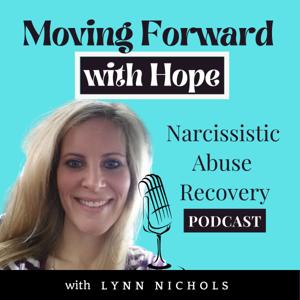
Discover a safe haven and a wellspring of insight with the Narcissistic Abuse Recovery Podcast. In this candid, relevant, and eye-opening show, host Lynn, author and passionate recovery advocate, guides you through the landscape of toxic relationships and covert narcissistic abuse dynamics. With honesty, depth, and tough love, Lynn helps you recognize subtle manipulation tactics and offers practical strategies to heal, rebuild, and reclaim your power.
Episodes dive deep into the complexities of narcissistic family systems, exploring roles like scapegoat and golden child, and shedding light on the pain of ostracization and family rejection. If you've been the family scapegoat—blamed, dismissed, and cast aside—this podcast validates your experience and provides a roadmap for breaking free from toxic family patterns. We tackle topics like going no contact, setting boundaries, understanding scapegoat dynamics, healing from family trauma, and uncovering covert manipulation that keeps you from thriving. Our conversations go beyond personal trauma to examine how narcissism is woven into broader cultural systems, including patriarchy's influence on gender roles and equality.
Available on all major podcast networks. Subscribe today.
This podcast exists to expose and challenge the systems that diminish, control, and silence. We focus on what has been overlooked, question what has been normalized, and create space for healing, clarity, and collective strength. Serving as a resource of hope, encouragement, and validation, so victims of narcissistic abuse can rebuild their lives and pursue dreams, visions, and intentional living.
Narcissistic Abuse Recovery Website: Visit our website at https://www.movingforwardafterabuse.com/
🔗 Additional Healing Resources & Support: 👉 movingforwardafterabuse.com
🎓 **Online Course: Narcissistic Abuse Recovery** 👉 Start the Course
🤍**Coaching with Lynn** 1:1 Connect with Lynn - Coaching
🧘♀️ **Somatic Healing Audio Sessions** 👉 Listen Now
📥 **Downloadables: Ebooks, Worksheets & More** 👉 Visit the Store
💬 **Join the Exclusive Community on Supercast** 👉 Become a Member
🎁 **Support the Show** 👉 Tip Jar
📱 **Connect on Social Media** 👉 Visit our Linktree
⭐ *****Benefiting from the Show? *****Leave us a Positive Review*****
Lynn is a trauma-informed narcissistic abuse recovery coach, author, and creator of the YouTube Channel, Wake the Elephant.
This podcast is for educational and informational purposes only. The content shared is not a substitute for professional mental health advice, diagnosis, or treatment. If you are experiencing a mental health crisis, please seek help from a qualified professional or contact a local crisis hotline.
Hosted on Acast. See acast.com/privacy for more information.
1,428 Listeners

330 Listeners
851 Listeners

758 Listeners

449 Listeners

1,164 Listeners
775 Listeners
512 Listeners

139 Listeners

39 Listeners
1,735 Listeners
292 Listeners
87 Listeners

84 Listeners

213 Listeners