
Sign up to save your podcasts
Or



Based on Podcast App listening data
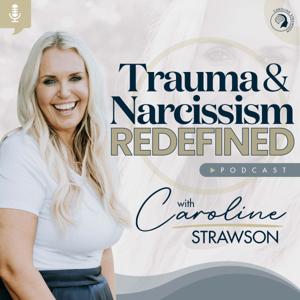
Today, we will talk about the shame many of us feel for staying longer than we think we should have in an abusive relationship with a narcissist.
In this show, my main focus is to understand before judging, to be compassionate before pointing fingers, and to take care of what we feel before wasting time on what others think of us. We will look at the reasons that made us stay in an abusive relationship from a trauma-informed lens, trying to understand our nervous system and why we behave the way we do.
What You Will Learn In This Episode:
- The link between my childhood traumas and me becoming a perfectionist and a people-pleasing person
- Why meeting my ex-husband, a covert narcissist, felt like I had met Prince Charming
- Why our brain thinks that it is better to stay with the narcissist than risk the unknown world
When our protector parts are coming to the rescue, that means somehow our inner child wounds were triggered. Getting curious about what triggered them is crucial for our recovery. We can't change past events, but we can change our experience over those events and, most importantly, how we FEEL about those events. That is the beginning of our healing journey because those past traumatic experiences won't hurt us anymore.
Resources:
- Join my Narcissistic Trauma Recovery Programme™ https://go.carolinestrawson.com/heal-the-trauma-of-narcissistic-abuse
- Join my Facebook group at https://www.facebook.com/groups/thriveafternarcissisticabuse
- Connect with me on Instagram: https://www.instagram.com/carolinestrawson/
- My website: https://www.carolinestrawson.com/
In this episode, we will go through the different types of narcissists you can encounter. I will break down each of them, starting with the main types or the core four, and then going through the subtypes. I believe that talking about this subject will help you identify and get more clarity about the type of narcissist you may be dealing with in your life.
What You Will Learn In This Episode:
- The four main types of narcissists, and the main differences between them
- The three subtypes of narcissists that go hand in hand with each one of the core four
- Why some subtypes of narcissists are so hard to spot
These kinds of episodes are meant to help you put pieces together. They should help you have a clearer idea of the size of the problem you're dealing with, to start realising that none of what is happening to you is your fault. Narcissistic abuse happens TO you, not because of you. The sooner you get curious about the origin of your reactions to abuse, the closer you get to finding healing and closure.
Resources:
- Join my Narcissistic Trauma Recovery Programme™ https://go.carolinestrawson.com/heal-the-trauma-of-narcissistic-abuse
- Join my Facebook group at https://www.facebook.com/groups/thriveafternarcissisticabuse
- Connect with me on Instagram: https://www.instagram.com/carolinestrawson/
- My website: https://www.carolinestrawson.com/
I had a fascinating conversation recently about postnatal depression and the symptoms of narcissistic abuse, and I thought it would be interesting to do an episode about it. Today I share the different challenges I faced during pregnancy, my own experience with postnatal depression, and the realisation that what I was feeling was mostly trauma-based.
What You Will Learn In This Episode:
- What triggered my inner wounds during my first pregnancy, and why I felt not good enough as a mother
- How I ended up with the belief that I had to choose between being enough either as mom or wife, but not both
- Why I decided to stay after finding out my ex-husband was cheating on me
- Looking at postnatal depression as protector parts distracting us from being in a loveless marriage
When we come from a place of anger, depression, anxiety, self-harm or addictions, it could be a part of us protecting us from a core wound our brain believes is too painful to feel. Narcissists are specialists in shining big spotlights on our inner wounds, and the more they do that, the more our protector parts show up and get louder. Eventually, what we think is the problem, actually is a symptom of the problem, and for us to experience post-traumatic growth, it is crucial we get curious about it.
Resources:
- Join my Narcissistic Trauma Recovery Programme™ https://go.carolinestrawson.com/heal-the-trauma-of-narcissistic-abuse
- Join my Facebook group at https://www.facebook.com/groups/thriveafternarcissisticabuse
- Connect with me on Instagram: https://www.instagram.com/carolinestrawson/
- My website: https://www.carolinestrawson.com/
Today, I will explain in depth what the Ladder of Tolerance is, how it works and how we use it in my Narcissistic Trauma Recovery Program™. We will explore how our nervous system functions, hoping to remove some of the guilt and shame that narcissistic abuse imprints on us. I will share some of my own traumatic experiences as a child that made me blend with my protective parts and turn into a perfectionist, self-harming, and people-pleasing person.
What You Will Learn In This Episode:
- The Ladder of Tolerance and how can we use it to understand our nervous system response to abuse
- What is post-traumatic growth, and how it can help us recover from narcissistic abuse
- What it means that we must be taught to be in the top part of the ladder, and what happens when we are not
- Why healing from narcissistic abuse does not happen only on the cognitive level, and what other things we must work on to heal completely
Our nervous system is constantly moving up and down the ladder. When we feel safe, we are at the top, and when we feel anxious, nervous, or threatened, we are at the bottom. In many cases, there is no real danger and still, we think our life is on the line. What triggers that response is usually self-worthiness wounds we drag from traumatic experiences from our childhood. We need to take a closer look at those wounds, get curious about them and find out their origin, so we can learn to heal them.
Resources:
- Join my Narcissistic Trauma Recovery Programme™ https://go.carolinestrawson.com/heal-the-trauma-of-narcissistic-abuse
- Join my Facebook group at https://www.facebook.com/groups/thriveafternarcissisticabuse
- Connect with me on Instagram: https://www.instagram.com/carolinestrawson/
- My website: https://www.carolinestrawson.com/
In this episode, we will talk about what I call the Disney narcissistic parents - about their behaviour when they are with the kids, the effects of that on our children, and the responses it triggers in us. We will talk about dealing with this kind of narcissistic parents, which is one of the most challenging parts of co-parenting with a narcissist.
What You Will Learn In This Episode:
- What is a Disney narcissistic parent and how we can identify them
- Why it is so triggering for us to deal with this behaviour in co-parenting with a narcissist
- Why our kids misbehave when they are with us and never when they are with the narcissistic parent
- How The Tolerance Ladder can help us understand our kids' behaviour
Although it might be extremely challenging to co-parent with a narcissist, we must focus on teaching our kids values, showing them love, ensuring a secure connection and installing a healthy sense of self in them. The Disney narcissistic parent will flood them with expensive toys, new cell phones or video games, but none of that can compete with the kind of relationship we can offer to them based on trust, love and a deep connection.
Resources:
- Join my Narcissistic Trauma Recovery Programme™ https://go.carolinestrawson.com/heal-the-trauma-of-narcissistic-abuse
- Join my Facebook group at https://www.facebook.com/groups/thriveafternarcissisticabuse
- Connect with me on Instagram: https://www.instagram.com/carolinestrawson/
- My website: https://www.carolinestrawson.com/
Today, we will talk about a topic that can be quite triggering. We will talk about intimacy while in a relationship with a narcissist, and we will look at lack of sexual desire from a trauma-informed perspective. To explore this topic, I’ll be fully vulnerable and share some of my own experiences with my ex-husband, and how I navigated these issues.
What You Will Learn In This Episode:
- How looking at intimacy with a narcissist from a trauma-informed perspective can help us better understand our reactions
- Why we must understand there is nothing wrong with ourselves when our body rejects intimacy with our partner
- What I learned about myself and my relationship with sex in my previous marriage
Understanding that frigidity, coldness, or lack of sexual desire are nothing else than our protector parts activating body responses to a perceived danger changes everything. Rather than thinking it is a conscious choice or something wrong with us, we must know that these reactions to sex are parts of us doing their job, which is keeping us alive.
Resources:
- Bella Article https://publishmystory.files.wordpress.com/2010/11/bella-caroline-strawson-nf-finished.jpg
- Join my Narcissistic Trauma Recovery Programme™ https://go.carolinestrawson.com/heal-the-trauma-of-narcissistic-abuse
- Join my Facebook group at https://www.facebook.com/groups/thriveafternarcissisticabuse
- Connect with me on Instagram: https://www.instagram.com/carolinestrawson/
- My website: https://www.carolinestrawson.com/
In this episode, we will talk about the damage that narcissistic abuse provokes to our brains. Although what happens to us in abusive relationships is considered brain damage, I'll add a caveat right away and clarify that this damage can be reversed. In fact, you can start living even better than before. We will begin by understanding what happens in our minds when we are abused, what parts of the brain are triggered by the abuse, and how we can recover from it.
What You Will Learn In This Episode:
- What kind of brain damage narcissistic abuse produces
- What happens when our mind goes from "online" to "offline" mode
- How the hippocampus and the amygdala affect how we feel and how we react to abuse
- What we can do to reverse the damage produced by narcissistic abuse
The traumatic experiences we go through in our childhood leave marks, or self-worthiness wounds as we call them. Those wounds are the reference our brain has to do its primary job of keeping us alive. Our brain will always pick what it considers the less painful option, even if that means staying in an abusive relationship. Understanding this is crucial to see that our system is trying to protect us, and for us to become curious why it considers abuse less dangerous than other options.
Resources:
- Join my Narcissistic Trauma Recovery Programme™ https://go.carolinestrawson.com/heal-the-trauma-of-narcissistic-abuse
- Join my Facebook group at https://www.facebook.com/groups/thriveafternarcissisticabuse
- Connect with me on Instagram: https://www.instagram.com/carolinestrawson/
- My website: https://www.carolinestrawson.com/
Today, I want to talk about a subject that divides the trauma, counselling, and psychology world: the label of narcissistic personality disorder (NPD). I'll share my opinion on the challenges and dangers of labelling NPD. We’ll talk about and compare three different approaches - the Diagnostic and Statistical Manual of Mental Disorders (DSM), the Internal Family System approach, and my own, Narcissistic Trauma Informed approach.
What You Will Learn In This Episode:
- Why I consider over 35 traits in order to recognise NPD and not only 9 like the DSM
- Why labelling and medicalising NPD almost feels like excusing the narcissistic behaviour
- Why we consider narcissistic traits as an umbrella protecting self-worthiness wounds
In many cases of narcissistic abuse, I've witnessed how the victims tend to see narcissistic abuse as a reflection of them. What happens is that when we have self-worthiness wounds from our childhood, we believe the narcissist "is right" abusing us because we see ourselves as unworthy or unlovable. That is why I love to share this knowledge, because we must know that the abuse is happening TO US, not because of us.
Resources:
- Join my Narcissistic Trauma Recovery Programme™ https://go.carolinestrawson.com/heal-the-trauma-of-narcissistic-abuse
- Join my Facebook group at https://www.facebook.com/groups/thriveafternarcissisticabuse
- Connect with me on Instagram: https://www.instagram.com/carolinestrawson/
- My website: https://www.carolinestrawson.com/
In this episode, we discuss narcissists in relation to addictions. We will use the Internal Family Systems approach to understand how addictions can serve as protective parts. We will also learn how addictions can distract and soothe away narcissists from suffering from their self-worthiness wounds.
What You Will Learn In This Episode:
- Why addictions are considered protective parts in Internal Family Systems
- How the narcissist’s interpretation of other people's actions and reactions lead to addictive behaviours
- How a better understanding of narcissists' addictions can help us on our trauma recovery journey
Self-worthiness wounds are created during childhood, and the interpretation of the world and other people's behaviour forms what is called an exile in Internal Family Systems. Addiction to drugs, porn, sex, or work can act as protective parts the brain uses to protect people from feeling that pain again. Between being distracted by an external stimulus or feeling miserable, the brain chooses what it considers less painful.
Resources:
- Join my Narcissistic Trauma Recovery Programme™ https://go.carolinestrawson.com/heal-the-trauma-of-narcissistic-abuse
- Join my Facebook group at https://www.facebook.com/groups/thriveafternarcissisticabuse
- Connect with me on Instagram: https://www.instagram.com/carolinestrawson/
- My website: https://www.carolinestrawson.com/
Today, we talk about gaslighting. I'm amazed by the number of people who aren't sure what gaslighting is and don't even know they are being victims of it. To help me explain what gaslighting is and why it is a form of abuse, I'll share some situations I've experienced during my previous marriage with my ex-husband.
What You Will Learn In This Episode:
- What gaslighting is, and what makes it a form of abuse
- Why, when we are being gaslighted, we doubt our sanity and our common sense
- How my ex-husband went from potential murder to hero
- Why we isolate ourselves when we are being gaslighted in our relationship
When someone is being abused, their friends and relatives will most likely advise them to leave that relationship. In most cases, the abused won't leave their abuser, not because they don't want to, but because they can't, because being in an abusive relationship feels safer for the victim's system than being alone. Gaslighting is a form of abuse, and we must approach its victims with compassion and empathy.
Resources:
- Join my Narcissistic Trauma Recovery Programme™ https://go.carolinestrawson.com/heal-the-trauma-of-narcissistic-abuse
- Join my Facebook group at https://www.facebook.com/groups/thriveafternarcissisticabuse
- Connect with me on Instagram: https://www.instagram.com/carolinestrawson/
- My website: https://www.carolinestrawson.com/
From the publisher's feed
Ranked by our users in the last 21 days

1,412 Listeners

1,526 Listeners

655 Listeners
848 Listeners
754 Listeners

570 Listeners
140 Listeners

1,849 Listeners
32 Listeners
684 Listeners
1,738 Listeners

340 Listeners

295 Listeners

83 Listeners