
Sign up to save your podcasts
Or

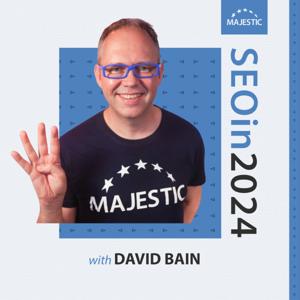


Helen Pollitt shares the importance of understanding the cost as well as value of organic traffic.
Talking points include:
What is the difference between the cost and value of organic traffic?
Why do we need to know the cost?
How do we calculate the value?
What do you mean by organic traffic in all forms?
How do you prefer to calculate ROI?
How does this lead into defining an SEO strategy?
How often should this work be done?
How is it changing due to AI and new technology?
Read the full transcript of Helen's interview at: https://majestic.com/seo-in-2025/additional-insights/helen-pollitt
Andy Frobisher shares that it’s time to get serious about the internet and energy consumption.
Talking points include:
What companies are trying to go net zero?
Does this have a positive business case?
What does this mean for the overall size of pages on websites?
What are the best ways to reduce the page speed of a web page in 2025?
What does this mean for algorithms moving forward?
What does this mean for SEO planning?
How can Core Web vitals help us with this?
How do we forecast a revenue increase or cost reduction as a result of reducing page speed?
Read the full transcript of Andy's interview at: https://majestic.com/seo-in-2025/andy-frobisher
Bastian Grimm shares that inventory management is now more important then ever.
Talking points include:
What do you mean by Inventory management?
How do you know which content to focus on?
What do Google do when they can’t keep up with crawling and indexing the web?
Should you get rid of some content?
What content should you get rid of?
What’s an example of poor quality content, produced by AI?
What is state-of-the-art AI that SEOs should be using?
What parts of your SEO and content production should you be using AI for?
How else can AI help with your SEO performance?
Read the full transcript of Bastian's interview at: https://majestic.com/seo-in-2025/bastian-grimm
Kaspar Szymanski shares that SEO in 2025 is all about signal input.
Talking points include:
What do you mean by SEO signals?
Are Google and Bing looking for the same thing in terms of SEO signals?
So the same signals apply to LLMs as well?
How do you ensure that SEO signals are consistent?
Why do regular, annual SEO audits help with SEO signals?
What are the key things to be looking for in an SEO audit?
Is using server log data important as part of this?
What are you looking for in server log data?
What software do you use to assist you with this?
Tin Dudajek shares the growing importance of schema markup.
Talking points include:
How would you summarise the current state of Schema?
Why is it continuing to gain importance in 2025?
What is schema used for in modern SEO? (data management)
Why is Schema so important for AI?
What content needs to be optimized for Schema for AI?
Where is AI using these schema enhanced pages?
What tools do you use to assist with this?
How do you measure success?
Keith Goode shares that SEO Product Management is the natural progression of Technical SEO.
Talking points include:
What is SEO product management?
What does the day-to-day life of an SEO product specialist look like?
Why is SEO Product Management the natural progression of Technical SEO?
Why does SEO Product Management help you go from just building audit lists to implementing changes?
Should every SEO be considering this?
What skillsets are developed?
Cathryn Stormont shares the importance of keeping track of the performance of core web vitals and overall site user experience.
Talking points include:
Why are your core web vitals so important to UX?
How can you improve your core web vital scores?
Are these metrics likely to change or be added to over the next couple of years?
Are there any other key metrics that are important for UX?
Montserrat Cano advises the importance of getting to know your audience by undertaking market and competitor research to help overcome risks.
Talking points include:
How do you undertake market and competitor research to help overcome risks?
Why does this work both in primary and global markets?
Why does it help to overcome bias?
You also talk about Avoiding Logical Fallacies in SEO & Broad Marketing - what do you mean by that?
How does this process help you to maximise your budget?
Why does this help you Avoid alienating potential customers?
What data should you be gathering?
Where should you get data from?
How often should you be doing this?
Maria Scheibengraf shares that in your international SEO efforts, translation and SEO shouldn't be separate tasks performed by separate professionals.
Discussion points include:
Why does translation and SEO need to be the same task?
What happens if these tasks aren’t tackled together?
Surely technical SEO and content creation are quite different tasks?
What aspects of SEO do people who are translation specialists commonly miss out on?
What aspects of getting translations right do SEO specialists generally get wrong?
How do you ensure that translations are correct for the local region?
What tools does an SEO need to do both of these tasks effectively together?
How do you determine if a translation has been effective?
Do localised translations need to be optimised differently for local search engines?
Is AI not impacting the need for localised translations?
Joseph Kahn explains why adapting to the Local SEO Evolution is key.
Talking points include:
What changes in local search algorithms are you referring to?
How is ‘features with AI’ affecting local SEO?
How do you optimize for "near me" searches ?
What do you mean by optimizing for location-based queries using AI?
How do you leverage user-generated content for local SEO using AI?
From the publisher's feed
1,448 Listeners

1,580 Listeners

113 Listeners

1,256 Listeners

53 Listeners

4,458 Listeners

8,527 Listeners

2,647 Listeners
210 Listeners

358 Listeners

1,448 Listeners

93 Listeners
3 Listeners

681 Listeners

38 Listeners