
Sign up to save your podcasts
Or

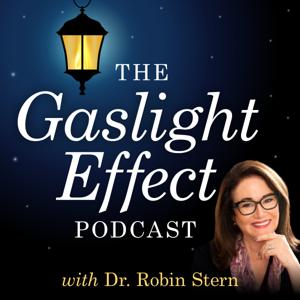


On this episode, Dr. Robin Stern talks with Dr. George Bonanno, Professor of Clinical Psychology at Columbia University. Dr. Bonanno is the author of two amazing books - The End of Trauma and The Other Side of Sadness.
From Dr. Bonanno's website :
"He is recognized by the Web of Science as among the top one percent most cited scientists in the world, and has been honored with lifetime achievement awards by both the Association for Psychological Science and the International Positive Psychology Association. In addition to the books, The End of Trauma and The Other Side of Sadness, George has published hundreds of peer-reviewed scientific articles, many appearing in leading journals such as Nature, JAMA, American Psychologist, and the Annual Review of Psychology. He is also an avid painter (when he has time), reads widely, and loves music." Robin and Dr. Bonanno explore how human trauma plays a role in gaslighting and some tools of resilience that can help in dealing with and healingl the trauma of gaslighting. Robin points out that gaslighters are not born. Gaslighting is the result of social learning. A gaslighter tries something and it works, and they need to be in control of a moment, so they continue to use this tactic. Dr. Bonanno talks about the flexibility mindset and using this to determine ways to not allow the gaslighter to control you. Robin and Dr. Bonanno also look into the grief and sadness that can accompany the ending of a gaslighting relationship. Even though the gaslightee can be happy and relieved, they are also susceptible to being sad at the loss of a relationship that they may have had for a very long time. To read the complete transcript of this episode and to hear other episodes of The Gaslight Effect Podcast, head over to robinstern.com. And please leave a rating and review if you enjoyed this episode!
On this episode, Dr. Robin Stern interviews Alyssa Haray about generational gaslighting and how Alyssa was able to identify the gaslighting in her family and break the cycle.
Alyssa discusses how interacting with the mother of her boyfriend, and watching him interact with his mother, showed her what a normal parent/child relationship should be, and how this experience changed how she interacted with her own mother and grandmother to break the cycle of gaslighting in her life.
Robin outlines the typical stages of gaslighting - 1) Don't believe 2) Defending 3) Depressed. Typically as a child you are exposed to all three of these feelings and often bounce between them, causing trust in yourself to be undermined.
Robin and Alyssa also talk about the importance of setting boundaries with a gaslighting parent, and having others in your life to support you outside of family relationships.
Alyssa very eloquently talks about how she understands that her mother is the product of her own upbringing and isn't in a place where she can recognize the gaslighting. Also, Alyssa and Robin discuss the emotional struggle that Alyssa has gone through to get to a place where she would feel comfortable having children of her own, and her fear of not being able to break the cycle of gaslighting.
This is an insightful and emotional episode that is a must listen for anyone who has experienced generational gaslighting.
For the full transcript of this episode as well as to hear other episodes and subscribe, please head over to robinstern.com!
On this episode, Dr. Robin Stern interviews Michelle McQuaid, founder of The Wellbeing Lab, "a benefit-led organization...passionate about energizing and equipping people to care for their wellbeing even when they're struggling so we can help you to build thriving teams, workplaces, schools, and communities."
Michelle explains that harassment is the #3 reason people burn out at work, and gaslighting plays a part in that!
As a way to battle this burnout, Michelle discusses the importance of the 4 Factors For Leaders - Compassion with boundaries; Appreciation; Responsibility; and Emotional Wisdom.
She also recommends periodic safety checks within any organization by asking: What's working well? Where are our people struggling? What are we learning from the first two questions? And what do we want to do about that?
Michelle and Robin dive deep into the ways in which organizations of any size can tackle harassment and gaslighting by "asking instead of mind reading," and not getting stuck on the "hump of politeness" (in other words - not "biting your tongue".)
Michelle also recommends "no groaning and moaning." Rather "dare and share!" And no pointing of fingers. Judgement is bad. Curiosity is good.
If you're looking for amazing insight into how organizations can thrive in any environment, then this epiosde is a must listen!
To see the full transcript of this episode and to check out other episodes, head over to robinstern.com.
On this episode Dr. Robin Stern talks with Dr. Paige Sweet, a Sociologist at The University of Michigan, doing work on gender and sexuality, with a specialty in studying domestic violence.
In her research and the interviews she conducted for her book, The Politics of Surviving: How Women Navigate Domestic Violence and its Aftermath (2021) Dr. Sweet noticed an almost universal reporting of gaslighting within the dysfunctional relationships. This led her to write the article, The Sociology of Gaslighting in The American Sociological Review.
Robin and Paige discuss gaslighting from both the psychological and sociological perspective, and how those two areas of study overlap and complement one another. Dr. Sweet points out that gaslighting as a sociological phenomenon, often includes gender inequality as well as other social inequalities, such as race and domestic abuse.
To read the full transcript of this episode and to hear other episodes, head over to robinstern.com!
Has the remote working phenomenon spurred by the pandemic caused an increase in gaslighting in the workplace?
On this episode, Robin talks with Dr. Heidi Brooks, Senior Lecturer in Organizational Behavior at Yale University, about this intersting phenomenon.
Many workplaces instituted a work-from-home policy during the recent COVID-19 pandemic. Now that more offices are opening back up, many employees are still eager to work from home. While the work environment continues to undergo change, there may be an increase in incidences of gaslighting due to the way that we now work together.
Robin and Heidi explore how someone in the workplace can "regain their reality" while navigating a work-from-home world, and how employers can create transparency and psychologically safe workplaces, so that emplyees will not be subject to gaslighting.
How can organizations become gaslight free zones? Check out the episode to find out!
For the full transcript of this episode and to hear other episodes, head over to robinstern.com.
Are you involved in a gaslighting situation and feel like you're all alone? Are you having trouble breaking away from your gaslighter? Robin's guest on this episode of The Gaslight Effect Podcast, Lucy Rose, found herself in exactly this situation.
Robin discusses with Lucy how, looking back, Lucy was experiencing signs of gaslighting as early as the very first date with her then boyfriend. Struggling with insecurity, and existing family issues, Lucy found herself very vulnerable to gaslighting.
It took many years of being in a controlling relationship with a partner who was verbally abusive and dictated almost every decision she made, before Lucy was able to find the inner strength to break away.
On this episode, Robin works through the underlying feelings that caused Lucy to be a victim of gaslighting, the signs of gaslighting that kept building up within her relationship, and ultimately the insight to recognize what was happening and the strength to take control of her life back from her gaslighter.
Lucy's story will inspire listeners to know that they are not alone, and they can stand up for their reality.
For more information and to see the full transcript of this episode, please visit www.robinstern.com
Does unintentional gaslighting exist? Are people born gaslighters? How do parents gaslight their children without either one of them knowing it? We'll dig deeper in this episode.
In this episode of The Gaslight Effect Podcast, Robin talks with Psychology Today's Hara Marano. Hara is the Editor at Large of Psychology Today and writes the magazine's advice column, Unconventional Wisdom.
Her newest book, A Nation of Wimps: The High Cost of Invasive Parenting, examines the contemporary culture of parenting. It grew out the groundbreaking Psychology Today article A Nation of Wimps, which focuses on the rise of psychological distress among America's youth.
Through her work and research with Psychology Today, Hara has been able to understand the pulse of the American public with relation to the gaslighting phenomenon.
During this episode Robin and Hara discuss concepts of inadvertent or accidental gaslighting versus intentional gaslighting as well as red flags related to the two different versions. Robin and Hara also share examples of gaslighting scenarios between parents and children and how seemingly innocent conversations can walk the fine line between "good parenting" and gaslighting.
For more information and to see the full transcript of this episode, please visit www.robinstern.com
On this episode of The Gaslight Effect Podcast, Robin talks with New York based divorce and family law attorney Evan Schein. Evan is the Head of Litigation at Berkam Bottger Newman & Schein LLP .
As stated on Evan's website - "Evan has helped clients find post-divorce happiness and build successful financial lives, advocated to protect children and fought for the rights of victims of domestic violence. He has learned more than a few things about family, money, and the law, things that every spouse or parent in America should know. As a divorce lawyer in America's unofficial capital city, Evan's been lucky to meet fascinating people and work with top experts in fields like finance, trust and estates, real estate, sports, entertainment, psychology, and more."
Robin and Evan discuss the role gaslighting plays in divorce cases and Evan's first hand experience over the past 15 years of witnessing the impact of gaslighting on marital relationships.
Delving into how gaslighting can have a negative impact on a marriage and ultimately become a significant factor in an individual seeking a divorce, Evan and Robin explore the empathy and compassion necessary to effectively support and protect a client during a divorce proceeding - especially one that involves gaslighting.
For more information and to see the full transcript of this episode, please visit robinstern.com
Gaslight (/ˈɡaslīt/). Verb. Manipulating someone by psychological means into questioning their own reality.
The Gaslight Effect podcast is hosted by Dr. Robin Stern, co-founder of the Yale Center for Emotional Intelligence and author of the best-selling book, The Gaslight Effect. On her podcast, Robin helps listeners identify gaslighting, to escape the destructive dynamic and reclaim their reality.
On this episode, join Dr. Robin Stern as she explains what the term Gaslighting means, why she decided to create The Gaslight Effect podcast, and what listeners can expect on future episodes.
From the publisher's feed

21,047 Listeners

2,516 Listeners
1,428 Listeners

27,905 Listeners
784 Listeners

365 Listeners

41,343 Listeners
33 Listeners

1,104 Listeners

18,912 Listeners
295 Listeners
381 Listeners

83 Listeners

8,472 Listeners

2,105 Listeners