
Sign up to save your podcasts
Or

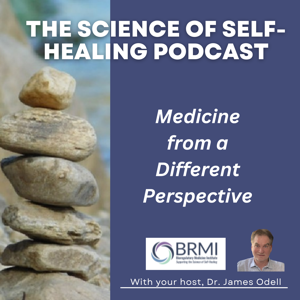


Berberine is all over social media right now, usually with the nickname "nature's Ozempic." But does this bright yellow plant compound actually live up to the hype?
In this episode of The Science of Self-Healing, we look at what the research really says about berberine and your metabolism. You'll learn how it may help lower blood sugar and cholesterol, why so little of it reaches your bloodstream and yet it still seems to work, and how your gut bacteria play a surprising role in its effects. We'll also look at why the Ozempic comparison falls apart, what a 2026 clinical trial found about berberine and belly fat, and why "natural" doesn't mean risk-free.
If you take metformin, blood thinners, blood pressure medication, or any prescription drug, this episode covers the interactions you need to know about before trying berberine. You'll also hear what a smart, supervised trial looks like and where berberine fits in a bioregulatory approach to metabolic health.
No hype. No dismissal. Just an honest look at a supplement that's promising, powerful, and still not fully proven.
Could the scent of rosemary actually sharpen your memory? Rosemary has been associated with remembrance since antiquity, and centuries later, herbalists were describing it as an herb that could strengthen memory and the senses. Today, modern researchers are uncovering intriguing biological reasons that this enduring connection may be more than symbolic.
In this episode of The Science of Self-Healing, Dr. James Odell explores how rosemary and its active compounds may influence memory, attention, alertness, brain energy, inflammation, oxidative stress, and the neurotransmitter acetylcholine. You'll discover what researchers have learned from studies using rosemary aroma, rosemary water, and dried rosemary, why the compound 1,8-cineole is particularly intriguing, and how simply smelling rosemary may produce measurable effects in the body and brain.
Dr. Odell also looks at rosemary and the aging brain, practical ways to use this familiar herb, and why supporting memory involves much more than targeting a single pathway.
What if aging isn't simply a matter of getting older—but a complex biological process that we may have more influence over than we once thought?
In this episode of The Science of Self-Healing, Dr. James Odell explores what actually happens inside the body as we age, from changes in our cells, mitochondria, hormones, immune system, microbiome, and epigenetics to the gradual shifts that occur in our muscles, bones, cardiovascular system, and brain.
You'll discover why people can age at remarkably different rates, how everyday factors such as movement, nutrition, sleep, stress, and social connection can influence the aging process, and why many age-related changes are not as inevitable as they may seem.
Rather than searching for a mythical fountain of youth, this episode takes a fascinating look at the science of healthier aging—and the practical choices that may help us remain stronger, more resilient, and more capable throughout life.
GLP-1 medications are everywhere right now — and so is the noise around them. One side calls them a miracle. The other says they're wrecking your metabolism, your gut, and your muscle. Neither version holds up when you actually read the evidence.
In this episode, we look at what these drugs are really doing inside the body. What happens when appetite is switched off for months at a time. Why losing weight and losing strength can happen simultaneously — and what the DXA data from the STEP 1 trial actually showed about lean mass. Why two-thirds of the weight tends to come back after stopping, and what a thoughtful exit plan looks like. Plus two interactions almost nobody warns patients about: what slowed stomach emptying does to oral birth control, and why your anesthesia team needs to know you're on one of these before any procedure.
We also give the benefits their due. The SELECT trial showed a roughly 20 percent reduction in major cardiovascular events in high-risk patients — that's not a cosmetic result, and it deserves to be part of an honest conversation.
Then we turn to the bioregulatory question that sits underneath all of it: is this intervention restoring your body's ability to regulate itself, or is the benefit only holding as long as the drug keeps pressing down? Along the way, we look at emerging research on Akkermansia muciniphila, a gut bacterium that may influence your own GLP-1 signaling from the inside.
The same medication can be rational treatment for one person and a poor biological trade for another. This episode is about knowing which one you are.
You're stressed, you're exhausted, and the weight is climbing anyway. Everyone has an explanation. Almost all of them are wrong.
The version you've heard stops at "stress raises cortisol, cortisol adds weight." What's actually happening is stranger and far more useful to know. Chronic stress doesn't just raise cortisol — it scrambles the timing of it. It rewires which part of your brain is making decisions at six o'clock. It changes the hormones that tell you when you're full. And there's an enzyme in belly fat that manufactures its own cortisol supply, right there in the tissue.
In this episode: why cravings hit hardest when you're most depleted, why stress moves fat toward the middle, why bad sleep may matter more than anything on your plate, and what should be ruled out before anyone blames your stress at all.
Then the part that matters most — what actually works, and why rigid dieting makes it worse.
Weight gain under stress isn't a character flaw. It's information. Here's how to read it.
Your blood sugar can look completely normal on paper while your metabolism is quietly unraveling underneath.
Insulin resistance often develops a decade or more before a diabetes diagnosis — and by the time it shows up on standard labs, the damage has already been building for years.
In this episode, we break down what's actually happening inside the body as cells stop responding to insulin, why this single shift is linked to heart disease, fatty liver, PCOS, cognitive decline, and more, and the early warning signs most people miss — from afternoon energy crashes to stubborn belly fat to waking up hungry at night. We also cover the lab markers that catch insulin resistance years before a glucose test ever will, and a bioregulatory framework for addressing the inflammation, mitochondrial stress, and gut health issues driving it all. Plus, simple things you can start doing today to blunt a glucose spike before it happens.
This one's for anyone who wants to get ahead of a diagnosis instead of reacting to one.
You've eaten burgers, steak, and bacon your whole life without a second thought. Then one tick bite changes everything.
Alpha-gal syndrome is unlike any allergy most people have heard of — it doesn't come from a protein, it doesn't show up right away, and it can turn a lifelong meat-eater into someone who can't touch a hamburger without ending up in the ER hours later.
In this episode, we break down how a single tick bite rewires the immune system, why symptoms hit three to eight hours after eating (long after most people have stopped suspecting their lunch), and what's actually happening inside the body when alpha-gal antibodies go to work.
We also get into diagnosis, conventional treatment, an emerging acupuncture protocol showing real promise, and the bioregulatory lens on immune resilience, plus practical tick prevention so you can stay ahead of it. If you spend any time outdoors, this one's worth your full attention.
50 million Americans live with an autoimmune disease. Nearly 80% of them are women.
If that's you, you already know the fatigue that doesn't lift, the flares that show up with no warning, the feeling that your own immune system has somehow become the enemy.
You've probably been searching for real answers for a while now.
This episode asks a different question than the one you've been asked a hundred times.
Not "how do we suppress this?"
But "why did the body lose its balance in the first place?"
In this episode, we get into:
Your immune system didn't betray you.
It's been trying to tell you something for a long time.
Let's finally turn that around.
You already know that ultra-processed foods aren't good for you. But do you know what they're actually doing inside your cells?
In this episode of The Science of Self-Healing, we take a deep look at one of the most consequential — and overlooked — consequences of the modern diet: mitochondrial dysfunction. Your mitochondria do far more than produce energy. They regulate inflammation, support detoxification, balance hormones, and govern the body's ability to heal itself. And ultra-processed foods are disrupting all of it.
From blood sugar instability and oxidative stress to gut microbiome damage, nutrient depletion, and toxic burden, we explore the cascade of mechanisms through which these foods quietly erode cellular function — often years before a chronic disease diagnosis appears.
This episode also covers what a bioregulatory approach to mitochondrial restoration actually looks like, and why healing this damage begins not in a doctor's office, but on your plate.
Have you ever wondered why your body produces symptoms like fever, inflammation, or mucus — and whether suppressing them is always the right answer? In this episode of the Science of Self-Healing, we explore Homotoxicology, a branch of bioregulatory medicine developed by German physician Dr. Hans-Heinrich Reckeweg that views illness as the body's intelligent attempt to eliminate toxins and restore balance.
We walk through the Six Stages of Disease — Excretion, Reaction, Deposition, Impregnation, Degeneration, and Dedifferentiation — and explain how the body progresses from healthy acute responses toward chronic cellular dysfunction when its detoxification systems become overwhelmed. You'll come away with a deeper understanding of what your symptoms may actually be communicating, why early intervention matters, and how supporting your body's natural regulatory systems can make a profound difference in your long-term health.
Whether you are navigating a chronic condition, supporting a patient, or simply curious about a more systems-based view of health and disease, this episode offers a compelling new lens through which to understand the human body.
From the publisher's feed
227,492 Listeners

3,959 Listeners
444 Listeners
718 Listeners

8,527 Listeners
981 Listeners
9,148 Listeners

29,204 Listeners

154 Listeners

2,031 Listeners

1,412 Listeners

15,964 Listeners

10,653 Listeners
7 Listeners
3,140 Listeners