
Sign up to save your podcasts
Or

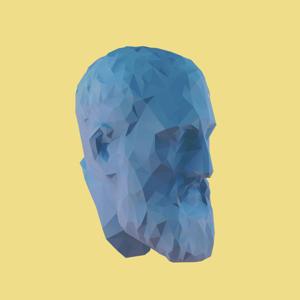


It is easy to read a lot about Stoicism and mistake that for actually practising it. I put this to Donald Robertson, and we get into the gap between knowing the ideas and living them, what he calls the illusion of mastery.
We also talk about the view from above as a practice, and end on a fun one: what Marcus Aurelius would make of the modern world if he time travelled into it.
More from Donald: donaldrobertson.name
Free 7-Day Stoic Challenge: stoicchallenge.co
The Stoic Vault: stoicvault.com
Asked what philosophy had taught him, Diogenes the Cynic said it taught him “to be prepared for every fortune.” I think he is one of the strangest, most useful figures in this whole tradition.
The Cynics came before the Stoics, and Diogenes took self-sufficiency to an extreme. He lived in a barrel, ate only when truly hungry, drank only when truly thirsty, and as a result could enjoy a plain cup of water like the finest wine. His most famous moment is the meeting with Alexander the Great. The most powerful man in the world offered him anything he wanted. Diogenes asked him to stand a little out of his sun. In this lesson I look at what that kind of freedom from craving actually buys you.
Free 7-Day Stoic Challenge: stoicchallenge.co
The Stoic Vault: stoicvault.com
When you are anxious, the fear is usually hiding underneath a vaguer worry. The What If technique is a way of following the thread down to whatever you are actually afraid of, so you can deal with the real thing instead of the fog around it.
It comes from Cognitive Behavioural Therapy, the science-backed approach that grew out of Stoic philosophy. This guided meditation is one of over a dozen in my course, Stoic Anxiety Mastery. Find somewhere quiet before you begin.
Stoic Anxiety Mastery: www.stoichandbook.co/what-if-technique
Free 7-Day Stoic Challenge: stoicchallenge.co
The Stoic Vault: stoicvault.com
Modern Stoicism gets sold mostly as resilience and acceptance. But I wanted to ask the obvious follow-up: can it actually make life more joyful? Not just calmer, but richer in awe, laughter, the good stuff.
I put that to Donald Robertson. This is the first in a series where I pick his brain on the Stoic ideas I keep wrestling with.
More from Donald: donaldrobertson.name
Free 7-Day Stoic Challenge: stoicchallenge.co
The Stoic Vault: stoicvault.com
Donald Robertson spent nearly three years making VERISSIMUS, a graphic novel about the life and philosophy of Marcus Aurelius. It might be the most ambitious philosophy project I have come across: historically accurate, genuinely action-packed, and a real way in for anyone who finds the Meditations hard to start with.
In this interview Donald comes back on the show to talk through how the book came together, what he had to leave out, and why a comic turned out to be the right form for Stoic ideas.
Order Verissimus (US): www.amazon.com
Order Verissimus (UK): www.amazon.co.uk
More from Donald: donaldrobertson.name
Free 7-Day Stoic Challenge: stoicchallenge.co
The Stoic Vault: stoicvault.com
The spiritual warrior is someone who treats every hardship as training rather than punishment. In this short clip I unpack that idea and how the Stoics turned adversity into an advantage instead of something to merely survive.
It is taken from a longer workshop, a bonus module inside my course Stoic Anxiety Mastery.
Stoic Anxiety Mastery: stoicanxiety.com
Free 7-Day Stoic Challenge: stoicchallenge.co
The Stoic Vault: stoicvault.com
James Stockdale spent over seven years as a prisoner of war and credited Stoicism with getting him through. What he noticed there became the Stockdale Paradox: the people who broke first were the optimists, the ones who kept saying they would be home by Christmas. In this short lesson I look at why realistic optimism beats the cheerful kind, and what that means for facing anything hard.
This is the first in a series of short lessons on my favourite Stoic figures, ancient and modern.
Free 7-Day Stoic Challenge: stoicchallenge.co
The Stoic Vault: stoicvault.com
The Stoics had a hard but freeing way of thinking about loss. Nothing is really yours. Everything you enjoy is on loan, and grief hurts less when you stop treating what was taken as something you owned outright.
This episode works from one of the more confronting lines in Epictetus:
“Under no circumstances ever say ‘I have lost something,’ only ‘I returned it.’ Did a child of yours die? No, it was returned. Your wife died? No, she was returned. ‘My land was confiscated.’ No, it too was returned.”
It is a lot to sit with. I try to take it seriously without pretending it makes loss painless.
Free 7-Day Stoic Challenge: stoicchallenge.co
The Stoic Vault: stoicvault.com
This Friday, May 27th, Stoic Anxiety Mastery launch week will end, meaning you will no longer be able to gain access to the epic bonus bundle and 70% discount.
To see everything Stoic Anxiety Mastery includes, click this link.
(This episode will be deleted at the end of launch week.)
I spent years trying different ways to get rid of anxiety. Stoicism and cognitive behavioural therapy gave me a better question: what happens if I stop treating every anxious feeling as a problem that must disappear? My friend Nic Stubbs interviews me about what changed, where the approach still falls short, and why I built Stoic Anxiety Mastery. This is personal rather than prescriptive. It is the account of what held up for me after a lot of searching, and why acceptance became more useful than another promise of a cure.
Free 7-Day Stoic Challenge: stoicchallenge.co
The Stoic Vault: stoicvault.com
From the publisher's feed
You've read the books. You know what Marcus Aurelius would do. But when life gets hard, the philosophy disappears. This podcast is for people who want to close the gap between knowing Stoicism and…
Ranked by our users in the last 21 days
828 Listeners
11,791 Listeners

948 Listeners

12,719 Listeners
2,516 Listeners

405 Listeners

4,967 Listeners

579 Listeners
1,341 Listeners

29,197 Listeners
1,377 Listeners
642 Listeners
100 Listeners

27 Listeners
62 Listeners