
Sign up to save your podcasts
Or

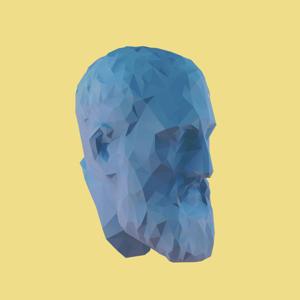


The Stoic claim here is bold: whatever lands in front of you, you already hold the inner resource to meet it. Tempted? You also carry self-restraint. The more you practise, the more you trust that no impression can knock you over.
This episode is my breakdown of one passage:
“For every challenge, remember the resources you have within you to cope with it. Provoked by the sight of a handsome man or a beautiful woman, you will discover within you the contrary power of self-restraint… In time, you will grow to be confident that there is not a single impression that you will not have the moral means to tolerate.” Epictetus, Enchiridion, Chapter 10
Free 7-Day Stoic Challenge: stoicchallenge.co
The Stoic Vault: stoicvault.com
The Stoics drew a sharp line between what happens to the body and what the mind does with it. Pain is real. But the suffering on top of it, the part that says this should not be happening, is something the mind adds. This episode sits with that distinction.
The passage I work from:
“Sickness is a problem for the body, not the mind – unless the mind decides that it is a problem. Lameness, too, is the body’s problem, not the mind’s. Say this to yourself whatever the circumstance and you will find without fail that the problem pertains to something else, not to you.” Epictetus
Free 7-Day Stoic Challenge: stoicchallenge.co
The Stoic Vault: stoicvault.com
Most of our anxiety about the future is really resistance to the fact that we cannot control it. This guided contemplation works on accepting events as they are rather than fighting the way things unfold, drawing on Chapter 8 of the Enchiridion.
It is a sit-down practice, so settle somewhere quiet before you start.
Further reading: www.stoichandbook.co/welcome-events-just-as-they-are
Free 7-Day Stoic Challenge: stoicchallenge.co
The Stoic Vault: stoicvault.com
How do you enjoy something fully while staying ready to lose it? Epictetus answers with one of his best images, the sailor who goes ashore to gather shells and water but keeps an ear out for the captain’s call. In this episode I work through Chapter 7 of the Enchiridion and what that analogy asks of us.
Further reading: www.stoichandbook.co/the-dangers-of-becoming-too-attached-to-life
Free 7-Day Stoic Challenge: stoicchallenge.co
The Stoic Vault: stoicvault.com
A tragedy happened close to home recently, and it knocked me sideways. This episode is me thinking out loud about death, life, and gratitude in the middle of that, and about the uncomfortable truth that a lot of Stoic practice is really preparation for the worst day of your life.
It is a more personal one. I do not try to tidy it into a neat lesson.
Free 7-Day Stoic Challenge: stoicchallenge.co
The Stoic Vault: stoicvault.com
Most people have heard of Stoicism. Far fewer have met an actual Stoic, someone as calm and self-disciplined as the people who wrote the books. That gap is what set me off ten years ago.
I learn through systems. I track my workouts, my martial arts progress, my habits. So I started asking what it would look like to treat Stoic practice the same way, as something you can measure and gamify rather than just read about. In this one I walk through how I do it, and how it changed my relationship with fear and gratitude.
Free 7-Day Stoic Challenge: stoicchallenge.co
The Stoic Vault: stoicvault.com
Epictetus drew a sharp line between two things that feel almost identical from the inside: bragging about what you happen to have, and taking pride in who you have become. One is fragile, the other is yours.
In this one I look at why feeling proud of externals, your looks, your money, your status, leaves you exposed, and where a steadier kind of pride actually lives.
Read the accompanying breakdown: stoichandbook.co
Free 7-Day Stoic Challenge: stoicchallenge.co
The Stoic Vault: stoicvault.com
Seneca wrote about fear more honestly than almost anyone. He knew it from the inside, the dread that arrives before the thing you dread ever does.
In this one I go through eleven of his lines on fear and anxiety and work out how to actually apply them, not just admire them. A note on credit: this audio includes a clip of Jocko Willink, and because it began life as a video where his accounts were on screen, the credit got lost in the audio version. So to be clear, that clip is his.
Jocko Willink: youtube.com/c/JockoPodcastOfficial
Free 7-Day Stoic Challenge: stoicchallenge.co
The Stoic Vault: stoicvault.com
Reading the Stoics and being changed by them are two different things. You can finish Meditations and carry nothing into Tuesday morning.
A listener, Mike Slavin, asked how I actually fold ancient Stoicism into daily life. That question sent me into the reading methods I have landed on over the years, the slow, deliberate ways of getting these texts off the page and into how you live.
Free 7-Day Stoic Challenge: stoicchallenge.co
The Stoic Vault: stoicvault.com
The Stoics can sound as if they want you to feel nothing. Donald Robertson, who has spent his career bridging Stoicism and modern therapy, takes that head on in this conversation.
We talk through the book Happy by Derren Brown and the questions it raises. Is anxiety ever useful? Were the Stoics too hard on it? I came in with my own doubts and Donald gave me a more careful way to hold them.
Free 7-Day Stoic Challenge: stoicchallenge.co
The Stoic Vault: stoicvault.com
From the publisher's feed
You've read the books. You know what Marcus Aurelius would do. But when life gets hard, the philosophy disappears. This podcast is for people who want to close the gap between knowing Stoicism and…
Ranked by our users in the last 21 days
828 Listeners

11,791 Listeners

948 Listeners

12,719 Listeners
2,516 Listeners

405 Listeners

4,967 Listeners

579 Listeners
1,341 Listeners

29,197 Listeners
1,377 Listeners
642 Listeners
100 Listeners

27 Listeners
62 Listeners