
Sign up to save your podcasts
Or

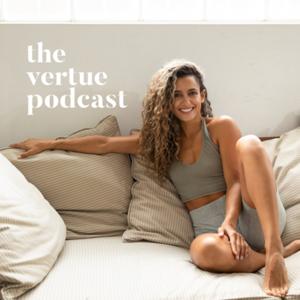


Abs. Belly fat. Six-packs. Post-baby pouches.
In this episode, we unpack why women feel so conflicted about their bellies; and why that pressure isn’t rooted in biology at all. We dive into culture, pregnancy, the pelvic floor, pressure management, and what your abs actually do, then finish with clear, practical guidance so you can train your core with confidence.
This episode is not anti-aesthetics - in fact, it's more about asking why the aesthetics obsession exists and finding ways to channel it in a healthy way.
Hope you enjoy it as much as I enjoyed researching for it. The historical stuff was my fave.
I was so wrong and psychology has demonstrated why and HUMBLED MEEEEE.
If you’ve ever felt like you know what to do for your training but still can’t seem to stick to it, this episode is for you. We explore why education alone doesn’t change behaviour, how uncertainty changes your relationship with your body, and why inconsistency is often a logical response, not a failure.
This episode offers a new way to understand your training struggles and a calmer path back to consistency.
Bring your pen and paper to this episode so we can really make this practical TOGETHER.
Why does everyone in the fitness space seem to be pitting these two against each other?
Why are prominent doctors who specialise in women's health suggesting that pilates isn't enough?
Do you have to give up Pilates to maintain a truly healthy body?
All of this was answered and so much more. I was on a MASSIVE mission to clear up the confusion with this frustrating online debate.
Let's go!
We often talk about exercise helping mental health, but not always why.
In this episode, I unpack a lesser-known system that links movement, emotional regulation, and even sleep–wake rhythms. If your anxiety tends to show up in the body before the thoughts, this one will likely resonate.
Resources:
Hilber, P., Cendelin, J., Le Gall, A., Machado, M.-L., Tuma, J., & Besnard, S. (n.d.). Cooperation of the vestibular and cerebellar networks in anxiety disorders and depression.
Vlassopoulos, E., Mychasiuk, R., & Yamakawa, G. R. (n.d.). Does the brain’s vestibular system contribute to synchronisation of circadian rhythms?
Rajagopalan, A., Jinu, K. V., Sailesh, K. S., Mishra, S., Reddy, U. K., & Mukkadan, J. K. (n.d.). Understanding the links between vestibular and limbic systems regulating emotions.
What’s the optimal amount and type of exercise to improve symptoms of Major Depressive Disorder?
A new Bayesian network meta-analysis may have the most straightforward answer yet. In this episode, I break down a comprehensive review comparing four primary exercise modalities: aerobic, resistance, mind–body, and mixed training, and their impact on clinically diagnosed MDD.
We explore:
• The U-shaped dose–response curve
• The minimum clinically effective dose (~320 MET-min/week)
• The optimal dose (~860 MET-min/week)
• Why mind–body training works at a lower volume
• How METs standardise intensity across exercise types
• How to build an evidence-aligned movement plan when motivation and energy are low
This is a practical, grounded, science-backed guide to using exercise as one part of a broader approach to healing depression.
This episode cuts through the noise and explains why creatine is one of the most effective, well-researched supplements for women, not just for building muscle, but for thinking sharper, recovering faster, and staying steady when life is heavy. We break down the physiology, the misconceptions, and the real-world benefits so you can use creatine with clarity and confidence.
I used one main paper to research all the mechanistic stuff for this episode. It is free to access and it's AMAZING:
Creatine Supplementation Beyond Athletics: Benefits of Different Types of Creatine for Women, Vegans, and Clinical Populations — A Narrative Review
Gutiérrez-Hellín J., Del Coso J., Franco-Andrés A., Gamonales J.M., Espada M.C., González-García J., López-Moreno M., Varillas-Delgado D.
Nutrients (2025).PMCID: PMC11723027 | DOI: 10.3390/nu17010095
Then some of the other studies I mentioned can be found here:
1. Single Dose Creatine Improves Cognitive Performance and Induces Changes in Cerebral High-Energy Phosphates During Sleep Deprivation
Gordji-Nejad A., Matusch A., Kleedörfer S., Patel H.J., Drzezga A., Elmenhorst D., Binkofski F., Bauer A.
Scientific Reports (2024).PMCID: PMC10902318 | DOI: 10.1038/s41598-024-54249-9
What it’s aboutA high single dose of creatine helped offset the cognitive decline and metabolic stress caused by sleep deprivation, temporarily boosting brain energy systems and mental performance.
2. Creatine Promotes Endometriosis Progression by Inducing M2 Polarization of Peritoneal Macrophages
Chen S.-M., Liu Y.-K., Ma X.-Q., Wei C.-Y., Li M.-Q., Zhu X.-Y.
Reproduction (2024).
DOI: 10.1530/REP-24-0278 | PMID: 39679878
What it’s aboutThis study found that creatine can shift peritoneal macrophages into an M2, pro-growth state, which may accelerate inflammation, angiogenesis, and lesion development in endometriosis.
3. Effects of Long-Term Low-Dose Dietary Creatine Supplementation in Older Women
Lobo D.M., Tritto A.C., da Silva L.R., de Oliveira P.B., Benatti F.B., Roschel H., Nieß B., Gualano B., Pereira R.M.R.
Experimental Gerontology (2015).
DOI: 10.1016/j.exger.2015.07.012 | PMID: 26192975
What it’s about
A year of very low-dose creatine (1 g/day) was safe but too small a dose to produce measurable changes in bone health, lean mass, or muscle function in postmenopausal women.
Hi friends - this is a slightly different episode this week and it's designed to be used as a guided relaxation. If you're unsure of why a guided relaxation might be beneficial then please listen to episode #36 where I break down the science.
I don't want to say much on this script, just that I hope you get what you need (and more) from it.
Please let me know how it felt for you.
xx
Shona
Back pain is one of the most common health problems in the world — but also one of the most mysterious. Scans don’t always match symptoms, treatments don’t always provide relief, and many people feel stuck with ongoing discomfort.
In this episode, I explore chronic, non-specific low back pain through a biopsychosocial lens. Basically, we’re looking beyond just the spine to understand how biology, psychology, and environment all shape the way pain is experienced.
You’ll hear about:
By the end, you’ll have a new way to think about back pain, one that expands the options for healing beyond the body alone.
We programme strength, cardio, and mobility — but almost never relaxation. Yet research shows Progressive Muscle Relaxation lowers stress, calms anxiety, improves mood, and even deepens the most restorative stages of sleep.
In this episode, I break down the evidence — from large systematic reviews to athlete studies — and then guide you through a full Progressive Muscle Relaxation session. You’ll finish not just knowing why relaxation matters, but experiencing its benefits in real time.
Study 1: Muhammad Khir S, Wan Mohd Yunus WMA, Mahmud N, Wang R, Panatik SA, Mohd Sukor MS, Nordin NA. Efficacy of Progressive Muscle Relaxation in Adults for Stress, Anxiety, and Depression: A Systematic Review. Psychol Res Behav Manag. 2024 Feb 1;17:345-365. doi: 10.2147/PRBM.S437277. PMID: 38322293; PMCID: PMC10844009.
Study 2: Simon KC, McDevitt EA, Ragano R, Mednick SC. Progressive muscle relaxation increases slow-wave sleep during a daytime nap. J Sleep Res. 2022 Oct;31(5):e13574. doi: 10.1111/jsr.13574. Epub 2022 Mar 30. PMID: 35355351; PMCID: PMC9786620.
Study 3: Battaglini MP, Pessôa Filho DM, Calais SL, Miyazaki MCOS, Neiva CM, Espada MC, de Moraes MG, Verardi CEL. Analysis of Progressive Muscle Relaxation on Psychophysiological Variables in Basketball Athletes. Int J Environ Res Public Health. 2022 Dec 19;19(24):17065. doi: 10.3390/ijerph192417065. PMID: 36554945; PMCID: PMC9778808.
In this episode I make the case for why relaxation should be treated as a trainable skill, not a luxury. We’ll explore what guided relaxation actually is, the science behind its benefits, and the fascinating mechanisms from nervous system regulation to dopamine release in the brain. You’ll learn why short daily practices are more powerful than the occasional long session, and how building relaxation into your routine can transform recovery, mood, and long-term performance. We’ll finish with a guided practice so you can experience it for yourself.
From the publisher's feed
224 Listeners

8,325 Listeners

570 Listeners

3,608 Listeners
852 Listeners
1,313 Listeners
1,228 Listeners

27,847 Listeners

21 Listeners
43 Listeners
199 Listeners

18,831 Listeners

275 Listeners
29 Listeners

578 Listeners