
Sign up to save your podcasts
Or



Based on Podcast App listening data
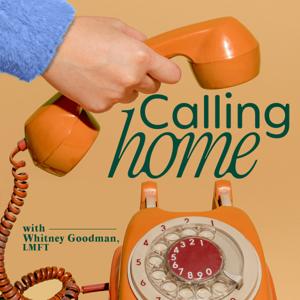
In this episode of the Calling Home Podcast, host Whitney Goodman discusses the topic of estrangement between adult children and their parents. She shares insights from hundreds of stories she received from her followers, highlighting common themes such as emotional immaturity, boundary violations, addiction, and denial of problems within the family. Goodman also shares results from polls she conducted on Instagram, revealing that most respondents took one to five years to decide to become estranged, and the main causes were a history of abuse and emotionally immature parents. She emphasizes that most respondents indicated that an apology and changed behavior could help mend the relationship.
Join her Family Cycle Breakers Club for further support and discussion on family dynamics at CallingHome.co. Follow the Calling Home community on Instagram or TikTok.
Follow Whitney Goodman on Instagram or TikTok.
Learn more about your ad choices. Visit podcastchoices.com/adchoices
Hosted on Acast. See acast.com/privacy for more information.
In the first episode of the second season of Calling Home, Whitney discusses adult sibling estrangement with guest Fern Schumer Chapman, author of Brother Sister Strangers.
They discuss the complexities of sibling estrangement, including the feelings of rejection, self-blame, and the impact on family dynamics. Fern shares her personal experience of a 40-year estrangement from her brother, which was followed by a 10-year reconciliation.
They discuss the factors that can lead to estrangement: family trauma, parental favoritism, poor communication skills, and differing family values. Fern advises that estrangement is not always permanent and maintaining even a limited relationship can be beneficial for all family members.
Learn more about your ad choices. Visit podcastchoices.com/adchoices
Hosted on Acast. See acast.com/privacy for more information.
In the final episode of The Calling Home podcast's first season, Whitney discusses the complexities of mother-daughter relationships. She emphasizes that love and protection are not the same thing, and a mother can love her child but still put them in dangerous situations.
We'll talk about why mothers might criticize their daughters, such as projecting their own standards or seeing their daughters as competition.
And a reminder to identify patterns they want to break in their own relationships and consider the systemic factors that might impact these relationships.
Learn more about your ad choices. Visit podcastchoices.com/adchoices
Hosted on Acast. See acast.com/privacy for more information.
Whitney is joined by Leslie Priscilla, founder of Latinx Parenting, about the intersection of culture, parenting, and childhood.
They discuss the harmful parenting behaviors that are often excused as part of culture, the impact of colonization on parenting styles, and the importance of treating children with respect. They also talk about the challenges faced by Latinx families, such as the expectation to take care of parents in old age and the normalization of violence against children.
Leslie emphasizes the importance of breaking generational cycles, being gentle with oneself, and finding a supportive community.
Learn more about your ad choices. Visit podcastchoices.com/adchoices
Hosted on Acast. See acast.com/privacy for more information.
Reconciliation is a process that requires both parties to take responsibility, acknowledge their roles, apologize, and work towards a new relationship.
Reconciliation should move slowly, especially in cases of long-standing estrangement or rifts. Setting boundaries, managing expectations, and accepting family members as they are now are all important as a family works toward making things better. Celebrate small victories along the way, and remember that reconciliation is not a final destination but a process that may involve steps forward and backward.
A holiday related question from a Calling Home listener about why families often cater to the most toxic individual during celebrations and holidays ends todays episode.
Today's episode is sponsored by Hello Fresh. Use code homefree for FREE breakfast for life - get one breakfast item per box while your subscription is active. HeloFresh is America’s #1 Meal Kit.
Learn more about your ad choices. Visit podcastchoices.com/adchoices
Hosted on Acast. See acast.com/privacy for more information.
In this episode, Whitney talks with Elizabeth Earnshaw, a marriage and family therapist, about navigating relationships with in-laws.
They explore the importance of finding common ground with your partner's family and setting boundaries. They also discuss a Reddit post about a conflict over a child's last name, highlighting the importance of communication and understanding in such situations.
Elizabeth also emphasizes the importance of the couple acting as a team and understanding each other's perspectives, and they also discuss the potential harm of criticizing in-laws and the benefits of having in-laws involved in one's life.
Learn more about your ad choices. Visit podcastchoices.com/adchoices
Hosted on Acast. See acast.com/privacy for more information.
Some tips to help you survive Thanksgiving with your family!
HAPPY THANKSGIVING!
Learn more about your ad choices. Visit podcastchoices.com/adchoices
Hosted on Acast. See acast.com/privacy for more information.
Whitney talks about the impact of emotionally immature parents on their children. She explains that emotionally immature parents often lack empathy, struggle to apologize or admit fault, and are often well-liked in their communities due to their ability to maintain surface-level relationships. They also tend to provide for their children in practical ways, but fail to meet their emotional needs.
We also have Calling Home listener questions about this same topic, including coping with 'the silent treatment' and the fear of becoming like them.
Awareness of one's own trauma can prevent the repetition of harmful patterns.
Learn more about your ad choices. Visit podcastchoices.com/adchoices
Hosted on Acast. See acast.com/privacy for more information.
Whitney is talking with Holly Whitaker, author and founder of Tempest, about the impact of alcohol on family dynamics.
Holly believes that society's positive messaging around drinking often overlooks the negative impact it can have on relationships. She believes that the question should not be whether one is an alcoholic, but rather if alcohol negatively impacts one's life and if steps should be taken to address the relationship with it. She also discusses the lack of informed consent around alcohol consumption, as many people are not fully aware of the potential consequences. She suggests that if alcohol feels uncomfortable or difficult, it's an invitation to interrogate one's relationship with it.
Learn more about your ad choices. Visit podcastchoices.com/adchoices
Hosted on Acast. See acast.com/privacy for more information.
Whitney talks how to navigate events and celebrations with a highly dysfunctional family, offering tips on how to deal with difficult family dynamics, such as setting boundaries and preparing for situations that may arise.
Introducing The Calling Home community, a platform offering support groups, exclusive content, and Q&A sessions with experts.
Listener questions: Dealing with family issues during significant life events, such as weddings and funerals.
This week's sponsors are:
Learn more about your ad choices. Visit podcastchoices.com/adchoices
Hosted on Acast. See acast.com/privacy for more information.
From the publisher's feed
Hosted on Acast. See acast.com/privacy for more information.
Ranked by our users in the last 21 days
1,410 Listeners

2,516 Listeners

1,382 Listeners
1,535 Listeners

366 Listeners

1,853 Listeners

4,507 Listeners

41,386 Listeners

37 Listeners
687 Listeners

1,097 Listeners

282 Listeners
1,743 Listeners

340 Listeners

84 Listeners