
Sign up to save your podcasts
Or

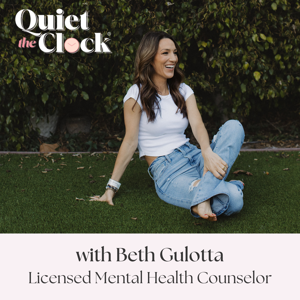


Are you curious about the field of reproductive medicine and the evolution of therapy in this space? In this episode of "Quiet the Clock," I interview Sharon Covington, a clinical social worker and director of psychological support services at Shady Grove Fertility, the largest reproductive medical practice in the US.
Sharon shares her personal journey into the field of reproductive medicine, which began with her own experience of reproductive loss and the lack of resources available at the time. She also discusses the use of self-disclosure in therapy and emphasizes the importance of therapists working through their own issues before sharing personal experiences with clients.
We also dive into the emotions and pain points that women experience when considering or undergoing fertility preservation. Sharon explains that the decision is often a gut-wrenching one, as it is not the first choice for most women. She also acknowledges that fertility preservation is not accessible to everyone and discusses the challenges of dealing with uncertainty in infertility treatment.
We even touch on the increase in women freezing their eggs during the COVID-19 pandemic and the complexities of egg freezing. Sharon emphasizes the importance of mental health professionals being well-informed and passionate about this work, and she encourages the next generation to get involved.
I hope you'll tune in to this insightful conversation with Sharon Covington. As she says, "Personal experience is not professional training," and it's important to be well-versed and knowledgeable about the field of reproductive medicine.
About Sharon Covington:
Quotes:
"I try to do everything particularly this point in my career to bring the kind of next generation along and to really make sure that people are well informed."
"I think that any kind of counseling that someone is doing offers a therapist an opportunity to begin to talk about this as an option and a as a question. One of the things that we see over and over again is how misinformed the public is about their fertility."
"Fertility preservation, there isn't a guarantee, there's no guarantees in any of this kind of treatment."
"Therapists really have to work through their own issues and be really very careful about that before they start sharing their own personal experience."
"70% of both mental health professionals and nurses who were working in the field came to it as a result of their personal experience."
Key Points:
Feelings and emotions [00:00:00] Sharon Covington explains the emotions and feelings of women who freeze their eggs, including the age range and reasons why women choose to do it.
Introduction to "Quiet the Clock" [00:00:46] Beth Gulotta introduces her podcast "Quiet the Clock," which aims to provide guidance and understanding for women navigating dating, motherhood, and egg freezing.
Sharon Covington's background and experience [00:02:41] Sharon Covington discusses her extensive work in the field of reproductive medicine, including her role as director of psychological support services at Shady Grove Fertility and her involvement in research, writing, and teaching.
Therapists' use of self-disclosure [00:08:24] Sharon Covington discusses the use of self-disclosure in therapy and the importance of being careful not to unduly influence clients.
Emotions and pain points of women considering egg freezing [00:10:14] Beth Gulotta asks Sharon Covington about the emotions and pain points of women considering egg freezing, including financial, emotional, and physical aspects.
Challenges and uncertainties of egg freezing [00:16:09] Sharon Covington and Beth Gulotta discuss the challenges and uncertainties of egg freezing, including the financial burden, physical and emotional toll, and uncertainty of success.
The evolution of therapy in reproductive medicine [00:17:55] Sharon Covington discusses the exponential growth of reproductive medicine and the changing technology that has offered new options for family building. She also talks about the need for specialized training in this area and the importance of mental health support for patients.
Importance of specialized training in fertility counseling [00:23:12] Sharon Covington emphasizes the need for mental health professionals to have specialized training in fertility counseling and reproductive mental health. She mentions various training opportunities available and cautions against assuming personal experience is professional training.
The surge in egg freezing during COVID-19 [00:26:07] Sharon Covington talks about the surge in egg freezing during COVID-19 and the importance of support systems for patients going through reproductive medicine treatments. She also mentions the potential for trauma associated with the invasiveness of treatment and the need for appropriate supports and treatment.
The impact of COVID-19 on fertility treatment [00:26:31] Sharon and Beth discuss the impact of COVID-19 on fertility treatment and the changes in family building plans.
Increase in egg freezing since 2012 [00:29:10] Beth learns from Sharon that the experimental label on egg freezing was removed in 2012, leading to a significant increase in egg freezing.
Preconception counseling and fertility awareness [00:32:37] Sharon emphasizes the importance of preconception counseling and fertility awareness among mental health professionals to help patients understand their fertility and make informed decisions.
Passion for Reproductive Medicine [00:35:42] Sharon Covington expresses her passion for reproductive medicine and her desire to bring the next generation along.
Information about Sharon Covington [00:35:18] Beth Gulotta asks Sharon Covington to share where people can find more information about her, her books, and her trainings.
Training Cohort Applications [00:36:53] Sharon Covington mentions that applications for the next cohort of classes will start in September and invites interested individuals to send in an application.
In this episode of "Quiet the Clock," I continue my conversation with fertility specialist Dr. Anate Brauer about the emotional component of fertility treatments, particularly egg freezing. We discuss the importance of therapy in the process and the challenges that patients face in finding the right mental health support.
Dr. Anate Brauer emphasizes the significance of mental and emotional health in fertility treatments, stating that 90% of the battle is in the mind. She notes that while there is a physical component to the process, the mental health journey of patients is crucial. Anate observes that elective egg freezers tend to feel empowered and happier, while those going through IVF have more at stake and experience more stress.
We also touch on the different emotional experiences of patients, including feelings of empowerment, anger, and frustration. Dr. Anate Brauer shares the medical differences between freezing eggs and embryos, and we discuss the emotional burden that falls disproportionately on women during fertility treatments.
We also discuss the guilt and regret that many women feel when they realize that their fertility may be compromised. Dr. Brauer shares a story about a musician who wrote a song about her low AMH levels and the frustration of not being able to control her fertility. We acknowledge the societal pressure on women to have children and the guilt that comes with feeling like they may have wasted time.
Overall, the conversation highlights the importance of mental health support in fertility treatments and the need for more accessible resources.
As always, I encourage you to listen to the full episode to gain a deeper understanding of the emotional component of fertility treatments. Thanks for tuning in!
Quotes:
"90% of this battle is mental and emotional honesty...and it's really interesting...my elective egg freezers...seem happier to me...versus my ivf patients who...have so much at stake for them...their families are dangling by a thread...their marriages sometimes are dangling by a thread...and so I've found that...mental health is such a big part of what we do and I still find it very lacking really."
"I think the best way to get support is to have a therapist to have someone that it's great to have friends and whatever to have an objective person with you kind of that you can talk to."
"There's a lot of work to rewrite some of these narratives that perpetuate guilt and yes regret and I think you know really empowering women to whatever their journey is and whatever their story is to embrace it yes to be proud of it and to celebrate it."
Key Points:
The Importance of Therapy [00:01:38] A discussion on the significance of therapy in the fertility treatment process, particularly in egg freezing, and the challenges patients face in finding the right mental health support.
Emotional Experiences of Patients [00:02:43] A comparison of the emotional journeys of elective egg freezers and IVF patients, with a focus on the different feelings of empowerment, anger, and frustration.
Challenges in Finding Mental Health Support [00:04:21] A conversation on the difficulties patients face in finding the right therapist, the lack of mental health support in the fertility treatment process, and the financial and insurance issues that come with it.
The benefits of freezing eggs vs embryos [00:08:41] Discusses the medical benefits of freezing eggs and embryos, and the importance of autonomy in the process.
Challenges of finding mental health support [00:12:25] Discusses the importance of mental health support during the fertility treatment process and the challenges patients face in finding the right support.
The emotional impact of fertility treatments on women [00:14:47] Discusses the emotional impact of fertility treatments on women, particularly the lack of control and uncertainty, and the challenges of reconciling achievement with the lack of control in this area.
The emotional challenges of fertility treatments [00:17:01] Beth and Anate discuss the emotional challenges of fertility treatments, including feelings of guilt, regret, and frustration.
Rewriting narratives and empowering women [00:18:24] They talk about the importance of rewriting narratives that perpetuate guilt and regret, and empowering women to embrace their journey and celebrate it.
Staying open to life's evolution [00:19:10] Beth and Anate encourage listeners to stay open to how life is going to evolve, as more often than not, it doesn't look like the way we had planned it out to be.
Are you curious about egg freezing? In this episode of "Quiet the Clock," I interview Dr. Anate Brauer , a reproductive endocrinologist and fertility specialist.
Dr. Brauer explains the basis of everything they do in egg freezing, which is what happens in a woman's natural cycle. She emphasizes the importance of understanding what they are doing in egg freezing, as it can help alleviate concerns about injecting hormones.
Dr. Brauer and I discuss the importance of increasing access to knowledge about fertility. She notes that while the conversation around fertility has evolved into a mainstream topic in recent years, there is still room for improvement in terms of discussing it more openly and frequently. We also discuss the potential impact of the fertility industry on society and the financial barriers to accessing egg freezing.
Dr. Brauer discusses the number of eggs needed to have a good chance of having a baby through egg freezing. She explains that for 30 to 34-year-olds, having 20 mature eggs in the freezer gives an 85-90% chance of having the first baby from those eggs and a 50-60% chance of having the second. The older the woman, the more eggs she needs. Dr. Brauer emphasizes the importance of having open conversations with patients about their goals and what they need to feel complete.
Finally, we discuss the importance of choosing the right lab and technology when it comes to freezing eggs. Dr. Brauer emphasizes that not all technology is created equal and that it's crucial to have a good doctor and lab. She warns against choosing significantly less expensive options, as there is usually a reason for the lower cost.
Dr. Brauer concludes by emphasizing the importance of the emotional component of fertility and promising to discuss it further in the next episode. Join us for a fascinating conversation about egg freezing!
Quotes:
"No one's gonna turn into a pumpkin when they're 35."
"I'm a doctor of moderation...nobody knows who's really right and who's wrong."
"And I think things like that are so great to ease the emotional stress or the uncertainty of will this work, will this not work? And that did not exist when I was going through."
"My view on that is I still believe that technology is not created equal. You have to be very careful with that. It's not actually you have to have a good doctor, right? You don't want a doctor that's gonna misdose you or not know how to do an egg retrieval, you know what I mean?"
Key Points:
Understanding the Natural Cycle [00:00:00] Dr. Anate Brauer explains the natural cycle of a woman's body and how it relates to egg freezing.
Connecting with Dr. Anate Brauer [00:02:02] Beth Gulotta shares how she connected with Dr. Anate Brauer and introduces her to the podcast.
Importance of Understanding egg freezing [00:05:19] Dr. Anate Brauer emphasizes the importance of understanding the basis of egg freezing and how they work to help women make informed decisions.
The Evolution of Fertility Conversation [00:07:57] Dr. Anate Brauer discusses how the conversation around fertility has evolved into a mainstream topic from 2013 to now.
Increasing Access to Fertility Knowledge [00:09:24] Dr. Anate Brauer talks about the importance of increasing access to fertility knowledge, especially for young women, and shares her experience speaking at a college event.
Age and Egg Quality [00:13:06] Dr. Anate Brauer explains how age affects egg quality and the decline in pregnancy rates with IVF population at 34, emphasizing the importance of considering egg freezing earlier.
How many eggs do you need to freeze for a good chance of having a baby? [00:15:45] Dr. Anate Brauer explains the number of eggs needed to freeze for a good chance of having a baby based on age and shares data from her clinic.
Balancing the number of eggs to freeze with personal goals [00:17:14] Dr. Anate Brauer discusses the importance of balancing the number of eggs to freeze with personal goals and having open conversations with patients.
The challenge of advising patients on when it's too late to freeze eggs [00:20:12] Dr. Anate Brauer shares the challenge of advising patients on when it's too late to freeze eggs and the potential harm of misleading patients with low success rates.
Concerns about the fertility industry [00:23:53] Dr. Anate Brauer discusses the potential for the fertility industry to change society and the responsibility that comes with it.
Rules and lifestyle during egg freezing [00:26:09] Dr. Anate Brauer talks about the different beliefs and convictions in the industry regarding lifestyle choices during egg freezing, including diet, alcohol, caffeine, and exercise.
Finances and coverage for egg freezing [00:30:04] Dr. Anate Brauer discusses the financial barriers to egg freezing and the increasing options for coverage, including employer benefits and third-party fertility benefits.
Financing and Egg Freezing Programs [00:31:56-00:35:37] Dr. Anate Brauer discusses financing and egg freezing programs, including the Ashore program and shared risk program, as well as programs for female physicians and cancer patients.
Importance of Freezing Eggs for Cancer Patients [00:37:31-00:38:19] Dr. Anate Brauer emphasizes the importance of freezing eggs for cancer patients undergoing chemo, and the need for more education on the topic.
Egg Freezing Abroad [00:38:41-00:39:43] Dr. Anate Brauer shares her thoughts on egg freezing abroad due to cost, and mentions her involvement in a musical about egg freezing.
The Importance of Choosing the Right Lab [00:39:43] Dr. Anate Brauer emphasizes the importance of choosing the right lab for egg freezing and warns against choosing a lab solely based on cost. She also discusses the importance of finding a lab with thaw data and the risks of freezing eggs internationally.
Accepting Eggs from Other Centers [00:41:49] Dr. Anate Brauer discusses the process of accepting eggs from other centers and the rigorous risk management process that SGF has in place. She also explains the reason why most labs in the US will not accept eggs coming from outside the US.
Freezing Eggs Internationally [00:43:19] Dr. Anate Brauer advises against freezing eggs internationally due to the risks involved in transporting them and the importance of ensuring the technology is sound. She emphasizes the need to be able to thaw the eggs and make babies from them in the US.
Thinking about freezing your eggs—or just curious what the journey really feels like? In this episode of Quiet The Clock, Beth sits down with Jen for an honest, deeply relatable conversation about the emotional rollercoaster of egg freezing in your thirties. Jen opens up about the swirl of excitement, fear, anxiety, resentment, and hope that came with the process, admitting that while she never imagined she'd take this path, she also recognizes the privilege of having the option. Beth and Jen dive into the uncertainty of dating, timelines, and wanting partnership and motherhood while also building a career, prioritizing health, and shifting from chasing aesthetics to feeling strong and grounded. They talk about the financial and emotional gamble of egg freezing, the weird limbo of not having guarantees, and the reframes that help—like Beth's perspective of "buying herself time." The conversation also explores the changing dynamics of friendships as people enter different life stages, and the importance of having support—even when others don't fully understand your journey. This episode is real, raw, funny, validating, and full of the "OMG, same" moments every woman navigating fertility, timelines, and modern adulthood needs. Hit play, subscribe to Quiet The Clock, and if you love these conversations, leave a review to help us reach more women who need them.
Quotes:
"it's not so much a choice, it's a great option and it's a privilege that I'm able to do it."
"I'm very goal driven, very... likes to make lists and check them off the list."
"Think about it on the other side of this, these follicles would eventually be embryos that then you're gonna use for ivf. Are you gonna go through ivf? how many times would you be willing to go through it?"
I don't invest my time unless I see real potential with something and I would expect the same in return."
"just be there...just be present".
Key Points:
Navigating uncertainty [00:00:42] Beth introduces the podcast and talks about navigating uncertainty in dating, motherhood, and egg freezing.
Jen's egg freezing journey [00:02:33] Beth interviews Jen about her egg freezing journey and how she came to consider it.
Career and wellness focus in thirties [00:04:02] Jen talks about her focus on career and health and wellness in her thirties, including getting certified as a nutrition coach.
Considering Egg Freezing [00:08:23] Jen shares her thought process and timeline for considering egg freezing, including her initial appointment in 2021 and her decision to delay the process.
First Appointment and Ultrasound [00:10:08] Jen discusses her first appointment and ultrasound at Loom Fertility, including her positive initial results and the emotional impact of her declining numbers during her second appointment.
Regret and Self-Blame [00:14:06] Jen reflects on her decision to delay egg freezing and experiences regret and self-blame after her declining numbers during her second appointment.
Perfectionism and Control [00:14:38] Jen discusses her struggle with perfectionism and control in her egg freezing journey, and how hard it is to accept that sometimes there is nothing you can do to change the outcome.
Counting Follicles [00:16:11] Jen talks about how the number of follicles and the uncertainty around it can be tough, and how she counted them on the screen during appointments.
The Number of Frozen Eggs [00:19:12] Jen shares her experience of getting 13 follicles and freezing 10, and how her friend's perspective helped her put things in perspective and be grateful for what she has.
Uncertainty about egg freezing [00:21:44] The speakers discuss the uncertainty surrounding egg freezing and the difficulty in predicting outcomes.
Financial considerations [00:24:00] The financial investment of egg freezing is discussed, including the initial cost and the larger cost of using the eggs in the future.
Emotional journey [00:28:10] The emotional journey of egg freezing is explored, including feelings of excitement, sadness, anxiety, worry, regret, resentment, and privilege.
Regret and Resentment [00:29:09] Jen talks about regret and resentment in her life, particularly in her dating life, and how she has been doing an inventory of her past relationships.
Challenges of Dating [00:32:30] Jen and Beth discuss the challenges of dating and how it can be hard to look back and be hard on oneself for not making different decisions.
Outlook on Life [00:35:32] Jen shares her goal-oriented outlook on life and how she is training to run the New York City Marathon.
Training for the New York City Marathon [00:36:10] Jen talks about how she decided to train for the New York City Marathon after completing the egg freezing process.
Friendship Dynamics [00:37:51] Jen and Beth discuss the complexities of friendship dynamics when it comes to motherhood, marriage, and being single.
People's Misconceptions about Egg Freezing [00:41:57] Jen shares some of the misconceptions people have about egg freezing, including assumptions about single motherhood and the process of injections.
Egg Freezing Journey [00:43:37] Jen shares her experience of freezing her eggs, including the emotional moments and the support she received from her partner.
Insensitive Comments [00:44:54] Jen and Beth discuss insensitive comments made by friends and acquaintances about motherhood and childlessness.
Advice for Women Considering Egg Freezing [00:47:47] Jen advises women to explore their options, not plan their future based on potential, and live in the present.
Ari, a publicist at Atlantic Records, is on a journey to become a mother in the next one or two years. In her recent conversation with Beth Gulotta on the Quiet the Clock podcast, she shared her experience of navigating through dating, egg freezing, and motherhood. One of the highlights of the conversation was Ari's decision to freeze her eggs as an insurance policy for motherhood.
Ari's decision to freeze her eggs came after a mental breakdown caused by societal pressures to have children and settle down. Freezing her eggs provided a safety net and took the pressure off of strict timelines. Beth shared that only 15% of frozen eggs are actually used and that freezing them is like an insurance policy. Ari also discussed the benefits of therapy and how it provides an unbiased opinion and a safe, non-judgmental space.
The conversation emphasized the importance of finding joy in one's own journey and not letting societal pressures dictate one's decisions. Ari talked about the importance of educating oneself about fertility and taking meetings with fertility clinics to relay information to partners. She credited her coping skills, consistent therapy, and support from her family and friends for helping her get into a better headspace.
The lack of conversation and education around fertility and motherhood was also discussed. Beth and Ari encouraged women to listen to themselves and their desires, and to lean into their support systems. The conversation aimed to provide a space for women to feel heard, understood, and empowered in their own journeys.
In conclusion, Ari's decision to freeze her eggs is an example of taking control of one's own journey and finding joy in the process. Freezing eggs can provide an insurance policy for motherhood and take the pressure off of strict timelines. The conversation on the Quiet the Clock podcast emphasized the importance of education, therapy, and support systems in navigating through the uncertainty of dating, motherhood, and egg freezing.
Quotes:
"don't let anyone tell you different there is again no blueprint"
"Your uterus doesn't age so she said like your eggs age not your uterus your uterus is there if I'm not in menopause and you know there aren't like any outstanding factors you can you can have a baby."
"i am on the right track and then i feel really good about it."
"the child has to fit into your life not the other way around."
Key Points:
Seeking Knowledge [00:00:00] Ari and Beth discuss the importance of seeking knowledge and information about motherhood, egg freezing, and career options.
Two Different Friend Groups [00:04:04] Ari talks about navigating between two different friend groups, one settled with families and houses, and the other living life on edge, traveling, and bar hopping.
Identity and Motherhood [00:06:26] Ari and Beth discuss the value of having time to build one's identity, get clear on values and career, and not making one's life the child's life.
Building the Foundation in Your Thirties [00:08:38] Ari talks about how her thirties allowed her to get her footing in her career and finances, and how she appreciates the freedom to travel and enjoy life before settling down.
Freezing Eggs as a Safety Net [00:15:25] Ari shares her decision to freeze her eggs after a mental breakdown and societal pressures, and how it serves as a safety net for her future plans of having children.
Taking the Pressure Off Timelines [00:16:57] Ari discusses how freezing her eggs takes the pressure off her and her boyfriend to have children on a strict timeline, allowing them to enjoy their time together without worrying about the future.
Navigating Dating and Egg Freezing [00:17:38] Ari and Beth discuss the benefits of egg freezing and how it takes the pressure off dating. They also talk about the importance of being open and honest with potential partners about their decision to freeze their eggs.
Educating Yourself on Fertility [00:20:03] Ari shares what she learned from her first consult at the fertility clinic, that your uterus doesn't age, only your eggs do. She emphasizes the importance of educating yourself and taking meetings with fertility specialists to relay information to your partner.
The Importance of Doing the Work [00:22:41] Ari and Beth discuss the importance of doing the work to get to a better headspace, and how it takes time and effort. Ari shares how her family and friends were a strong support system during her journey.
The Cost of Egg Freezing [00:25:22] Ari discusses the cost of egg freezing and how she was able to afford it through her job benefits.
Importance of Prioritizing Egg Freezing [00:26:22] Ari and Beth discuss the importance of prioritizing egg freezing and how it's not something that is often talked about or thought about in one's twenties or thirties.
Normalizing Different Paths to Motherhood [00:32:37] Beth and Ari discuss the importance of normalizing different paths to motherhood and creating a supportive community for women who may feel isolated or alone in their journey.
In this episode of Quiet The Clock, Beth shares her personal journey of freezing her eggs and her journey to motherhood.
She talks about her decision to freeze her eggs at the age of 37, her consultation at Extend Fertility in Manhattan, her emotions and uncertainties around the process, and her decision to include her partner in the process.
She also shares some funny and memorable moments during the egg freezing process, including a mishap with the medication and a country singer friend's show that she had to miss due to the process.
Beth also discusses the cost of egg freezing and the financial options presented to her during her consultation. She shares her experience of unexpectedly getting pregnant after years of sadness, uncertainty, and disappointment.
Quotes:
"While the uncertainty still exists, it's not breaking me down the way it did in my thirties."
"If this is meant to be for me, if motherhood is meant to be for me, it'll just be and sort of leave it up to the universe or whoever."
Key Points:
Deciding to Freeze My Eggs [00:00:12] Beth talks about her decision to freeze her eggs at the age of 37, her consultation at Extend Fertility in Manhattan, and her emotions and uncertainties around the process.
Including Partner in the Process [00:04:28] Beth shares her therapist's advice to include her partner in the egg freezing process, her initial resistance, and how her partner was incredible through it.
Funny and Memorable Moments [00:06:08] Beth shares a funny story about a mishap with the medication and a memorable moment during the egg freezing process when she had to miss a country singer friend's show.
Freezing Eggs [00:08:43] Beth talks about her decision to freeze her eggs at the age of 37, her consultation at Extend Fertility in Manhattan, her emotions and uncertainties around the process, and her decision to include her partner in the process.
Cost and Fear [00:13:20] Beth discusses the cost of egg freezing and her fear of infertility, which was fueled by hearing about other people's infertility journeys.
Hard Conversations [00:15:51] Beth and her partner have hard conversations about their relationship and their plans for having a baby, including a pause on fighting and a plan to come back together in September with a plan.
Freezing My Eggs [00:16:37] Beth talks about her decision to freeze her eggs at the age of 37, her consultation at Extend Fertility in Manhattan, and her emotions and uncertainties around the process.
Pregnancy Announcement [00:17:20] Beth shares her surprise and mixed emotions when she found out she was pregnant after years of sadness, uncertainty, and disappointment with the egg freezing process.
Support System [00:20:45] Beth talks about the importance of having a support system during her journey, including her sister, friend, and a high school friend who shared her own journey on Facebook. She also mentions her commitment to creating a supportive space for others.
In this episode of the Quiet the Clock podcast, Beth talks about her relationship with her partner, Rob. She shares the challenges they have faced, including hard conversations about marriage and children, and the uncertainty that comes with it.
Beth admits to struggling with comparing herself to others and feeling like she was waiting for Rob to be ready. She emphasizes the importance of trust, respect, and communication in a relationship and wishes she had been more present and grateful for the things she had and less focused on the things she did not.
Quotes:
"I'm a true believer that conflict breeds closeness when done well when done with respect."
"I'm not proud of the moments I get upset and sensitive about things that normally would not bother me."
"Trust that all that is meant for you will come."
Key Points:
Challenges in a relationship [00:00:00] Beth shares about the challenges she and Rob have faced in their relationship, including conflicts and hard conversations.
Meeting Rob [00:03:33] Beth talks about how she met Rob at a dinner with friends from her gym, and how she was initially annoyed by him.
Honeymoon phase [00:07:10] Beth describes the first two years of her relationship with Rob as the honeymoon phase, filled with travel, meeting each other's families and friends, and falling in love.
Things I wanna talk to Rob about [00:11:19] Beth shares her journal entry from July 29th, 2019, where she expresses her uncertainty about her relationship with Rob and how it is affecting her.
Uncertainty and its effects [00:08:47] Beth talks about how the uncertainty of not knowing if Rob wants marriage and kids affected her self-esteem and caused her to have meaningless fights.
Dealing with uncertainty [00:13:25] Beth shares her struggles with living in uncertainty and how it is affecting her mental health and relationship with Rob.
Meeting Rob didn't answer all the uncertainty [00:17:36] Beth talks about how meeting her partner did not solve all the uncertainties in her life, and how it made things more complex.
Comparison and uncertainty [00:15:57] Beth discusses how comparing herself to others and dealing with uncertainty affected her mental health and relationship.
Journey to motherhood [00:19:24] Beth previews the next episode, where she will talk about her journey to motherhood, including freezing her eggs at 37.
In this episode of the Quiet the Clock podcast, host Beth shares her journey through her thirties, including her experiences with dating, friendships, and career.
She reads two journal entries that highlight different times in her life during her thirties, and gives an overview of her journey to motherhood and her relationship with her partner Rob.
Beth reflects on her journey to finding her career path in mental health counseling and encourages women to lean into what they can feel good about and proud of.
Her hope with the podcast is to help other women navigate this decade in a way that they can feel proud of their journey even if it looks different than they expected.
Quotes:
"Every decision is mine, every dollar I spend is my own. At 32, I can say I am proud of how hard I work, the money I make, and the bills I'm working to pay off. It's all mine."
"I finally in that moment leaned into my singlehood because prior to that it was sort of the victim narrative or not feeling great about myself and it was the ebb and flow of like cool i'm great with this life i love being independent to being so sad that i was single and at 34 it really just felt so authentic to lean into this radical acceptance of i love this life i'm so happy with this life i feel really good and literally a month later bam i meet rob so i wish i had a little more time in that space and i think that's part of the messaging is i want women to feel more in that space more in this place of loving their life radical acceptance being in the now and being really grateful."
"Try to lean into what you can feel that feel good about and feel proud of and i you know this is a question that my my clients struggle with cuz i know sometimes i'll ask them tell me something you're proud of and they look at me like i have five heads so i think that's a space we don't often lean into spend time reflecting on and i wish i wish i had"
Key Points:
Being 32 and Single [00:01:09] Beth shares a journal entry from 2013 when she was 32 and single, feeling empowered and proud of her independence.
Shift and Change [00:03:30] Beth shares another journal entry from 2019, highlighting the shift and change in her life after meeting her partner Rob, and the challenges they faced.
Overview of Thirties [00:06:49] Beth gives an overview of her thirties, including being single and dating in her early thirties, meeting Rob at 34, and the uncertainty and challenges in her late thirties, particularly around motherhood.
Dating Patterns [00:07:45] Beth talks about her dating patterns and how she realized she had a pattern of dating unavailable people.
Radical Acceptance [00:09:31] Beth talks about how she came to a place of radical acceptance of her singlehood and how it opened her up to meet her partner Rob.
Friendship and Loss [00:13:41] Beth talks about the loss and gain of friendships in her thirties and how she learned that friendships come and go.
Finding the Right Career [00:16:16] Beth talks about her journey to finding the right career and how she struggled with self-judgment and feeling inadequate compared to her college friends.
Challenges in the Workplace [00:17:48] Beth shares her experiences of external and internal judgment in the workplace and how she wished she felt more proud of her accomplishments.
Lessons Learned in Her Thirties [00:21:02] Beth reflects on the highs and lows of her thirties, including resilience, loss, and gaining new friends, and hopes to empower women to celebrate their journey and move away from comparison.
Are you navigating through the uncertainty of dating, motherhood, and egg freezing?
Does it feel like your time is limited to build the partnership, marriage, and family you dream of cause the ticking clock just keeps getting louder?
You're not alone. I'm Beth Gulotta and welcome to Quiet The Clock.
Quiet The Clock is where we cultivate more conversations, understanding, and guidance around these journeys that might look a little different.
Join me as we quiet the narratives, quiet the shoulds, quiet the comparisons, and quiet the biological clock for women like us.
Partnership and motherhood should not have a deadline!
We'll hear from guests who have chosen different paths and timelines while reimagining their own paths. They'll share their experiences, challenges, and triumphs, and offer insight into how we can break free from the pressure to conform to societal timelines.
So join me as we challenge narratives, transform our thinking, and get inspired by women just like you, ready to quiet the clock and find joy in their own journeys.
Quotes:
"Be proud of this journey, be proud that it looks different, embrace the fact that you've taken a different way, that you've taken other risks, you pursued other things and I think I didn't spend enough time in that space and really being proud and empowered."
Key Points:
Introduction [00:00] Beth Gulotta introduces the Quiet the Clock podcast and shares her personal journey through navigating her thirties, uncertainty, dating, and egg freezing.
Pressure and expectations on women [04:40] Beth talks about the pressure and expectations on women to meet certain milestones and find a partner, get married, and have children.
Importance of community [07:35] Beth emphasizes the importance of cultivating a community of women to support each other through the challenges of navigating thirties, egg freezing, and societal expectations.
Introduction and Topics [09:07] Beth introduces her podcast and shares the topics she will cover, including dating, friendship, and egg freezing.
Understanding Egg Freezing [10:09] Beth discusses the process of egg freezing and the emotional, physical, and financial implications. She also mentions interviewing a doctor and therapist on the topic.
Offering Hope and Reassurance [11:48] Beth shares her personal journey and offers hope and reassurance to women going through similar experiences. She encourages embracing the journey and finding joy.
From the publisher's feed

10,206 Listeners

14,890 Listeners

12,673 Listeners

3,904 Listeners

14,897 Listeners

29,095 Listeners

1,220 Listeners
3,301 Listeners
1,105 Listeners

27,872 Listeners

1,904 Listeners

4,193 Listeners

1,385 Listeners

18,897 Listeners
520 Listeners