
Sign up to save your podcasts
Or

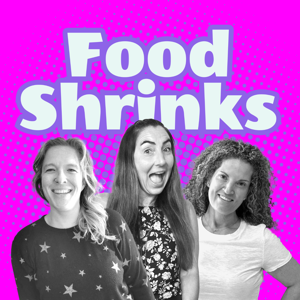


Welcome to the Food Shrinks podcast! In this heartfelt and honest episode, the Food Shrinks team dives into a powerful listener-submitted question: What happens when the people, places, and things that once brought us comfort no longer fit in our healing and recovery journey?
This week, we explore the grief and growth that come with outgrowing relationships, hobbies, environments, and identities that once felt like home.
You'll hear reflections on: • Why things that once felt safe can suddenly feel unbearable • How identity shifts in recovery can affect our social lives • Why it's normal to feel guilt, grief, or even judgment about these changes • The importance of compassionate self-awareness and honoring intuition • How to navigate change without shame—or setting everything on fire 🔥 • The difference between cutting ties to protect yourself vs. fleeing out of overwhelm • Why kindness doesn't mean self-betrayal • And how to hold space for your metamorphosis with curiosity, not self-criticism
Whether you're frustrated by your changing preferences or unsure how to handle friends who no longer "get you," this episode will remind you: You're not going crazy—you're just growing. 💗
In This Episode, You'll Learn: • How to tell if you're in a true identity shift • How grief shows up in unexpected ways in recovery • Tools to slow down and make intentional choices • The importance of trusting yourself as you evolve • Why it's okay (and often necessary) to set boundaries or walk away
Ways You Can Support the Show: 1. Subscribe to Food Shrinks on your favorite podcast platform. 2. Rate & Review—Five stars if you're feeling generous! 3. Share this episode with a friend who's going through their own transformation.
Got a question for the Shrinks? Email us at [email protected] or drop your comments on our YouTube channel!
🌱 Remember: healing doesn't always feel good—but it's always worth it. We love you, and we're so glad you're here. ________________________________________ New episodes drop weekly. Until next time, breathe, stay curious, and keep growing. 🌀
The content of our show is educational only. It does not supplement or supersede your healthcare provider's professional relationship and direction. Always seek the advice of your physician or other qualified mental health providers with any questions you may have regarding a medical condition, substance use disorder, or mental health concern.
In this powerful episode, we tackle a question that resonates deeply for so many in recovery: "Why can't I stay off sugar, even after a life-threatening diagnosis?"
We received a heartfelt listener question from someone who has been struggling with sugar addiction for years—even after a cancer diagnosis. This sparked a deep, honest conversation about the nature of addiction, why even fear or facts aren't always enough to inspire change, and how recovery takes more than just motivation—it takes connection, community, repetition, and reframing.
💬 In this episode, we cover:
🌱Why fear, force, and facts aren't sustainable motivators for change
🌱How addiction hijacks the brain and overrides even our strongest survival instincts
🌱Why relapse is not a moral failing, but a symptom of a powerful brain-based disorder
🌱What to do when willpower alone isn't cutting it
🌱How to expand your recovery toolkit to match the severity of the problem
🌱The importance of community and compassionate self-care in recovery
🌱What "ICU-level care" for food addiction might look like
✨ We explore the truth that addiction is not your fault, but recovery is your responsibility—and you don't have to do it alone. Whether you're binging every day or white-knuckling your way through abstinence, there is hope, and there are practical tools to help you build a sustainable, supported recovery.
📩 We want to hear from YOU! Got a question for the Food Shrinks? Email us at [email protected]
🙏 Support the Podcast: We LOVE making this podcast for you—but creating free content isn't free. Here's how you can help us keep the mic on:
🌱Subscribe to the show
🌱Rate & Review—we love a 5-star, but you do you, boo
🌱Share this episode with friends, recovery groups, or anyone who needs to know they're not alone
Big hugs. Big whoosh. You've got this—and we're with you every step of the way.
The content of our show is educational only. It does not supplement or supersede your healthcare provider's professional relationship and direction. Always seek the advice of your physician or other qualified mental health providers with any questions you may have regarding a medical condition, substance use disorder, or mental health concern.
In this episode:
Clarissa opens up about a deeply personal and challenging season in her life—navigating grief, fear, and emotional overwhelm as unexpected hardships pile up. From her puppy's serious health concerns to her mother's cancer recurrence, Clarissa vulnerably shares what it's like to face wave after wave of uncertainty.
The Food Shrinks dive into what happens when emotional pain feels relentless, and all the usual tools start to feel... not enough. Together, they explore:
💡How to manage emotional pain when it feels like you're at capacity 💡The dance between disassociation and anger in response to trauma 💡The silent fears about relapse or returning to old coping mechanisms 💡De-shaming the fear of recurrence and reframing relapse prevention 💡The importance of community and connection when survival mode kicks in 💡How empathic individuals may be significantly impacted by global and personal uncertainty 💡Practical tools for staying grounded, even when the storm feels never-ending
Through candid conversation and dark humor (because, hey, sometimes we need it), the team navigates the murky waters of high-stress seasons and how to "put on your wetsuit" when life feels like an emotional downpour.
Takeaways: ✨ Why acceptance is sometimes more challenging than it sounds ✨ The power of community and skill-building during emotional overwhelm ✨ How loosening shame around relapse fears can actually create more resilience ✨ "Help me to want what I have" – the uncomfortable but powerful prayer for navigating tough times
🎧 Listen now for an honest, raw, and heart-opening conversation on what it means to be human, in recovery, and doing your best when life feels just too heavy.
💌 Listener Q&A is open! Have a question for The Food Shrinks? Send it to [email protected] and you might hear it answered on a future episode!
💡 Don't forget to follow, rate, and share the podcast! Your clicks help keep this work going, and we appreciate you being part of this community. 🩷
📢 Follow Us: 📱 Instagram: @FoodShrinks 📧 Email: [email protected] 🌐 Website: foodshrinks.com
The content of our show is educational only. It does not supplement or supersede your healthcare provider's professional relationship and direction. Always seek the advice of your physician or other qualified mental health providers with any questions you may have regarding a medical condition, substance use disorder, or mental health concern.
In this thought-provoking episode of Food Shrinks, we challenge the concept of self-sabotage and explore a radical reframe—what if it's not sabotage at all, but an attempt at protection? Join us as we unpack the deeper, more compassionate understanding of behaviors that are often mislabeled as sabotage. Together, we discuss how our brains are wired for survival, not destruction, and how unmet needs, fear, and safety-seeking responses shape our actions.
What You'll Learn in This Episode: ✔️ Why we don't believe in self-sabotage—and what we think is actually happening ✔️ The difference between intentional harm (true sabotage) and subconscious protective mechanisms ✔️ How labeling behaviors as "sabotage" can create shame and keep us stuck ✔️ The role of childhood survival mechanisms and nervous system responses in our habits ✔️ Why language matters—how the words we use can either empower us or hold us back ✔️ The impact of chaos, stability, and safety on our decision-making and emotional responses
Key Takeaways & Highlights: 💡 "Your brain is wired for survival, not sabotage." The behaviors we often call sabotage are usually our brain's way of keeping us safe from discomfort, fear, or overwhelm. 💡 Labeling creates limitations. When we call ourselves "self-saboteurs," we're reinforcing a belief that we are our own worst enemy rather than recognizing our need for new coping skills. 💡 Self-compassion is key. Understanding our behaviors through a lens of protection rather than destruction allows for healing and real change. 💡 It's not sabotage—it's an unmet need. Instead of asking, "Why am I sabotaging myself?" try asking, "What need is going unmet, and how can I address it in a healthier way?" 💡 Language shapes reality. The words we use—whether "sabotage," "lazy," "manipulative," or others—carry energy and impact how we see ourselves.
Listener Reflection Questions: 🔹 Have you ever labeled your own behaviors as self-sabotage? How did that label impact you? 🔹 What if your "sabotage" was actually your brain trying to protect you? How might that change your perspective? 🔹 What language do you use to describe your struggles? Does it help or hinder your growth?
Join the Conversation: We'd love to hear your thoughts! Do you believe in self-sabotage, or do you resonate with this reframe? Email us at [email protected] and let us know!
Support the Show! If you loved this episode, help us keep Food Shrinks going! ✔️ Share this episode with a friend who might need to hear it. ✔️ Follow/subscribe to the podcast so you never miss an episode. ✔️ Rate & review us—it's how we grow and stay alive in the podcast world!
Until next time, Food Shrinks—keep it real, keep it kind, and keep exploring! 🎙️🩷
The content of our show is educational only. It does not supplement or supersede your healthcare provider's professional relationship and direction. Always seek the advice of your physician or other qualified mental health providers with any questions you may have regarding a medical condition, substance use disorder, or mental health concern.
In today's episode, we dive deep into a thought-provoking listener question: Will there always be something waiting in the wings to take the place of old addictive patterns?
Molly C. shares a personal experience about her resolution to avoid blue light before bed—and how she noticed an urge to watch TV after a fun night out. This sparks a rich discussion on self-awareness, nervous system regulation, and the evolving nature of cravings and coping mechanisms in recovery.
In This Episode, We Discuss:
✅ The idea of whether food (or other behaviors) will always be our first instinct in times of stress ✅ How our nervous system and trauma history influence our default responses ✅ The role of neuroplasticity and whether we can truly rewire our brains to respond differently ✅ The 8 Fs of trauma responses: Fight, Flight, Freeze, Fawn, Fornicate, Feed, Flop, and Friend ✅ The importance of curiosity and self-compassion when noticing urges and cravings ✅ Why we are wired to crave—and how that doesn't mean we're failing in recovery ✅ The power of observation: how practicing "observe and report" can help us navigate cravings without judgment
📩 Listener Question: Will there ever be a day when food is not our first thought in moments of stress? If not, is the goal simply to acknowledge it, dismiss it, and move on with radical acceptance?
This led us to a deep and honest conversation about the nature of recovery, self-compassion, and how to shift from reacting to responding with awareness.
Key Takeaways:
🧠 Our nervous system is wired for survival, and old patterns don't disappear overnight—but they can lose their intensity. 💡 Cravings are not a failure. They are a natural part of being human. 💙 Healing is about curiosity, not judgment. The more we understand our behaviors, the less power they hold over us.
💬 Join the Conversation! We love hearing from you! Send us your questions at [email protected] and let us know your thoughts on today's episode.
🎧 Don't forget to subscribe, rate, and review! See you next week!
#FoodAddictionRecovery #NervousSystem #TraumaResponses #CuriosityNotJudgment #Neuroplasticity #FoodShrinksPodcast
The content of our show is educational only. It does not supplement or supersede your healthcare provider's professional relationship and direction. Always seek the advice of your physician or other qualified mental health providers with any questions you may have regarding a medical condition, substance use disorder, or mental health concern.
In this episode, Molly C, Molly P, and Clarissa dive deep into the feeling of being "othered"—that sense of not quite fitting in, even among close friends or trusted spaces.
We explore: ✅ The fear of being too different—what happens when our thoughts, experiences, or intuition don't align with those around us ✅ The connection between feeling othered and food behaviors—how discomfort leads to numbing or binging ✅ The armor we put up when we feel excluded—why we protect ourselves instead of reaching out ✅ The power of naming our feelings—and how vulnerability in friendships can heal deep-seated fears
✨ Big Takeaways from This Episode: • Feeling "othered" often comes from historical wounds rather than present reality. • Our shame thrives in secrecy, but when shared, it loses power. • Authentic friendships are a space to practice saying, "I feel left out," instead of shutting down. • We all have parts of ourselves that we fear are "too much"—but often, those are the parts people love most. • Belonging doesn't come from sameness, it comes from being fully seen and accepted.
💡 Listener Reflection: • Have you ever felt like you didn't belong, even in a group where you "should" feel connected? • What "armor" do you put on when you feel that way? • How do you soothe yourself when those feelings come up?
💬 Final Thought: We all want to be seen. And today, we saw each other.
❤️ Take Care of Yourself After This Episode: This one was deep, friends. If it resonated, be gentle with yourself. Maybe take a walk, journal, or check in with a friend who makes you feel truly seen.
📩 Got a Question or Topic for the Shrinks? Send it to [email protected]—we'd love to hear from you!
🎧 Subscribe and leave a review! If you found this episode helpful, share it with someone who might need it.
📢 Follow Us: 📱 Instagram: @FoodShrinks 📧 Email: [email protected] 🌐 Website: foodshrinks.com
The content of our show is educational only. It does not supplement or supersede your healthcare provider's professional relationship and direction. Always seek the advice of your physician or other qualified mental health providers with any questions you may have regarding a medical condition, substance use disorder, or mental health concern.
In this episode of Food Shrinks, we're shaking things up! With one shrink missing, we dive into how we handle scheduling conflicts as a team and the importance of open, honest conversations in problem-solving. Then, we transition into a powerful discussion about a common struggle in food addiction recovery: sneaking, hiding, and lying about food.
We explore how secrecy and shame amplify dopamine release, making the behavior even more rewarding—just like in other substance addictions. By illuminating these patterns, we can dismantle them and find practical ways to break free from the cycle.
Key Topics Discussed in This Episode:
✔️ Handling scheduling conflicts with honesty and flexibility – Why communication is key and how we're restructuring our approach.
✔️ The psychology behind sneaking and hiding food – How secrecy fuels the reward cycle and makes cravings stronger.
✔️ Shame and isolation in food addiction – Why we feel compelled to hide and how it mirrors other addictions.
✔️ Mindful eating and breaking the secrecy cycle – Strategies like eating in the open, using a plate, and slowing down to challenge the food's "forbidden" appeal.
✔️ The power of self-awareness in recovery – Recognizing triggers, patterns, and practical self-binding strategies to avoid relapse.
✔️ Navigating food choices in social and professional settings – Addressing guilt and external expectations and setting personal boundaries in recovery.
Practical Takeaways:
✅ Normalize the struggle – Sneaking and hiding food is common in addiction, and talking about it removes shame.
✅ Break the secrecy cycle – Try eating in the open, paying attention to taste, and challenging the "thrill" of the behavior.
✅ Lean into self-awareness – Identify when and where these urges happen and find strategies to disrupt the pattern.
✅ Own your choices – You can decide what works for you in recovery—without guilt or external judgment.
💡 Want to share your experience or ask us a question?
Please email us at [email protected]
🎧 Subscribe and leave a review! If you found this episode helpful, share it with someone who might need it.
📢 Follow Us:
📱 Instagram: @FoodShrinks
📧 Email: [email protected]
🌐 Website: foodshrinks.com
The content of our show is educational only. It does not supplement or supersede your healthcare provider's professional relationship and direction. Always seek the advice of your physician or other qualified mental health providers with any questions you may have regarding a medical condition, substance use disorder, or mental health concern.
In this insightful and heartfelt episode of Food Shrinks, we explore the complex relationship between hormones, perimenopause, and food addiction recovery. Inspired by listener questions, we share our journeys, client experiences, and the science behind hormonal changes—whether you're still cycling, in perimenopause, or navigating menopause.
🌿 In This Episode:
🧘 Hormones and Recovery: How shifts during the menstrual cycle, perimenopause, and menopause can affect food cravings and emotional eating. 💡 Luteal Phase Insights: The science behind increased hunger, metabolism spikes, and why cravings often hit hardest before your period. 🧠 The Grief of Change: Exploring the emotional impact of hormonal transitions and why acceptance is key. 💪 Recovery Strategies: Planning for hormonal changes and aligning your recovery support around them is essential. 🌿 The Grandmother Hypothesis: Reframing menopause as a rite of passage into wisdom, connection, and leadership.
💡 Key Takeaways:
💪Hormonal Changes Are Not the Enemy: Learn how fluctuations in estrogen and progesterone influence cravings and mood. 💪Self-Compassion First: Accepting body changes, reducing shame, and prioritizing self-care during hormonal shifts. 💪Awareness is Power: Tracking cycles and recognizing patterns can help you support your recovery plan. 💪Don't Give Away Your Power: Beware of quick-fix solutions and trust your body's innate wisdom. 💪Find Joy and Connection: Nourish your serotonin with creativity, friendships, and meaningful activities.
💬 Share Your Experience! We'd love to hear from you! What has been your experience with hormones and recovery? How have you navigated perimenopause or menopause on your food addiction journey?
💌 Have a question for us? We want to hear from you! Please email us at [email protected]
🎥 Watch & Share: If you found this episode helpful, don't forget to LIKE, COMMENT, and SUBSCRIBE to our channel. Share this episode with someone who might benefit from learning about healthy communication and conflict resolution!
📢 Follow Us: 📱 Instagram: @FoodShrinks 📧 Email: [email protected] 🌐 Website: foodshrinks.com
The content of our show is educational only. It does not supplement or supersede your healthcare provider's professional relationship and direction. Always seek the advice of your physician or other qualified mental health providers with any questions you may have regarding a medical condition, substance use disorder, or mental health concern.
In this episode of Food Shrinks, Molly C. shares a significant life shift—she's entirely off social media! Coming back from a retreat, she realized how much screen time was impacting her nervous system, focus, and ability to engage with life. She opens up about the moment she knew she had to step away, the withdrawal symptoms she experienced, and how she transitioned off social media with the help of the Freedom app.
Molly and Clarissa also explore the broader topic of digital addiction, drawing connections to food addiction and other compulsive behaviors. They discuss insights from Dr. Anna Lembke's work on dopamine and addiction, how social media companies profit from our dysregulation, and what it means to take back your power.
What You'll Learn in This Episode:
Why Molly decided to quit social media and what changed for her
The surprising benefits of stepping away from constant scrolling
How screen addiction mirrors food addiction and other compulsive behaviors
Practical steps to reduce digital dependence
Signs your social media use might be a problem
Why reclaiming your time is an act of self-care
Resources & Mentions:
Dopamine Nation by Dr. Anna Lembke
Dr. Anna Lembke's podcast interview
Freedom app for screen time management
Join the Conversation:
Have a question for us? We want to hear from you! Email us at [email protected]
Watch & Share: If you found this episode helpful, don't forget to LIKE, COMMENT, and SUBSCRIBE to our channel. Share this episode with someone who might benefit from learning about healthy communication and conflict resolution!
Follow Us:
YouTube: https://www.youtube.com/@FoodShrinks
Instagram: @FoodShrinks
Email: [email protected]
Website: foodshrinks.com
The content of our show is educational only. It does not supplement or supersede your healthcare provider's professional relationship and direction. Always seek the advice of your physician or other qualified mental health providers with any questions you may have regarding a medical condition, substance use disorder, or mental health concern.
In this episode of Food Shrinks, we dive into an important question: When do we need to go deeper than recovery coaching, and when is it enough to stay at that level?
🔑Key Topics Discussed:
🔒Two Approaches to Healing – Clearing out the body and mind first vs. addressing deeper emotional work upfront. 🔒When Coaching Isn't Enough – How to recognize when therapy, trauma work, or other professional support is needed. 🔒The Rush to Go Deeper – Why there's no need to sprint toward deeper work and how cultural pressure impacts this mindset. 🔒Intuition as a Guide – How to trust yourself in knowing when it's time to explore deeper healing. 🔒The Limits of Helpers – Coaches, therapists, and sponsors can only take you as far as they've gone themselves. 🔒The Importance of Readiness – Why sometimes it's okay not to do deeper work and simply focus on life and joy. 🔒Recovery as a Bridge Back to Life – Remembering that healing isn't about fixing yourself but expanding your ability to live fully.
We also explore the balance between doing inner work and simply being in life, finding joy, and knowing when to step back instead of always digging for the next thing to "fix."
💌 Have a question for us? We want to hear from you! Email us at [email protected]
🎥 Watch & Share: If you found this episode helpful, don't forget to LIKE, COMMENT, and SUBSCRIBE to our channel. Share this episode with someone who might benefit from learning about healthy communication and conflict resolution!
📢 Follow Us:
📱 Instagram: @FoodShrinks
📧 Email: [email protected]
🌐 Website: foodshrinks.com
The content of our show is educational only. It does not supplement or supersede your healthcare provider's professional relationship and direction. Always seek the advice of your physician or other qualified mental health providers with any questions you may have regarding a medical condition, substance use disorder, or mental health concern.
From the publisher's feed
1,407 Listeners
2,607 Listeners
703 Listeners

8,394 Listeners
774 Listeners
2,544 Listeners
841 Listeners

29,181 Listeners
165 Listeners
141 Listeners
86 Listeners
583 Listeners

182 Listeners
15 Listeners

1,209 Listeners