
Sign up to save your podcasts
Or



Based on Podcast App listening data
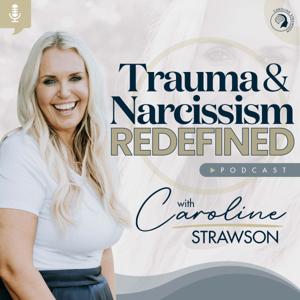
In this episode, we will talk about the shame and judgment that those who stay in a narcissist relationship suffer from others and from themselves. We will dive deep into the reasons behind the decision to stay in an abusive relationship, and how to be more compassionate towards those who make such decisions.
What You Will Learn In This Episode:
- How our protective parts don't know what happiness is
- What happens when we hear the phrase ‘Just leave then’
- Safety concerns in case of leaving a narcissistic relationships
- How we can help people who decide to stay in abusive relationships
- The importance of bringing awareness into your internal protective mechanisms
Someone that comes from a place of not feeling worthy is more likely to end up as a codependent in an abusive relationship. In most cases, the fear of leaving that relationship will be greater than their suffering, so they'll choose to stay. Without help, those people can enter the endless cycle of not feeling good enough to leave and, simultaneously, not worthy enough to generate love in their partners.
Resources:
- Join my Facebook group at https://www.facebook.com/groups/thriveafternarcissisticabuse
- Connect with me on Instagram: https://www.instagram.com/carolinestrawson/
The third and final interview segment with Sam Vaknin is perhaps the most triggering, as we discuss the concepts of victim, victimhood, and being victimized by a narcissist. We also analyze Sam's view on victimization and victimhood as new social trends and part of the tribalism we live in nowadays.
What You Will Learn In This Episode:
- What happened to us is not what we are
- Why people idolize, perpetuate, and glamorise being a victim
- The danger of the self-styled empaths
- How to love yourself, trust your gut, and not abuse your abuser
When we grow up hearing things like we are not good enough or our parents find us helpful only as victims, then our self-esteem is low and we understand there is no other way than victimhood to get favourable outcomes from our environment. However, in order to heal, we must allow ourselves to be loved for who we are, and not for what happened to us.
Resources:
- Malignant Self-Love: Narcissism Revisited by Sam Vaknin
- Connect with Professor Sam Vaknin on LinkedIn, Instagram, and YouTube
- Join my Facebook group at https://www.facebook.com/groups/thriveafternarcissisticabuse
- Connect with me on Instagram: https://www.instagram.com/carolinestrawson/
This is part two of the fantastic interview with Professor Sam Vaknin. In this episode we talk about narcissistic abuse from a social perspective, and how we, as society members, deal with abusers and victims. We dive deep into the danger of labelling people, and discuss the idea of fluidity between the roles of victims and abusers.
What You Will Learn In This Episode:
- The counterproductive tendency of isolating trait behaviours, labelling and medicalising
- Regarding narcissism as a positive adaptation that has helped a child to survive
- Are we all a part of a colossal victim community?
- The differences in a relationship between narcissists and healthy people, and narcissists and codependents
- How the confirmation bias and the saviour mentality affects the victims of narcissist abuse
Accepting that many victims are never likely to abandon their abusers, Doctor Vaknin believes that people should be educated on self-defence, on how to create boundaries and react to abusive situations. Both the victim and abuser share the same source - they are children with wounded inner parts, utilising their survival tools.
Resources:
- Trauma and Recovery: The Aftermath of Violence--From Domestic Abuse to Political Terror by Judith Lewis Herman
- Malignant Self-Love: Narcissism Revisited by Sam Vaknin
- Connect with Professor Sam Vaknin on LinkedIn, Instagram, and YouTube
- Join my Facebook group at https://www.facebook.com/groups/thriveafternarcissisticabuse
- Connect with me on Instagram: https://www.instagram.com/carolinestrawson/
This episode is the first part of an enlightening interview with Sam Vaknin, Professor of Psychology & Finances at the Southern University of Rostov-on-Don, Russia, PhD in Philosophy and Physics, and author of the book "Malignant Self-Love: Narcissism Revisited."
In this first of a three-episode series, we talked about why the narcissistic abuse experience is different from other abusive relationships, and why each narcissistic abuse story is unique.
What You Will Learn In This Episode:
- How it was connecting with narcissistic abuse victims before the internet era
- The uniqueness of the narcissistic abuse experience
- How narcissists live inside their mind
- Why making demands or having expectations threatens a narcissist’s equilibrium
- The Diagnostic and Statistical Manual (DSM) vs. the Psychodynamic Diagnostic Manual (PDM)
When Professor Vaknin started working with narcissistic abuse trauma back in 1995, there was no terminology, no words to describe it. One of his first jobs was to coin terms like narcissistic supply, somatic narcissist, cerebral narcissist, and narcissistic abuse itself. He has been studying the subject passionately for over 26 years, helping thousands of people to recover from their trauma.
Resources:
- Malignant Self-Love: Narcissism Revisited by Sam Vaknin
- Connect with Professor Sam Vaknin on LinkedIn, Instagram, and YouTube
- Join my Facebook group at https://www.facebook.com/groups/thriveafternarcissisticabuse
- Connect with me on Instagram: https://www.instagram.com/carolinestrawson/
Today, I want to talk about what happens after we break up with a narcissist, what we should expect from them, and how to prevent being affected by what they can do or say to us and our closest friends.
What You Will Learn In This Episode:
Breaking up a relationship with a narcissist might lead us to a lonely place if they turn our friends and relatives against us. We must create a robust ecosystem around us, and surround ourselves by the people who believe in us. We need to keep in mind that we are enough, and that we are worthy and lovable regardless of what the narcissist could have said to us or to anyone else about us.
Resources:
This week we are talking about relationships after narcissistic abuse. But to talk about future relationships, we need to look at our past and what we learned about love when we were children.
What You Will Learn In This Episode:
To ensure a healthy and lasting new relationship, we need to do some inner work, identify our blueprint of what love and connection are, and work on it. If we don't address it, we are at risk of repeating this inter-generational trauma, and possibly passing it onto the next generations.
Resources:
In today's episode, we will talk about future generations and narcissism. We will explore and analyze kids' trauma responses to being with a narcissist and the best ways to help them deal with it.
What You Will Learn In This Episode:
When our kids come back to us aggressive or angry, we must see them through the trauma-informed lens. We need to understand them, show them love and compassion, be supportive and make them feel that we see them and hear them. Our kids misbehave with us because we are their anchor. We must be aware of that and build our relationship with them from that place.
Resources:
This episode is about the controversy around the diagnosis of a narcissist and its medicalisation. Should narcissists be medicalised? And if they should, how does it affect those who've been involved with a narcissist?
What You Will Learn In This Episode:
As a society, we are conditioned to look at the symptoms and there is not much space for considering the root cause. That's what is happening with narcissists as well. The root cause gets overlooked, and the abuse suffered by the narcissist's victims remains unacknowledged. But the solution might lie in looking at narcissists through the trauma lens.
Resources:
One of the narcissist types that is hardest to identify is the covert narcissist. Today we will go through a covert narcissist's behavioural traits, the ways they get their narcissistic supply, how that makes us feel, and how to deal with that behaviour.
What You Will Learn In This Episode:
When we think about a narcissist, the first image that comes to mind is an arrogant, entitled and overly confident individual. But a covert narcissist is quite the opposite, they will portray themselves as a victim who suffers constant abuse. We need to be aware that they can turn people who know us against us, and be ready to deal with that.
Resources:
This week I want to talk about co-parenting with a narcissist in COVID times. We'll talk about what happens when the pandemic is used as an excuse for not giving the kids back, or sending them over. We will also go through the best way to communicate with a narcissist in conflict situations, and what parallel parenting is.
What You Will Learn In This Episode:
We need to pay special attention to the pandemic restrictions used as control methods by the narcissist in our lives. If that is the case, our kids' happiness is essential to look at before we decide to act.
Resources:
From the publisher's feed
Ranked by our users in the last 21 days
1,412 Listeners

1,526 Listeners

655 Listeners
848 Listeners

754 Listeners

570 Listeners
140 Listeners

1,849 Listeners

32 Listeners
684 Listeners
1,738 Listeners

340 Listeners
295 Listeners

83 Listeners