
Sign up to save your podcasts
Or

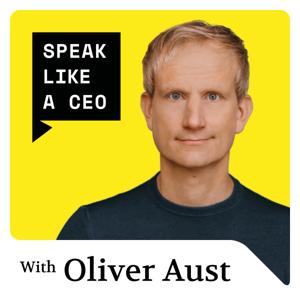


The communication “rules” most workplaces follow weren’t built for every brain.
In this episode, Andy J. Pizza explores how ADHD and other forms of neurodivergence shape the way people think, speak and lead. You’ll hear why entrepreneurship attracts so many neurodivergent thinkers, how to turn these traits into a storytelling advantage, and what leaders can do to support neurodivergent teams so everyone can do their best work.
Andy is a bestselling author, speaker, and host of the long-running podcast Creative Pep Talk. He has spent years studying storytelling, creativity, and speaking with ADHD – and built a career on turning different wiring into influence.
Topics discussed:
Introduction (00:00)
Do neurodivergent people communicate differently? (00:38)
Moving from shame to self-acceptance with an ADHD diagnosis (05:15)
Masking as a coping mechanism: when it becomes detrimental (10:21)
Why many entrepreneurs are neurodivergent (11:59)
Neurodivergent work methods and why meaning is so important (15:49)
Why so many neurodivergent people undermine their value (20:15)
Why neurodivergent leaders may thrive in the AI era (22:25)
How leaders unlock creativity and what blocks it (28:30)
Storytelling as a communication tool (30:44)
How leaders can support neurodivergent employees (36:50)
Andy’s picture books and podcast (41:10)
What you should do before communicating (42:35)
Connect with Andy J. Pizza:
https://www.andyjpizza.com/
https://www.youtube.com/c/CreativePepTalk
Want to work with Oliver and become a top 1% communicator? Join the Speak Like a CEO Academy: https://www.speaklikeaceo.academy/
This episode was produced by Podcast Boutique https://www.podcastboutique.com (https://podcastboutique.com)
30 seconds. That’s all you have to win the room – or lose your audience.
Oliver Aust is joined by Nancy Duarte. Calling Nancy a guru wouldn’t do her justice. As a persuasion expert, she cracked the code for effectively incorporating story patterns into business communications.
She has written six bestselling books including Resonate and DataStory, and has advised some of the highest-performing brands and executives in the world for over three decades.
Nancy breaks down the fastest way leaders lose an audience, what actually happens psychologically in the first minute, and the framework elite communicators use to move the audience to action.
Topics discussed:
What happens in the first 30 seconds (00:00)
How leaders can “win the room” (01:21)
The fastest way to lose an audience early (03:25)
Why leaders struggle with storytelling (04:02)
How to turn data into a compelling story (06:21)
Moving from informing to driving action (09:05)
Why most slides fail and what to do instead (11:45)
Why tension matters in communication (15:27)
Balancing logic and emotion in your communication (19:05)
How introverts can become great communicators (24:50)
The AI era and rise of storytelling (28:32)
Why CEOs must communicate more than ever (32:41)
Connect with Nancy Duarte:
https://www.duarte.com/
Want to work with Oliver and become a top 1% communicator? Join the Speak Like a CEO Academy: https://www.speaklikeaceo.academy/
This episode was produced by Podcast Boutique https://www.podcastboutique.com (https://podcastboutique.com)
Same sentence. Different gestures. Totally different message.
Your body and the subconscious signals it sends decide whether people find you credible – and it happens in just 10 seconds.
In this episode, Mark Bowden, ranked the World’s #1 Communication Keynote Speaker and Body Language Professional, explains the body language rules that shape how the world sees you. You'll learn how to use your hands to build trust, the signals that undermine your message, and why "just be natural" is terrible advice and what to do instead.
Topics discussed:
The truth about first impressions (00:45)
Why body language matters more than words (02:03)
The dos and don’ts of making a good first impression (05:51)
How the brain interprets facial expressions and body language (12:11)
The “$5 million” example (16:43)
What changes when you communicate virtually (22:27)
A confidence strategy you can use immediately (26:04)
Why over preparation backfires (29:45)
The presentation shift that makes you more effective (32:45)
How leaders manage “risk” and discomfort (35:08)
Authenticity vs. performance (37:40)
Why modern leaders are always on display (42:05)
Connect with Mark Bowden:
https://truthplane.com/
This episode was produced by Podcast Boutique https://www.podcastboutique.com (https://podcastboutique.com)
Micromanager or “easy” boss. Most leaders I meet feel stuck in the middle – they are trying not to be controlling, but also don’t want to be that nice boss people don’t respect.
As a result, team communication feels messy and exhausting. Ashley Herd, author of The Manager Method and a former HR boss at McKinsey and Yum Brands, says the solution is cozy joggers leadership – where leaders set clear expectations, provide support, but let people get on with their work.
Her three-step framework, Cozy Joggers Leadership approach and practical tips will help you make small changes that have a big impact on how you delegate, communicate with your team, and lead.
Topics discussed:
How oversized sweatpants leaders are made (00:38)
Finding the middle ground: cozy joggers leadership (02:13)
The complexity of modern leadership (05:00)
The Pause-Consider-Act management method (09:28)
The leadership shift that builds true confidence (15:31)
What most people miss when delegating (18:06)
How to balance empathy with expectations (22:40)
Imposter phenomenon and how leaders work through it (25:48)
How small actions can make a big impact (31:33)
Why context needs to come before content (33:22)
Connect with Ashley Herd:
https://www.managermethod.com/
Grab her book, The Manager Method, and the free companion guide:
https://www.managermethod.com/book
Want to work with Oliver and become a top 1% communicator? Join the Speak Like a CEO Academy and sign up for the FREE webinar! https://www.speaklikeaceo.academy/
This episode was produced by Podcast Boutique https://www.podcastboutique.com (https://podcastboutique.com)
When you’re a leader, your words don’t stop with the room. Compliment someone in a meeting? Their partner hears about it that night. Express concern about a deadline? It travels through the team as “we’re in trouble.” Get visibly angry? People are still talking about it weeks later.
Adam Galinsky calls this the Leader Amplification Effect, and it helps explain why some leaders inspire while others infuriate — often without realizing it. In this episode, he shares how leaders can build the skill of inspiration through small habits and clear, simple communication. You'll learn actionable strategies that empower your team, help your message land, and make people want to follow your lead.
Topics discussed:
Are leaders born or made? (00:48)
Inspire vs. infuriate: the leadership continuum (03:09)
How leadership impact spreads beyond work (06:15)
Nonverbal signals: the banana story (09:25)
The simple act that builds inspiration (12:09)
3 roles of inspiring leaders (15:07)
How visual language makes leaders more persuasive (19:30)
Why repetition matters and the cost of undercommunicating (22:51)
Why leaders must show authentic passion (26:50)
What it means to truly empower people (33:18)
How to take accountability without shame (37:21)
One action you can take to become more inspirational (39:24)
Take Adam’s Am I Inspiring? Quiz:
https://adamgalinsky.com/assessment/
Get your 50 Presentation Hacks from Oliver: https://eo-ipso-comms.kit.com/50-presentation-hacks-by-oliver-aust
Want to work with Oliver and become a top 1% communicator? Join the Speak Like a CEO Academy and sign up for the FREE webinar! https://www.speaklikeaceo.academy/
This episode was produced by Podcast Boutique https://www.podcastboutique.com (https://podcastboutique.com)
When you’re a leader, your words don’t stop with the room. Compliment someone in a meeting? Their partner hears about it that night. Express concern about a deadline? It travels through the team as “we’re in trouble.” Get visibly angry? People are still talking about it weeks later.
Adam Galinsky calls this the Leader Amplification Effect, and it helps explain why some leaders inspire while others infuriate — often without realizing it. In this episode, he shares how leaders can build the skill of inspiration through small habits and clear, simple communication. You'll learn actionable strategies that empower your team, help your message land, and make people want to follow your lead.
Topics discussed:
Are leaders born or made? (00:48)
Inspire vs. infuriate: the leadership continuum (03:09)
How leadership impact spreads beyond work (06:15)
Nonverbal signals: the banana story (09:25)
The simple act that builds inspiration (12:09)
3 roles of inspiring leaders (15:07)
How visual language makes leaders more persuasive (19:30)
Why repetition matters and the cost of undercommunicating (22:51)
Why leaders must show authentic passion (26:50)
What it means to truly empower people (33:18)
How to take accountability without shame (37:21)
One action you can take to become more inspirational (39:24)
Take Adam’s Am I Inspiring? Quiz:
https://adamgalinsky.com/assessment/
Get your 50 Presentation Hacks from Oliver: https://eo-ipso-comms.kit.com/50-presentation-hacks-by-oliver-aust
Want to work with Oliver and become a top 1% communicator? Join the Speak Like a CEO Academy and sign up for the FREE webinar! https://www.speaklikeaceo.academy/
This episode was produced by Podcast Boutique https://www.podcastboutique.com (https://podcastboutique.com)
Download your copy of the 21 Storytelling Frameworks (https://eo-ipso-comms.kit.com/21-storytelling-frameworks-with-oliver) guide:
https://eo-ipso-comms.kit.com/21-storytelling-frameworks-with-oliver
AI isn't going to run your company – but not for the reason you think. Business thrives on innovation and adaptability, which requires more than logic. That's where storytelling comes in.
Angus Fletcher, Professor of Story Science and author of Primal Intelligence, joins host Oliver Aust to explain why storytelling is a form of intelligence that helps us plan, act and innovate in ways AI never could. He breaks down how narrative thinking guides our decisions, how intuition really works, and how to strengthen them both.
You’ll also learn the “three stories” every business is running (whether you realize it or not), and what happens when they’re out of alignment.
Topics discussed:
Storytelling as a form of intelligence (00:51)
Why AI struggles in dynamic, changing environments (03:14)
Narrative thinking vs. logical thinking (05:47)
The mission behind his research and book, Primal Intelligence (07:38)
How intuition really works and how to develop it (11:12)
3 stories every business runs on: strategic, operational, external (14:33)
When “marketing problems” are actually alignment problems (17:26)
Leaders vs. managers and why “safe” communication fails (21:18)
The AI spam loop and why humans are tuning out (27:31)
External vs. internal storytelling structure (30:42)
The trap of “defining the problem” (35:56)
Where to start if you want to become a better storyteller (38:23)
Want to work with Oliver and become a top 1% communicator? Join the Speak Like a CEO Academy and sign up for the FREE webinar! https://www.speaklikeaceo.academy/
This episode was produced by Podcast Boutique https://www.podcastboutique.com (https://podcastboutique.com)
AI isn't going to run your company – but not for the reason you think. Business thrives on innovation and adaptability, which requires more than logic. That's where storytelling comes in.
Angus Fletcher, Professor of Story Science and author of Primal Intelligence, joins host Oliver Aust to explain why storytelling is a form of intelligence that helps us plan, act and innovate in ways AI never could. He breaks down how narrative thinking guides our decisions, how intuition really works, and how to strengthen them both.
You’ll also learn the “three stories” every business is running (whether you realize it or not), and what happens when they’re out of alignment.
Topics discussed:
Storytelling as a form of intelligence (00:51)
Why AI struggles in dynamic, changing environments (03:14)
Narrative thinking vs. logical thinking (05:47)
The mission behind his research and book, Primal Intelligence (07:38)
How intuition really works and how to develop it (11:12)
3 stories every business runs on: strategic, operational, external (14:33)
When “marketing problems” are actually alignment problems (17:26)
Leaders vs. managers and why “safe” communication fails (21:18)
The AI spam loop and why humans are tuning out (27:31)
External vs. internal storytelling structure (30:42)
The trap of “defining the problem” (35:56)
Where to start if you want to become a better storyteller (38:23)
Download your copy of the 21 Storytelling Frameworks (https://eo-ipso-comms.kit.com/21-storytelling-frameworks-with-oliver) guide:
https://eo-ipso-comms.kit.com/21-storytelling-frameworks-with-oliver
Want to work with Oliver and become a top 1% communicator? Join the Speak Like a CEO Academy and sign up for the FREE webinar! https://www.speaklikeaceo.academy/
This episode was produced by Podcast Boutique https://www.podcastboutique.com (https://podcastboutique.com)
Download your copy of the 21 Storytelling Frameworks guide:
https://eo-ipso-comms.kit.com/21-storytelling-frameworks-with-oliver
Have you ever been told to "fake it till you make it" or “just be yourself"? It's no surprise this common advice doesn't work – it focuses on acting confident instead of becoming confident.
This episode breaks down Oliver’s three-step method that helps you build true confidence so you’re not overthinking or over-preparing for every presentation. You'll learn why you get so nervous in the first place, the common mistake that causes people to freeze, and how to calm your anxiety so you can speak confidently under pressure as a leader.
Topics discussed:
Bad public speaking advice (01:22)
How perfectionism fuels imposter syndrome (03:33)
Limiting beliefs that hold you back (04:04)
The foundation of being a confident speaker (05:07)
The 3-step BMW method (06:37)
Why scripts don’t work and what to do instead (09:02)
Strategies that build true confidence (10:56)
Want to work with Oliver and become a top 1% communicator? Join the Speak Like a CEO Academy and sign up for the FREE webinar! https://www.speaklikeaceo.academy/
This episode was produced by Podcast Boutique https://www.podcastboutique.com
Want to work with Oliver and become a top 1% communicator? Join the Speak Like a CEO Academy and sign up for the FREE webinar! https://www.speaklikeaceo.academy/
Communication problems don’t always start with words. From misinterpretation to slow execution, you can say all the right things and still be misunderstood.
Trust expert Stephen M. R. Covey has seen great organizations experience this for one reason: lack of trust. In this episode, he shares why trust is the foundation of communication and a true driver of performance. You'll hear powerful leadership lessons from Ford, Campbell's, and Hugo Boss, so you can build a culture of trust that moves faster.
Topics discussed:
What most leaders get wrong about trust (00:34)
The difference between low and high-trust cultures (04:09)
How leaders can build the skill of trust (07:11)
High-trust behaviors vs. counterfeit behaviors (09:19)
The first step to changing trust dynamics as a leader (11:48)
Alan Mulally and Ford case study (14:31)
Distrust in the age of AI: what leaders can do (17:36)
Why leaders should declare intent: the Campbell’s story (21:00)
Why trust must be both earned and given (24:52)
The #1 reason employees don’t trust their leaders (26:32)
Learn more about Stephen M. R. Covey and his book, The Speed of Trust: https://speedoftrust.com/
Connect with Stephen on LinkedIn:
https://www.linkedin.com/in/stephen-m-r-covey-6400191a5/
This episode was produced by Podcast Boutique https://www.podcastboutique.com
From the publisher's feed
16,049 Listeners

2,016 Listeners

8,554 Listeners
96 Listeners

2,432 Listeners
126 Listeners

27,674 Listeners

1,123 Listeners

814 Listeners
2,204 Listeners

29,197 Listeners

3,455 Listeners

19,246 Listeners

153 Listeners
388 Listeners