
Sign up to save your podcasts
Or

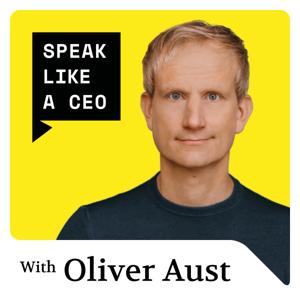


Want to work with Oliver and become a top 1% communicator? Join the Speak Like a CEO Academy and sign up for the FREE webinar! https://www.speaklikeaceo.academy/
Most women are taught to be nice and agreeable, but that comes at a cost in the workplace.
In this episode, Kate Mason, author of Powerfully Likeable: A Woman's Guide to Effective Communication, challenges the idea that women have to choose between being likeable and powerful at work.
You'll learn how to define your authentic communication style, bring warmth without losing authority, and find calm confidence even in high-stakes rooms.
Topics discussed:
Why “likable vs. powerful” is a false choice (00:33)
How to define your own communication style (03:02)
Ways we diminish our authenticity (06:24)
Saying “no” and setting boundaries without guilt (08:18)
The failure privilege and who is "allowed" to fail (10:52)
What to do when you’re afraid to speak up (13:07)
Managing perfectionism and over-preparation (15:58)
The mindset shift that helps women "steal space" in powerful rooms (19:21)
The biggest challenge women face in the workplace (22:43)
The first step: audit your communication strengths (24:56)
Authentic communication and why it matters in the workplace (26:42)
Self-regulation to find your calm, confident self (30:46)
Connect with Kate Mason:
https://www.katemason.co/
https://www.instagram.com/drkatemason/
https://www.linkedin.com/in/katemasonphd/
Get your 50 Presentation Hacks from Oliver: https://eoipsocommunications.com/newsletter/
This episode was produced by Podcast Boutique https://www.podcastboutique.com
If you’ve ever felt your heart race before a presentation, struggled to find the right words in a high-stakes conversation, or worried you’re not being heard at work, this episode is for you.
My guest is Matt Abrahams, a world expert in communication, Stanford lecturer, and host of the Think Fast, Talk Smart podcast.
In this episode, he shares a powerful, practical approach to overcoming the most common challenges in public speaking and everyday communication.
We explore how to manage anxiety, stop over-relying on slides, and shift from performance mode to connection mode. Matt explains why memorizing a script often makes us more nervous and offers a better alternative: structure over script.
He breaks down how to recover gracefully when your mind goes blank, eliminate filler words like “umm” and “you know,” and use storytelling to make your message more memorable and persuasive.
We also dive into how to be seen and heard at work without sounding self-promotional, and how to build spontaneous speaking skills that make meetings and conversations feel less stressful and more natural.
Enjoy this masterclass in how to speak up – without freaking out.
0:00 Introduction & Setting the Stage
0:36 Presentation Mistakes & Audience-Centric Communication
2:34 The Power of Storytelling
6:53 Managing Nerves & Building Confidence
17:23 Standing Out at Work & Building Credibility
21:40 AI in Communication: Opportunities & Pitfalls
29:02 Evolving as a Communicator & Final Advice
31:21 Outro & Resources
Get your 50 Presentation Hacks from Oliver: https://eoipsocommunications.com/newsletter/
If your team is smart, talented, and experienced – but still isn’t performing as they should – this episode is your wake-up call. Because the problem isn’t your people… it’s the norms driving how they interact.
Today, you’re going to learn how to build team emotional intelligence on demand — the kind that unlocks trust, psychological safety, and fast alignment. If you want to lead a top 1% team, this is the playbook.
In this must-listen episode, Oliver is joined by Dr. Vanessa Druskat, organizational psychologist, long-time collaborator of Daniel Goleman, and co-author of The Emotionally Intelligent Team – one of the most important leadership books of the year.
We unpack why focusing on individuals is no longer enough, how to embed emotional intelligence into your team’s daily habits, the 3 essential norms that separate average teams from extraordinary ones, and how to measure and improve your team’s EQ, starting now.
Vanessa offers a science-backed, deeply practical framework to create high-performing, human-centered teams – even in high-pressure, fast-changing environments.
⏰ CHAPTERS
00:00 - Introduction
01:33 - Meet Dr. Vanessa Druskat & The Power of Team Emotional Intelligence
04:25 - Why Individual EQ Isn’t Enough for Teams
07:20 - The Relationship Between IQ and EQ
10:09 - What Should Leaders Look for When Hiring?
13:09 - The Three Essential Team Norms
15:46 - Norm 1: Building Belonging & Trust
19:22 - Norm 2: Creating Shared Purpose & Direction
22:11 - Norm 3: Reaching Outside the Team
25:20 - Is Team EQ Catching On?
28:18 - How to Measure and Improve Team EQ
31:00 - The Impact of Leadership and Culture Change
34:00 - The Future: AI, Teams, and Emotional Intelligence
37:00 - Vanessa’s Best Communication Advice
39:00 - Wrap Up & Where to Learn More
Enjoy the episode!
Leave us your comments and ideas. We want to know what you think.
You can find the "Team EI Quick Survey" mentioned in the episode here: https://www.vanessadruskat.com/resources
Get your 50 Presentation Hacks from Oliver: https://eoipsocommunications.com/newsletter/
Many leaders sound inauthentic, robotic or fake.
It’s true: As a leader, it’s hard to sound authentic – to be real, relatable, and trusted. Some messages may come across as too corporate, others as too casual.
The result is the same: there’s a gap between what you want to say and what your people hear.
To close that gap, I’m joined by David Shelley, CEO of Hachette Book Group, one of the biggest names in global publishing, with more than 220 million books sold annually.
He’s raw, real, and incredibly believable – and he shows us what authentic leadership communication sounds like at scale.
Get your 50 Presentation Hacks here: https://eoipsocommunications.com/newsletter/
00:00 Introduction & Authentic Leadership
00:32 Open Office & Company Culture
01:39 Industry Changes & Inclusivity
02:27 Feedback & Growth Mindset
07:54 Diversity & Changing the Story
10:27 Business Growth & Pillars of Success
12:14 Understanding Consumers
14:50 Building Trust & Communication Channels
19:23 Transparency vs. Confidentiality
22:34 The Future of Publishing
26:03 Advice for Aspiring Authors
28:49 Leadership, Communication, and Final Advice
38:35 Closing Remarks
Is everything we know about leadership… wrong?In this eye-opening episode, Jon Levy, behavioral scientist and bestselling author of Team Intelligence, joins Oliver to challenge some of our most deeply held assumptions about what makes a great leader – and what truly drives high-performing teams.Forget charisma and vision. According to Jon, the real reason we follow someone isn’t their MBA or their skills checklist – it's the feeling that they offer a better future. But that’s just the beginning.In this conversation, you’ll learn:
Why the MBA was designed for a world that no longer exists – and what it missed entirely.
How Harvard’s early leadership research was based on fake credentials.
Why “super skills” (not soft skills) are the secret to influence.
What makes some teams 1.6x more productive – and why “glue players” are the hidden MVPs.
The science of bursty communication and why it beats Slack pings and endless meetings.
How too much talent can tank a team—and why team intelligence > individual genius.
Why diversity, emotional intelligence, and alignment are non-negotiable for team success.
How to spot (and survive) dark personalities in your workplace.
The one mindset shift every leader needs to unlock true collective genius.
Jon’s insights are grounded in cutting-edge research but delivered with refreshing clarity, wit, and real-world practicality.
Bonus takeaway: Learn why your best team member might not be the loudest star—but the quiet connector who helps everyone else shine.
Get the “50 Presentation Hacks” Guide https://eoipsocommunications.com/newsletter/
Timestamps
0:00 - Intro & is leadership all wrong?
1:19 - Why the MBA is outdated
3:09 - Harvard’s fake credentials
6:08 - Super skills vs. soft skills
13:22 - Too much talent problem
16:10 - Diversity & emotional intelligence
17:45 - Glue players boost teams
18:32 - Bursty communication
32:30 - Dark personalities at work
39:55 - Unlocking collective genius
Bad communication costs businesses $37 billion a year, and chances are, it's costing you too.
Celeste Headlee is one of the most watched TED speakers ever and a global authority on conversations.
And today, she's going to show you how to save money by communicating better.
Plus: she exposes the bad advice you’ve been given by so-called experts.
Timestamps
00:00 The Cost of Poor Communication
01:19 The Inefficiency of Emails
04:03 Mastering the Art of Conversation
28:21 Switch vs. Support Responses in Conversations
29:34 The Impact of Technology on Communication
33:29 The Future of Communication and AI
Have you ever struggled to explain what you do, or find it hard to cut through? And no, it’s not about refining your elevator pitch or polishing your LinkedIn bio. It’s about making one crucial decision: what are you not?Because in a noisy world, people don’t remember nuance. They remember contrast.Global brand and positioning strategist Laura Ries argues that the clearest way to stand out as a leader or a company is to pick the right fight. Not out of anger. Out of clarity.
She’s spent decades advising global brands. In her new book Pick the Right Fight, she shows why finding your strategic enemy might be the smartest move you ever make.
She breaks it down:-Why people don’t buy “better” – they buy “different”-How to become instantly memorable by positioning against something-Why trying to “stay open” often keeps you invisible- And how even something as small as a color, a word, or a tagline can anchor your entire presence.This isn’t theory. It’s about being findable in a world that forgets you in seconds.You’ll leave this episode asking a powerful question:What am I not – and what fight am I really here for?
Timestamps
00:18 The Power of Strategic Enemies
02:12 Visual Branding & Positioning
08:53 Brand Focus & Differentiation (Subaru, Tesla, Liquid Death)
14:44 Personal Branding & Authenticity
24:44 Reflecting on a Legacy
25:16 The Evolution of Advertising and Positioning
28:45 Modern Branding Challenges and Strategies
48:13 Brand Extensions, Pivots & Case Studies
To influence someone, we have to change their minds – or so we have been told. But what if that’s exactly why your message keeps falling flat?
In this episode, you'll learn why changing minds is overrated – and how to be influential in today’s world.
Our guest is Steve Martin, one of the world’s top minds in behavioral science and longtime business partner of Robert Cialdini, the godfather of persuasion.
Steve has spent 20+ years translating psychology into action and is the author of “Messengers” and his new book “Influence at Work”.
Here’s what we break down:
If you want to be more effective in how you show up in the world, this conversation will change the way you think about influence.
Find out more about Steve Martin: https://influenceatwork.co.uk/
Subscribed to the Speak Like a CEO newsletter to become a top 1% communicator: https://eo-ipso-comms.kit.com/profile/posts
This episode reveals why most teams underperform and how to fix it fast.
I sit down with Dr. Colin M. Fisher – Harvard-trained management professor, former jazz musician, and author of the brand new book The Collective Edge – to dismantle the myths most leaders believe about collaboration, trust, and leadership.
Forget forced fun, trust falls, and bloated org charts.
Fisher explains why most teams are too big, too unclear, and too focused on individual performance – and what it actually takes to build a high-functioning team that delivers.
🔥 In this episode:
If you're building teams, leading change, or scaling fast — this conversation will challenge your assumptions and give you a blueprint for team performance that actually works.
Fisher’s work isn’t theory – it’s been battle-tested in high-stakes environments.
👉 Learn more and grab the book at colinmfisher.com
💬 Like what you hear? Follow, share, and leave us a review.
Meet the man who scaled Kindle and turned McDonald’s, Volvo, and MGM into truly digital businesses.
Atif Rafiq has helped reshape some of the world’s biggest brands by challenging how organizations make decisions and execute bold ideas.
As the first Chief Digital Officer in the Fortune 500 and author of the Wall Street Journal bestseller Decision Sprint, Atif believes the true competitive edge lies not in execution alone, but in mastering the messy, often misunderstood process of decision-making.
Atif breaks down how to foster a culture where problem-solving thrives, people feel heard, and collaboration leads to clarity. He knows what he talks about: Atif led the transformation of McDonald’s customer experience through self-service kiosks and shares how old school carmaker Volvo reimagined its digital strategy.
Now as founder of Ritual – an AI-native workspace designed for strategy, product, and cross-functional collaboration – Atif is building what some have called a “McKinsey Killer.” He offers a compelling take on how AI can democratize high-quality problem-solving and why consultants will need to evolve to stay relevant.
He also shares his most important piece of communication advice for leaders: seek clarity before you provide it. In a world moving faster than ever, Atif’s approach to thoughtful decision-making, human-centered innovation, and transparent leadership offers a powerful roadmap for change.
00:00 Welcome
00:19 Establishing a Culture of Problem Solving
01:31 Leadership and Cultural Shifts at McDonald's
04:12 Digital Transformation at McDonald's
07:48 Innovations at Volvo
09:18 Decision Sprint: The Book
16:58 Methodology for Effective Decision Making
18:25 AI and the Future of Decision Making
20:03 Introducing Ritual: AI Native Workspace
20:58 Key Questions for Exploration and Discovery
21:14 Ritual: AI-Powered Collaboration
21:38 Overcoming Information Sharing Challenges
22:10 Human-AI Collaboration in Ritual
22:32 Structuring Problem Spaces with AI
23:24 Measuring Confidence in Recommendations
23:37 Ritual vs. Traditional Consultants
24:44 Future of Consulting in the AI Era
28:38 Upskilling and the Next-Gen Knowledge Worker
32:47 Challenges and Opportunities for Founders
34:41 Building Long-Term Relationships
36:05 Advice for Younger Self and Community Building
38:39 Final Thoughts and Communication Advice
From the publisher's feed
16,049 Listeners

2,016 Listeners

8,554 Listeners
96 Listeners
2,432 Listeners
126 Listeners

27,674 Listeners

1,123 Listeners

814 Listeners
2,204 Listeners

29,197 Listeners

3,455 Listeners

19,246 Listeners
153 Listeners
388 Listeners