
Sign up to save your podcasts
Or



Based on Podcast App listening data
Most people think cheating is black and white.
You either cheated or you didn’t.
But an affair rarely begins with the affair.
It begins with the text you wouldn’t want your spouse to see.
The flirtation you didn’t shut down.
The connection you’re keeping secret.
The attention you’re seeking outside your marriage.
One seemingly harmless choice becomes another. And another.
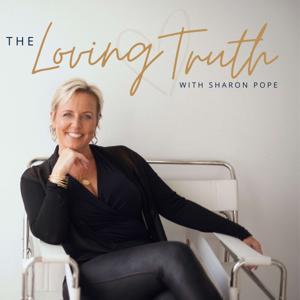
In this episode of The Loving Truth Podcast, I’m talking about micro-cheating: the small choices that may not technically qualify as an affair, but still chip away at trust and create distance in your marriage.
In this episode, you’ll learn:Because the most useful question may not be:
Does this technically count as cheating?
It may be:
If your spouse could see every text, interaction and choice you’re making, would anything need to change?
Your faith tells you marriage is forever.
But your marriage is hurting you.
So…now what?
In this episode of The Loving Truth Podcast, we’re stepping into some tricky territory: faith, marriage, abuse and divorce.
One of my members recently told her husband that she intends to separate and move toward divorce after 12 years of verbal, mental and emotional abuse.
Then she went to church and heard her pastor preach that God hates divorce, even when abuse is present.
Because, he said, the abuser could always change.
And just like that, she was questioning herself again.
Have I done enough?
Have I tried everything?
What if he really could change?
Here’s the thing…
I’m not here to tell you what to believe about God.
What I believe is simply what I choose to believe. It’s right for me. That doesn’t mean it needs to be right for you.
But if you’re wrestling with this question, I think that matters.
Because there’s a difference between what you’ve been taught to believe and what you actually believe.
There’s also a difference between what someone could become and who they have consistently shown themselves to be.
At some point, we have to be willing to look at both.
In this episode, you’ll learn:I also share some of my own journey with faith and why I struggle with any teaching that asks a woman to become stronger at enduring abuse rather than asking the person abusing her to stop.
Because maybe the question isn’t whether someone else thinks you’ve tried hard enough.
Maybe it’s:
After everything you’ve tried, what has your experience shown you?
Reflective Question:
What would I need to know, see or experience to trust that I’ve done all I can do?
The world feels uncertain right now.
And when the world feels uncertain, we tend to hold tighter to what feels familiar.
Even when what’s familiar doesn’t feel particularly good.
Sharon is seeing more women choosing to stay in unhappy, disconnected marriages right now. Not because their marriages have gotten better, but because everything outside the marriage feels less certain.
The marriage you were once seriously considering leaving can suddenly feel safer than the unknown of divorce.
That doesn’t necessarily mean you’ve changed your mind about the marriage.
It means something else may matter more right now.
In this episode, Sharon explores what happens when the question, “Should I stay or go?” gets quieter and you find yourself choosing to stay in a marriage you’re not sure you would choose under different circumstances.
Through the story of Evelyn, who is married to a man who can feel like two entirely different people depending on whether he’s sober or high, we’ll look at what it means to make peace with a marriage that isn’t what you want it to be.
Because acceptance isn’t helplessness.
Acceptance is getting honest about what is true, what you can control, and what you’re choosing from here.
We’ll also talk about something that has to be part of any honest conversation about divorce in midlife: money.
Not to scare you into staying.
But to help you make a decision with your eyes wide open.
In this episode, you’ll learn:You may not love every choice available to you.
But there is a big difference between “I have no choice” and “This is the choice I’m making right now.”
Reflection QuestionWhat would need to shift within me for me to genuinely feel at peace with the life and marriage I’m choosing?
You've been trying to get him to see it.
To hear you.
To understand you.
To finally change.
You've explained it.
You've cried.
You've been patient.
You've gotten angry.
And yet...here you are.
Still waiting.
Because somewhere inside, you're holding onto the belief that if you could just say it the right way, something would finally click.
But what if he already understands?
What if he's simply making a different choice?
In this episode, Sharon explores one of the hardest truths about struggling marriages:
Your partner has been making choices all along.
Every day.
Every conversation.
Every opportunity to show up differently.
And those choices tell you far more than the promises ever will.
Because every adult gets to choose.
They get to choose how they show up.
They get to choose what kind of partner they want to be.
And they also get to live with the outcome of those choices.
So do you.
The question isn't whether your partner could change.
The question is whether they're choosing to.
In this episode, you'll learn:Reflection Question:
What truths about your relationship have you been resisting because accepting them would require you to make difficult choices?
You’re exhausted.
You carry the mental load.
You solve the problems.
You keep everything moving.
And you're wondering why your partner doesn't seem to step up.
But what if, without realizing it, you've helped create that dynamic?
In this episode, Sharon explores one of the most common patterns she sees in struggling marriages: overfunctioning. It's the habit of doing too much, taking on too much, and believing it's simply what a good partner does.
Until one day, you're overwhelmed, resentful...and wondering why you're carrying the relationship alone.
You'll discover why overfunctioning isn't really about being helpful. It's often driven by anxiety, control, or the belief that your worth comes from what you do for everyone else. And while those intentions may come from a good place, they often produce the exact opposite result.
Because every time you rush in to fix, rescue, or take over, you leave no room for your partner to show up.
Just because you can do everything doesn't mean you should.
If you're tired of carrying the weight of your marriage, this episode will challenge you to stop creating the very dynamic you resent and start making space for something different.
In this episode, you'll learn:Reflection Question:
Where in your relationship are you over-functioning… and then quietly resenting your partner for allowing you to?
Menopause isn't ruining your marriage.
It's revealing what stopped working a long time ago.
If you've been blaming your hormones for the distance in your relationship, or your husband has been blaming your hormones for why things feel different, this episode will challenge that story.
Because menopause didn't create the cracks.
It simply made them impossible to ignore.
For years, life was full. Kids. Careers. Responsibilities. There wasn't much room to stop and ask whether your marriage was actually working.
Then midlife changed the pace.
The kids became more independent. Life got quieter. And suddenly you were left with the truth of your relationship.
Not because menopause changed your marriage.
Because it changed what you're willing to tolerate.
In this episode, Sharon explores why menopause isn't the problem. The unresolved patterns in your marriage are. The conversations that never went anywhere. The resentment that never got repaired. The loneliness that slowly became normal.
Because every healthy marriage has to evolve.
In this episode, you'll learn:Reflection Question:
Has your marriage actually stopped working… or have you simply stopped tolerating what never truly worked for you?
The most dangerous place in a struggling marriage isn't constant conflict.
It's the place where nothing changes.
You stop arguing because you've stopped expecting anything different. You go through the motions. You raise the kids. You pay the bills. From the outside, everything looks fine.
But inside, you keep asking yourself:
Is this all there is?
In this episode, Sharon explores what she calls the In-Between. That place where you're no longer fulfilled in your marriage, but you're not ready to leave either.
It's where many women spend years. Sometimes decades.
Not repairing the marriage.
Not ending it.
Just waiting... hoping clarity will somehow arrive on its own.
Through the story of Julie, a woman who spent nearly ten years questioning her marriage, Sharon unpacks why we stay stuck, why "comfortable discomfort" can quietly steal years of our lives, and why the clarity you're searching for isn't found by thinking harder.
It's found by having the conversations you've been avoiding.
Because courage doesn't come after confidence.
It comes before it.
If you've been asking yourself whether to stay or go, this episode will challenge you to stop waiting for certainty and start taking the small, courageous steps that lead to the truth.
In this episode, you'll learn:Reflection Question:
What courageous conversation or action have you been avoiding that might finally give you the clarity you say you want?
Every time you try to have an honest conversation about your marriage, something happens.
He gets defensive.
He changes the subject.
He tells you you're overreacting.
He starts arguing about something else.
Or he shuts down altogether.
After a while, you stop bringing things up because it feels easier than hitting the same brick wall over and over again.
But here's the problem.
What goes unspoken doesn't disappear. It simply grows into distance.
In this episode, Sharon explores why so many people avoid difficult conversations, what's really happening underneath defensiveness and shutdown, and why avoidance slowly erodes even the strongest relationships.
Because avoidance isn't usually about not caring.
It's about not knowing how to stay present when something feels painful, threatening, or like failure.
You'll learn why defensiveness, blame, angry outbursts, and stonewalling are all different ways we protect ourselves from discomfort, and why those protective strategies come at such a high cost to our marriages.
Sharon also shares practical ways to change the conversation, including how to talk about how you communicate, the language that invites greater engagement, and how to stop chasing someone who isn't willing to meet you halfway.
If you've spent years wondering how to get your partner to open up, this conversation will help you understand what's happening beneath the surface while also helping you decide what healthy participation in a marriage really looks like.
Because intimacy doesn't require perfection.
It requires two people who are willing to stay in the conversation.
In this episode, you'll learn:• Why avoidance is often more damaging than conflict in a marriage
• What's really happening when your partner gets defensive, shuts down, or walks away
• Why many men experience feedback as failure and how that shapes difficult conversations
• The fear underneath avoidance and how past experiences influence our reactions today
• How to have a conversation about how the two of you communicate
• Why pursuing a withdrawing partner often creates even more distance
• What to say when your spouse refuses to engage or continually avoids difficult conversations
• How to balance compassion with accountability without abandoning yourself
• The conversation every couple needs before deciding whether it's time to stay or go
What conversations have been avoided in your marriage for so long that the silence itself is now damaging the relationship?
Audrey was married for 23 years.
For most of those years, there was always another woman.
Sometimes it was someone from high school. Sometimes it was a coworker. Sometimes it was inappropriate messages, emotional affairs, or naked photos exchanged online. Every time Audrey discovered something, the same cycle played out. She confronted him. He apologized. She hoped. And then it happened again.
She stayed because she loved him.
She stayed because they had four children together.
She stayed because she believed this time would be different.
Until one day, she realized it wouldn't.
In this episode, Sharon explores the moment Audrey finally stopped asking whether her husband would change and started asking herself a different question:
At what point does staying become self-abandonment?
Together, you'll unpack why so many of us stay loyal to relationships that have stopped being loyal to us, why hope can quietly become the thing that keeps us stuck, and why patterns don't end simply because we recognize them. They end when we stop participating in them.
If you've ever found yourself waiting for someone to become the person you know they're capable of being... if you've left before only to come back... if you've wondered whether you're staying because of love or because of fear... this conversation is for you.
Because there comes a moment when the question isn't whether they'll change.
It's whether you're finally ready to.
In this episode, you'll learn:• Why repeated betrayal slowly becomes self-abandonment.
• The difference between hope and denial, and why confusing the two keeps you stuck.
• Why leaving isn't usually one decision, but hundreds of small ones that lead to one final moment.
• How waiting for someone else to change keeps you from changing your own life.
• Why breaking a pattern requires more than awareness. It requires different choices.
Reflective Question:
Are you staying out of love… or out of fear of what happens if you leave?
Most people believe desire is something you either have or you don't.
You meet the right person and it's there. Or life gets busy, years pass, and it fades away.
But what if that's not true?
In this episode, Sharon covers one of the biggest myths about long-term relationships: desire doesn't disappear on its own. It dies from neglect.
And if you're not paying attention to it, it may be the very thing that's quietly eroding your marriage.
This isn't an episode about getting back to how things used to be. You can't go backward. You're not the same person you were before kids, careers, responsibilities, and life happened. And, trying to recreate the past isn't the answer anyway.
The question is: How do you create desire from where you are right now?
Whether desire has faded over time, feels completely absent, or was never really there to begin with, Sharon shares what it actually takes to cultivate it. You'll learn why desire is something we build, not something we find, and why the emotional environment you create every day matters more than you think.
From appreciation and kindness to communication, trust, novelty, and touch, Sharon breaks down the foundational ingredients that allow desire to grow. She also explores why predictability can quietly drain the life from a relationship, why spontaneity often requires intention, and why non-sexual touch may be one of the most overlooked tools for rebuilding connection.
If you've been waiting to feel desire again before taking action, this episode offers a different path:
Stop waiting. Start building.
In this episode, you'll learn:
• Why desire rarely disappears overnight and what slowly causes it to fade
• The difference between reigniting desire and cultivating it for the first time
• How predictability creates safety but can diminish aliveness
• How to create the conditions where desire can grow again
Reflective Question:
What kind of emotional environment are you creating in your marriage, one where desire can thrive, or one where it slowly disappears?
From the publisher's feed
As a Relationship Expert & Certified Master Life Coach, Sharon Pope has helped thousands of women gain the confidence and clarity they need to either fix their struggling marriages or move…
Ranked by our users in the last 21 days

2,642 Listeners

1,413 Listeners
407 Listeners

21,054 Listeners

16,624 Listeners

571 Listeners
779 Listeners

222 Listeners

32 Listeners
279 Listeners

1,385 Listeners

18,797 Listeners

294 Listeners

60 Listeners

83 Listeners