
Sign up to save your podcasts
Or

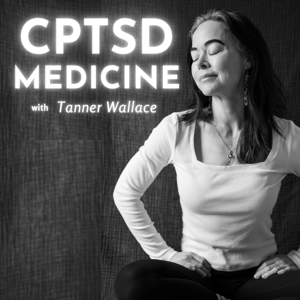


Hello love ❤️
We found each other.
This podcast has such a tender place in my heart. When I hit record back in the late spring, early summer of 2020, I had no idea the journey that would unfold in front of me. This podcast is essentially an audio diary of my own evolution and growth over the months I have hosted it.
Along the way, there have been high moments and low moments of healing in the public eye, lessons and celebrations for creating potent containers for transformation, and breakthroughs in my and my client’s CPTSD recovery so profound I cannot even put them into words.
Through all of this, the mission is clear: “Create a precise map for permanent CPTSD healing.”
And so, I continue walking, and it just keeps getting better and better in my world.
If you want to know me more intimately, come join me on IG @heldbytanner and @cptsdmedicine or on Facebook @heldbytanner.
If you would like to receive an email each time I am selling a healing container or coaching experience, you can opt-in to my “Shop With Tanner” email list here:
https://www.heldbytanner.com/heldbytanner-opt-in
Sending you love…so much love. Recovery from CPTSD is no joke. AND you absolutely CAN do it (more quickly than you might imagine at this very moment.)
Episode 046
Hello love ❤️
We found each other.
This podcast has such a tender place in my heart. When I hit record back in the late spring, early summer of 2020, I had no idea the journey that would unfold in front of me. This podcast is essentially an audio diary of my own evolution and growth over the months I have hosted it.
Along the way, there have been high moments and low moments of healing in the public eye, lessons and celebrations for creating potent containers for transformation, and breakthroughs in my and my clients' CPTSD recovery so profound I cannot even put them into words.
Through all of this, the mission is clear: “Create a precise map for permanent CPTSD healing.”
And so, I continue walking, and it just keeps getting better and better in my world.
If you want to know me more intimately, come join me on IG @heldbytanner and @cptsdmedicine or on Facebook @heldbytanner.
If you would like to receive an email each time I am selling a healing container or coaching experience, you can opt-in to my “Shop With Tanner” email list here:
https://www.heldbytanner.com/heldbytanner-opt-in
Sending you love…so much love. Recovery from CPTSD is no joke. AND you absolutely CAN do it (more quickly than you might imagine at this very moment.)
Episode 045
What is the importance of distinguishing between selfishness and self-centeredness in trauma recovery?
The healing journey is a profound and multifaceted exploration of recovering from complex trauma, where individuals strive to recalibrate their inner compass and restore balance within themselves. Tanner provides critical insights into this journey, focusing on the crucial distinction between selfishness and self-centeredness as a method for recalibrating one's path towards healing. Her perspective is rooted in the belief that healing involves unlocking one's inherent power and transforming old beliefs to emerge as a whole and healed individual. By engaging in survivor-led conversations and fostering an environment of vulnerability and compassion, Tanner invites individuals to join "The Clearing," a space where they can tap into healing energies and develop new approaches to recovery. Her approach underscores the importance of communication skills and personal empowerment, acknowledging that healing is an ongoing process intricately woven into the fabric of daily life and relationships.
Key TakeAways
- Tanner focuses on efficient complex trauma recovery through the Relational Healing Lab.
- Learning how to show up with vulnerability and reprogram the brain is crucial for healing.
- Self-centeredness during active recovery is a gift that leads to a more fulfilling life.
- Partnership healing and vulnerability involves connecting and restoring attachments for healing past wounds.
- Addressing root causes and improving communication enhances relationships and quality of life.
- Attachment woundings lead to the development of survival codes for self-protection.
- Active recovery focuses on internal healing to foster healthier relationships and break destructive patterns.
Actionable Insights
- Distinguish between selfishness and self-centeredness for inner work
- Practice vulnerability to heal past wounds and receive support
- Focus on partnership healing and vulnerability in relationships
- Address root causes and improve communication for better relationships
- Understand the impact of trauma on relationships for self-awareness
- Prioritize internal healing to prevent selfish behavior and loneliness
- Utilize unblending processes and balance protective parts for healing
Why is it important to prioritize healing practices over non-essential activities?
The Internal Family Systems (IFS) approach to trauma recovery offers a compelling framework for understanding the complex inner dynamics that influence healing. This therapeutic model views the mind as composed of distinct "parts" that have developed over time to protect and support the individual, particularly in response to traumatic experiences. Tanner, an advocate of this approach, draws from her background in working with trauma survivors to stress the importance of identifying and engaging with these Protective Parts. She underscores the necessity of addressing parts that originated in early childhood, which often act as surrogate caretakers, providing comfort when actual parental figures were unavailable or ineffective. For Tanner, the IFS approach is not just about understanding these parts but actively unburdening them, which she believes is essential for enabling self-leadership and fostering transformative healing. Her perspective highlights the need for dedicated and compassionate reprogramming of the brain, where the commitment to understanding and healing these parts plays a pivotal role in achieving meaningful recovery.
Key TakeAways
- Committing fully to the recovery journey leads to exponential growth and results.
- Internal Family Systems approach focuses on protective parts developed in infancy for trauma recovery.
- Unburdening shame associated with parental protective parts is crucial for healing.
- Consistent daily commitment leads to significant shifts and breakthroughs in recovery over time.
Actionable Insights
- Commit fully to the recovery journey for exponential growth and results
- Prioritize healing over non-essential activities to intensify commitment
- Unburden the shame associated with parental protective parts for healing
- Consistent daily commitment to healing leads to significant shifts in recovery
How can reflecting on lessons learned contribute to continual growth and evolution?
Embarking on a healing journey involves more than just the process of recovering; it requires thoughtful preparation to cultivate a flourishing life beyond healing. Tanner, who has extensively explored the nuances of personal growth, emphasizes the importance of nurturing one's life during this journey by addressing obstacles and seeking support. His experiences have led him to advocate for dreaming big in all areas of life—be it relationships, health, or finances—as a means to manifest future goals. With a focus on small, everyday practices, Tanner encourages developing a playful and imaginative relationship with oneself to foster personal growth and transformation. His approach includes documenting personal milestones and celebrating progress, all of which contribute to a vibrant and fulfilling existence post-recovery.
Key TakeAways
- Preparing for the healing journey is crucial for a flourishing life post-recovery
- Dreaming big for relationships, health, and finances is essential for goal manifestation
- Developing a companionship with different parts of oneself enhances the dreaming process
- Improving the quality of life during recovery is vital for sustained personal growth
- Reflecting and synthesizing lessons learned are key for continual growth and development
- Documenting memories and lessons learned through photos and videos aids in personal growth
- Prioritizing self-awareness, gratitude, and personal expression leads to a more fulfilling living experience
Actionable Insights
- Acknowledge and address obstacles, triggers, and the need for external support during the healing journey
- Dream big for relationships, health, and finances by envisioning ideal scenarios
- Develop companionship with different parts of oneself to enhance the dreaming process
- Improve the quality of life during the recovery journey rather than waiting for complete healing
- Reflect and synthesize lessons learned in personal growth for continual development
- Document memories and lessons learned throughout the year for personal growth
- Prioritize self-awareness, gratitude, and personal expression for a positive impact
How can individuals transition from a fear-based frequency to a frequency of love for healing?
Trauma recovery is a complex journey that involves healing from past wounds and reshaping one's life towards a more positive future. Tanner advocates for a survivor-led revolution in trauma recovery, where individuals are at the forefront of their healing journey, empowered by the latest research and a humanistic approach. Her perspective is shaped by his belief in the power of community and ongoing conversations, encouraging people to take charge of their own recovery as their most powerful coach. By fostering environments that support holistic healing and personal empowerment, Tanner envisions a transformative path for survivors to reprogram their lives, overcome fear-based influences, and achieve authentic self-expression.
Key TakeAways
- Healing is a collective effort that requires ongoing conversations and peer support.
- Breaking free from fear-based prophecies inherited from parents is crucial for trauma recovery.
- Individuals may struggle with self-worth and acceptance as survivors of trauma, but empowerment and self-leadership are key in rewriting their narratives.
- Parents can pass on unhealed trauma and fear-based prophecies to their children, impacting their emotional growth.
- Transitioning from a fear-based frequency to a frequency of love is a transformative process that unlocks infinite possibilities.
- Examining and healing unconscious fear-based prophecies can empower individuals to manifest their truest selves.
- The Relational Healing Lab is a survivor-led initiative focusing on complex trauma, attachment issues, and relational healing.
Actionable Insights
- Prioritize ongoing conversations and peer support in trauma recovery
- Create a survivor-led trauma recovery revolution based on the latest research
- Recognize and break free from fear-based prophecies inherited from parents
- Empower individuals to rewrite their narratives and break free from fear-based frequencies
- Acknowledge and actively work towards healing inherited burdens to create a positive legacy
- Transition from fear-based frequency to a frequency of love for transformative healing
- Reflect on and heal unconscious fear-based prophecies to unlock personal power and authenticity
Why is a recovery framework that is sober, slow, and systematic recommended?
Self-leadership and recovery are vital components in the journey towards healing, particularly when dealing with trauma. This concept revolves around the idea that individuals can guide themselves towards personal growth and recovery, thereby contributing to the broader healing of their communities. Tanner offers a unique perspective on self-leadership, drawing from her own experiences of healing and reintegration into a supportive community. She stresses the importance of unburdening oneself and embracing self-awareness, not only by reparenting wounded parts but also by mentoring the protective aspects of one's personality. Tanner advocates for a Self Energy approach, where the aim is to become entirely Self-led, fostering the development of healthy and stable relationships while affirming that it is never too late to rebuild and nurture fulfilling connections.
Key TakeAways
- Collective healing and trauma recovery within a community is crucial for growth and evolution.
- Expanding language and shared concepts of healing is essential for building a new paradigm in trauma recovery.
- The difference between circumstantial power and personal power is important in overcoming trauma.
- Self leadership is emphasized as a foundational skill in building safe and fulfilling relationships for successful recovery.
- Self-compassion and radical accountability are key in personal transformation and empowerment.
- Cultivating self energy through self leadership is essential in unburdening oneself and progressing towards healing.
- Adopting a recovery framework that is sober, slow, and systematic is crucial for successful CPTSD Recovery.
Actionable Insights
- Focus on expanding language and shared concepts of healing
- Unlock personal power through self-awareness and self-leadership
- Practice self-leadership to navigate trauma triggers and interactions with others
- Cultivate Self Energy through coaching, guiding, and reparenting oneself
- Embrace self-compassion to overcome feelings of helplessness and powerlessness
- Promote radical accountability and ownership of one's energy and sub-personalities
- Adopt a recovery framework that is sober, slow, and systematic
What are the key components for comprehensive healing from complex trauma?
Recovery from complex trauma is a profound journey that requires a multifaceted approach to healing. It involves understanding and addressing the intricate layers of psychological and emotional damage that have been sustained over time. Tanner views this recovery process as embarking on an uncertain journey guided by a flexible framework. She emphasizes the importance of being open to new interventions and understanding the timing and application of various healing modalities. Tanner's perspective is deeply shaped by her belief in the cyclical nature of healing, acknowledging that individuals must bravely confront their inner darkness and past traumas, allowing every aspect of their internal experience to be acknowledged for authentic recovery to unfold.
Key TakeAways
- Recovery from complex trauma requires a clear framework and sequence of interventions.
- Survivor-led perspectives are crucial in developing a collective understanding of trauma recovery.
- Sacrifice and deep investment are necessary for profound relational healing.
- Permanent healing and attachment restoration are achievable goals in trauma recovery.
- Acknowledging and facing past traumatic experiences is essential to unburden protective parts.
- Reparenting involves nurturing and supporting oneself in a kind manner during the healing journey.
- Discovery is crucial for learning, growth, and transformation in the healing process.
Actionable Insights
- Invest in structured trauma recovery programs for attachment restoration and relational healing
- Commit fully to the healing process by reassessing spending habits and prioritizing resources towards recovery programs
- Focus on strengthening emotion regulation alongside parts work for comprehensive healing from complex trauma
- Create a safe and supportive environment to face past traumatic experiences and unburden protective parts
- Practice reparenting as a gentle and encouraging approach to healing trauma within oneself
- Engage in the trauma recovery process by leaving behind looping negative emotions and embracing present-day emotions
- Emphasize discovery in the healing process for learning, growth, and transformation
What are the key phases of the healing journey as emphasized by Tanner?
Self-awareness plays a pivotal role in the journey of trauma recovery, serving as a guiding force that enables individuals to navigate the intricate pathways of healing and growth. Tanner, through her work with the Relational Healing Lab and podcast, underscores the significance of self-awareness and self-leadership in this transformative process. She draws from her experiences and insights to advocate for an intentional approach to recovery, one that involves understanding and addressing the various Parts of oneself. By employing frameworks like Internal Family Systems, Tanner believes individuals can effectively manage trauma triggers and foster emotional maturity, ultimately achieving breakthroughs in their healing journey. Her perspective highlights the collective effort needed to deepen understanding of complex trauma, creating a nurturing environment for survivors to explore and rebuild connections both internally and externally.
Key TakeAways
- Tanner values quality over quantity in creating impactful content for the Relational Healing Lab and podcast.
- The healing journey involves phases like becoming a safe human, deactivating survival codes, and navigating triggers in relationships.
- Self-leadership in recovery is crucial for leading oneself through challenging situations and embracing personal growth.
- The parts framework is essential in trauma recovery, allowing individuals to engage with different internal parts for healing.
- Having a Trauma Response Strategy involves identifying triggers and safe individuals to navigate challenging scenarios effectively.
- The Attachment Restoration Framework is a method for restoring attachments and enhancing connections through a relational healing approach.
Actionable Insights
- Focus on delivering impactful messages drawn from expertise in trauma recovery and personal healing journey
- Value quality over quantity when creating content for the podcast
- Emphasize the importance of becoming a safe human to others and navigating emotional triggers in relationships
- Take charge of the recovery journey and lead oneself through challenging situations
- Utilize a Trauma Response Strategy to identify triggers and safe individuals for proactive measures
- Utilize the Attachment Restoration Framework to restore internal and external attachments through relational healing
What is Internal Family Systems (IFS) therapy and how does it address complex trauma?
Madeleine Warren, a dedicated therapist based in Evanston, Illinois, is a fervent advocate for the Internal Family Systems (IFS) therapy model, particularly in its application to adults and couples with trauma histories. As a trainer for the IFS Institute, she plays a crucial role in mentoring practitioners, emphasizing the model's seamless integration and its embodied understanding in both personal and professional contexts. Warren's perspective is shaped by her own experiences with complex trauma, which enhance her empathetic approach, focusing on the importance of identifying and unburdening protective parts rather than solely accessing child parts. She believes in the transformative potential of IFS therapy by fostering self-energy and promoting internal collaboration, empowering clients to view their struggles as interconnected aspects of their internal system, and thereby creating a more compassionate, healing environment.
Connect with Madeleine here.
Key TakeAways
- The transformative power of Internal Family Systems therapy in trauma recovery
- Importance of experiential learning and personal exploration in implementing the IFS model
- Understanding that there are no bad parts within us, and every part has a good intention
- Healing complex trauma by addressing the protective roles of internal parts and connecting them to inner system reparenting
- The concept of self energy as a spark of light undamaged by trauma
- Significance of understanding extreme protectors within a system
- Importance of conveying 'I am here with you' message for relief and support
Actionable Insights
- Acknowledge and work with different parts of our inner system to address trauma and promote healing
- Recognize Protective Parts within oneself and reconnect with the inner spirit for healing
- Offer the message 'I am here with you' to comfort inner parts and foster a sense of safety and support
- Be intuitive and attuned to the varying needs of different parts within oneself
- Create a safe space and focus on internal healing to support survivors without pressure to disclose sensitive information
- Understand protective parts to gain insight into decision-making processes and find hope in navigating internal systems
- Embrace and sit with individuals facing hopelessness and despair without trying to argue or offer false hope
From the publisher's feed
1,407 Listeners

2,510 Listeners

5,139 Listeners

4,716 Listeners
429 Listeners

27,988 Listeners
280 Listeners

366 Listeners

1,852 Listeners
1,421 Listeners
1,057 Listeners

1,399 Listeners

341 Listeners
219 Listeners

221 Listeners