
Sign up to save your podcasts
Or

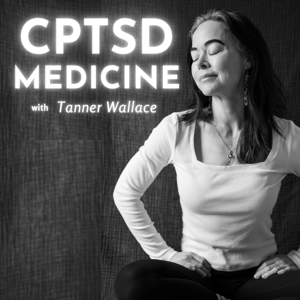


Hello love ❤️
We found each other.
This podcast has such a tender place in my heart. When I hit record back in the late spring, early summer of 2020, I had no idea the journey that would unfold in front of me. This podcast is essentially an audio diary of my own evolution and growth over the months I have hosted it.
Along the way, there have been high moments and low moments of healing in the public eye, lessons and celebrations for creating potent containers for transformation, and breakthroughs in my and my clients' CPTSD recovery so profound I cannot even put them into words.
Through all of this, the mission is clear: “Create a precise map for permanent CPTSD healing.”
And so, I continue walking, and it just keeps getting better and better in my world.
If you want to know me more intimately, come join me on IG @heldbytanner and @cptsdmedicine or on Facebook @heldbytanner.
If you would like to receive an email each time I am selling a healing container or coaching experience, you can opt-in to my “Shop With Tanner” email list here:
https://www.heldbytanner.com/heldbytanner-opt-in
Sending you love…so much love. Recovery from CPTSD is no joke. AND you absolutely CAN do it (more quickly than you might imagine at this very moment.)
Episode 036
How can trauma survivors contribute to a larger shift in human evolution?
Tanner's journey of self-discovery and healing from complex trauma emphasizes the significance of understanding and unblending from Protective and wounded Parts to uncover the True Self. By engaging in parts work and drawing insights from Pete Walker's book, Tanner learns to address his emotional struggles and dysfunctional patterns rooted in childhood trauma, which ultimately transforms his perspective on relationships and emotional processing. Healed trauma survivors, like Tanner, can contribute to a larger shift in human evolution by modeling vulnerability, compassion, and non-judgmental support, creating a safe space for others to heal and engage in inner work. Tanner highlights the concept of Attachment Restoration through relational healing, where trauma survivors can unlock healing by holding space for deep emotions without being triggered.
Key TakeAways
- Trauma survivors can guide others through a healing process by modeling vulnerability, compassion, and non-judgmental support.
- Recognizing and Unblending from Wounded Younger Parts can lead to healing and release burdens in the face of extreme emotional distress.
- Healed trauma survivors can help shift human evolution by providing a model for Unburdening inner systems and accessing Self Energy.
- The concept of Attachment Restoration through relational healing can raise consciousness and access Self Energy.
- Internal Family Systems views the mind as having sub-personalities developed due to trauma, with Protective Parts and Wounded Younger Parts being key components.
- Engaging in parts work and unblending from Protective and Wounded Younger Parts can lead to healing from past traumas and a shift in perspective.
Actionable Insights
- Engage in Parts Work to separate Protective and ounded Parts for understanding True Self
- Healed trauma survivors can guide others through the healing process by modeling vulnerability and compassion
- Recognize and Unblend from Wounded Younger Parts to offer opportunities for healing
- Understand the concept of Attachment Restoration through relational healing
- Utilize the Internal Family Systems to heal and show up Unblended in interactions
How does Internal Family Systems (IFS) therapy contribute to healing?
The experience of complex trauma survivors is a multifaceted journey marked by the challenges of navigating intense emotions and deep-rooted wounds. Tanner offers valuable insights into this journey, highlighting how survivors often feel overwhelmed as they become more aware of their trauma, leading to hesitation in fully committing to the healing process. Drawing from her understanding of trauma's intricate dynamics, Tanner advocates for a wholehearted commitment to healing, emphasizing the need to deactivate survival mechanisms and address protective parts that harbor shame. Through her perspective, shaped by a background in exploring the intergenerational transmission of trauma and therapeutic approaches like Internal Family Systems (IFS), Tanner underscores the importance of befriending these protective parts. By doing so, survivors can build trust, nurture self-compassion, and ultimately connect with their vulnerable inner selves to foster healing and break the cycle of trauma.
Key TakeAways
- Survivors of complex trauma struggle with intense experiences in the body as they become more aware of their trauma, making it challenging to take the first steps towards healing.
- Commitment to self-discovery is essential in deactivating survival codes and addressing protective parts holding onto shame from past traumas to initiate the healing process.
- Guiding trauma survivors to fully commit to the healing journey, put both feet on the path of healing, and move forward together is crucial for updating neural networks and progressing in healing.
- Internal Family Systems (IFS) therapy is transformative in helping individuals explore their internal world, work with protective parts, and update neural networks to move towards healing and integration.
- Unresolved parenting trauma can perpetuate trauma across generations, emphasizing the need to unburden protective parts holding shame from adult trauma to break the cycle of generational trauma.
- Engaging protective parts in therapy sessions, building trust in the healing process, and addressing shame from past traumatic experiences are crucial steps towards healing and addressing underlying wounds.
Actionable Insights
- Fully commit to self-discovery in the healing journey
- Address Protective Parts holding onto shame from past traumas
- Recognize the importance of Unburdening Protective Parts to facilitate healing
- Reflect on darkest adult moments to nurture self-compassion and courage
- Engage in inner child healing by Unburdening Wounded Younger Parts
- Build trust in the healing process by recognizing and befriending Protective Parts
What practices does Tanner illustrate as transformative for healing within a community?
Rediscovering yoga and its intrinsic community elements has become a beacon of hope and resilience for many, particularly during challenging times such as the pandemic. Tanner's journey back to yoga highlights the profound impact of community engagement in overcoming personal adversities. Despite initial mental hurdles and the challenges of re-engaging with physical activity, Tanner found relief and fulfillment in reconnecting with her yoga community. By practicing alongside individuals of diverse body types and experiences, she not only rediscovered the power of communal support but also appreciated the authentic friendships and personal growth that emerged. Places like the Pittsburgh Yoga Factory and the Relational Healing Lab have been instrumental in Tanner's healing process, emphasizing how shared goals and experiences can lead to self-discovery and resilience.
Key TakeAways
- Community plays a significant role in supporting individuals during challenging times, aiding in healing and providing strength.
- Open, supportive spaces like the Pittsburgh Yoga Factory and Relational Healing Lab are crucial for individuals seeking comfort and connection.
- Embracing individual differences within a community setting is essential for personal development and self-discovery in yoga practice.
- Staying present, showing self-compassion, and approaching challenges with curiosity in yoga practice can lead to lasting healing and growth.
Actionable Insights
- Reconnect with supportive communities during challenging times
- Embrace individual differences within a community setting for personal growth
- Practice self-compassion and curiosity when facing obstacles
- Stay present and mindful to approach recovery with courage and gratitude
How can engaging in Parts Work help individuals understand their sub-personalities?
Reflecting on childhood experiences is a crucial process that can significantly impact adult life, shaping behaviors, beliefs, and emotional responses. Tanner offers a nuanced perspective on this topic, emphasizing that healing from complex trauma requires more than just focusing on one's inner child; it necessitates addressing the Protective Parts that have developed as survival mechanisms over the years. Her viewpoint is informed by personal experiences, including seeking support during his youth that did not always provide the relief she needed, which has profoundly influenced her understanding of trauma healing. Tanner advocates for a comprehensive approach that involves acknowledging and working with both Wounded Younger Parts and protective mechanisms to achieve true, lasting healing.
Key TakeAways
- Music can access and speak to Wounded Younger Parts in trauma recovery by bypassing protective parts.
- Engaging with music and creative pursuits can aid in the healing process by tapping into the parts of the brain affected by trauma.
- Addressing Protective Parts alongside inner child healing is crucial for lasting recovery from complex trauma.
- Protective Parts can hinder progress in healing Wounded Younger Parts if not acknowledged.
- A survivor-to-survivor approach can offer unique relational healing experiences focused on healing complex trauma.
Actionable Insights
- Engage in Parts Work to identify sub-personalities affecting behavior and beliefs
- Tap into Wounded Younger Parts through music and creative pursuits for deeper exploration of past traumas
- Address Protective Parts alongside inner child healing for permanent recovery from complex trauma
- Process childhood and adolescent stories to understand how they shape adult behaviors and experiences
- Establish a survivor-to-survivor approach for experiences focused on healing complex trauma
Why is daily commitment and accountability essential for emotional healing?
Emotional liberation and trauma healing are vital processes that allow individuals to break free from the chains of past pain and manipulation, reclaiming their narratives and empowering themselves to lead authentic lives. Tanner, an advocate for these processes, believes in the transformative power of confronting and sharing one's story as a means to reclaim and rewrite narratives marred by childhood trauma. Tanner’s perspective is shaped by an understanding of the profound impact psychological abuse can have on a person’s perception of reality and truth, often leaving them grappling with fear and voicelessness. She emphasizes the critical role of community support and the daily commitment required in the journey towards emotional freedom, advocating for a collective effort to overcome past abuses and step into one’s truth without fear or shame.
Key TakeAways
- Having a safe person for validation and support is essential in recovery.
- Community support is crucial in reclaiming one's story and achieving emotional liberation.
- Childhood trauma can lead to fear, voicelessness, and struggle to speak one's truth.
- Daily commitment and accountability are important for emotional healing and growth.
Actionable Insights
- Have a safe person by your side during recovery for support and validation
- Reclaim and rewrite your story from past trauma with community support
- Assess the cost-benefit of speaking your truth for emotional liberation
- Commit to daily accountability in emotional healing and growth within the community
How can music and movie scenes unlock deep insights into personal experiences and emotions?
Emotional healing is a transformative process that involves understanding and releasing the deep-seated wounds and trauma that affect one's mental and emotional well-being. Tanner's perspective on emotional healing is deeply influenced by her journey of introspection and self-reflection, particularly as he navigates the impact of childhood neglect and emotional betrayal. Drawing inspiration from a scene in "A Star Is Born," Tanner illustrates how art can unlock profound insights into one's experiences, allowing her to recognize the protective and wounded Parts within herself. She highlights the necessity of acknowledging these Parts, emphasizing that working through them is crucial for healing, as it provides a platform for expressing and releasing emotional pain, thereby reclaiming self-worth and fostering transformation.
Key TakeAways
- Music and movie scenes can reveal deep insights about experiences and emotions
- Impact of childhood abuse and neglect on self-worth and emotional well-being
- Emotional disconnection can lead to panic, dissociation, and numbness
- Importance of allowing emotional pain to be expressed and witnessed for healing
Actionable Insights
- Acknowledge and address past trauma for healing
- Recognize the impact of neglectful parenting on self-worth
- Allow emotional pain to be expressed and witnessed for healing
- Create a safe space for raw emotions to surface and be healed
How can music aid in trauma recovery and healing?
Healing through music is an intriguing and transformative approach that taps into the profound emotional and psychological impact that music can have on individuals. Tanner, who advocates for the use of music in trauma recovery, emphasizes its capacity to facilitate significant advancements in parts work. Her perspective is shaped by personal experiences, such as when the song "Traitor" by Olivia Rodrigo enabled her to delve into and process deep-seated emotional wounds. Tanner underscores the importance of giving voice to the tender, wounded Parts within us by allowing them to express their truths through music, which she believes can unlock subconscious insights and reveal hidden trauma, leading to personal empowerment and a sense of wholeness.
Key TakeAways
- Prioritizing physical health is crucial for overall well-being and healing.
- Music has the power to tap into deep emotional truths and different parts of oneself.
- Integrating music into trauma recovery can lead to profound breakthroughs and understanding.
- Acknowledging and supporting the wounded self is essential for navigating past trauma and healing.
Actionable Insights
- Prioritize regular physical health check-ups for overall well-being
- Explore the healing potential of music in uncovering different parts of oneself
- Use music as a tool for facilitating truth telling and promoting personal empowerment
- Allow your vulnerable, wounded self to have a voice in the healing process
Why is it crucial to feel safe and supported when sharing one's story?
Tanner is spearheading a movement to create a supportive community for individuals recovering from complex childhood trauma, focusing on empowerment and transformation. She envisions a survivor-led revolution that encourages TruthTelling, despite the challenges and fears that often accompany it, as a crucial step towards personal and collective healing. Tanner highlights the importance of feeling safe and supported in the process of sharing one's story, emphasizing that even small steps can lead to emotional liberation and empowerment. Tanner expands this vision by discussing the significance of rewriting one's narrative to reflect authentic lived experiences, thus promoting a more meaningful and empowering life story. As part of this initiative, Tanner invites participants to select emotionally resonant songs to foster vulnerability and introspection, using music as a transformative tool for healing within the community.
Key TakeAways
- Creating a survivor-led trauma recovery revolution is Tanner's vision for the Relational Healing Lab.
- TruthTelling is essential in trauma recovery and requires survivors to feel safe and supported.
- Tanner emphasizes the power of rewriting one's story to reflect lived experiences more accurately.
- The importance of stepping into personal power and embracing truth telling for emotional liberation is highlighted.
- Using emotionally resonant songs as a tool for introspection and healing is a unique approach to CPTSD Resolution
Actionable Insights
- Encourage individuals to take small steps towards truth telling for emotional liberation and personal empowerment
- Embrace the process of rewriting one's story to create a more authentic and empowering life narrative
- Recognize the significance of truth telling in trauma recovery to achieve wholeness and integration
- Prioritize vulnerability and self-reflection by identifying emotionally resonant songs for healing
- Foster a supportive environment for survivors of childhood trauma using music as a catalyst for self-discovery
What is the connection between emotions and gut health?
Ryan Rose Evans, an ardent advocate for physical health and integrative wellness, believes that prioritizing physical health is crucial for overall well-being. His journey from personal challenges to professional expertise illustrates the transformative power of self-care, a message he shares widely through social media. By inspiring individuals like Tanner to embark on their own health journeys, such as participating in a gut reset program, Ryan demonstrates the importance of small, intentional steps in healing. Through his insights, Ryan emphasizes the significance of trusting one's own journey and the profound impact of structured daily routines in fostering both physical and emotional health.
Find Ryan Rose Evans here.
Key TakeAways
- Prioritizing physical health is crucial for overall well-being and self-care.
- Community support can be created through sharing personal health journeys and encouraging others to prioritize their well-being.
- Holistic approaches to health, including focusing on gut health, diet, lifestyle, and microbiome, can lead to improved energy levels and mental well-being.
- Daily routines structured for restorative and reparative purposes can aid in trauma recovery and inner child healing.
- Overcoming food addiction requires compassion, awareness of triggers, and making gradual dietary changes.
- Healing trauma is interconnected with healing the gut, emphasizing the importance of a holistic approach to recovery.
- Taking ownership of physical health, addressing chronic stress, and incorporating intentional steps in recovery is essential.
Actionable Insights
- Prioritize physical health through small, intentional steps
- Commit to a gut reset program for holistic well-being
- Focus on gut health, diet, lifestyle, and microbiome for improved energy levels
- Create a supportive community for proactive health steps
- Structure daily routines for restorative and reparative activities
- Overcome food addiction with mindful diet choices
- Integrate holistic health into trauma recovery through gut-brain connection
From the publisher's feed
1,407 Listeners

2,510 Listeners
5,139 Listeners
4,716 Listeners
429 Listeners

27,988 Listeners
280 Listeners

366 Listeners

1,852 Listeners
1,421 Listeners
1,057 Listeners

1,399 Listeners

341 Listeners
219 Listeners
221 Listeners