
Sign up to save your podcasts
Or

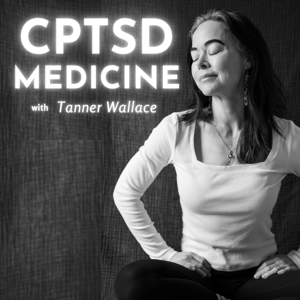


Why does treating complex trauma require a longer and more in-depth approach?
Dr. Frank Anderson is a psychiatrist and psychotherapist renowned for his innovative approach to trauma treatment, emphasizing the healing power of love and source energy. As an advocate for the efficient and effective treatment of complex trauma, he integrates personal experiences with his professional practice, believing in the transformative cycle where trauma blocks love and love heals trauma. Anderson has contributed significantly to the expansion of the Internal Family Systems (IFS) model, tailoring it to address the nuanced challenges of trauma. His work is characterized by a deep spiritual perspective, viewing himself as a conduit for healing messages, and he is committed to helping individuals unblock their source energy to facilitate healing.
Finding therapists who specialize in complex trauma is notably difficult, as Tanner highlights the scarcity of professionals adept at managing such intricate cases. Frank Anderson stresses the need for more therapists trained in this area, emphasizing that treating complex trauma requires a more profound and prolonged approach than traditional therapy. The interplay between trauma and love is pivotal; while trauma can block love and sever connections, love has the potential to heal, reconnecting individuals to themselves and others. Anderson explores the dynamics of attraction and relationships in the healing process, noting that true healing emerges from within, necessitating self-responsibility and internal work. He also underscores the importance of understanding the neurobiology of PTSD, destigmatizing dissociative identity disorder, and promoting a collective healing approach where survivors unite to share their experiences and support one another.
Key TakeAways
- Finding therapists who specialize in complex trauma is challenging due to the scarcity of professionals available for specialized care.
- Trauma blocks love, but love has the power to heal trauma and reconnect individuals to themselves and others.
- Attraction can be a way to heal wounds through relationships, as individuals are often drawn to those with similar wounds for mutual healing.
- Healing traumatic wounds involves self-responsibility and self-connection, emphasizing that true healing comes from within.
- Understanding the neurobiology of CPTSD and the collaborative process of medication management are crucial aspects of the healing journey for trauma survivors.
- Individuals with dissociative identity disorder have typically experienced severe trauma, resulting in the development of self-like parts as a coping mechanism.
- Survivors uniting to share experiences and support each other is crucial for empowerment and fostering a sense of community among those who have experienced trauma.
Actionable Insights
- Find therapists who specialize in complex trauma for specialized treatment
- Understand that treating complex trauma requires a longer and more in-depth approach
- Recognize the healing power of love in overcoming trauma and reconnecting with oneself and others
- Take responsibility for your own healing and self-connection
- Embrace the presence of different parts within oneself as a coping mechanism
- Understand the neurobiology of PTSD and collaborate on medication management
- Unite with other survivors to share experiences and support each other in the healing journey
How can I prevent passing trauma down to my children?
CycleBreaking parenting is an empowered and intentional approach that focuses on healing past wounds and fostering deeper connections with children to prevent the perpetuation of generational trauma. Tanner believes that parents wield the power to disrupt unhealthy cycles handed down through generations by adopting self-awareness and intentional parenting strategies. Her perspective is shaped by the conviction that being mindful and deliberate in parenting can forge a healthier environment for children, effectively halting the cycle of dysfunction. Tanner views cycle-breaking parenting as a transformative tool, instrumental in cultivating positive change and dismantling the chains of generational trauma.
Key TakeAways
- Conscious parenting involves actively engaging with children through attunement and presence.
- Cycle-breaking parenting involves healing attachment wounds to prevent trauma from being passed down to children.
- Creating a secure environment for children to interact positively with peers is essential.
- Parents can support their children's emotional expression by working through their protective instincts.
- Trauma survivors often face unique challenges when parenting young children.
- CycleBreaking Parenting involves breaking the cycle of behaviors passed down through generations and consciously approaching parenting in a way that is different from what was experienced in one's own childhood.
Actionable Insights
- Practice conscious parenting by being fully present and attuned to your child's needs and emotions
- Heal your own attachment wounds to prevent passing trauma down to your children
- Establish clear rules, consistent supervision, and positive reinforcement to create a secure environment for children to interact positively with peers
- Support your children's emotional expression by creating an environment that promotes emotional openness and understanding
- Seek therapy and support groups tailored for trauma survivors to address challenges in parenting as a trauma survivor
- Break the cycle of behaviors passed down through generations by consciously approaching parenting in a different way and working on healing attachment wounds
How does Tanner challenge the traditional medical model of trauma recovery?
The trauma recovery revolution is gaining momentum with a shift towards survivor-led approaches that prioritize personal empowerment and relational healing. At the forefront of this movement is Tanner, who, through the Relational Healing Podcast and social media, champions a transformative approach that challenges traditional medical models of trauma recovery. Drawing on her own experiences and insights, Tanner emphasizes the importance of attachment restoration and self-discovery as crucial elements in the healing process. Her perspective is deeply shaped by principles like Internal Family Systems, which guide survivors in integrating disintegrated Parts and breaking cycles of intergenerational trauma. Tanner's approach underscores the significance of honesty, self-awareness, and accountability, encouraging individuals to become their recovery coaches by connecting with their true selves and reflecting on their trauma narratives.
Key TakeAways
- Tanner advocates for survivor-led trauma recovery empowering individuals to become their own recovery coaches.
- Attachment restoration is emphasized as a key pathway to permanent healing in trauma recovery.
- The importance of engaging in reflective exercises and compassionate dialogue with protective parts is highlighted.
- Intergenerational trauma themes shape perceptions and behaviors, influencing relationships and personal experiences.
- Fear of abandonment, betrayal, and lack of trust impact relationships and can be rooted in intergenerational trauma themes.
- Shame and sadness are interconnected emotions that play a significant role in the healing and recovery process.
- Restoring access to disintegrated parts internally and aligning work context with the true self are crucial in trauma recovery.
Actionable Insights
- Focus on self-discovery in the trauma recovery process
- Create safe containers for survivors to explore attachment restoration and self-discovery
- Engage in reflective exercises to address obstacles to transformation
- Acknowledge and understand intergenerational trauma themes
- Reflect on how fear of abandonment, betrayal, and lack of trust influence relationships
- Coaching oneself through moments of shame and sadness for healing and recovery
- Restore access to disintegrated parts through loving guidance in trauma recovery
How can separating past trauma from present reality lead to genuine healing? The trauma recovery process is a multifaceted journey that involves unraveling the deep-seated impacts of past experiences to foster present-day healing and well-being. This transformative path is highlighted in the Relational Healing Lab's REVEAL program, which underscores the significance of understanding and integrating past traumas to facilitate meaningful recovery. Tanner offers a unique perspective on this process, shaped by her belief that recovery necessitates recognizing how past traumas influence current perceptions and behaviors. She distinguishes between healing journeys and recovery processes, advocating for discernible outcomes such as joy and fulfillment. Moreover, Tanner critiques the traditional medical model of trauma treatment, arguing that it often perpetuates suffering by re-enacting terror, and emphasizes the importance of separating past experiences from the present to access and heal inner wounded parts.
Key TakeAways
- Understanding past trauma is critical in shaping present interpretations of reality for survivors.
- Recovery planning focuses on outcomes such as joy, peace, and fulfillment beyond traditional healing approaches.
- Advocating for fundamental changes in how trauma is treated in society is important for an empowering recovery process.
- The impact of childhood trauma on adult survivors and the development of sub-personalities are key factors in shaping present experiences.
- Recognizing and embracing protective parts in trauma recovery is vital for integration and restoration of one's True Self.
Actionable Insights
- Understand the impact of past trauma on present interpretations of reality
- Acknowledge the role of protective sub-personalities in trauma recovery
- Advocate for fundamental changes in how trauma is treated in society
- Separate past trauma from present reality for genuine healing and transformation
- Foster integration and wholeness in the recovery process from childhood abuse and neglect
What is the importance of having a structured recovery plan in trauma recovery?
Investing in trauma recovery resources is a critical step for individuals seeking to heal and transform their lives after experiencing trauma. This process involves creating a structured recovery plan that aligns with personal healing goals, which Tanner emphasizes as essential for fostering genuine change. Tanner underscores the significance of a detailed plan, advocating for survivors to critically assess and choose resources that include psychoeducational content, experiential learning, and opportunities for reflection and observation. Shaped by his belief in self-discovery, Tanner encourages individuals to take responsibility for their healing journey by selecting resources that facilitate meaningful transformation and growth, ultimately empowering them to break the cycle of trauma and achieve sustainable recovery.
Key TakeAways
- Having a recovery plan and making wise investments in trauma recovery resources is crucial for sustainable changes in life.
- Survivors need to assess their current engagement with trauma recovery resources to maximize their time and money investments in their healing journey.
- Relational healing involves developing self-regulation skills, body awareness, and addressing trauma through mindful separation from thoughts and memories.
- Taking responsibility for one's healing journey and committing to resources aligned with the recovery plan is essential in trauma recovery.
- Investing in trauma recovery resources that provide psychoeducational content, experiential activities, reflection, and observation is key for effective healing and development.
- Creating a checklist to evaluate the effectiveness of each resource helps survivors maximize their investments and lead their healing journey.
Actionable Insights
- Create a recovery plan for sustainable changes in life
- Assess current engagement with trauma recovery resources
- Develop self-regulation skills and body awareness of emotions
- Take responsibility for one's healing and seek aligned resources
- Incorporate psychoeducational, experiential, and reflective elements into recovery plan
- Evaluate effectiveness of trauma recovery resources for maximum investment
To get on the REVEAL 2022 VIP Waitlist - Apply Here
https://relationalhealinglab.com/
For the newsletter and free parent group DM me @drtannerwallace
Join our free, private Relational Healing Lab Facebook group, a community space for adult survivors of childhood trauma who want to both recover AND dream big. I’m so glad the universe connected us, and we can’t wait to connect with you in the group.
Hello my love!!!! We’re connected. We found each other!
Let’s deepen our connection. Come find me on IG https://www.instagram.com/heldbytanner/ and Facebook https://www.facebook.com/heldbytanner
Want information on my healing containers delivered straight to your email inbox? Join my Offer Insider List here:
https://www.relationalhealinglab.com/relational-healing-lab-offers-opt-in
I’m so grateful The Universe connected us! Welcome to my world!
Episode 012
What is embodied healing and how does it involve movement and music?
Embodied healing through movement and music emerges as a transformative approach to addressing trauma and fostering personal growth. This modality leverages the intuitive power of movement and music, as highlighted by Melanie Holst Collins, to facilitate a safe and expressive space for healing. Tanner views this approach as a potent means to reconnect with one's body, emphasizing the importance of intuitive movement and the restoration of feminine energy. Their perspective is shaped by a belief in the power of self-study and small, mindful steps to initiate substantial shifts in the body-mind connection. By integrating movement, music, and other healing modalities, Tanner advocates for a holistic approach that transcends the limitations of traditional practices, enabling deeper emotional and spiritual transformation.
Key TakeAways
- Embodied healing through movement and music is explored as a powerful modality for processing trauma and facilitating transformation.
- Music and movement provide a safe space for processing experiences that words could not reach.
- Embodied Healing Practices involve movement, music, tea, mudras, and breath work to help individuals connect with themselves and spirituality for healing.
- Engaging in movement guided by intuition and music allows the body to express itself freely.
- The importance of taking small steps towards personal growth and transformation is highlighted.
- Starting small with mindfulness and returning to the body can lead to significant shifts.
Actionable Insights
- Incorporate intentional playlists and movement practices to guide individuals on a journey of self-expression and healing
- Focus on restoring qualities associated with feminine energy through practices like intuitive movement, mudras, and intentional tea rituals
- Engage in daily intuitive movement to tap into the body's wisdom and promote healing and transformation
- Take small steps towards self-awareness and personal growth through daily practices and reflections
- Start small with mindfulness practices like just a minute of focus to deepen the connection with the body and mind
- Prioritize intuitive movement and introspection to tap into inner knowing and trust for healing and transformation
What role does self-compassion play in healing from trauma?
Softness plays a crucial role in the healing journey from complex trauma, offering a path to self-compassion and profound internal transformation. According to Tanner, softness is vital in trauma healing as it signifies a release from trauma-induced responses, allowing individuals to connect with their true selves. Drawing from her experiences, Tanner underscores the significance of embracing softness and vulnerability, viewing it as an act of immense strength and courage. She points out the challenges of shifting from aggressive power dynamics, often learned in childhood, to fostering gentler, more compassionate relationships both with oneself and others. Through this approach, Tanner advocates for the importance of letting go of protective mechanisms to cultivate a nurturing environment for healing.
Key TakeAways
- Softness and self-compassion are essential in trauma healing journeys
- Protective Parts can hinder access to one's true self and prevent the experience of softness
- Recognizing and befriending protective parts is crucial for healing and rediscovering one's true self
- Cultivating self-compassion and opening up to safe individuals play a crucial role in healing from trauma
- Exploring protective parts in the parts work journey helps navigate our internal system and cultivate resilience
Actionable Insights
- Practice self-compassion and softness in trauma healing journeys
- Recognize and unblend with Protective Parts to access True Self
- Cultivate a sense of softness and vulnerability for healing
- Open up to safe supporters for care, love, and guidance
- Explore and befriend Protective Parts for inner healing
What is the importance of personalized healing approaches for trauma survivors?
Relational healing is an intricate process of understanding and transforming how past traumas influence present relationships. This approach emphasizes the significance of personal growth, self-awareness, and nurturing partnerships as pivotal components of healing. Tanner, drawing from her experiences, advocates for the necessity of internal work and awareness of trauma triggers as prerequisites for engaging in healthy relationships. She underscores that relational healing aids in transitioning from anxious to secure attachment, asserting that both partners must actively participate in this journey. Tanner also stresses the value of open communication about one's healing journey to cultivate intimacy and vulnerability, suggesting that while complete healing is ideal before entering a relationship, having a supportive partner can facilitate the process.
Key TakeAways
- Exploring alternatives to the medical model for trauma survivors is important for personalized healing approaches.
- Understanding protective parts in relationships is crucial for assessing compatibility in addressing past trauma with a new partner.
- Trusting a partner, setting boundaries, and maintaining self-care are key aspects of fostering a healthy relationship.
- Moving from an anxious attachment style to a secure attachment can be achieved through relational healing.
- Dating while healing from trauma involves understanding internal systems and potential triggers, and involving partners in the healing journey.
- Engaging in relational healing before dating helps individuals develop self-leadership and avoid projecting wounded parts onto others.
Actionable Insights
- Focus on personalized healing approaches for trauma survivors
- Center yourself as a learner in the healing process
- Understand protective parts in relationships and work through them with a new partner
- Prioritize self-care, setting boundaries, and trust in relationships
- Engage in relational healing before dating to understand triggers and interactions
- Develop self-leadership and avoid projecting wounded parts onto others
From the publisher's feed
1,407 Listeners

2,510 Listeners

5,139 Listeners

4,716 Listeners
429 Listeners

27,988 Listeners
280 Listeners

366 Listeners

1,852 Listeners
1,421 Listeners
1,057 Listeners

1,399 Listeners

341 Listeners
219 Listeners

221 Listeners