
Sign up to save your podcasts
Or



What are some key elements in transitioning from survivor to thriver?
Transitioning from a survivor to a thriver is a transformative journey that involves overcoming fears, establishing safe environments, and embracing change. This process requires individuals to recognize unsafe coping mechanisms and dysfunctional relationships, allowing them to stand up for themselves and create a life of genuine safety and trust. Tanner underscores the necessity of safe partnerships, supportive communities, and trauma therapists in facilitating recovery from complex trauma, highlighting the need for deep, authentic conversations. Tanner focuses on dismantling trauma-based responses and rewiring the brain, advocating for gradual steps and community support as essential elements in moving from survival to thriving. Through his podcast and educational series, Tanner provides resources for survivors to understand intergenerational trauma and find hope and support in their healing journeys.
Key TakeAways
- Transition from Survivor to Thriver involves facing fears and creating safe spaces
- Dismantling trauma-based responses requires gradual steps and guidance
- Importance of safe partnerships, community support, and guidance from trauma therapists in recovery journey
Actionable Insights
- Acknowledge familiar yet unsafe coping mechanisms and dysfunctional relationships to start standing up for oneself
- Distance from challenging relationships temporarily and set time-limited boundaries to create a space filled with trust and security
- Create enduring spaces for survivors and their partners to do the work of recovery through real, raw conversations and access to tools for relational healing
Hello love ❤️
We found each other.
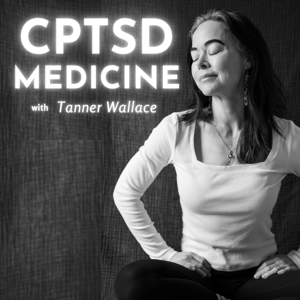
This podcast has such a tender place in my heart. When I hit record back in the late spring, early summer of 2020, I had no idea the journey that would unfold in front of me. This podcast is essentially an audio diary of my own evolution and growth over the months I have hosted it.
Along the way, there have been high moments and low moments of healing in the public eye, lessons and celebrations for creating potent containers for transformation, and breakthroughs in my and my clients’ CPTSD recovery so profound I cannot even put them into words.
Through all of this, the mission is clear: “Create a precise map for permanent CPTSD healing.”
And so, I continue walking, and it just keeps getting better and better in my world.
If you want to know me more intimately, come join me on IG @heldbytanner and @cptsdmedicine or on Facebook @heldbytanner.
If you would like to receive an email each time I am selling a healing container or coaching experience, you can opt-in to my “Shop With Tanner” email list here:
https://www.heldbytanner.com/heldbytanner-opt-in
Sending you love…so much love. Recovery from CPTSD is no joke. AND you absolutely CAN do it (more quickly than you might imagine at this very moment.)
What role does a partner play in a shared life during CPTSD Resolution?
Relational healing from childhood trauma is a transformative process that involves creating supportive environments and nurturing meaningful relationships to mitigate the lingering effects of past traumas. Tanner, an advocate for this approach, emphasizes the importance of evaluating and optimizing one's environment to foster healing by reducing negative influences and encouraging positive relational dynamics. Her perspective is deeply influenced by his own experiences with childhood trauma, particularly in her relationship with her partner, where both partners are actively working to transcend past behaviors learned from trauma. Tanner believes in the importance of directly addressing any intense adult traumas in relationships to effectively resolve childhood traumas, advocating for a diverse support system and emotional outlets as essential elements in this healing journey.
Key TakeAways
- Creating an optimal context to minimize the impact of traumatizing events during a recovery journey is crucial.
- Having a partner who provides consistent support and shows unconditional positive regard is essential in a relationship.
- Embracing laughter and finding shared experiences with survivor friends can help address emotional needs and heal from trauma.
- Surrounding oneself with supportive individuals who show up authentically and provide meaningful support is important during difficult times.
- Having a diverse emotional support network is valuable as different people can offer unique forms of support based on their experiences and personalities.
Actionable Insights
- Evaluate the role of a partner in a shared life and track interactions for relational healing
- Create emotional outlets to minimize impact of traumatizing events
- Surround oneself with supportive individuals who show up authentically during difficult times
- Seek support from survivor friends and engage in shared experiences for healing
- Build a diverse emotional support network to tap into different forms of assistance
What is the Success Trauma Theme?
Success trauma, rooted in past experiences and family history, can lead to emotionally charged decision-making and self-abandoning behaviors, impacting present-day choices. Tanner's Interaction Tracking Method offers a structured approach to trauma recovery, encouraging individuals to document interactions and analyze emotions to uncover patterns of intergenerational trauma. By identifying hidden patterns and understanding trauma triggers, individuals can break free from detrimental cycles, fostering personal growth and healthier relationships. The theme of separation trauma highlights fears of abandonment and rejection, often traced back to family experiences, and underscores the importance of recognizing these core themes for healing. Tanner emphasizes the impact of family dynamics on views of success and failure, as demonstrated by financial stress affecting interpersonal relationships, advocating for open communication to address these challenges.
Intergenerational trauma refers to the transmission of emotional and psychological effects of trauma across generations, often manifesting in behaviors and decision-making patterns that can disrupt relationships and personal well-being. Tanner, an advocate for addressing intergenerational trauma, views this phenomenon through the lens of personal experiences with toxic narratives and childhood trauma triggers. Her approach emphasizes the importance of self-reflection and inner child work, utilizing tools like his Interaction Tracking Method to empower individuals in identifying and understanding these inherited patterns. By fostering relational healing and safe partnerships, Tanner believes that individuals can courageously confront past wounds, ultimately breaking free from detrimental cycles and facilitating recovery from complex PTSD.
Key TakeAways
- Success trauma can lead to emotionally flashbacked decision-making, pushing individuals to make choices based on past experiences that may not align with the current situation.
- Recurrent negative feelings and self-abandoning behaviors are often rooted in past traumas from not only our own experiences but also those of our parents and caregivers, shaping our behavioral patterns and family systems.
- The Interaction Tracking Method is a structured approach to trauma recovery, focusing on out-of-control emotions, self-sabotaging behaviors, and childhood wounds.
- Identifying hidden patterns related to intergenerational trauma is crucial in breaking cycles of trauma transmission and fostering personal growth.
- The Separation Trauma Theme focuses on feelings of abandonment, rejection, loss of control, and other related fears that may stem from family experiences.
- Recognizing core themes related to trauma triggers in relationships can help individuals address past trauma triggers and foster healthier interactions in the present.
- The Success Trauma Theme explores how family histories can impact views on failure, recognition, and achievement.
Actionable Insights
- Recognize trauma themes in decision-making processes
- Document interactions and context factors for insights
- Identify trauma triggers in present-day life
- Address core themes related to intergenerational trauma transmission
- Recognize and address core themes related to trauma triggers in relationships
- Understand how family histories impact views on success and failure
- Practice open, honest communication when facing financial challenges
What are the effects of transference on relationships?
Trauma survivors often experience transference, projecting unresolved childhood emotional pain onto their partners, which can result in conflicts and toxic interactions. Viewing partners through the lens of past caretakers can trigger intense emotional responses, rooted in childhood experiences. Tanner highlights the importance of addressing these patterns through relational healing, which involves understanding emotional reactions, releasing shame, and fostering vulnerability and honesty to achieve true intimacy. Engaging in therapeutic approaches, such as inner child work and exploring protector roles, helps individuals decode how past wounds affect present relationships and facilitates healing. By cultivating vulnerability and seeking therapy, individuals can break the cycle of trauma, leading to healthier, more fulfilling partnerships.
Healing childhood trauma within partnerships is a profound journey that involves addressing deep-seated patterns and emotional wounds that often disrupt relational dynamics. Tanner, an advocate for relational healing, underscores the necessity of honesty, bravery, and vulnerability in overcoming these challenges. Her perspective, shaped by her understanding of trauma's impact on relationships, emphasizes ending transference and breaking codependent cycles to nurture trust and intimacy. By encouraging small steps towards vulnerability and insightful interactions, Tanner believes individuals can transcend past wounds, achieving a higher calling through healthier, more fulfilling partnerships.
Key TakeAways
- Trauma survivors may experience transference, projecting unresolved childhood emotional pain onto significant others, which can lead to conflicts in intimate partnerships.
- By recognizing and addressing these patterns, individuals can break toxic cycles and work towards relational healing.
- Engaging in inner child work involves exploring the concept of wounded exile and addressing protector roles within the internal family systems perspective.
- Tanner emphasizes the significance of practicing vulnerability in relationships to address past traumas and break toxic patterns.
Actionable Insights
- Recognize and address patterns of transference in relationships
- Engage in inner child work or seek therapy to heal unresolved childhood pain
- Practice vulnerability in relationships to break toxic patterns
- Combine inner child work and wounded exile work for comprehensive healing
Hello love ❤️
We found each other.
This podcast has such a tender place in my heart. When I hit record back in the late spring, early summer of 2020, I had no idea the journey that would unfold in front of me. This podcast is essentially an audio diary of my own evolution and growth over the months I have hosted it.
Along the way, there have been high moments and low moments of healing in the public eye, lessons and celebrations for creating potent containers for transformation, and breakthroughs in my and my clients’ CPTSD recovery so profound I cannot even put them into words.
Through all of this, the mission is clear: “Create a precise map for permanent CPTSD healing.”
And so, I continue walking, and it just keeps getting better and better in my world.
If you want to know me more intimately, come join me on IG @heldbytanner and @cptsdmedicine or on Facebook @heldbytanner.
If you would like to receive an email each time I am selling a healing container or coaching experience, you can opt-in to my “Shop With Tanner” email list here:
https://www.heldbytanner.com/heldbytanner-opt-in
Sending you love…so much love. Recovery from CPTSD is no joke. AND you absolutely CAN do it (more quickly than you might imagine at this very moment.)
Why is it crucial to understand trauma-based responder archetypes?
Tanner underscores the importance of a trauma-informed approach in relationships, advocating for inner wisdom and specialized support from trauma-informed therapists to address childhood trauma and facilitate healing. She emphasizes the power of transformative wisdom over mere knowledge and the need for relational healing within partnerships to break intergenerational trauma cycles. Tanner suggests using tools like interaction trackers to analyze relationship dynamics, identify trauma-based patterns, and enhance communication through reflection and data-driven insights. She also highlights the necessity of aligning personal goals with values and choosing specialized resources tailored to one's trauma-based responder archetype for effective healing. Ultimately, Tanner advocates for intentional investments in relationships and resources that reflect personal values, which can lead to profound personal transformation and becoming a relational role model.
Trauma-informed therapy has emerged as a pivotal approach in modern mental health, centering on understanding and addressing the impact of trauma on individuals' lives and relationships. Tanner's perspective on trauma-informed therapy highlights its essential role in healing and personal growth. Drawing from her experiences, Tanner advocates for a multifaceted approach that includes not just therapy, but also active engagement in relational healing to break the cycle of intergenerational trauma. Her methodology emphasizes self-reflection, data-driven analysis of relationship dynamics, and the alignment of therapeutic goals with personal values, enabling individuals to take control of their healing journey and foster transformative change.
Key TakeAways
- Trauma-based response is crucial when feeling endangered or wronged, emphasizing inner wisdom in relationships.
- Transformative wisdom is more powerful than mere knowledge, especially in seeking help from trauma-informed therapists.
- Relational healing within partnerships is significant in addressing childhood trauma and breaking intergenerational cycles.
- Methodical approach involving reflection, interaction tracking, and aligning insights for personal transformation and healing.
- Using an interaction tracker to analyze and enhance information exchanged in relationships leads to improved communication.
- Seeking specialized help from trauma-informed therapists is essential for addressing trauma-based responses.
- Understanding trauma-based responder archetype is crucial for tailoring resources and support to individual needs.
Actionable Insights
- Practice trauma-based response when feeling endangered or wronged
- Seek help from trauma-informed therapists for specialized healing goals
- Invest in resources and interactions to break cycles of intergenerational trauma
- Track interactions to enhance quality of information exchanged in relationships
- Work with trauma-informed therapists for personalized healing journey
- Understand trauma-based responder archetype for tailored support
- Set smaller and immediate goals based on personal data and values for optimal recovery journey
What role do relational healing and positive interactions play in personal growth and well-being?
Investing in relationships is a crucial aspect of personal development and well-being, particularly for those who have experienced trauma or come from challenging family backgrounds. Tanner, whose insights stem from both personal and professional experiences, emphasizes the transformative power of making wise relationship decisions. With a background deeply rooted in understanding the dynamics of toxic family systems, Tanner highlights the importance of shifting one's mindset from feeling defective to merely lacking certain skills. She advocates for the pursuit of healthy, stable relationships as these provide not only emotional stability and fulfillment but also a nurturing environment for effective communication and problem-solving. Tanner also reassures individuals that the end of a relationship should not be a source of shame, as it might not have been the right environment for healing at that time, underscoring the necessity of seeking connections that truly support one's growth and healing journey.
Tanner emphasizes the critical role of relational healing and positive interactions in fostering personal growth and well-being, particularly for individuals with traumatic pasts or toxic family systems. She highlights the importance of making wise relationship decisions, developing communication skills, and investing in stable, long-term partnerships to achieve emotional attunement and intimacy. Strategies like using timeouts during emotional flashbacks and engaging with supportive survivor communities are recommended to manage relationship challenges and promote healing. Tanner also suggests journaling as a powerful tool for emotional release and clarity, aiding in effective communication within relationships. Overall, embracing vulnerability and seeking understanding through trusted connections can lead to transformative personal growth and fulfillment.
Key TakeAways
- Relational healing and attachment are crucial for personal growth and well-being.
- Investing in the health of relationships is essential for long-term stability and fulfillment.
- Positive interactions and communication skills are key in nurturing healthy relationships.
- Recognizing emotional flashbacks and utilizing timeouts can prevent damaging conflicts in relationships.
- Finding a survivor friend or mentor for support in the healing process is important.
Actionable Insights
- Make wise relationship decisions on both micro and macro levels
- Develop empowered communication skills to foster healthy relationships
- Recognize emotional flashbacks and use timeouts to prevent damaging conflicts
- Connect with survivor communities for support in the healing process
- Utilize journaling for emotional release and increased clarity in partnerships
How can practicing new relational skills contribute to emotional healing?
This episode highlights the critical role of addressing childhood wounds and attachment issues to move from confusion to clarity in life, emphasizing the development of emotional intelligence as a foundational tool for healing and improving relationships. Tanner discusses the importance of self-awareness, self-regulation, social awareness, and social skills in enhancing emotional intelligence, which is crucial for effectively managing emotions, understanding triggers, and maintaining healthy relationships. Tanner provides a personal perspective on the impact of unprocessed trauma and the power of authentic communication in releasing shame and fostering deeper connections. She underscores the value of emotional intelligence in recovering from childhood trauma, allowing individuals to be vulnerable and authentic in safe relational contexts. Overall, the takeaways stress the significance of self-awareness, emotional intelligence, and authentic communication as pathways to personal growth and relational healing.
Emotional intelligence is an essential skill that enables individuals to navigate the complexities of human emotions, fostering personal growth and healthier relationships. Tanner views emotional intelligence as a vital tool for regulating emotions and collaborating effectively with others, especially in partnerships. Her perspective is shaped by a focus on self-awareness, self-regulation, social awareness, and social skills, emphasizing the importance of understanding and managing one's behaviors and thoughts to enhance awareness. Tanner further highlights the ability to handle difficult people with tact and diplomacy, remaining calm in stressful situations, as crucial components of emotional intelligence, which he sees as instrumental for healing from past traumas and building a nurturing "Love House."
Key TakeAways
- Healing from childhood trauma involves addressing attachment issues and practicing new relational skills.
- Emotional intelligence allows individuals to shift mindset from feeling permanently flawed to recognizing areas for improvement.
- Recognizing emotional triggers is important for growth and inner healing.
- Self-awareness, self-regulation, social awareness, and social skills are key components of emotional intelligence.
- Authentic communication leads to understanding, connection, and healing in relationships.
- Developing emotional intelligence is vital for building deeper connections and personal growth.
Actionable Insights
- Address childhood wounds and attachment-based thinking for healing from trauma
- Practice new relational skills in real-life interactions for emotional healing
- Shift mindset from feeling permanently flawed to recognizing areas for improvement
- Develop self-awareness, emotional intelligence, and accountability for progress
- Recognize emotional triggers for growth and inner healing
- Engage in authentic communication for understanding, connection, and healing
How can projection and triggering impact intimacy and healing in relationships?
Tanner underscores the crucial role of finding a skilled therapist for healing from childhood trauma and dysfunctional family systems, drawing from her personal experiences. She and therapist Patrick Tehan discuss how childhood trauma can influence adult behaviors, including projecting unresolved issues onto partners and seeking relationships mirroring those with parents. They highlight the manifestation of trauma in behaviors like control and triggering within adult relationships, emphasizing the need for recognizing these patterns to foster intimacy and healing. The conversation also addresses the lasting impacts of neglect and chaos in childhood, which can result in emotional instability and a lack of security. Both emphasize the importance of therapy and support groups in reconnecting trauma survivors with themselves and others, advocating for a community approach to healing and personal growth.
Patrick Teahan is a dedicated therapist specializing in healing from childhood trauma, offering transformative six-month and three-year support groups. With extensive experience, including his participation in a three-and-a-half-year support group focusing on childhood trauma, Patrick brings deep insights into the impact of dysfunction and chaos in family dynamics. Through his informative YouTube channel, he raises awareness by creating engaging role plays and animated videos of assessments related to childhood trauma, distinguishing between obvious and tricky abusive family situations. Patrick also explores the concept of "trigger city," providing strategies to navigate and improve challenging interactions with partners, ultimately fostering safe and healthy connections.
Key TakeAways
- Finding a good therapist is crucial for healing from childhood trauma and dysfunctional family systems.
- Childhood trauma survivors may unconsciously address their issues through their partners or seek relationships similar to those with their parents.
- Projection and triggering behaviors can impact relationships, and recognizing these patterns is essential for intimacy and healing.
- Symptoms of childhood trauma can manifest in relationships, such as avoidance and seeking validation from others due to disconnection from oneself.
- Neglect and chaos in childhood can have lasting impacts on emotional well-being and security, affecting how individuals navigate their emotions and relationships.
- Childhood trauma survivors may exhibit control and triggering behaviors in adult relationships, leading to tension and conflict within marriages.
- Personal growth in relationships involves navigating conflicts, seeking external support, and understanding that healing is an ongoing process that goes beyond self-help resources.
Actionable Insights
- Find a good therapist for healing from childhood trauma
- Seek professional help rather than relying solely on self-help resources
- Recognize and address projection and triggering behaviors in relationships
- Navigate conflicts and seek external support like therapy to strengthen relationships
- Join support groups to address trauma and disconnection
- Disrupt coping mechanisms and seek healing through therapy and support networks
- Confront projections, triggers, and develop intimacy with oneself and others for healing from trauma
From the publisher's feed
1,407 Listeners

2,510 Listeners

5,139 Listeners

4,716 Listeners
429 Listeners

27,988 Listeners
280 Listeners

366 Listeners

1,852 Listeners

1,421 Listeners
1,057 Listeners

1,399 Listeners

341 Listeners
219 Listeners

221 Listeners