
Sign up to save your podcasts
Or

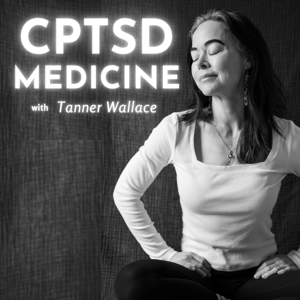


What are the challenges of navigating intimate relationships while recovering from complex trauma?
Recovering from complex trauma involves navigating a complex web of emotional and relational challenges, particularly evident when forming intimate relationships. This type of trauma, often originating from repeated adverse experiences during early development, profoundly shapes attachment styles and relational dynamics, echoing unresolved childhood experiences. Tanner, an advocate for healing within partnerships, views the recovery from complex trauma as both arduous and transformative. Her perspective, shaped by personal experiences and possibly professional insight, underscores the value of accountability in relationships, suggesting that a partner's support can significantly propel the healing process. Tanner emphasizes the importance of focusing on the present and the need to Unburden oneself from past traumas, acknowledging that each individual's recovery journey is unique and influenced by their specific life circumstances.
Key TakeAways
- Intimate partnerships while recovering from complex trauma pose challenges related to intimacy, communication, and trauma imprint.
- Trauma survivors often struggle with basic tasks and decisions due to unresolved trauma, leading to feelings of being behind their peers.
- Survivors of childhood trauma may identify with symptoms of complex trauma but have difficulty with the survivor identity, hindering daily tasks.
- The development of Protective Parts and survival codes by trauma survivors in response to past experiences impacts emotional responses and vulnerability.
- Survival codes in relationships involve protective parts responding to wounded younger parts, affecting dynamics and communication patterns.
- Managing survival codes and instincts is crucial in maintaining energy balance, fostering accountability for personal growth and recovery.
- Focusing on present-moment awareness and self-energy is essential in trauma recovery, providing valuable internal resources for healing.
Actionable Insights
- Understand the impact of trauma on intimate partnerships
- Recognize the differences between 'tricky' and 'traumatizing' families
- Focus on managing day-to-day tasks to overcome overwhelm
- Acknowledge the struggle with survivor identity in complex trauma
- Integrate older versions of oneself for lasting healing
- Understand and manage survival codes in relationships for holistic healing
- Emphasize present-moment awareness and self-energy in trauma recovery
Why is it important to take radical responsibility for healing?
Complex trauma, often resulting from prolonged exposure to traumatic events, can leave deep, multifaceted scars that impact one's mental and emotional well-being. Tanner's perspective on healing from such trauma underscores the importance of self-integration and forgiveness, emphasizing the need to understand one's wounded Parts and the protective strategies they've developed. Drawing from her experiences, Tanner advocates for a healing journey that involves acknowledging past behaviors, embracing Self Leadership, and re-parenting oneself to foster a coherent and authentic life. Despite the inherent challenges, she views this process as a transformative journey that offers profound insights into the human experience, advocating for a life of stability, integrity, and gratitude.
Key TakeAways
- Importance of self-integration and forgiveness in recovery process
- Concept of Wounded Younger Parts and childhood traumas
- Protective Survival Codes and self-leadership in recovering from complex trauma
- Dealing with past behaviors and navigating shame associated with it
- Understanding complex trauma recovery from a developmental perspective
- Taking radical responsibility for healing and personal growth
Actionable Insights
- Practice self-integration and forgiveness
- Engage in healing practices like meditation, journaling, breathwork, and therapy
- Address Wounded Younger Parts within oneself
- Recognize the impact of past experiences on current sense of Self
- Take radical responsibility for healing
- Work towards self-leadership and unblending from protective and wounded energies
What is the dynamic between protective and wounded Parts in trauma survivors?
Internal Family Systems (IFS) is a therapeutic model that explores the interplay between various "parts" or sub-personalities within an individual, aiming to foster self-awareness and healing. Tanner, a trauma survivor who transitioned from academia to coaching, offers a unique perspective on IFS, shaped by her personal journey and professional development through Level 1 IFS training. She views IFS as crucial for understanding the protective and wounded Parts that trauma survivors develop, which can lead to seemingly inconsistent behaviors. Tanner emphasizes the significance of recognizing and working with these parts to achieve emotional relief and self-discovery, particularly highlighting the role of the Self-like part in connecting to one's core self for deeper healing in complex trauma recovery.
Key TakeAways
- Tanner's professional growth and personal healing journey led to a newfound sense of liberation and authenticity in her professional life.
- Trauma survivors develop protective parts of their personality to safeguard wounded younger parts of themselves, resulting in different behaviors and survival strategies.
- Reparenting Protective Parts is crucial to accessing one's True Self beyond trauma distortions and survival codes.
- Complex Trauma survivors can benefit from recognizing Protective Parts and connecting with a true Self-like part for healing.
- Tanner highlights the importance of building a knowledge base on trauma healing, emphasizing the journey of healing as transformative rather than waiting for complete healing to start living fully.
Actionable Insights
- Understand the interplay between protective and wounded parts for healing and self-awareness
- Reparent protective parts to access true self beyond trauma distortions
- Recognize and connect with self-like parts for transformative healing in trauma survivors
- Build a knowledge base on trauma healing to create an effective recovery strategy
- Start the healing journey to transform lives, rather than waiting for full healing
What is the significance of a 'Wise Woman' persona in leadership development?
Trust and boundaries are pivotal components when addressing developmental trauma, as they serve as the foundation for authentic healing and transformation in relationships. Tanner, an advocate for personal growth and leadership development, underscores the critical role these elements play in her own healing journey from complex trauma. Her perspective is shaped by an internal transformation process that involves surrendering control and tapping into spiritual realms to access a Divine understanding, which she describes through a "Wise Woman" persona within him. By building trust with oneself and establishing self-containment, Tanner suggests that individuals can naturally create boundaries that facilitate deeper self-integration and pure self-expression.
Key TakeAways
- The presence of a 'Wise Woman' within Tanner embodies qualities of directness and seriousness in her leadership style.
- Establishing trust and boundaries is crucial for authentic healing in relationships and navigating relational shakeups during the transformation process.
- Self-containment and setting energetic boundaries are powerful practices in leadership growth and healing from developmental trauma.
- Understanding Protective Parts and agreements is key to embodying the wisdom of the 'Wise Woman' persona and healing internal processes.
- The structured progression of healing involves phases and Circuits, leading individuals from building trust and boundaries to surrendering to divine knowing for personal growth and fulfillment.
Actionable Insights
- Recognize and embody qualities of directness and seriousness in leadership style
- Establish trust and boundaries in relationships for authentic healing
- Develop self-containment and set energetic boundaries for leadership growth
- Identify, validate, befriend, and heal internal processes to embody wisdom
- Master foundational knowledge and skills before advancing in healing and personal growth
Ready for your next powerful step? Amplifying your Self Energy transforms not just your healing journey, but how you lead yourself, your family, and your lineage into sovereignty. The Self Energy as Sacred Leadership 4-part email series introduces you to the CPTSD Medicine perspective on Self Energy, helping you see how to dissolve trauma energies through intentional amplification of your innate Self Energy.
Start Amplifying Your Self Energy Here →
Why is it important to align with the right frequency and potency in healing?
The concept of the 5 ircuits of Healing Power offers a structured approach to addressing and healing trauma, particularly complex trauma that involves deep-seated attachment and ancestral wounds. Tanner approaches this framework as a flexible model that adapts to individual experiences and outcomes, underscoring the necessity for personal refinement in defining and navigating each Circuit. Her perspective is shaped by a deep commitment to healing, influenced by the positive transformations he has witnessed in others. As Tanner progresses through these Circuits, her focus has shifted towards a more grounded and integrated form of healing, particularly emphasizing ancestral healing and the purification of Self Energy in Circuit 5. This evolution marks his journey from an initial state of celebration to a more profound, rooted approach to achieving wholeness and support for trauma survivors.
Key TakeAways
- Aligning with the right frequency and potency in healing is crucial for rapid progress.
- Connecting with others doing similar work can be transformative and supportive in healing.
- The Circuits program focuses on deepening integration and ancestral healing.
- Tanner emphasizes the importance of addressing attachment wounds, gaslighting wounds, and ancestral healing through the Circuits.
Actionable Insights
- Align with the right frequency and potency for rapid progress in healing
- Connect with others doing similar work to support growth and healing
- Address attachment wounds, gaslighting wounds, and ancestral healing through the Circuits
- Strive to enhance and deepen understanding of healing practices through continuous refinement
What is reparenting and how does it purify Self Energy?
Reparenting after developmental trauma is a transformative journey that seeks to heal and nurture the inner child, addressing the unmet needs and unresolved wounds from one's past. Tanner views this process as essential for healing childhood trauma, emphasizing the importance of showing up for ourselves and the Parts of us that have been stunted by incomplete developmental milestones. Influenced by her understanding of attachment wounding, Tanner believes that reparenting involves deactivating survival codes ingrained in protective and wounded younger parts. Through mentorship, collaboration, and spiritual connection, she advocates for guiding these parts towards healing, growth, and liberation from generational trauma and fear-based frequencies, ultimately fostering a path of self-discovery and transformation.
Key TakeAways
- Reparenting is a process that involves purifying self energy and disconnecting from legacy burdens.
- Building trust, respect, and self-leadership is crucial in the healing journey through reparenting.
- Internal Family Systems therapy is essential for unburdening protective parts and facilitating healing breakthroughs.
- Self-energy and courage play a significant role in dealing with fear-based frequencies and constraints within internal systems.
- Generational trauma affects subconscious patterns and relationships, requiring unburdening processes and spiritual connections for healing.
Actionable Insights
- Engage in Reparenting to purify Self Energy
- Establish trust internally and respect externally through reparenting Parts of you that missed achieving key developmental milestons
- Utilize Internal Family Systems therapy for Unburdening Parts
- Address generational trauma through opening up to spiritual connection you may have with your lineages
How do trauma distortions affect relationships?
Trauma distortions in relationships refer to the unconscious adaptations that individuals develop as a response to past traumas, which can significantly impact the authenticity and health of their connections with others. Tanner, an advocate for healing and authenticity in relationships, views these distortions as a significant barrier to genuine connections. She believes that these distortions result in the creation of inauthentic personas that attract similarly wounded individuals, perpetuating cycles of unfulfilling and toxic relationships. Drawing from her understanding and experiences, Tanner emphasizes the importance of dismantling these trauma-induced distortions to rebuild relationships from an empowered and authentic standpoint. She acknowledges the inherent challenges and potential disruptions in this healing process, including the possibility of ending certain relationships. However, Tanner underscores the necessity of renegotiating relationships with trust and courage, ultimately fostering connections that align with one's true self and pave the way for joy and abundance.
Key TakeAways
- Survivor healing can disrupt relationship dynamics by challenging original terms and renegotiating contracts.
- Trauma distortions create an inauthentic persona in relationships, leading to toxic interactions and disrupting identity and purpose.
- Establishing authenticity in relationships involves dismantling trauma distortions, rebuilding trust, and aligning with one's true self.
- Deconstructing trauma distortions can result in challenges like relationships ending or partners struggling with authentic changes.
- Renegotiating relationships to live authentically requires trust, faith, and courage, leading to a life filled with joy, love, and abundance.
Actionable Insights
- Deactivate survival codes in relationships to prompt renegotiation of terms and establish new boundaries
- Strive for authenticity in relationships by dismantling trauma distortions and attracting genuine connections
- Acknowledge the need for trust, faith, and courage when rebuilding after trauma and aligning relationships with true selves
- Deconstruct trauma distortions to live authentically and create connections based on energetic signatures
- Renegotiate relationships by shedding trauma distortions and establishing healthy emotional connections
How can acknowledging and confronting past mistakes benefit personal growth?
Personal growth is often a journey marked by the mistakes we make along the way, serving as pivotal learning opportunities that shape our character and resilience. Tanner posits that childhood mistakes are not only inevitable but crucial for development, advocating for the role of parents in guiding their children through these errors to prevent them from becoming burdensome. Her perspective is molded by the belief that confronting and rectifying mistakes is essential for healing and personal evolution, fostering a deeper self-understanding and empowerment. By encouraging responsibility, open communication, and the fortification of one's inner strength, Tanner underscores the transformative potential of embracing mistakes as steps toward self-improvement and relational healing.
Key TakeAways
- Childhood mistakes can impact an individual's growth and lead to internal and external shame.
- Proper parental guidance is crucial in navigating childhood mistakes.
- Facing mistakes and working through their repercussions is crucial for healing and personal growth.
- Embracing relational healing and internal attachment restoration is significant for stable relationships.
- Recognizing the interchangeability of relationships and focusing on internal attachment restoration work are essential for personal growth.
Actionable Insights
- Acknowledge and confront past mistakes for personal growth
- Embrace the relational healing process to rebuild internal trust
- Recognize the interchangeability of relationships and focus on internal healing
- Commit to growth in personal relationships and leave room for potential reconciliation
- Navigate evolving connections with grace and Self Compassion
How does witnessing in survivor communities counter emotional gaslighting?
Witnessing is an essential component in the process of trauma recovery, providing survivors with validation and support that helps them feel acknowledged and counters the emotional gaslighting they may have endured. Tanner underscores the transformative power of witnessing, which allows survivors to express their authentic emotions without the fear of invalidation, thereby fostering relational healing and enhancing self-leadership capacities. Drawing from her insights, Tanner stresses the significance of understanding the different stages of the healing journey, where witnessing evolves to help survivors manage triggers and navigate challenging situations within a safe and supportive community. He believes that witnessing is a vital element in achieving profound and lasting healing from trauma.
Key TakeAways
- Witnessing is essential in trauma recovery communities, offering survivors validation and support.
- Acknowledging survivors' emotional states without judgment is crucial for healing.
- Validation in trauma healing involves recognizing and accepting survivors' experiences.
- Creating specific containers for truth telling and healing parts is important in trauma recovery.
- Witnessing in survivor communities serves as an antidote to emotional gaslighting, promoting relational healing.
Actionable Insights
- Acknowledge survivors' emotional states without judgment
- Create specific containers for TruthTelling and Unburdening Parts
- Foster lasting trauma recovery through secure attachment connections with others
- Validate survivors' experiences without dismissing or attempting to solve their struggles
- Enhance Self-Energetic capacity to lead internal system
Why is it essential to work with Protective Parts in complex trauma recovery?
The Internal Family Systems (IFS) model has emerged as a vital framework for addressing the complexities of trauma burdens, offering a compassionate approach to healing by understanding these liabilities and nurturing an individual's inner world. In the context of working with those who have experienced deep, lasting trauma, the model can be especially transformative. This approach leverages the insights and experiences of experts like Tanner, who emphasizes the importance of understanding and engaging with the different aspects of one's psyche that have developed in response to life's challenges. She highlights the necessity of holding strong, safe containers for Unburdening in addition to nurturing, understanding, and harmonizing these components, a greater harmony and balance can be achieved, promoting profound healing and personal growth. Tanner's perspective has been shaped through her her understanding of the intricate layers of human experience within a trauma ecosystem. Her work underscores the importance of evolving and adapting therapeutic models to meet the unique needs of those on their journey from survival to thriving.
Key TakeAways
- Efforts to innovate and enhance the Internal Family Systems (IFS) model for more efficient and effective complex trauma recovery are crucial.
- Tanner emphasizes the importance of using Internal Family Systems therapy for complex trauma recovery and the need for skilled practitioners who understand trauma intricacies.
- The awakening process of Protective Parts in trauma healing involves an Attachment Restoration and a profound shift in understanding of self and healing journey.
- Working with Protective Parts is essential for expediting healing and preventing setbacks in complex trauma survivors.
- Establishing trust with Protective Parts is crucial to facilitate healing and prevent disruptions in the healing process.
Actionable Insights
- Recognize the importance of understanding and working with Protective Parts in trauma recovery
- Implement energetic release and breathwork in practice to aid in the awakening process of protective parts
- Collaborate with others to enhance the Internal Family Systems model for complex trauma healing
- Acknowledge and hold space for the awakening of protective parts to deepen trust and facilitate healing
- Establish trust with protective parts to prevent therapeutic stalemates and expedite healing
From the publisher's feed
1,407 Listeners

2,510 Listeners

5,136 Listeners

4,716 Listeners
429 Listeners

27,978 Listeners
280 Listeners

366 Listeners

1,852 Listeners
1,413 Listeners

1,058 Listeners

1,401 Listeners

341 Listeners
219 Listeners

222 Listeners