
Sign up to save your podcasts
Or



Hello love ❤️
Here's the link for the 2023 Self-Paced Journey + Community Support 5 Circuits of Healing Power
https://www.heldbytanner.com/5circuitsofhealingpower
We found each other.
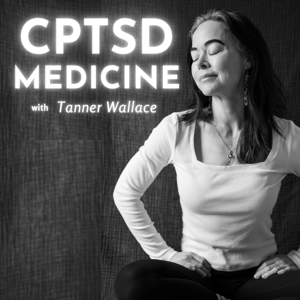
This podcast has such a tender place in my heart. When I hit record back in the late spring, early summer of 2020, I had no idea the journey that would unfold in front of me. This podcast is essentially an audio diary of my own evolution and growth over the months I have hosted it.
Along the way, there have been high moments and low moments of healing in the public eye, lessons and celebrations for creating potent containers for transformation, and breakthroughs in my and my clients' CPTSD recovery so profound I cannot even put them into words.
Through all of this, the mission is clear: “Create a precise map for permanent CPTSD healing.”
And so, I continue walking, and it just keeps getting better and better in my world.
If you want to know me more intimately, come join me on IG @heldbytanner and @cptsdmedicine or on Facebook @heldbytanner.
If you would like to receive an email each time I am selling a healing container or coaching experience, you can opt-in to my “Shop With Tanner” email list here: https://www.heldbytanner.com/heldbytanner-opt-in
Sending you love…so much love. Recovery from CPTSD is no joke. AND you absolutely CAN do it (more quickly than you might imagine at this very moment.)
Episode 74
How can setbacks be viewed in the healing journey?
Setbacks in a healing journey can often feel disheartening, yet they play a crucial role in personal development and emotional growth. Viewing these challenges as opportunities for growth and self-leadership is essential, according to Tanner. Tanner emphasizes that setbacks are inevitable but can be reframed as training grounds for deeper embodiment and self-leadership. With her perspective shaped by experiences that highlight the necessity of compassion and empowerment, Tanner believes these challenges are valuable opportunities to learn and grow. By embracing setbacks as integral parts of the healing process, individuals can enhance their resilience and continue progressing on their journey toward transformative growth.
Key TakeAways
- Setbacks are opportunities for growth and learning, reframing them as valuable learning experiences.
Integrating and embodying healing experiences prevents looping back, allowing for a more transformative healing journey.
Actionable Insights
- Reframe setbacks as opportunities for growth and learning
- Integrate and embody healing experiences to prevent looping back
Why is it important to clear past traumas for personal empowerment?
Embarking on a healing journey often involves the challenging process of getting unstuck from patterns and emotions that hold us back. Tanner offers a unique perspective on this journey, emphasizing the significance of self-leadership in guiding one's path toward healing. With a focus on relying on inner wisdom rather than external advice, Tanner advocates for a grounded approach where individuals can unblend from their protective or wounded parts. Through his experiences, Tanner has found that turning inward to trust one's intuition can help clear past traumas and restore instinct, ultimately leading to personal empowerment. By encouraging individuals to lead their own healing journey while remaining open to insights from others, Tanner believes that self-leadership cultivates the courage and confidence necessary to navigate the path to recovery with resilience.
Key TakeAways
- Self-leadership is crucial for guiding one's parts towards connection and love in the healing process.
- Trauma can distort intuition and instinct, hindering one's ability to trust themselves and make aligned decisions.
- Developing self-leadership and reclaiming personal power is essential for taking ownership of the healing journey.
Actionable Insights
- Practice self-leadership by being grounded in self-energy and making decisions based on connection and love
- Clear past traumas to restore intuition and instinct, guiding you towards healing and empowerment
- Reclaim personal power by being self-led, taking ownership of your healing journey, and making decisions based on your own wisdom
Why is it important to prioritize healing when recovering from complex trauma?
Complex trauma, characterized by prolonged and repeated exposure to traumatic events, demands a comprehensive and sustained intervention approach to facilitate effective recovery. Tanner views complex trauma as an intense and multifaceted challenge that requires a correspondingly robust intervention strategy. Her perspective is shaped by the belief that prioritizing healing is essential, advocating for daily practices like breath work, journaling, and parts work, even if this means making difficult decisions to reallocate one's time and resources. Tanner underscores the necessity of moving beyond superficial efforts, urging individuals to engage deeply with their healing journey and make intentional choices that reflect their commitment, thus involving their support systems in this transformative process.
Key TakeAways
- Prioritizing healing activities like breath work, journaling, or parts work is crucial in recovering from complex trauma.
- Committing to healing as a top three priority for at least a year can greatly impact one's recovery journey.
- The level of intensity in the intervention approach should match the complexity of trauma to achieve desired results.
Actionable Insights
- Prioritize healing as a top three priority for at least a year
- Incorporate daily healing activities like breath work, journaling, or parts work
- Make intentional decisions to prioritize healing over other commitments
What role does radical responsibility play in healing from complex trauma?
Complex trauma recovery is a multifaceted journey that demands dedication and a holistic approach to truly foster healing and growth. Tanner, an advocate for this intricate process, underscores the importance of having a well-defined plan and a clear understanding of one's healing investments. Shaped by her belief in a comprehensive treatment experience, Tanner emphasizes the necessity of matching the healing process's intensity to that of the trauma experienced. His approach integrates Internal Family Systems or Parts Work, which helps individuals separate from survival instincts, fostering hope and self-leadership. Tanner champions a lifestyle of recovery, recognizing that such commitment may not suit everyone but is crucial for achieving lasting healing from complex trauma.
Key TakeAways
- Taking radical responsibility and long-term commitment are crucial in healing from complex trauma.
- External sources cannot provide the healing one seeks; personal growth and recovery should be prioritized.
- Andrew advocates for a holistic and dedicated approach to complex trauma recovery.
- The Medicine Wheel Concept allows for revisiting and exploring different aspects of healing multiple times.
- Acknowledging and validating inner wounds in a safe environment is essential for healing and restructuring one's inner world.
Actionable Insights
- Take radical responsibility for your healing journey
- Commit to long-term personal growth and recovery as a lifestyle
- Invest in necessary resources to facilitate the recovery process
- Develop a clear roadmap for complex trauma recovery
- Engage actively in transformative healing processes
What are some indicators of complex trauma in relationships?
Complex trauma and Complex Post-Traumatic Stress Disorder (CPTSD) are increasingly recognized as critical issues that impact mental and emotional well-being, often stemming from prolonged exposure to traumatic situations, such as parental betrayal or unstable relationships. In a compelling discussion, trauma recovery coach Tanner highlights the significance of understanding these dynamics, focusing particularly on how unresolved issues with parents can manifest in one's life as markers of complex trauma. Having dedicated himself to helping survivors, Tanner strives for clarity and accuracy in conveying these complex concepts, emphasizing the importance of recognizing the deeper emotional betrayals and judgments that frequently contribute to CPTSD. His thoughtful approach underlines the necessity of addressing these underlying issues to facilitate meaningful recovery and personal growth.
Key TakeAways
- Complex trauma involves deep levels of betrayal and relational chaos, leading to chronic feelings of loneliness and disconnection.
- Identifying and addressing chaotic relationships can be crucial in healing from underlying complex trauma.
- Feelings of resentment, dysregulation, and bitterness in parenting can be indicators of complex trauma.
- Individuals experiencing complex trauma may feel an overwhelming sense of discomfort and restlessness, driving them to seek comfort through coping mechanisms.
Actionable Insights
- Recognize the profound effects of betrayal on mental and emotional well-being
- Address chaotic relationships as indicators of complex trauma
- Identify and address feelings of resentment, dysregulation, and bitterness in parenting
- Recognize manifestations of complex trauma in daily life and seek healthy coping mechanisms
How can complex trauma impact individuals?
Childhood trauma can have profound and lasting effects on individuals, often manifesting in complex ways that impact emotional and psychological well-being. Tanner sheds light on the often-overlooked intergenerational trauma hidden within seemingly successful families, where unresolved toxic dynamics and inadequate caregiving create cycles of emotional distress. With a focus on the subtle yet damaging forms of trauma, Tanner emphasizes the significance of recognizing emotional abuse and the lack of emotional processing that can occur even in high-functioning families. Her perspective is shaped by the understanding that these deep-seated issues contribute to struggles with intimacy and Self-worth, advocating for the crucial need to address and break these cycles to foster healthier family dynamics and promote emotional intelligence in parenting.
Key TakeAways
- Intergenerational trauma can be passed down through generations and manifest in families with degrees, wealth, and other external indicators of success.
- Complex trauma can lead individuals to unknowingly perpetuate intergenerational trauma, impacting their coping skills and ability to break free from harmful cycles.
- Inappropriate parenting behaviors such as neglect and emotional abuse can result in serious developmental challenges and emotional distress in children.
- Children growing up in dysfunctional households may internalize blame for their family's issues, leading to a distorted self-concept rooted in trauma.
- Parents who fail to reduce the gap between their children's coping skills and the stress of the environment risk contributing to complex trauma, perpetuating a cycle of suffering until intervention occurs.
Actionable Insights
- Recognize and address intergenerational trauma in all types of families
- Focus on emotionally intelligent parenting to help children develop resilience
- Understand and address traumatizing family dynamics for proper coverage and support
- Minimize the gap between children's coping skills and environmental stress to prevent complex trauma
- Intervene to break the cycle of trauma and suffering in families
Why is it important to choose strong containers for healing?
Self leadership and empowerment are crucial components in the journey of personal development and healing, particularly for individuals recovering from trauma. Tanner, an advocate for a holistic and humanistic approach to healing, underscores the importance of moving beyond traditional medical models to embrace methods that emphasize empowerment and connection to source energy. With her background in facilitating transformative healing experiences, Tanner's perspective is shaped by his commitment to empowering trauma survivors through his ten-month program, 'DEVOTED,' which incorporates innovative practices such as parts work and shamanistic experiences. She believes that fostering environments where individuals can authentically express themselves without fear of judgment is essential for shifting focus from solely identifying with trauma to embracing self-awareness and personal growth. Through this lens, Tanner aims to guide individuals towards a more empowered and self-led healing journey.
Key TakeAways
- Tanner emphasizes the importance of creating a fund of knowledge around complex trauma, focusing on healing from an empowered, holistic, and humanistic perspective.
- Tanner's approach involves tapping into deeper source energy aspects of healing complex trauma, emphasizing Self Leadership and creating a connection to Source Energy as a powerful tool in the healing process.
- Tanner introduces the ten-month healing circle program 'DEVOTED' as a journey towards empowerment for survivors, incorporating parts work and shamanistic experiences to unlock individual strength and create a ripple effect of healing.
- Frank Anderson discusses why more therapists and coaches don't talk about themselves as trauma survivors and the importance of showing up fully in healing containers.
- Choosing strong containers for healing is crucial, as Tanner highlights the importance of feeling safe enough to fully show up and release in order to progress on a healing journey.
- Tanner emphasizes the transformation clients undergo as they transition from identifying solely with trauma to embracing their healing journey and personal development.
Actionable Insights
- Focus on creating a fund of knowledge around complex trauma
- Explore healing methods beyond traditional medical models
- Tap into deeper Source Energy aspects of healing complex trauma
- Choose strong containers for healing to feel safe and fully show up
- Transition from identifying solely with trauma to embracing personal development
- Emphasize the importance of Self Energy and Self Leadership in healing complex trauma
What is the importance of uncovering one's True Self in trauma recovery?
Trauma recovery coaching is an emerging field focused on helping individuals heal from complex trauma by fostering personal development and self-discovery. Tanner Wallace, a former university professor turned full-time trauma recovery coach, brings a unique perspective to this endeavor. Tanner's approach emphasizes the importance of evolving beyond mere symptom management, advocating for a journey of deepening self-awareness and growth. Drawing from her experiences, Tanner encourages individuals to embrace emotions and energy, viewing trauma recovery as an opportunity for continuous personal development. This perspective highlights the transformative power of self-empowerment and self-accountability, suggesting that true healing involves both guided support and individual responsibility.
Key TakeAways
- Trauma recovery can be seen as a form of potent personal development empowering individuals on their healing journey.
- Recognizing Protective Parts developed in response to trauma is crucial in reconnecting with one's true self for authentic healing.
- Accessing Self Energy involves making a deep commitment to no longer being afraid of one's own emotions and energy.
- Taking responsibility for grounding oneself and maintaining accountability is essential in the healing journey for authentic recovery.
- Guided support, like therapy or parts work, can help individuals access self-energy and overcome ingrained fears and conditioning.
- Using mantras like 'I am the safest human in the room' can empower individuals to navigate interactions with authenticity and respect.
- Viewing recovery as a journey of self-discovery and personal growth shifts the focus from symptom management to transformation.
Actionable Insights
- Recognize the impact of trauma on decision-making and emotional responses
- Shift the conversation from symptom management to a journey of self-discovery and growth
- Commit to accessing self energy by overcoming fears and negative emotions
- Separate oneself from protective parts developed in childhood trauma
- Acknowledge challenging emotions as parts of oneself for authentic recovery
- Take back responsibility for grounding oneself and maintaining accountability
- Use mantras and affirmations to embody authenticity and respect in interactions
How does Tanner suggest transitioning from a disempowered state to empowered Divine leadership?
Complex trauma recovery is a profound and intricate journey that involves healing from deep-seated emotional and psychological wounds, often stemming from chronic exposure to traumatic experiences. Tanner is pioneering a comprehensive approach to recovery through his Council of Guides Instagram platform, where she shares insights and introduces a transformative paradigm that highlights the crucial role of guides in the healing process. Drawing from her own experiences, Tanner acknowledges that individuals often start their healing journey with a self-centered focus, driven by survival instincts and personal pain. Over time, she believes this can evolve into externalizing blame, which reflects a disempowered mindset. Having gone through her own healing evolution, Tanner advocates for small, intimate settings that integrate Internal Family Systems and shamanistic practices, ultimately guiding individuals toward self-transcendence and empowerment through intentional living and spiritual awakenings.
Key TakeAways
- Tanner emphasizes the importance of holding intimate, small containers for powerful medicine in trauma recovery.
- Self-centeredness on the healing journey is crucial for progress towards self transcendence.
- Taking radical responsibility for one's inner world and actions is a key step in the healing journey for childhood trauma survivors.
- Transitioning from a Self-led survivor to an empowered Divine leader involves healing Circuits and energetic practices.
- Moving from the survivor identity to the returning and remembering phase involves recognizing unique gifts and experiencing a spiritual awakening.
Actionable Insights
- Prioritize inner work, slow down, and turn inward on your healing journey
- Take radical responsibility for your inner world and actions to shift towards Self-led survivor
- Engage in daily devotional practices and energetic training to progress towards becoming an emotionally sovereign leader
- Release survivor identity energetically and embrace your gifts and spiritual calling
- Transition from survivor identity to Self-led survivor, ready to embrace true essence and empowered leadership within yourself
From the publisher's feed
1,407 Listeners

2,510 Listeners

5,139 Listeners
4,716 Listeners
429 Listeners

27,988 Listeners
280 Listeners

366 Listeners

1,852 Listeners
1,421 Listeners
1,057 Listeners

1,399 Listeners

341 Listeners
219 Listeners

221 Listeners