
Sign up to save your podcasts
Or



Ready for your next powerful step? Amplifying your Self Energy transforms not just your healing journey, but how you lead yourself, your family, and your lineage into sovereignty. The Self Energy as Sacred Leadership 4-part email series introduces you to the CPTSD Medicine perspective on Self Energy, helping you see how to dissolve trauma energies through intentional amplification of your innate Self Energy.
Start Amplifying Your Self Energy Here →
How does integrating Self Energy with Source Energy contribute to healing from complex trauma?
The co-creation process in healing involves a collaborative effort between individuals and external energies or entities to foster personal transformation and recovery. Tanner, an advocate for this approach, believes that co-creation is vital for deep healing and growth, especially for those recovering from complex PTSD. Her perspective is shaped by his own journey of shifting from a reliance on external leadership to embracing self-nourishment and personal empowerment. Tanner acknowledges the challenges within trauma ecosystems, where not everyone is open to co-creation, but she emphasizes that connecting with The Universe and Source Energy can help release emotional burdens and facilitate healing. Through a blend of spiritual practices and Self Leadership, Tanner underscores the transformative potential of integrating Self Energy with universal energies in the healing process.
Key TakeAways
- Co-creating with The Universe empowers individuals and helps release gaslit parts.
- Seeking validation and leadership from others is crucial in the healing journey of those with CPTSD.
- Transitioning from manager parts to true healing leads to self-nourishment and a deeper understanding of healing ecosystems.
- Acknowledging responsibility in the collective healing process is essential for personal growth and self-leadership.
- Working with parts and validating negative self-views are important aspects of healing from complex trauma.
- Integrating Self Energy with Source Energy through spiritual practices is key to healing from CPTSD.
Actionable Insights
- Open up to Source Energy and Divine connection for personal empowerment and healing
- Seek validation and leadership from others in the healing process
- Transition from being driven by manager Parts to embody true healing and self-nourishment
- Acknowledge personal responsibility in the collective healing process
- Work with Internal Family Systems to validate and witness negative self-views
- Integrate Self Energy with Source Energy for healing from complex trauma
Quotes:
“Those that are healed enough grant opportunities for refinement, clarification, revision, improvement, modification, adaptation, opening, beginning, clearing, and reimagining.” — Tanner [01:26]
“We move through life in an unfolding act of co-creation.” — Tanner [01:45]
“Living in that ‘I am’ energy is the healing, is the journey, is the process.” — Tanner [02:49]
“Learning how to do co-creation with the universe as an anchor is such a foundational part of how I view complex trauma recovery.” — Tanner [06:57]
“Through my own experience, Self Energy couldn’t convince or collaborate or fully unburden my most severely gaslit parts.” — Tanner [29:17]
“There is no sidestepping Self Leadership in the healing of CPTSD.” — Tanner [36:40]
How do maladaptive coping mechanisms like food, alcohol, or drugs manifest in individuals with false beliefs about their worth?
The intricate patterns of evidence in mental health reveal how early experiences, such as parental abandonment and neglect, can profoundly impact an individual's self-perception and coping mechanisms. Children subjected to neglect often develop survival codes—phrases like "I must," "I can't," "I won't," and "I will destroy"—that initially protect them but may lead to isolation and poor decision-making in adulthood. Tanner, a specialist in trauma recovery, highlights the crucial role of external interventions in disrupting negative self-views and feelings of worthlessness that stem from childhood experiences and inherited trauma. With a background in exploring the dynamics of protective psychological parts, Tanner advocates for approaches like internal family systems to help individuals understand and heal from the distorted beliefs formed through neglect. Through such methods, Tanner aims to break the cycle of self-destructive behavior by fostering self-compassion and challenging entrenched negative perceptions.
Key TakeAways
- Survival instincts triggered by parental abandonment can lead to false beliefs about one's worth and lovability.
- Protective Parts form survival codes like 'I must,' 'I can't,' 'I won't,' and 'I will destroy' in response to feelings of helplessness.
- Maladaptive coping mechanisms such as food, alcohol, or drugs may be sought by individuals with false beliefs and survival instincts.
- The cycle of negative self-view and shame imprints can deepen destructive patterns and hinder self-compassion until an external disruption prompts healing.
Actionable Insights
- Recognize and address false beliefs about self-worth and lovability stemming from parental abandonment
- Develop healthy coping mechanisms such as seeking relational support and leaning into connection during distress
- Avoid maladaptive coping strategies like turning to food, alcohol, or drugs to escape feelings of helplessness and hopelessness
- Work towards breaking the cycle of negative self-view, shame imprints, and self-destructive behaviors through healing and self-compassion
Quotes
“Why does this negative view of myself persist when intellectually, I can absolutely make sense of it?” — Tanner [05:27]
“In the context of parental neglect and/or parental rejection, there are these wounded younger parts of us that almost get frozen-in-time and fragmented off.” — Tanner [08:29]
“These wounded younger parts of us have these feelings that until they’re alchemized, or until they’re released or unburdened, there is this level of ‘I hurt’ energy in our system.” — Tanner [10:59]
“It makes sense to me that if a protective part comes online, they’re seeing the parents, they’re seeing the wounded younger parts, that they develop a belief system based on observation which is forged in the context of parental neglect and rejection.” — Tanner [14:13]
What is Co-Regulation and why is it important in managing emotional difficulties associated with complex trauma?
Co-regulation is a vital concept in trauma recovery, especially when dealing with the emotional challenges of complex trauma. It acts like "training wheels" for emotion regulation, supporting individuals, much like how adults help children until they can self-regulate, thus disrupting the cycle of trauma and promoting emotional stability. Tanner, who explores this concept, believes that self-regulation is key to trauma recovery, while acknowledging the supportive role that friends and partners can play. Her perspective is shaped by the idea of "parts" within oneself—fragmented neural networks formed in childhood—that may impede emotional control in adulthood. By advocating for both internal and external co-regulation dynamics, Tanner highlights its importance in nurturing healthy relationships and fostering self-leadership to break cycles of trauma.
Key TakeAways
- Co-Regulation is crucial in the healing journey from complex trauma, offering a pathway towards internal coherence and emotional stability.
- Distinguishing between emotion regulation and Co-Regulation is important in trauma ecosystems to break cycles of trauma.
- Co-Regulation can result in valuable outcomes in partnering interactions with trauma survivors, offering tools for healing and recovery.
- Co-Regulation involves self-energetic ways to support oneself or others in activating parts and building trust through shared experiences.
- Emphasizing co-regulation leads to a new way of showing support through collective consciousness raising, nurturing coping skills, and reducing stress.
Actionable Insights
- Emphasize the significance of Co-Regulation in the healing journey from complex trauma
- Distinguish between emotion regulation and Co-Regulation for effective parenting and breaking cycles of trauma
- Seek co-regulatory support from others to enhance emotional regulation and change relational dynamics
- Tap into Self Energy and navigate through different energetic signatures for harmonizing protective instincts
- Increase awareness to control emotions through collective consciousness raising and nurturing coping skills
Quotes
“Co-regulation is a really important aspect of being human.” — Tanner [03:19]
“We run out of options when we become an adult for really deep ongoing consistent co-regulatory support.” — Tanner [09:47]
“As an adult, you have difficulty controlling your emotions because you likely have 7 to 10 protective parts of you that are responding to any emotions in your relational field, both inside and out, with pretty well-developed survival instincts.” — Tanner [11:24]
“It’s not the emotions that are difficult to control, it’s the fucking Protective Part energy that thinks the emotions of ours or somebody else are literally going to kill us. And that’s what’s difficult to hold.” — Tanner [14:01]
“Ultimately on a healing journey, we’re separating our emotions from fear, from survival instinct.” — Tanner [15:38]
“That’s a large portion of the [healing] journey is just to arrive in your Power Core where you recognize ‘This Is Me’.” — Tanner [20:20]
Why is self-perception and emotional regulation affected in CPTSD survivors?
Complex trauma is a multifaceted issue that profoundly impacts individuals' self-perception and emotional regulation, often manifesting as negative self-views and feelings of helplessness. This emotional turmoil, deeply rooted in trauma, necessitates a compassionate approach to healing, where individuals are encouraged to acknowledge and engage with challenging emotions as opportunities for growth. Tanner views complex trauma as a multidimensional human experience, shaped by various factors including personal context, interactions, and even epigenetic influences. Drawing from their experiences, Tanner advocates for a deep, intentional commitment to the healing journey, emphasizing the need for self-leadership and energetic shifts to facilitate true healing. By embracing vulnerability and befriending protective parts, Tanner promotes an approach to healing that is both precise and intentional, ultimately transforming the cellular composition of the body from the inside out.
Key TakeAways
- CPTSD can significantly impact one's self-perception and self-esteem, leading to a distorted and negative view of oneself.
- Individuals with CPTSD often struggle with controlling their emotions, experiencing explosive anger, persistent sadness, depression, and even suicidal thoughts.
- Managing emotions in individuals with CPTSD is a common challenge, often leading to a sense of helplessness and decision-making based on emotionally charged states.
- Wounded younger parts in CPTSD survivors are often hidden, requiring deep trust-building through internal work to access and heal.
- Recognizing Nothing Bad or Wrong in Trauma Recovery can bring relief and provide compassionate self-leadership.
- Approaching trauma healing with light and love involves nurturing and understanding the root causes of emotions rather than suppressing them.
Actionable Insights
- Find ways to release charged emotions to lessen the burden on oneself
- Lean into intense emotions and meet oneself with compassion
- Build deep trust with wounded younger parts through internal work
- Acknowledge that nothing bad or wrong is happening in trauma recovery
- Fully commit to the healing process by facing difficult emotions head-on
- Approach trauma healing with light and love by nurturing and understanding root causes
Quotes
“At some point, most of us have some sort of life event related to our inability to control our emotions that just makes it crystal clear that this has become unmanageable, this is not sustainable, and something needs to change.” —Tanner [04:12]
“Unlike the emotions of a non-traumatized human, or human without CPTSD, humans with CPTSD have these emotions that are interwoven into very primitive life or death fear frequencies.” — Tanner [05:49]
“These emotions are not just based on our human experience. they are also based on what we inherited from our family trauma intergenerationally.” — Tanner [09:27]
“Healing CPTSD, recovering from CPTSD is about leaning into the very charged emotions. Not separating or distancing yourself from them, but meeting yourself and all your parts in those moments very directly.” — Tanner [11:52]
How do Protective Parts perpetuate internal struggle in childhood trauma survivors?
Complex trauma recovery is an intricate process that demands a nuanced understanding of the inner self, particularly for individuals who have endured childhood trauma. Tanner offers a unique perspective by advocating for an expansion of the Internal Family Systems framework to better address the complexities of the inner world. This approach involves recognizing and engaging with different facets of oneself, including emotions, past versions, ancestral influences, and inner guides. Tanner's insights are shaped by a belief in the necessity of holding one’s own energy, which fosters internal safety and enhances relationships. He underscores the importance of precision and a deep comprehension of one's internal experiences, arguing that traditional models may fall short in facilitating genuine healing from complex trauma.
Key Points From This Episode:
How emotions motivate certain responses, actions, and thought processing patterns.
Expanding on IFS to build a more holistic view of how we experience our inner worlds.
The big six emotions and how emotions are different from energy.
Why it’s important to acknowledge the absence or presence of fear.
Insight into the various nuances of fear-based energy and the inheritance of hurt.
How to hold that energy without numbing it or distancing yourself from it.
How this allows you to show up for the parts of yourself that are most wounded.
Quotes
“Not only can we recover from complex trauma, but in doing so, we unlock really powerful medicinal codes about collective healing.” — Tanner [0:02:02]
“There are a lot of different ways to give form to thoughts, energies, emotions, points of view, urges, actions, responses, reactions in our inner world.” — Tanner [0:07:00]
“Emotions are hugely important sources of information as humans operating in the world. It’s when we add the zing of fear to an emotion that we start to move into unhelpful, unproductive, very challenging things to hold.” —Tanner [0:14:26]
Why is it important to acknowledge and celebrate progress in recovering from complex trauma?
Healing complex trauma is a multifaceted journey that involves understanding and addressing deep-seated emotional and psychological wounds. Tanner offers a perspective that emphasizes the necessity of exploring both the conscious and unconscious aspects of the mind to truly address the root causes of trauma, rather than merely alleviating symptoms. With a background that highlights the complexity of trauma, Tanner advocates for a holistic approach, integrating diverse therapeutic modalities to foster healing. Fundamental to her perspective is the creation of a safe and supportive environment, enabling individuals to process their experiences and gradually heal.
Key TakeAways
- Progress should be acknowledged and celebrated, as it signifies growth and healing
- Creating a safe and supportive environment for individuals dealing with complex trauma is key
Actionable Insights
- Celebrate progress in your recovery rourney
- Engage in concrete activities for healing from complex trauma
Quotes
“So many of us have had to do so many hard things along the way that we don’t often step back and look at how much we have actually laid down in the name of recovery.” — Tanner [00:53]
“All of this knowledge that you’ve gained about the ‘how’ of recovery from complex trauma is the ultimate guidebook to human evolution.” — Tanner [03:31]
“Celebration can be a practice that starts to tap more into the frequencies that we desire most, moving us from not so fear-based into more of a love-base.” — Tanner [07:52]
What is the importance of parts work in trauma recovery?
Internal Family Systems (IFS) is a therapeutic approach that focuses on understanding and healing the various "Parts" within an individual, which can often be at odds with each other. This method is particularly effective in recovering from complex trauma, as it encourages individuals to connect with and heal their inner selves. Dr. Tanner Wallace, an advocate for Internal Family Systems, combines this approach with other healing modalities such as archetypal energy and shamanic journeying. Through her perspective, Tanner views the Parts not as abstract concepts but as living entities with distinct opinions and beliefs, emphasizing the importance of consent and communication with these parts during healing practices, including psychedelic journeying. Tanner’s approach highlights the empowerment of building a consistent relationship with one's parts, facilitating self-healing, and breaking negative cycles by repeatedly finding one's center.
Key TakeAways
- Betrayal within familial relationships can have a deep emotional impact, triggering suicidal thoughts and feelings of powerlessness.
- Building a relationship with one's internal Parts is crucial for trauma recovery and personal empowerment.
- Parts Work should not be seen as transactional, but rather as a continuous process of healing, forgiveness, and empowerment.
- Viewing Internal Family Systems as a curriculum of embodiment can lead to becoming a facilitator of healing and love during complex trauma recovery.
Actionable Insights
- Build a relationship with your internal Parts for healing and recovery
- Obtain consent from internal Parts and debrief after negative experiences in parts work
- Shift perspective from transactional to holistic approach in Parts Work
- View Internal Family Systems as a curriculum of embodiment and a path to becoming a healer
Hello love ❤️
We found each other.
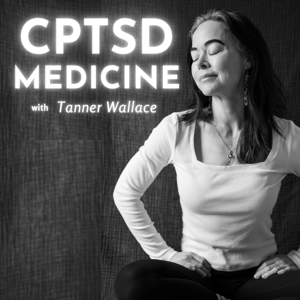
This podcast has such a tender place in my heart. When I hit record back in the late spring, early summer of 2020, I had no idea the journey that would unfold in front of me. This podcast is essentially an audio diary of my own evolution and growth over the months I have hosted it.
Along the way, there have been high moments and low moments of healing in the public eye, lessons and celebrations for creating potent containers for transformation, and breakthroughs in my and my clients' CPTSD recovery so profound I cannot even put them into words.
Through all of this, the mission is clear: “Create a precise map for permanent CPTSD healing.”
And so, I continue walking, and it just keeps getting better and better in my world.
If you want to know me more intimately, come join me on IG @heldbytanner and @cptsdmedicine or on Facebook @heldbytanner.
If you would like to receive an email each time I am selling a healing container or coaching experience, you can opt-in to my “Shop With Tanner” email list here: https://www.heldbytanner.com/heldbytanner-opt-in
Sending you love…so much love. Recovery from CPTSD is no joke. AND you absolutely CAN do it (more quickly than you might imagine at this very moment.)
Episode 76
Why is self-compassion important in healing from childhood trauma?
Compassion plays a crucial role in healing from childhood trauma, serving as a powerful catalyst for transformation and self-empowerment. Tanner underscores the importance of self-compassion and acceptance in overcoming ingrained feelings of unworthiness and insecurity, which often stem from unloving caregivers. Similarly, Tanner posits that compassion is essential because it enables individuals to connect with themselves in love, counteracting the harmful effects of not being received with love during childhood. Tanner's perspective is shaped by an understanding of the intergenerational trauma ecosystem and the necessity of embracing all aspects of oneself, including the fierce and destructive parts, with compassion and understanding. By doing so, individuals can shift their energetic frequency from fear and scarcity to love and trust, paving the way for profound healing and self-empowerment.
Key TakeAway
Compassion in healing from childhood trauma is crucial for self-recovery.
Actionable Insight
Practicing self-compassion is crucial for healing from childhood trauma
Why is it important to separate past experiences from present realities in trauma recovery?
Complex trauma recovery involves navigating the intricate process of healing from past emotional and psychological wounds that can deeply affect present life experiences. Tanner offers an insightful perspective on this topic, emphasizing the importance of separating past traumas from present realities to foster growth and transformation. With a background shaped by understanding the impact of childhood trauma on personal development, Tanner advocates for a shift towards self-leadership and self-empowerment, encouraging individuals to develop unique viewpoints and embrace parts work and life force activation. By focusing on self-compassion and energetic stewardship, Tanner believes individuals can view past experiences as opportunities for healing and integration, ultimately breaking free from the cycle of reliving old traumas.
Key TakeAways
- Understanding key concepts and ways of thinking about complex trauma recovery is crucial for navigating the healing process.
- Separating past failures and experiences from the present moment allows for a shift in perspective and self-empowerment.
- Practicing self-leadership, self-compassion, and viewing past experiences as opportunities for growth are essential for deeper healing and integration.
Actionable Insights
- Separate past failures and experiences from present decision-making processes
- Practice self-compassion and self-leadership in moments of healing
- Engage in parts work and life force activation for addressing past traumas
From the publisher's feed
1,407 Listeners

2,510 Listeners

5,139 Listeners
4,716 Listeners
429 Listeners

27,988 Listeners
280 Listeners

366 Listeners

1,852 Listeners
1,421 Listeners
1,057 Listeners

1,399 Listeners
341 Listeners
219 Listeners
221 Listeners