
Sign up to save your podcasts
Or

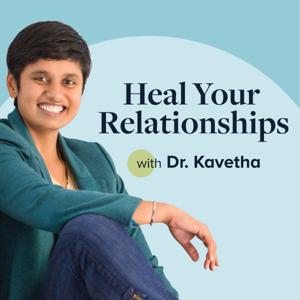


Do you ever leave a hard conversation thinking, “How am I here again?”
Or do you feel seen in therapy but the week rolls around and the same stress knocks at your door?
Maybe you’re the “strong one,” the giver… and privately you’re tired.
If that’s you, I made this week’s episode of Heal Your Heal Relationships for you:
“Your Complaints Are a Doorway to Your Healing.”
Here’s the heart of it:
I don’t want you to just feel better for an hour.
I want your capacity to grow so life feels different from the inside out and complaints can help us do that.
Not by fixing the surface problem, but by gently showing us the root that’s asking for care.
In this episode, I share a reframe I use as a physician:
Think of a complaint like a fever.
Comfort matters...
But real healing comes from finding the source. We walk through a real example (an overwhelmed teacher who’s busy-busy-busy to avoid a deeper loneliness), and I guide you to follow your own “little tributaries” back to the lake underneath.
Inside the episode:
If you’ve been circling the same challenges and are ready to understand what’s underneath—this episode is for you.
I hope it brings clarity, compassion, and a deeper sense of power in your healing journey.
Take a deep breath, hit play, and let’s walk this path together.
Timestamps:
00:00 Why recurring complaints are clues to deeper wounds
01:08 How complaints help you map your inner world
02:25 Why traditional venting doesn’t create real change
03:11 What complaints truly are — expressions of subconscious dissatisfaction
04:26 How childhood experiences form core wounds stored in the body
06:39 Complaints as “symptoms” — following them like breadcrumbs to the source
09:00 An example: when busyness hides a deeper loneliness
12:28 Healing the source — combining inner work with embodiment
Oh—and if you have something you're navigating and would love my take on it...
You can submit a question or situation for a future episode right here (totally anonymous!):
Submit your question
P.S. Love the podcast? Reviews help us spread these life-changing tools far and wide.
If you leave a 5-star review and submit a screenshot here, I’ll send you my Rapid Relationship Repair mini-course—a short but powerful set of tools to reduce conflict and improve connection immediately.
FREE tools:
How do you know if the challenges you face today — in relationships, at work, or even with your health — are really caused by unresolved childhood trauma?
It’s a question I hear often, and it’s a good one. Because without clarity, we end up treating the wrong “symptom” and going in circles.
Maybe you’ve already done therapy or coaching around past issues. You’ve journaled, meditated, and worked on your personal growth.
But here’s the deeper question:
How do you know if your healing is truly complete… or if there are still layers left to uncover?
In this week’s episode of the podcast, I share the 3 telltale signs of unresolved childhood trauma — patterns I’ve seen in myself and in countless others. They quietly shape our relationships, our sense of self, and our ability to manage emotions:
If you recognize yourself in any of these, you’re not alone.
And here’s the good news: healing is possible.
P.S. If this resonates, please share the episode with someone who may need it. Healing becomes more powerful when we don’t do it alone.
Timestamps:
00:00 How to tell if your past is still affecting your present
00:46 The importance of finding the right diagnosis for emotional healing
01:20 What makes complex trauma different from other forms of PTSD
01:48 Sign #1: Repetitive relational patterns — fear of abandonment, push–pull dynamics, and people-pleasing
05:22 Sign #2: A vague inner belief that something is “wrong” with you
07:04 Sign #3: Emotional dysregulation and disconnection from your body
09:24 Why talk therapy and mindset work alone aren’t enough
10:59 A personal mission to help you heal faster and pass on a better legacy
Oh—and if you have something you're navigating and would love my take on it...
You can submit a question or situation for a future episode right here (totally anonymous!):
Submit your question
FREE tools:
Have you ever felt like all the tools you’ve learned in therapy or coaching just disappear the moment you get triggered?
Maybe you’ve meditated, journaled, or practiced new ways of responding—yet the moment your child melts down in public or your spouse says something dismissive, calm feels impossible.
You’re not alone—and you’re not broken.
This is exactly how the nervous system works when we’re under stress.
In this week’s episode, I share a novel way to find calm in your daily life—by becoming your own best friend. Through the simple practice of befriending yourself, you’ll learn how to bring the acceptance, empathy, and compassion of a trusted loved one into the hardest moments, so you can stay grounded no matter what’s happening around you.I’m sharing:
If you’ve ever felt stuck in the cycle of knowing better but not doing better, this episode will show you how to finally bring your learning into your daily life—so you can respond differently, without the guilt.
Timestamps:
00:00 Checking in from Pennsylvania + reflections on family and healing
01:09 The struggle of “losing it” despite years of self-work
04:21 Why therapy insights and tools often vanish in real-life triggers
06:12 Bridging what you learn in safe spaces into everyday life
08:06 The core concept: befriending yourself (being your own BFF)
10:19 How to embody acceptance, empathy, and compassion — the 3 elements of love
17:38 Using these tools in real time when you’re triggered or overwhelmed
26:58 Bringing it all together — how befriending yourself transforms your daily life
Oh—and if you have something you're navigating and would love my take on it...
You can submit a question or situation for a future episode right here (totally anonymous!):
Submit your question
P.S. Love the podcast? Reviews help us spread these life-changing tools far and wide.
If you leave a 5-star review and submit a screenshot here, I’ll send you my Rapid Relationship Repair mini-course—a short but powerful set of tools to reduce conflict and improve connection immediately.
FREE tools:
Do you know exactly what your limiting beliefs are… but still can’t seem to move past them?
Or maybe you’ve spotted the patterns holding you back, yet every time you try to take action, fear and resistance pull you right back in?
You’re not alone—and you’re not broken.
This is just how the subconscious mind works.
Last week in Part 1 of our Limiting Beliefs series, we uncovered the hidden beliefs quietly shaping your choices and sabotaging your progress.
This week in Part 2, we’re taking it to the next level—because once you see those beliefs, you have the power to shiftthem.
In this week’s episode of Heal Your Relationships, I’m sharing:
If you’ve done the work to identify your limiting beliefs but still feel stuck in the same cycles, this episode is your roadmap out.
With love,
Dr. Kavitha Sun
P.S. If you haven’t heard Part 1 yet—“3 Ways to Uncover Your Hidden Limiting Beliefs”—start there first. Then come back to this episode so you can put the tools into action.
Timestamps:
00:00 Today’s focus: shifting beliefs (building on last week’s “find your limiting beliefs”)
01:22 A real example: changing a successful business felt scary — why hesitation = hidden beliefs
02:40 Core belief uncovered: fear of money rooted in childhood messages about scarcity & sacrifice
05:49 How subconscious scarcity kept me stuck even when I “wanted” change
07:47 Tool 1: Replace the inner debate with fact-based thoughts (practical examples)
11:29 Tool 2: Identity shift — “If money were my friend and flowed easily, how would I think/feel/act?” (generosity, presence, abundance walks, noticing impact)
20:09 Tool 3: Collect confirmations — track evidence you’re living the new identity
Oh—and if you have something you're navigating and would love my take on it...
You can submit a question or situation for a future episode right here (totally anonymous!):
Submit your question
P.P.S. Love the podcast? Reviews help us spread these life-changing tools far and wide.
If you leave a 5-star review and submit a screenshot here, I’ll send you my Rapid Relationship Repair mini-course—a short but powerful set of tools to reduce conflict and improve connection immediately.
FREE tools:
Do you ever feel like you're doing everything right—reading the books, setting goals, saying the affirmations—but you're still stuck in the same patterns?
Or maybe you know exactly what you want… but no matter how hard you try, you just can’t get yourself to take action.
You're not lazy.
You're not broken.
You're likely bumping up against something much deeper: limiting beliefs.
In this week’s episode of Heal Your Relationships, I’m diving into:
“3 Ways to Uncover Your Hidden Limiting Beliefs”
Limiting beliefs live under the surface of our conscious mind. They silently shape our choices, habits, and how much we believe we’re allowed to dream. And unless we spot them, we can’t change them.In this episode, you’ll discover:
If you’ve been repeating the same habits and getting the same old results, this is the episode you need.
Let’s bring those hidden beliefs to light—so you can create the life you keep saying you want.
With love, Dr. Kavetha Sun
Timestamps:
00:00 Backyard check-in + the “North Star” behind recent life/business changes
01:35 Why I postponed change despite clarity — today’s plan to spot limiting beliefs
03:55 Pick one specific stuck situation — the power of specificity (GPS analogy)
06:08 Tool 1: Write your recurring complaints in your own words
08:18 Circumstance vs. belief — the trap of “what I make this mean”
09:37 Tool 2: What you and your friends vent about (your social mirror)
11:28 Tool 3: Journal past “I’m done” for 2–3 minutes to reach the subconscious
14:56 Quick recap + next week’s “how to shift them”
P.S. This is part 1 of a 2-part series. In next week’s episode, I’ll show you how to shift those limiting beliefs. So make sure to listen to this one first!
Oh—and if you have something you're navigating and would love my take on it...
You can submit a question or situation for a future episode right here (totally anonymous!):
Submit your question
P.P.S. Love the podcast? Reviews help us spread these life-changing tools far and wide.
If you leave a 5-star review and submit a screenshot here, I’ll send you my Rapid Relationship Repair mini-course—a short but powerful set of tools to reduce conflict and improve connection immediately.
FREE tools:
For years, I didn’t even realize I was being triggered.
I thought I was just reacting like anyone would.
One moment, I’d be calmly sipping my tea — and the next, someone would say or do the wrong thing, and suddenly, it was like I’d been hijacked by a wild elephant.
Before I knew it, I was saying or doing things I’d later regret.It didn’t feel like a trigger—it just felt like... me.
Which honestly, made it even more confusing...
“If I had a huge reaction, it wasn’t because the situation was that big — it was because there was a raw spot within me. It’s like this: when you have an unhealed wound, even a gentle breeze can feel like a forest fire.” - Dr. Kavetha Sun
But here’s what shifted everything:
Triggers aren’t problems. They’re invitations.
In this week’s episode of Heal Your Relationships, I’m diving into:
If you’ve ever wondered why certain things hit you so hard—or how to stop reacting in ways you regret—this is the episode you’ve been waiting for.
🚨 Got a burning question or situation you’d love my coaching on?
Submit it here for an upcoming Q&A episode (all totally anonymous!).
P.S. Love the Heal Your Relationships podcast? Your review could help someone else find exactly what they need. 💛
Leave a 5-star review, and send a screenshot here! And I’ll gift you my Rapid Relationship Repair mini-course as a thank you gift!
Remember, sharing is caring — if this episode resonated with you, don’t hesitate to forward it to someone who might need it today!
FREE tools:
So… you gave yourself the pep talk. You swore you'd stay calm next time someone pushed your buttons.
And it worked!
…for like, two days 🤣
If you keep finding yourself overreacting — despite all the communication tools, journaling, or deep desire to do better — it might be time to go deeper.
In this week’s podcast, I’ll walk you through a gentle yet powerful practice that uses your imagination to access four inner resources that can help you start healing your inner child — yes, that part of you still carrying unspoken hurts, fears, and unmet needs.
This isn’t about more tactics. It’s about transformation.
In this episode, you’ll discover:
Listen now!
Whether you're deep in your healing journey or just starting to explore these ideas, this is a conversation that will stay with you.
Oh—and if you have something you're navigating and would love my take on it...
🗣️ You can submit a question or situation for a future episode right here (totally anonymous!):
👉Submit your question
P.S. Love the podcast? Reviews help us spread these life-changing tools far and wide.
If you leave a 5-star review and submit a screenshot here, I’ll send you my Rapid Relationship Repair mini-course—a short but powerful set of tools to reduce conflict and improve connection immediately.
FREE tools:
What if the goals you’re chasing aren’t really yours?
Or have you ever felt like you’re pushing toward something you’re “supposed” to want—even if it doesn’t really light you up?
Until you stop and look around and ask yourself—wait… is this really me?
If this feels familiar, this week’s episode might really hit home.
This week on the podcast, I’m diving into something I see so often (in myself and my clients): the difference between our true self and our pseudo-self.
Our pseudo-self can be very convincing. It’s shaped by childhood conditioning, social expectations, family pressures, and the rewards we’ve learned to crave. Sometimes it pushes us toward paths that look right on paper—but leave us feeling stuck, restless, or unfulfilled.
Ask yourself:
In this episode, I share:
If you’ve been procrastinating on something you say you want… it might not be about laziness. It could be your truest self hitting the brakes.
Tune in to uncover whether the path you’re on truly belongs to you—and start choosing what really lights you up.
Oh—and if you have something you're navigating and would love my take on it...
🗣️ You can submit a question or situation for a future episode right here (totally anonymous!):
👉Submit your question
P.S. Love the podcast? Reviews help us spread these life-changing tools far and wide.
If you leave a 5-star review and submit a screenshot here, I’ll send you my Rapid Relationship Repair mini-course—a short but powerful set of tools to reduce conflict and improve connection immediately.
FREE tools:
Are you using "I statements" as a cheat sheet to dump your feelings on your partner?
If you’ve ever tried to communicate better in your relationship using “I statements,” you might be surprised to learn they can actually backfire when used the wrong way.
Having the tool of owning your feelings only works if you use it properly – otherwise, it breaks something. In this episode, I offer a psychological insight for us all to snack on and ask if we are really using the "I statement" appropriately.
We will look at how to talk without triggering each other, and the difference between owning your personal feelings effectively and simply using the sh*t sandwich that can be the "I statement" to project your feelings onto others.
This episode also contains the reminder that if you’re not having the goal of connection and greater understanding with your partner, then no amount of "I statements" is going to get you there. Over 90% of communication is non-verbal, so your body language might be saying something completely different too!
Please join me, as we explore healthy ways to get your feelings heard and your needs met.
We’ll unpack:
“If you’re not aiming for true connection and understanding, no amount of ‘I statements’ will get you there.” - Dr. Kavetha Sundaramoorthy
Whether you’re talking to a partner, parent, or friend, these insights will help you make every tough conversation a little safer and more constructive.
Oh—and if you have something you're navigating and would love my take on it...
🗣️ You can submit a question or situation for a future episode right here (totally anonymous!):
👉Submit your question
P.S. Love the podcast? Reviews help us spread these life-changing tools far and wide.
If you leave a 5-star review and submit a screenshot here, I’ll send you my Rapid Relationship Repair mini-course—a short but powerful set of tools to reduce conflict and improve connection immediately.
FREE tools:
Have you ever found yourself asking: Should I stay, or should I go?
Have you wondered if you’re giving up too soon… or staying too long?
Do you find yourself weighing your own needs against the hope of connection?
These questions come up so often in my work with people navigating complicated relationships—whether it’s with a partner, friend, parent, or sibling.
This week on the podcast, I’m sharing 5 essential questions to help you decide if a relationship is truly working for you. These are the questions I wish someone had taught me to ask myself years ago.
We'll talk about:
If you’re wrestling with this choice (or know someone who is), this episode is for you.
Let’s make these tough decisions with clarity, honesty, and integrity—so you can choose in a way you'll be proud of for years to come.
Oh—and if you have something you're navigating and would love my take on it...
🗣️ You can submit a question or situation for a future episode right here (totally anonymous!):
👉Submit your question
P.S. Love the podcast? Reviews help us spread these life-changing tools far and wide.
If you leave a 5-star review and submit a screenshot here, I’ll send you my Rapid Relationship Repair mini-course—a short but powerful set of tools to reduce conflict and improve connection immediately.
FREE tools:
From the publisher's feed

10,531 Listeners

111,708 Listeners

504 Listeners

9,131 Listeners

3,135 Listeners

7,911 Listeners

27,835 Listeners

28,980 Listeners

198 Listeners

280 Listeners

188 Listeners

512 Listeners

18,797 Listeners

128 Listeners
8 Listeners