
Sign up to save your podcasts
Or



Is This My Path Video 1
Is This My Path Video 2
Is This My Path Video 3
Join Journey 24|25
Join Students of the Medicine
Purchase the Morning Mastery Kit
Why is CPTSD resolution considered a lifestyle?
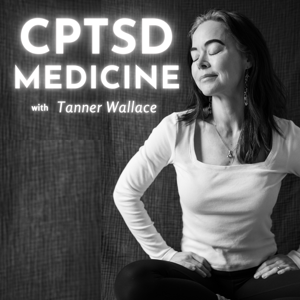
The CPTSD Medicine Podcast seeks to resolve Complex Post-Traumatic Stress Disorder (CPTSD) and disrupt cycles of generational trauma. This initiative coincides with the full moon of Aries, offering diverse participation methods such as free community live streams, a self-paced subscription service, and mentorship, all grounded in the CPTSD Medicine Healing Protocol. Tanner, reflecting on her podcast journey, expresses gratitude for the listeners who have shared their stories and found healing through her content. She underscores the significance of commitment to the CPTSD Medicine path, encouraging new listeners to join the community. Over the years, Tanner has embraced challenges and personal growth, refining her approach to trauma resolution and fostering a collective dedicated to healing, with an invitation to engage through the Students of the Medicine hub and a revitalized Instagram presence.
Key TakeAways
- CPTSD resolution is a lifestyle, not just a task
- Participating in healing routines can break generational trauma cycles
- Developing simple structures in daily life supports effective healing
- Morning routines can set the tone for a successful healing journey
- Consistent effort and experimentation are key in building healing routines
- Embodying healing as a lifestyle can lead to significant progress in CPTSD resolution
Actionable Insights
- Commit to CPTSD resolution and breaking generational trauma cycles
- Embody the results you seek in your healing journey
- Engage in healing routines to have a collective impact on shaping a new mental health paradigm
- Develop simple structures in daily life to support healing and reconnect with oneself
- Incorporate morning routines aligned with personal power to take leadership in healing journey
- Embody healing as a lifestyle to make quantum leaps in CPTSD resolution
Want to start your own daily morning ritual for healing? Reclaim your mornings as a sacred portal for your healing progress. Our Morning Mastery Kit is designed to guide you step-by-step through powerful practices that align your mornings with your healing goals. Purchase your Morning Mastery Kit here.
How does Internal Family Systems (IFS) help individuals address CPTSD?
The resolution of Complex Post-Traumatic Stress Disorder (CPTSD) through Internal Family Systems (IFS) therapy offers a compelling approach to healing by addressing the fragmented internal experiences that often accompany trauma. Tanner Wallace, in his CPTSD Medicine podcast, highlights the transformative power of IFS in helping individuals unburden and understand different parts of themselves, leading to a more integrated perception of their trauma. With a background in working with clients who have experienced significant trauma, Tanner has seen firsthand the profound changes IFS can facilitate. However, she acknowledges that while IFS provides a strong foundation, it may not fully address all aspects of CPTSD, advocating for a combination of IFS with other holistic methods to ensure comprehensive healing and transformation.
Key TakeAways
- Internal Family Systems (IFS) is a trauma therapy modality that addresses the fragmented nature of a person's internal experience.
- IFS offers a path towards resolving Complex Post-Traumatic Stress Disorder (CPTSD) by identifying and unburdening trauma energies within an internal system.
- Sacred Blueprint Alignment focuses on studying human design, the gene keys, and shamanic astrology to dismantle gaslit portrayals constructed by trauma energies.
- Parts Work Practice involves turning inward to notice different thoughts, sensations, and energies, expanding consciousness to understand how CPTSD uniquely shapes the internal system.
- Advanced practices such as noticing parts, energies, or entities that may not trust you yet can further enhance the effectiveness of using Internal Family Systems (IFS) to address CPTSD.
Actionable Insights
- Recognize and address fragmented parts within yourself for CPTSD resolution
- Create a safe and trusting environment to uncover the root causes of trauma
- Explore human design, gene keys, and shamanic astrology to uncover your true identity
- Practice turning inward to understand how CPTSD uniquely shapes your internal system
- Enhance the effectiveness of using Internal Family Systems (IFS) by noticing parts, energies, or entities that may not trust you yet
Quotes:
“IFS is necessary for CPTSD Resolution, but not sufficient as taught in mainstream training spaces.” — Tanner [04:55]
“In many ways, as I understand IFS, we’re storytelling with neural networks. We’re listening to voices, feeling sensations, reviewing memories, feeling behavioral urges; the senses that are hard to put into words, and we’re understanding them as really important sources of data, wisdom—Sacred Wisdom—as to the blueprint of our wounding and the consequences of a traumatizing childhood.” — Tanner [11:08]
“If I know the root cause of something; I know the problem to something, I can create a solution because I know the problem. When I don’t even know the problem, how am I going to know the solution?” — Tanner [17:46]
“CPTSD Medicine teaches Energetic Stewardship so that Self Energy can be purified as well as amplified.” — Tanner [25:10]
What is the ultimate goal of the CPTSD Medicine Healing Protocol?
The CPTSD Medicine Healing Protocol is a revolutionary approach tailored to assist individuals in overcoming Complex Post-Traumatic Stress Disorder by focusing on healing rather than mere symptom management. This innovative program combines a structured curriculum with personalized methodologies, drawing on elements like Internal Family Systems to help participants address and resolve deep-seated trauma. Tanner, who has extensive experience working with individuals affected by CPTSD, advocates for this protocol, underscoring its necessity in achieving true recovery. Tanner's perspective is shaped by the belief that each person's healing journey is unique, requiring a tailored approach to effectively move through the unburdening sequence and reach key milestones that signify genuine progress. Through a range of engagement options, Tanner ensures that individuals have the support and flexibility needed to navigate their path to healing within this comprehensive framework.
Key TakeAways
- The CPTSD Medicine Healing Protocol focuses on guiding individuals through the necessary steps to resolve Complex Post-Traumatic Stress Disorder (CPTSD) rather than just managing symptoms.
- The ultimate goal of the protocol is to reach a state of resolved CPTSD where only self energy and divinely sourced energy run through one's mind, body, and energy centers.
- The CPTSD Medicine Healing Protocol offers a personalized and authentic path towards healing by utilizing a lived experience approach.
- Tanner outlines the role of Internal Family Systems (IFS) in CPTSD resolution and emphasizes the importance of cohesion as a precursor to the dissolution of the ego.
- Tanner outlines a structured approach to resolving complex trauma by eliminating trauma energies, transitioning to cohesive structures, and mastering energetic protection.
- The CPTSD Medicine Healing Program offers three ways for individuals to participate: free community offerings, self-paced subscription service, and Diamond Circle mentorship program.
Actionable Insights
- Anchor your healing journey with a structured curriculum and plan
- Move through internal and external steps to achieve resolution, not just symptom management
- Engage with the CPTSD Medicine Healing Protocol using a personalized approach
- Utilize Internal Family Systems (IFS) for trauma resolution and cycle breaking
- Focus on eliminating trauma energies, transitioning to cohesive structures, and mastering energetic protection
- Choose the right participation level: free community offerings, self-paced subscription, or Diamond Circle mentorship program
Quotes:
“If we don’t have a guide; if we don’t have a ‘how to’; if we don’t have a plan; or a recipe, we’re all just kind of floating around in space unclear of what we’re doing and why we’re doing it.” — Tanner [02:29]
“Now that I’ve found my Power, I can say it so clearly: We are resolving CPTSD. I am the evidence myself as my own transformation, I have clients who are also evidence, and if you don’t want to hear that, we’re not the organization for you.” —Tanner [07:52]
“CPTSD Medicine – is Internal Family Systems-based through-and-through, but it’s an alternative rendering of Parts Work calibrated to the frequency of cycle-breaking.” —Tanner [22:17]
“The CPTSD Medicine Healing Protocol is about moving you through everything that’s needed internally and externally to resolve CPTSD. It’s not about coping or managing symptoms, although, getting better at that will expedite the process of Resolution, for sure.” — Tanner [28:56]
“There is no comparison. Every one of our journeys and timelines are different, but the universal thing is [that] we all need to move through the Unburdening sequence.” — Tanner [32:09]
What is the CPTSD Medicine Healing Protocol?
The CPTSD Medicine Healing Protocol is a comprehensive approach designed to aid individuals in their journey of healing from complex post-traumatic stress disorder (CPTSD). Tanner, a key advocate and facilitator, invites people from all stages of their CPTSD recovery to join the Students of the Medicine community, a space dedicated to mutual support and understanding. With a background that emphasizes breaking cycles of generational trauma, Tanner regards the Protocol as a transformative gift, essential for guiding individuals towards self-discovery and resolution. They believe it harnesses a blend of spiritual, scientific, and mystical practices that collectively contribute to reclaiming one's innate essence and addressing the broader human disconnection in today's world. Through expert interviews and a newly launched subscription service, Tanner aims to enrich understanding and application of the Protocol, fostering a community-focused effort in healing complex trauma.
Key TakeAways
- The community of Students of the Medicine provides support and commitment for survivors in various phases of their CPTSD journey.
- The CPTSD Medicine Healing Protocol merges spiritual, scientific, and mystical practices to address complex trauma.
- CPTSD Medicine aims to provide alternative health services that promote growth, courage, and resilience for survivors.
- Breaking generational cycles of trauma within families is emphasized, along with forgiveness and building compassionate relationships.
- Expert interviews will cover topics like breath work, gene keys, archetypes, and elemental medicine to deepen understanding of the healing Protocol.
Actionable Insights
- The community of Students of the Medicine provides support and commitment for survivors in various phases of their CPTSD journey.
- The CPTSD Medicine Healing Protocol merges spiritual, scientific, and mystical practices to address complex trauma.
- CPTSD Medicine aims to provide alternative health services that promote growth, courage, and resilience for survivors.
- Breaking generational cycles of trauma within families is emphasized, along with forgiveness and building compassionate relationships.
- Expert interviews will cover topics like breath work, gene keys, archetypes, and elemental medicine to deepen understanding of the healing Protocol.
Quotes:
“If we don’t have a guide; if we don’t have a ‘how to’; if we don’t have a plan; or a recipe, we’re all just kind of floating around in space unclear of what we’re doing and why we’re doing it.” — Tanner [02:29]
“Now that I’ve found my Power, I can say it so clearly: We are resolving CPTSD. I am the evidence myself as my own transformation, I have clients who are also evidence, and if you don’t want to hear that, we’re not the organization for you.” — Tanner [07:52]
“CPTSD Medicine – is Internal Family Systems-based through-and-through, but it’s an alternative rendering of Parts Work calibrated to the frequency of cycle-breaking.” — Tanner [22:17]
“The CPTSD Medicine Healing Protocol is about moving you through everything that’s needed internally and externally to resolve CPTSD. It’s not about coping or managing symptoms, although, getting better at that will expedite the process of Resolution, for sure.” — Tanner [28:56]
“There is no comparison. Every one of our journeys and timelines are different, but the universal thing is [that] we all need to move through the Unburdening sequence.” — Tanner [32:09]
What is the significance of unburdening trauma energies in CPTSD resolution?
The CPTSD Medicine Podcast serves as a valuable resource for those on the journey to recover from complex PTSD, focusing on the transformative power of commitment and personal evolution in healing. Tanner passionately advocates for making CPTSD Medicine a top priority, urging listeners to fully engage with the podcast and its community to transition from novices to experts in the field. Drawing from their own experiences, Tanner acknowledges the challenges of creating the podcast but eagerly anticipates reconnecting with the audience each season, highlighting the podcast's transformative potential and its role in ongoing personal and community growth. Their insights underscore the importance of patience and dedication, fostering a supportive environment where listeners can achieve long-term healing and self-discovery.
Key TakeAways
- Unburdening trauma energies is key to CPTSD resolution, bringing new perspectives, personal empowerment, and alignment with our true self.
- Individuals evolve and gain a deeper understanding of reality by unburdening themselves from past traumas and conditioning.
- Trusting oneself in CPTSD recovery involves recognizing doubts and uncertainties, softening internally, and taking leadership in decision-making and investments.
Actionable Insights
- Unburden trauma energies to resolve CPTSD
- Develop a unique language for trauma resolution
- Trust oneself in CPTSD recovery by taking leadership in decision-making
- Commit to a long-term dedicated healing journey
- Embrace community engagement for transformative healing
Quotes:
“The origin of shame [is] that a part of you or an entity within you thinks that the bad event or the uncomfortable emotion is happening because something is morally incorrect about you.” — Tanner [06:21]
“It’s not that we are becoming a different human, instead we are accessing who we were meant to be without all the trauma and conditioning. It’s not a becoming process, it’s a restoring process.” — Tanner[11:41]
“Without awareness, without evolution, without transformation, there are no lessons.” — Tanner [13:13]
“It can’t be a mistake if we learned something.” — Tanner [17:16]
“When we start to release shame around lessons, we are more able to access a deeper intuition.” — Tanner [18:16]
What is the significance of 'Holding Your Own Energy' in trauma recovery?
Complex Post-Traumatic Stress Disorder (CPTSD) recovery is a multifaceted process that involves various therapeutic approaches aimed at healing deep-seated trauma. One innovative method that has gained attention is Internal Family Systems (IFS) and Parts Work, which emphasizes the importance of unburdening internal parts to differentiate between trauma energies and one's True Self. Tanner, through years of training and personal experience, advocates for the transformative power of IFS in managing and transforming these energies. She highlights the necessity of a precise understanding and theory of change, which is encapsulated in the CPTSD Medicine Healing Protocol—a structured framework that prioritizes practicality and love. Despite acknowledging the current limitations of technology in addressing complex trauma, Tanner remains optimistic about future advancements, underscoring a pragmatic yet heart-centered approach to CPTSD recovery.
Key TakeAways
- Internal Family Systems (IFS) and Parts Work are crucial in CPTSD recovery.
- Unburdening internal parts is essential in separating trauma energies from the core self.
- Holding energy in recovery helps avoid perpetuating harm and secondary traumas.
- Developing the capacity to manage overwhelming energies is a significant milestone in CPTSD recovery.
- Practicality and love are essential in approaching trauma recovery.
- Energy centers and self-generated energy play a crucial role in CPTSD recovery.
- Utilizing self energy and divinely sourced energy leads to a restored state in CPTSD recovery.
Actionable Insights
- Develop the capacity to contain and manage overwhelming, painful energies without discharging them onto others
- Utilize a structured guidebook for trauma recovery to navigate the journey effectively
- Understand and activate energy centers like trust, desire, instinct, and intimacy to create a roadmap for healing
- Channel self energy and divinely sourced energy to work towards a state free from trauma energies
- Acknowledge and hold energy within the body to avoid perpetuating harm to oneself and others
- Master the process of holding one's energy to lead to unburdening, integration, and embodiment
- Complete extensive training in Internal Family Systems (IFS) to anchor one's CPTSD recovery journey and offer effective treatment to clients
Quotes:
“I [now] understand that IFS and Parts Work is the foundation for CPTSD recovery, not sufficient but absolutely necessary. It’s the anchor work of complex trauma recovery, in my opinion.” — Tanner [0:08:51]
“My truest truth is [that] I am a very, very, practical guide.” — Tanner[0:15:07]
“In CPTSD medicine, one of the things that is a deep value of ours is we never release trauma energies without alchemizing them first because we don’t want to put trauma energies into The Collective that somebody else could absorb.” — Tanner [0:33:55]
How to Leave a Review on Apple PodcastsLeaving a review on Apple Podcasts is a great way to support our show and help others find us. Follow these simple steps:
Open Apple Podcasts: On your iPhone, iPad, or Mac, open the Apple Podcasts app.
Search for the Podcast: In the search tab, type the name of our podcast, CPTSD Medicine, and select it from the search results.
Go to the Podcast Page: Once on our podcast page, scroll down to the "Ratings & Reviews" section.
Tap on "Write a Review": Below the displayed reviews, tap the "Write a Review" link.
Rate the Podcast: Tap on the number of stars you want to give us (5 stars would be wonderful!).
Write Your Review: Fill in a title for your review and then write your feedback in the review box.
Submit Your Review: Once you're satisfied with your review, tap "Send" or "Submit" in the upper right corner.
Thank you so much for your support! Your reviews help our community grow and improve.
What is the CPTSD Medicine Podcast about?
The CPTSD Medicine Podcast, introduced by Tanner, aims to provide valuable insights into the recovery from complex post-traumatic stress disorder (CPTSD) and is geared towards the ultimate publication of the CPTSD Medicine Healing protocol by October 2024. Through a heart-centered approach, the podcast—along with its community on Mighty Networks—seeks to guide individuals through various stages of their healing journey, emphasizing personal empowerment and the dangers of relying solely on external sources for help. Tanner, whose enthusiasm for connecting with listeners is evident, brings a perspective shaped by a commitment to building a community that supports lasting trauma resolution and contributes to the evolution of human understanding of mental health. Her xperiences highlight the importance of allies and self-agency in trauma recovery, underscoring the significance of co-creation and independence, particularly in parenting strategies that cultivate self-leadership in children. Tanner's dedication to sharing their knowledge aims to foster a transformative environment for those on the path to overcoming complex trauma.
Key TakeAways
- The podcast aims to share insights on CPTSD recovery and lead to the final publication of the CPTSD Medicine Healing protocol in October 2024.
- Building a community for individuals seeking CPTSD recovery is essential for providing support and guidance.
- Allies play a crucial role in the healing process by promoting personal growth and understanding.
- Cycle breaking parenting empowers children to lead themselves through healing processes.
- Divine Archetypal Resonances guide individuals to specific frequencies to release trauma energies and gain clarity.
- The CPTSD Medicine Healing Protocol focuses on working on trauma energies and provides guidance for healing at different stages.
Actionable Insights
- Build a community on Mighty Networks for support in CPTSD recovery
- Focus on the role of allies in healing and avoid seeking help externally
- Empower children through cycle breaking parenting to lead themselves through healing sequences
- Utilize Divine Archetypal Resonances to release trauma energies and gain clarity
- Work on trauma energies and be protected within a community of individuals at different stages of recovery
- Promote self-leadership and empowerment in healing from complex trauma through gene keys and self-energetic frequencies
Quotes:
“We need a community. I’ve held a lot of this on my own for a long time and that’s all part of the process but I’m reaching a point where I’m no longer willing to hold this all on my own. – I hope you feel my love and my sincerity in my words and in what I’m trying to communicate in this very heart-centered, grounded place.” — anner [11:37]
“Everything you need to heal is already inside of you.” — Tanner [19:57]
“I tune into the distress, not the forward-presenting manifestation of that distress.” — Tanner [22:56]
“[Bridging] creates independence; creates co-creation; avoids codependency; [and] avoids power dynamics and overpower and hierarchy. It’s such a critical, foundational concept, both for our personal healing but then also for the health of the CPTSD Medicine mission.” — Dr. Tanner [27:31]
“When we have a bridge to intentionally amplify specific frequencies of Self Energy, we’ve helped ourselves [to] really develop the potency of Healing Power required to be a CycleBreaker.” — Tanner [35:44]
How to Leave a Podcast Review on Apple Podcasts
Open Apple Podcasts: Launch the Apple Podcasts app on your iPhone, iPad, or Mac.
Find Our Podcast: Search for CPTSD Medicine in the search bar.
Select the Show: Click on the podcast show’s artwork to go to the main page of our podcast.
Scroll Down: On the podcast's main page, scroll down until you see the "Ratings & Reviews" section.
Rate the Podcast: Tap on the stars to leave a rating. You can rate the podcast from 1 to 5 stars.
Write a Review: Below the star rating, click on "Write a Review."
Title and Review: Enter a title for your review and write your feedback in the review box.
Submit: When you’re finished, click "Send" or "Submit" in the upper right corner.
Thank you for taking the time to leave a review! Your feedback helps us improve and reach more listeners.
Welcome to this special bonus episode of the CPTSD Medicine podcast! In this episode, I aim to introduce the upcoming CPTSD Medicine Training Program launching this October. My goal is for you, our podcast listeners, to gain a comprehensive understanding of the program’s offerings and the passion behind its creation. Join me as I dedicate this episode to explaining what the program is, why it exists, and why I am so deeply passionate about bringing it to life!
Key Points From This Episode:
What listeners can expect from this special bonus episode.
The highlights behind how I have arrived at the launch of the CPTSD Medicine Training Program.
What the training program needs to look like.
Why the standard of the treatment provider is embodiment.
I unpack the three-year clinical part of the program.
The big vision explained.
The three different tiers of investment (pricing for the program).
Who this is for: my vision for participants in the training program.
What the application process includes.
My passion for showing up for this program.
Quotes:
“Without unburdening we are not moving through CPTSD recovery at the level that needs to happen to experience permanent resolution of our CPTSD.” — Tanner Wallace [0:11:59]
“To get through complex trauma recovery you must, you must, you must take back your seat of power.” — Tanner Wallace [0:17:50]
“I am in my body. I am grounded. I am devoted to this [CPTSD Medicine Training Program] and I am showing up in service. This is so squeaky clean for me — [and] I want this so deeply for us because I know what we can unlock.” — Tanner Wallace [0:40:19]
Links Mentioned in Today’s Episode:
The Application Portal: 💎Diamond Circle Application💎
Complex PTSD: From Surviving to Thriving: A Guide and Map for Recovering from Childhood Trauma
CPTSD Medicine
Students of the Medicine Community
CPTSD Medicine on Instagram
CPTSD Medicine on Facebook
CPTSD Medicine on YouTube
CPTSD Medicine Podcast (Spotify)
How can safe healing environments facilitate unburdening and self-leadership?
The journey of recovering from complex post-traumatic stress disorder (CPTSD) is a deeply personal and transformative process that involves understanding and integrating past traumatic experiences and fostering a compassionate relationship with oneself. Tanner, an educator with extensive experience in this realm, provides a nuanced perspective on CPTSD recovery, viewing it as a developmental pathway that requires not only structure and progression but also a communal support system. She emphasizes the importance of not dwelling on forgotten details of the past but rather focusing on the decisions made during survival mode and the unexpected aspects of the self that emerge in healing. Through her work, Tanner advocates for creating a shared knowledge base within the CPTSD community, which is essential for enhancing communication, precision, and collective support, ultimately leading individuals from a place of darkness toward embracing future possibilities.
Key TakeAways
- Recognizing survival decisions made in survival mode is crucial in healing from complex trauma
- Embodying truth resonance is essential for aligning with one's true self essence in the healing process
- Full permission is key in expressing all emotions and energies in safe healing spaces
- Creating strong and trustworthy healing containers is vital for authentic expression and unburdening
- Rewriting our stories and honoring the journey towards CPTSD recovery leads to transformative healing
Actionable Insights
- Recognize survival decisions made in survival mode in the healing process
- Work towards embodying one's true self in CPTSD recovery
- Express truths in healing spaces to unburden all aspects being stewarded
- Create strong, trustworthy, and potent healing containers for full permission practice
- Rewrite stories and author the next chapter of life by acknowledging past experiences
Quotes:
“You cannot make it through unburdening every Part, Energy, and Entity without mastering the milestone of full permission.” — Tanner [09:41]
“In the CycleBreaking frequency, we want to show up grounded, radiating Self Energy. In our healing containers, we want to understand what the blocks and barriers are to full expression of the truths, Parts, Energies, and Entities.” — Tanner [15:50]
“Once things can be vocalized, Parts, Energies, or Entities can be expressed, there’s permission to channel Parts in safe, structured – healing containers, you [start] to move and soften blocks. What needs to be spoken out loud can be witnessed.” — Tanner[19:05]
“What are the emotions and energies that constrict or constrain full permission in healing containers? Can I get curious about this? What does this show me and all me about [the next things I need to] to explore in my CPTSD recovery?” — Tanner [27:19]
How to Leave a Podcast Review on Apple Podcasts
Open Apple Podcasts: Launch the Apple Podcasts app on your iPhone, iPad, or Mac.
Find Our Podcast: Search for CPTSD Medicine in the search bar.
Select the Show: Click on the podcast show’s artwork to go to the main page of our podcast.
Scroll Down: On the podcast's main page, scroll down until you see the "Ratings & Reviews" section.
Rate the Podcast: Tap on the stars to leave a rating. You can rate the podcast from 1 to 5 stars.
Write a Review: Below the star rating, click on "Write a Review."
Title and Review: Enter a title for your review and write your feedback in the review box.
Submit: When you’re finished, click "Send" or "Submit" in the upper right corner.
Thank you for taking the time to leave a review! Your feedback helps us improve and reach more listeners.
From the publisher's feed
1,410 Listeners

2,515 Listeners
5,139 Listeners
4,716 Listeners
429 Listeners

27,998 Listeners

279 Listeners

366 Listeners

1,852 Listeners

1,424 Listeners

1,056 Listeners

1,401 Listeners

341 Listeners
219 Listeners
221 Listeners