
Sign up to save your podcasts
Or

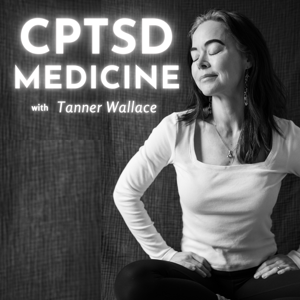


Why is understanding roles within a family dynamic based on trauma ecosystems essential for navigating adult relationships?
Family dynamics play a crucial role in the recovery process from complex post-traumatic stress disorder (CPTSD), as they can significantly influence an individual's healing journey. Tanner explores the intricate challenges of managing extended family relationships during CPTSD recovery, emphasizing the necessity of setting firm boundaries to prioritize personal safety and healing. With her insights shaped by experiences of familial roles rooted in trauma ecosystems, Tanner highlights how these roles can persist into adulthood, affecting self-identity and partnerships. She advocates for focusing energy on nurturing healthy relationships within one's immediate partnership, suggesting that a compassionate and loving approach can facilitate a secure healing environment. Moreover, Tanner underlines the importance of understanding and navigating these familial roles to create healthier dynamics and ultimately foster personal resolution and healing within the context of relationships.
Key TakeAways
- Setting boundaries and taking space is crucial in managing extended family dynamics during CPTSD recovery.
- Healing from CPTSD can inspire family members to embark on their own healing journeys or adjust their relationships.
- Redirecting energy towards building intimacy and connection within partnerships is key for healing and reconciliation within families.
- Understanding roles within a family dynamic based on trauma ecosystems is essential for navigating adult relationships and fostering healing.
- Enmeshment can lead to a lack of autonomy, identity, and recognition, impacting relationships and the establishment of boundaries.
Actionable Insights
- Set boundaries and take space when needed in managing extended family dynamics during CPTSD recovery
- Unburden oneself and radiate compassion, forgiveness, and love to navigate delicate family dynamics
- Redirect energy towards building intimacy and connection within partnerships for healing and reconciliation within families
- Understand roles within a family dynamic based on trauma ecosystems to navigate adult relationships and work towards healthier family dynamics
- Recognize the burden of enmeshment and feeling invisible in family dynamics to establish autonomy and identity
Quotes:
“CPTSD, [a] complex trauma, is a specific relational injury that impacts almost every aspect of your life, internally and externally. And yet, it can be healed. It can be resolved. You can complete active recovery of CPTSD.” — Tanner [01:50]
“The disconnections, the no contact, the estrangements; all of those, as I understand it now, are human attempts to demand external safety when in truth, safety is an internal experience.” — Tanner [06:00]
“You can’t really have a real, authentic, intimate relationship with somebody [who’s] running [on] survival instinct. You can appreciate them, you can hold space for them, you can be around them, you can laugh with them, you can even have fun with them, but that deep, reciprocal, authentic, genuine intimacy is not possible.” — Tanner [09:54]
“Continue to unburden your own system and radiate compassion, forgiveness, and love, and keep showing up in those frequencies and see what happens over time.” — Tanner [11:43]
“Just repeat, repeat, repeat, repeat. It’s the same basic things again and again and again that create a successful CPTSD recovery journey.” — Tanner [34:56]
Why is open communication about sex important in relationships?
Sexual exploration and knowledge play a pivotal role in personal empowerment and relational dynamics, offering individuals a pathway to better understand themselves and their partners. Tanner, a proponent of this concept, views sexuality as an expression of life force, creativity, and personal satisfaction rather than mere physical interaction. Their perspective is deeply shaped by the belief that understanding one's own desires and fantasies is integral to achieving a balanced power dynamic in relationships, irrespective of gender identity. Tanner advocates for open communication and vulnerability, suggesting that a detailed understanding of personal pleasure serves as a cornerstone for mutual respect and fulfillment in intimate connections.
Key TakeAways
- Discussing sex in relationships can evoke complex emotions and indicate deeper issues.
- Understanding one's own sexual desires is a source of personal power in a relationship.
- Open communication and understanding are crucial in achieving mutual sexual fulfillment.
- Healing trauma related to sexual abuse requires clear communication and mutual understanding.
- Partners need to take responsibility for their desires and support each other's healing journey.
Actionable Insights
- Approach discussing sex in relationships with maturity
- Understand your own pleasure and fantasy spaces for personal power
- Encourage open communication about sexual desires and boundaries
- Align fantasy spaces with your partner for mutual sexual fulfillment
- Take responsibility for addressing trauma related to sexual abuse in partnerships
Quotes:
“Sex, sexuality, sexual satisfaction, sexual connection, and intimacy are so wildly nuanced.” — Tanner [0:02:39]
“Our sexuality, sexual connection, [and] sexual expression in the context of a long-term partnership is non-negotiable. Sexual satisfaction, sexual expression, sexual fulfillment is a basic core human need.” — Tanner [0:06:45]
“Anything but neutral curiosity is an indication that there’s some work to be done here.” — Tanner [0:09:05]
“Waiting until you are healed to deal with your sexuality [and] sexual issues is avoiding a beautiful, sacred, profound training ground that is only possible in a partnership. There is no other space where this particular thing can be held.” — Tanner [0:30:44]
Longer Quotes:
“Our sexuality is not just practical. It’s not just transactional. It’s truly about life force activation. It’s about primal, deep, body energy. It’s about creativity, it’s about expression, it’s about release, it’s about satisfaction. It’s about flow states and transcending our human experience. It is truly about — [unlocking] experiences beyond what our human brain can comprehend.” — Tanner [0:15:17]
How can understanding individual values improve money management within relationships?
Healing through money work is an intriguing and transformative concept that addresses the intersection of financial behaviors and emotional well-being. Tanner, an expert in trauma recovery, offers a unique perspective on this topic, shaped by his extensive work with the 5 Circuits of Healing Power and the CPTSD Wheel of Life. She advocates for a structured approach to understanding how trauma affects financial decisions and emphasizes the importance of aligning financial goals with personal values. Tanner's teachings encourage participants to be honest about their relationship with money, practice gratitude, and recognize money as a powerful energy that can foster deep personal growth and long-term healing when managed with intention and mindfulness.
Key TakeAways
- Tanner teaches about the 5 Circuits of Healing Power and the CPTSD Wheel of Life for healing from complex trauma
- Season 11 of the CPTSD Medicine Podcast focuses on topics like parenting, money, sex, and extended family dynamics for healing and growth
- Tanner discusses trauma responses related to money in relationships and the importance of understanding individual values
- Practicing gratitude and aligning with personal values can enhance money management and lead to a more fulfilling approach
Actionable Insights
- Delve into the 5 Circuits of Healing Power and the CPTSD Wheel of Life for a deeper understanding of trauma experiences
- Engage in Tanner's guided group sessions to explore concepts in a structured and supportive environment
- Listen to Season 11 of the CPTSD Medicine Podcast to gain insights on parenting, money management, sex, and family dynamics
- Address trauma responses related to money in relationships to improve partnerships and long-term prosperity
- Practice gratitude for current possessions and align with personal values to enhance money management
Quotes:
“Everything you need to heal is already inside of you, you just need some facilitation, structure, understanding, and practice to know how to access it consistently.” — Tanner [01:13]
“Money is associated with a particular survival mode [for people with CPTSD].” — Tanner [21:01]
“[Use] these money conversations as the healing, not [standing] in the way of the healing.” — Tanner [29:57]
How can practical solutions help parents in cultivating secure attachments with their children?
Parenting is a multifaceted journey filled with challenges and diverse configurations, demanding adaptability and understanding from those involved. In the CPTSD Medicine Season 11 podcast series, she explore the intricate dynamics of relationships, particularly focusing on partners of individuals with CPTSD, and extend their insights to various parenting arrangements. Drawing from her experiences, Tanner underscores the necessity of embracing different parenting approaches and addressing unresolved trauma within these relationships. She advocates for inclusivity and adaptability, highlighting the importance of self-awareness and intentional practices in parenting. By promoting secure attachments and fostering children's independence, Tanner aims to break generational cycles and nurture healthier family bonds.
Key TakeAways
- The podcast season focuses on partners of individuals with CPTSD and the importance of support in relationships.
- Understanding how to support children in getting their needs met and creating healing experiences is crucial.
- Various parenting arrangements are discussed, highlighting the complexity of family structures and the challenges they pose.
- Parenting is seen as a training ground for unburdening work, integration work, and embodiment work for both parents and children.
- The challenges of parenting include the transmission of trauma to children and breaking detrimental cycles for their well-being.
- Practical solutions like setting boundaries and providing support to partners can help parents cultivate secure attachments with their children.
Actionable Insights
- Offer healing power, high-quality time, accurate communication, and consistent support to children
- Understand different parenting arrangements and the challenges that come with each dynamic
- Approach parenting with empathy, understanding, and a willingness to adapt to unique needs
- Break the cycle of trauma transmission by providing a healing environment for children
- Prioritize children's needs over personal struggles and create secure attachment experiences
- Break detrimental cycles, manage emotional triggers, and establish boundaries for effective parenting
Quotes:
“When activated, we start to drop into Primitive Survival Instinct, Hurt Parts, Wounded Younger Parts, Aggressive Protective Parts, Collapsed Protective Parts. – We’re no longer leading [or] parenting our child from a grounded, anchored place of pure personal power.” — Tanner [16:19]
“What am I doing for my kids to break the cycle [of trauma] so that their children are trauma-free?” — Tanner [19:21]
“There’s a lot of work planning [and practical considerations] that must go into cycle-breaking parenting.” — Tanner [31:43]
“When in distress, lean in to connect.” — Tanner [36:17]
What is the significance of partners in developmental relationships?
Radical responsibility is a transformative concept that encourages individuals to fully own their actions and choices, particularly in the context of healing and personal growth. This idea is especially pertinent for those recovering from Complex Post-Traumatic Stress Disorder (CPTSD), where developmental relationships can be a cornerstone for mutual healing and understanding. Tanner's perspective on radical responsibility is deeply rooted in the belief that individuals must take ownership of their decisions made during less healed states, such as those related to children, careers, and relationships. With a background that emphasizes the power of reciprocal support, Tanner advocates for partners in a relationship to alternately support one another, ensuring a balanced dynamic that fosters growth and prevents emotional suppression. Through this approach, Tanner encourages a mature acceptance of past experiences, challenging individuals to work collaboratively towards a healthier future.
Key TakeAways
- Partners in a developmental relationship experience significant personal growth and change together
- Taking responsibility and acknowledging past trauma is crucial for navigating the recovery journey in relationships
- Reciprocity and radical responsibility are essential for maintaining balance and actively working towards recovery in partnerships
Actionable Insights
- Commit to personal growth and support each other
- Address past mistakes, shame, and blame for healing
- Practice reciprocity in providing support and taking responsibility
Quotes:
“One of the early milestones of CPTSD recovery is dropping the immature, childlike energy of ‘I don’t want to have to do this’.” — Tanner [06:14]
“Your partner is not a parent. However, they can provide a pseudo-parenting context for a short period of time while an unburdening is happening.” — Tanner [11:01]
“At different points of the journey, there are different types of radical responsibility.” — Tanner [14:34]
What is the significance of creating a shame-free environment in the healing journey from complex trauma?
The unburdening process is a pivotal component of trauma recovery, allowing individuals to confront and release emotional burdens such as fear, hurt, and shame that often stem from past traumatic experiences. Tanner, an advocate for this process, underscores its necessity by illustrating how trauma is internally held and the significance of releasing it for genuine healing. With a background shaped by the Internal Family Systems model, Tanner stresses the creation of a shame-free and supportive relational context to facilitate this unburdening, enabling individuals to approach their internal experiences with greater peace and neutrality. They acknowledge that resistance may arise due to the fear of facing uncomfortable truths, yet they encourage embracing such resistance as an opportunity for deeper understanding and personal leadership. Tanner also points to the diverse modalities that incorporate unburdening practices, attesting to the practical effectiveness of these approaches, even if they initially appear unconventional to some.
Key TakeAways
- Resistance in the healing journey can signal a need to confront uncomfortable truths or fears and leakage of energy towards unproductive areas.
- Unburdening is crucial for healing complex trauma and involves working with parts or energies that hold onto burdens from traumatic experiences.
- Creating a no shame environment is essential during the unburdening process for deeper alignments and true self emergence in complex trauma recovery work.
- Recovering from CPTSD within relationships involves setting clear boundaries, holding space without taking on someone else's energy or emotion, and building trust through secure commitment.
- Establishing energetic boundaries in partnership allows for emotional closeness while maintaining energetic separation, promoting individual self-leadership in the journey of Complex Post-Traumatic Stress Disorder recovery.
Actionable Insights
- Confront uncomfortable truths or fears during healing journey
- Create a shame-free environment for unburdening process
- Set clear boundaries in relationships for CPTSD recovery
- Establish energetic boundaries to witness partner's negative emotions without taking them on
- Build trust in relationships by committing wholeheartedly and eliminating ambiguity
Quotes:
“In my opinion, unburdening is essential, required, non-negotiable for permanent healing of CPTSD.” — Tanner [08:40]
“Trust is critically important in small and big ways.” — Tanner [23:29]
“Relationships are the perfect, ideal training ground for complex trauma recovery.” — Tanner [27:27]
Why is it important for partners to understand the protective instincts in trauma survivors?
The CPTSD recovery apprenticeship introduced by Tanner offers a novel approach to healing for survivors of childhood trauma, integrating the 5 Circuits of Healing Power and five Directional Callings of the CPTSD Wheel of Life. This comprehensive curriclum is designed for those seeking leadership within the CPTSD recovery community, emphasizing the empowerment of individuals to draw on their own wisdom rather than depending on outside experts. Tanner views this apprenticeship as a transformative journey that not only aids in personal healing but also has the potential to influence the trajectory of human evolution. Having experienced the profound impacts of deep healing work, Tanner stresses the significance of rebuilding within intimate partnerships, which often mirror the attachment contexts crucial for recovery. CPTSD Medicine is dedicated to creating a paradigm shift in mental health services, where reclaiming personal wisdom becomes the cornerstone of lasting healing.
Key TakeAways
- The apprenticeship is designed for CPTSD survivors actively recovering from childhood trauma, aiming for permanent healing and leadership roles in the CPTSD recovery community.
- Protective Parts in individuals recovering from trauma are survival instincts deeply intertwined with trauma, making it challenging to unravel them.
- Partners of trauma survivors must navigate and support protective parts, as individuals work towards releasing survival coding and discovering their true selves.
- Recognizing and supporting partners in 'I must' energy is crucial, offering assistance and collaboration to help them feel supported, leading to intimate connections.
- Partners should address the 'I can't' Protective Instinct with compassion, as reacting negatively can plant seeds of disrespect and unworthiness.
- Creating a supportive environment with boundaries and accountability in relationships is essential for partners to engage in healing work and contribute to collective healing energy.
Actionable Insights
- Recognize and support a partner in 'I must' energy by offering assistance and collaboration
- Differentiate between survival instincts and True Selves for healthier relationships
- Address 'I can't' Protective Instinct with compassion to restore dignity and emotional healing
- Create a supportive environment with boundaries and accountability in relationships for healing work
- Provide a safe space for partners to engage in healing work while contributing to collective healing energy
- Navigate and support protective parts in relationships as loved ones work towards unburdening and releasing survival coding
Quotes:
“It’s very hard to change behavior, especially if it was an adaptive strategy or something that you inherited or were socialized to believe is the way from your family of origin.” — Tanner [11:02]
“Working on our partnership directly affects our children as well.” — Tanner [17:29]
“You’re keeping the path clear for your partner to do the healing work, but you’re not doing the work for them. You’re simply keeping everything open and clear so that the work is easier to do.” — Tanner [42:44]
“If you weaponize Parts Work, you are creating an unsafe experience for parts of each other to feel that they can trust to be vulnerable.” — Tanner [45:24]
How can partners create a safe space for each other to express themselves?
Effective communication within a partnership is crucial for nurturing a healthy and fulfilling relationship, serving as the cornerstone for intimacy, trust, and mutual understanding. Tanner's perspective on partnership communication underscores the importance of open and honest dialogue between partners, advocating for addressing issues directly within the relationship rather than relying on external validation or advice. With a focus on maintaining intimacy and trust, Tanner views the partnership as a sacred union where all matters should be discussed candidly to strengthen the bond. Her experiences highlight the value of prioritizing communication within the partnership framework, emphasizing its role in fostering a supportive and resilient relationship.
Key TakeAways
- Creating a safe space for all energies to be witnessed is essential for healthy expression and breaking free from harmful patterns.
- Addressing value mismatches directly and finding middle ground is crucial for partnership viability and maintaining healthy relationships.
- Taking ownership of personal wounds and not relying on partners for healing is key for true growth and nurturing environments.
- Focusing on the present state of a relationship, taking responsibility for past wounds, and building together creates a strong foundation for a fulfilling partnership.
Actionable Insights
- Create a safe space for partners to express themselves without judgment
- Address value mismatches directly with your partner instead of complaining behind their back
- Take ownership of personal wounds and focus on individual healing journeys
- Focus on the current state of the relationship and work together to build a strong foundation
Quotes:
“It’s one thing to listen to something, and it’s another thing to integrate the knowledge; embody it through your actions; and see how it lands and shapes what you do day to day.” — Tanner [02:21]
“It takes so much courage to change, and change happens over time when we align with a particular identity that shapes our habits.” — Tanner [02:36]
“If there is an urge to turn to somebody else to talk about your partner; complain about your partner; talk about the partnership, this is an immediate sign that you need to turn toward your partner and start sharing some of this with them.” — Tanner [13:38
Why is it important to collaboratively revise the relationship story for partners healing from past traumas?
Healing trauma, particularly from complex post-traumatic stress disorder (CPTSD), is a profound journey that can be significantly influenced by the dynamics of partnership. Tanner Wallace, in her insightful exploration on The CPTSD Medicine Podcast, emphasizes the transformative potential of supportive relationships in this healing process. With a focus on revising the narrative of their relationship, Tanner suggests that partners can build deeper connections and mutual understanding, which are crucial for individuals dealing with trauma. By encouraging honest dialogue and embodying compassion, Tanner believes that partners can address unmet needs and protective behaviors, creating a context that honors their shared realities. This approach not only fosters individual healing but also transforms the relationship into a nurturing space for growth and a purposeful, loving life together.
Key TakeAways
- Partnerships can serve as training grounds for healing trauma and personal evolution.
- Co-creating a revised relationship story based on reality and respect is crucial for growth and compassion.
- Individual healing work and unburdening past hurts are essential for fostering healthy relationships.
- Partnerships provide a relational field for healing, growth, and tapping into compassion and love.
Actionable Insights
- Work together with your partner in the healing process
- Reflect on the evolution of your relationship story and acknowledge different narratives
- Engage in mature and honest conversations with your partner
- Address past hurts and unburden yourself to foster healthy relationships
Quotes:
“[A relationship] is a training ground in the relational field for every human, but particularly for humans that have betrayals in the attachment context of their childhood.” — Tanner [10:49]
“There is no other training ground than CPTSD and the relational field to tap into those codes.” — Tanner [11:19]
“When I retreat and get on my own team, and see you as the enemy, I’ve separated from love.” — Tanner [12:56]
“The more flexible and adaptable and open we are to revisions, to evolution, to learning, the better off we all are.” — Tanner [13:56]
Why does Tanner emphasize individual healing before making relationship decisions?
Complex Post-Traumatic Stress Disorder (CPTSD) recovery frameworks are essential tools for those navigating the intricate and often tumultuous path of healing from deep-seated trauma. Tanner Wallace, a leader in this field, has crafted unique recovery frameworks utilizing parts work and Internal Family Systems as foundational practices to facilitate transformative healing experiences. Drawing from her background in social research, Tanner's approach underscores the messy and nonlinear journey of recovery, advocating for individual unburdening and integration as critical steps. She critiques mainstream relational advice for inadequately addressing CPTSD's impact on relationships, reflecting on her own challenges with publicly navigating recovery and marriage. Tanner emphasizes the need for personal healing before making relational commitments and promotes shared responsibility and dedication in partnerships, challenging traditional narratives that label one partner as the "problem."
Key TakeAways
- CPTSD Medicine focuses on developing frameworks, modules, and curriculums to help humans permanently heal from CPTSD using parts work as a foundational practice.
- Tanner emphasizes the importance of embracing a messy, nonlinear healing process while highlighting the significance of individual and relational healing in the recovery journey.
- Tanner reflects on their healing journey within her marriage, acknowledging the challenges of navigating healing publicly and guiding others.
- Tanner discusses the challenges of navigating CPTSD recovery within a relationship, emphasizing the importance of individual healing before making collective decisions.
- Tanner stresses the importance of being dedicated, showing up for the work, and making clear decisions regarding the future of a relationship based on groundedness and courage.
Actionable Insights
- Embrace the messy and non-linear nature of healing from CPTSD
- Prioritize individual healing before making collective decisions in relationships
- Recognize that both partners co-create relationship issues and are responsible for solving them
- Invest time, dedication, and effort in relationships for deeper connections and clarity
- Make decisions in relationships based on groundedness and courage
Quotes:
“The sexual stuff, the sexual connection, the intimacy is simply a symptom of much deeper stuff that’s happening underneath.” — Tanner [0:10:54]
“In my healing, I now understand CPTSD [and] healing it doesn’t make logical sense. You just gotta run with what’s happening. You’ve got to lean into the flow.” — Tanner [0:13:13]
“What’s so powerful about the ‘It’s ending’ or ‘I’m staying’ decision is it’s squeaky clean and it ends the ambiguity.” — Tanner [0:16:58]
“You cannot arrive at the final result — that squeaky clean ‘yes, no’, when you have an exit door wide open; that you’re in.” — Tanner [0:20:29]
From the publisher's feed
1,407 Listeners

2,510 Listeners
5,139 Listeners
4,716 Listeners
429 Listeners

27,988 Listeners

280 Listeners

366 Listeners

1,852 Listeners

1,421 Listeners

1,057 Listeners

1,399 Listeners

341 Listeners
219 Listeners

221 Listeners