
Sign up to save your podcasts
Or

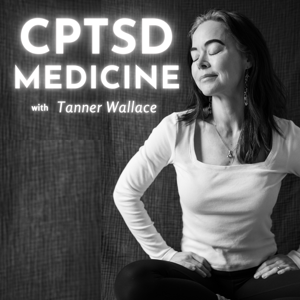


Ready for your next powerful step? Amplifying your Self Energy transforms not just your healing journey, but how you lead yourself, your family, and your lineage into sovereignty. The Self Energy as Sacred Leadership 4-part email series introduces you to the CPTSD Medicine perspective on Self Energy, helping you see how to dissolve trauma energies through intentional amplification of your innate Self Energy.
Start Amplifying Your Self Energy Here →
How can self-leadership contribute to personal transformation?
The topic of CPTSD medicine and training grounds explores the innovative approaches to complex trauma recovery, emphasizing profound personal transformation rather than merely managing symptoms. Under the guidance of Tanner, the CPTSD Medicine Podcast introduces a transformative treatment protocol and a structured training program launching on June 21st, designed to empower individuals and foster community change. Tanner, drawing from her own experiences, advocates for viewing life events as training grounds—opportunities for growth and mastery in the journey of recovery. He believes in the transformative power of the CPTSD medicine protocol, encouraging individuals to embrace challenges as initiations towards self-leadership and empowerment, ultimately leading to significant shifts in perception and healing.
Key TakeAways
- Tanner emphasizes the deep, soul-changing nature of complex trauma recovery work beyond symptom management.
- The CPTSD Medicine training program offers a structured approach for personal transformation and becoming CPTSD Medicine providers.
- Viewing challenges as opportunities for growth and mastery of CPTSD medicine milestones is crucial in the healing journey.
- The importance of community and breaking cycles is stressed for collective evolution and personal growth.
- Internal healing and self-leadership are highlighted as ways to reclaim personal power and sovereignty for healing and growth.
- Embracing vulnerability and connectedness is essential for personal and collective growth in the journey towards self-discovery and healing.
Actionable Insights
- View initiations and challenges as opportunities for growth in complex trauma recovery
- Recognize the ongoing nature of the healing process in CPTSD recovery
- Engage in self-leadership and empowerment for personal transformation
- Embrace community and break cycles for collective evolution
- Practice introspection and confront deep-seated wounds for healing
- Embrace vulnerability and connectedness for personal and collective growth
Quotes:
“One of the key hallmarks of complex trauma is this inheritance of not only hurt, but fear.” — Tanner [12:48]
“I heal all wounds. I don’t give my power over to time and wait. I have reclaimed my sovereignty, my leadership, my value.” — Tanne [23:11]
“All of us are exquisite, important, and matter. We are not the same without each other.” — Tanner [24:07]
“Everything happens in a relational context.” — Tanner [32:18]
How to Leave a Podcast Review on Apple Podcasts
Open Apple Podcasts: Launch the Apple Podcasts app on your iPhone, iPad, or Mac.
Find Our Podcast: Search for CPTSD Medicine in the search bar.
Select the Show: Click on the podcast show’s artwork to go to the main page of our podcast.
Scroll Down: On the podcast's main page, scroll down until you see the "Ratings & Reviews" section.
Rate the Podcast: Tap on the stars to leave a rating. You can rate the podcast from 1 to 5 stars.
Write a Review: Below the star rating, click on "Write a Review."
Title and Review: Enter a title for your review and write your feedback in the review box.
Submit: When you’re finished, click "Send" or "Submit" in the upper right corner.
Thank you for taking the time to leave a review! Your feedback helps us improve and reach more listeners.
What are the crucial steps in completing open emotional loops for healing?
Complex Post-Traumatic Stress Disorder (CPTSD) recovery can be viewed as an enriching journey of personal development that fosters profound life changes and growth. By investing in mastering resilience and acquiring specific skills, individuals can transform their interaction with the world and achieve a sense of fulfillment. Tanner, an advocate for this approach, perceives CPTSD recovery as a mission to end complex trauma and advance human evolution. Her perspective has been shaped by experiences that highlight the necessity of precise tools and the restoration of attachments, both internal and external. Tanner believes that successful recovery leads to resilience and a profound sense of peace, and he encourages individuals to embrace this transformative journey, join supportive communities, and contribute to a movement of collective healing and empowerment.
Key TakeAways
- Treating CPTSD recovery as an investment in oneself can lead to positive life changes.
- Mastering specific skill sets and achieving resiliency can result in a profound shift in how individuals show up in the world.
- Understanding the impact of shame on behaviors and learning to address it is crucial for personal growth.
- Completing Open Loops for Healing involves addressing past traumas to prevent re-experiencing old energies.
- Engaging with the community and participating in programs can be beneficial for individuals on their journey towards healing and self-discovery.
Actionable Insights
- View CPTSD recovery as an investment in oneself
- Master specific skill sets for personal growth
- Address and resolve shame through self-confidence
- Close open loops for healing by addressing past traumas
- Engage with the community for support and involvement
Quotes:
“CPTSD recovery is simply personal development.” — Tanner [05:01]
“Post-CPTSD recovery, it is a whole other world of what you can accomplish and what is possible and what you feel in your body. I’m saying these things from the other side, and it’s beyond what I could’ve imagined.” — Tanner [06:38]
“Shame is the same substance for all humans, but how it codes, and corrupts, influences, replicates, disrupts – it’s so unique to the human.” — Tanner [13:20]
“It’s not that no one got any sense of who you might be underneath all the trauma and conditioning; it’s just, it was so distorted and off in some way. That’s the old stuff.” — Tanner [22:31]
“We have to be better readers and interpreters of the evidence as it is in this moment.” — Tanner [25:47]
How can engaging in activities with joy and authenticity benefit CPTSD recovery?
The CPTSD Medicine Podcast, hosted by Tanner Wallace, offers an enlightening exploration into the recovery journey from Complex PTSD. Tanner's perspective on the topic is richly informed by herpersonal experiences and growth, which she shares with a sense of deep honor and gratitude. She is committed to creating a transformative space for listeners, where they can engage with crucial insights and messages that foster healing. Tanner highlights the power of storytelling and self-reflection as pivotal tools in shaping one's recovery narrative, aiming to empower individuals to break cycles of trauma and transform their lives.
Key TakeAways
- Healing from Complex PTSD (CPTSD) comes from within through personal accountability and self-reflection.
- Storytelling plays a crucial role in shaping the narrative of individuals working towards CPTSD recovery.
- Engaging in activities with joy, authenticity, and shared passion leads to creating meaningful experiences and lasting memories.
- A collective of cycle breakers at different stages of their CPTSD recovery journey provides support and deepening into integration.
- Committing to cycle breaking involves self-sacrifice, healing, and boundary-setting, leading to transformative changes in individuals' lives.
Actionable Insights
- Emphasize personal accountability and self-reflection in CPTSD recovery
- Utilize storytelling as a tool for shaping your narrative in healing from CPTSD
- Engage in activities with joy, authenticity, and shared passion for meaningful experiences
- Build a collective of cycle breakers for support and integration in the CPTSD recovery journey
- Commit to healing from complex trauma through self-sacrifice, boundary-setting, and energetic separation
Quotes:
“We're on the right track. Things are moving, things are shifting, the momentum is building, and it's so deeply meaningful.” — Tanner [02:45]
“[When] you add this level of intentionality to what you're doing, it has to be aligned with the energy you have.” — Tanner [18:23]
“There is so much more possibility for what is ahead than what the most injured, weary Parts of you believe.” — Tanner [23:14]
“We often miss the value of everyday moments because we are waiting for something to happen for us to be happy - but this waiting is a trap, a trick, a falsehood.” — Tanner [23:31]
What practices are crucial for addressing complex trauma?
Recovering from complex trauma is an intricate journey that involves not only emotional and psychological healing but also a deep understanding of energetic processes. Tanner's perspective on complex trauma recovery centers around the concept of energetic stewardship, where trauma is viewed as a constellation of energies that require careful management and transformation. His insights are shaped by his personal journey of exploring the interconnectedness of energy work, manifestation, and quantum leaps, which revealed the profound impact of energy patterns on thought processes and life experiences. Tanner believes that by actively engaging in energy work and completing this transformative process, individuals not only facilitate their personal healing but also contribute to shifting collective energies towards light and love, thereby challenging and transforming existing power structures.
Key TakeAways
- Understanding complex trauma recovery as energy work involves energetic stewardship and practices like unblending, unburdening, integrating, and embodying.
- The process of transmuting energy back into light and love through support and scaffolding leads to a corrective experience in the relational field.
- Contributing to the collective and driving human evolution towards a higher energetic state by filtering and transmuting energy within ourselves and our trauma ecosystem.
- Viewing complex trauma as a constellation of energies and emphasizing energetic stewardship for personal growth and evolution.
- Addressing complex trauma through practices like unblending, unburdening, integrating, and embodying for healing and contributing to the collective.
- The significance of vulnerability, honest self-reflection, and confronting personal fears and barriers for personal growth and alignment with essential changes.
Actionable Insights
- Practice unblending, unburdening, integrating, and embodying for trauma recovery
- Seek support and scaffolding throughout the recovery journey
- Filter and transmute energy within oneself and trauma ecosystem
- Maintain authenticity in coaching and mentorship approaches
- Embrace vulnerability and self-reflection for personal growth
- Be open to personal evolution and understanding what is possible
Quotes:
“Complex trauma recovery will indeed change the course of human evolution because we’re changing the energy that’s running individually and collectively.” — Tanner [13:43]
“Lean in to connect when in distress!” — Tanner [21:44]
“If there’s a source of dark energy that isn’t stopped at its source, then there’s always going to be complex trauma.” — Tanner [32:13]
What is the CPTSD Medicine Healing Protocol?
Complex Post-Traumatic Stress Disorder (CPTSD) recovery involves navigating a path of healing that acknowledges the intricate interplay between traumatic experiences and one's emotional and relational well-being. Tanner Wallace, host of the CPTSD Medicine Podcast, introduces a groundbreaking healing protocol that integrates the Five Circuits of Healing Power and the CPTSD Wheel of Life, offering a transformative approach for those on their healing journey. With a background deeply rooted in holistic healing, Tanner emphasizes the importance of recognizing the interconnectedness of human experiences and energetic shifts, advocating for a non-hierarchical approach that taps into divinely sourced energy. She believes that true recovery lies in the alignment with the frequency of "there is no separation," urging individuals to embrace this holistic perspective with discernment and openness. Through practices that enhance self-energetic frequencies like compassion and grace, Tanner's protocol focuses on breaking the cycle of trauma, repairing attachments, and fostering resilience, ultimately guiding individuals to take responsibility for their healing journey.
Key TakeAways
- Recognize the interconnectedness of human experiences and energetic processes for healing
- Engage in physical and energetic practices to release trauma and tap into divinely sourced energy
- Focus on breaking cycles of blame and shame through practices of energetic and developmental differentiation
- Take responsibility for relationships by facing discomfort, exploring unresolved feelings, and acknowledging emotions
- Emphasize patience, self-reflection, and forgiveness to break cycles of blame and shame in healing journey
Actionable Insights
- Recognize the interconnectedness of human experiences and energetic processes for healing
- Engage in physical and energetic practices to release trauma and tap into divinely sourced energy
- Focus on breaking cycles of blame and shame through practices of energetic and developmental differentiation
- Take responsibility for relationships by facing discomfort, exploring unresolved feelings, and acknowledging emotions
- Emphasize patience, self-reflection, and forgiveness to break cycles of blame and shame in healing journey
Quotes:
“We find ourselves in these liminal spaces. I haven't fully released the past, but I also haven't landed completely in the future.” — Tanner [12:11]
“If we zoom out a little bit, we see ourselves, our children, our parents, our lineage, [and] our ancestors all woven together in a much larger narrative and inheritance of hurt.” — Tanner [19:45]
“Parts of us have been harmed significantly by our parents not being able, willing, or available to stop the trauma. But they didn't start the trauma. They're swimming in it, along with us.” — Tanner [20:10]
“Our most wounded Parts need permission to speak the truth. It's an essential part of CPTSD recovery.” — Tanner [20:35]
“Cycle-breaking is when the threads are repaired, restored, rejuvenated, [and] regenerated: internal attachment restoration and external attachment restoration.” — Tanner [28:17]
“Let’s neutralize the zing of responsibility so that it's available to us as mature adults on a healing path. Responsibility, accountability: these are the frequencies of cycle-breaking.” — Tanner [36:37]
What are some tips for reclaiming personal power?
The CPTSD recovery movement is gaining momentum as a collective effort to heal complex trauma through self-sustaining networks and shared knowledge. This initiative utilizes digital platforms such as Instagram, YouTube, and their CPTSD Medicine podcast to spread awareness and nurture a supportive community. Tanner's perspective on the movement is deeply rooted in the belief that true transformation and healing from complex trauma come from within, emphasizing personal agency and self-healing. Her views are shaped by his personal journey of reclaiming personal power and finding resilience despite public criticism, underscoring the importance of interconnectedness and mentorship within the trauma-focused community. Tanner envisions the movement as an empowering, collective endeavor where individuals are encouraged to lead themselves out of survival mode, fostering a community that supports active recovery and future healing journeys.
Key TakeAways
- The collective movement of CPTSD Medicine aims to end complex trauma through recovery and building a supportive network.
- The CPTSD Medicine Training Program focuses on creating a self-sustaining network for the treatment of complex trauma and sharing knowledge within the health industry.
- Trauma energies can affect self-identity, and true transformation comes from within, not external validation or circumstances.
- Facing backlash and criticism on social media exposed Tanner's vulnerabilities and fears, leading to self-reflection and support from mentors and peers.
- Recognizing personal power and not giving it away to external circumstances is crucial for stability and trust in oneself.
Actionable Insights
- Subscribe to CPTSD Medicine channels and participate in live gatherings
- Engage in daily practices to recognize and nurture personal power
- Shift focus from external validation to internal healing and empowerment
- Reclaim personal power and break free from retraumatization
- Contribute to collective healing through self-discovery and internal work
- Support CPTSD Medicine by leaving reviews and referring others
Quotes:
“It is my intention that something lands, from what I say today, that completely changes your life. That is the standard we set in the CPTSD Medicine universe.” — Tanner [00:36]
“I loved the authenticity of the scientific process; I loved the co-creation of knowledge in small groups.” — Tanner [11:00]
“I remember Nicole [Casteel] saying to me in some form or another, ‘This is an opportunity for you to learn where your power is sourced.’ And when she said that to me, it brought me to my knees.” — Tanner [25:30]
“Everything you need to heal is already inside of you.” — Tanner[28:02]
“If your Identity Center or G-Center is defined, then you know who you are; you always have since birth, and it’s just a matter of owning that identity without compromise, and not entering into implicit contracts with other humans who want you or need you to be somebody different.” — Tanner [32:23]
“When we have access to pure Personal Power, everything becomes more stable.” — Tanner [34:32]
What is the concept of radical responsibility in CPTSD recovery?
Complex Post-Traumatic Stress Disorder (CPTSD) recovery is a journey that requires individuals to take radical responsibility for their own healing, as highlighted by the transformative concept that "no one is coming to save you." This involves embracing personal agency, transforming past traumas, and fostering forgiveness and surrender, supported by practices such as Internal Family Systems therapy. Tanner's perspective on CPTSD recovery underscores the importance of this radical responsibility, encouraging individuals to not only intellectually understand but also integrate the concept into their lives. Drawing from her experiences and teachings, Tanner guides people on a path of self-discovery and acceptance, suggesting that by turning inward and confronting past traumas, healing and personal growth can be achieved. Through self-leadership and the acknowledgment of one’s internal parts, Tanner believes that true transformation and emotional regulation are possible, paving the way for a more connected and supportive emotional and spiritual journey.
Key TakeAways
- Taking radical responsibility in CPTSD recovery is crucial for personal transformation and healing.
- Internal Family Systems therapy can be an effective tool for emotional regulation and self-soothing during challenging situations.
- Accepting the mission of being a cycle breaker involves forgiveness, releasing the victim story, and offering future generations something better.
- Building a support network is essential for emotional and spiritual well-being, requiring individuals to work on healing past traumas.
- Taking radical responsibility for personal growth involves acknowledging past traumas, creating a healthy support system, and shifting towards open, connected energy.
Actionable Insights
- Embrace your own agency in healing by taking radical responsibility
- Practice Internal Family Systems therapy for emotional regulation
- Accept the mission of being a cycle breaker by forgiving others
- Build a support network by balancing providing and receiving energy
- Take radical responsibility for personal growth by acknowledging past traumas
Quotes:
“For those of you who are familiar with the energy of complex trauma, when your proportionalities of energies you’re running shifts, you’re actually kind of a different person.” — Tanner [07:53]
“CPTSD recovery introduces an understanding of our humanness that transcends time in a lot of ways.” — Tanner [13:52]
“If you’re listening to this podcast, you’ve been called to the mission.” — Tanner [18:18]
“The resonance of love is an energetic force that softens rough edges, restores motivation, that explains things without words, that rights the wrongs without a single action because love is a frequency.” — Tanner [20:26]
“I want you to listen, learn, and have the wisdom come into your body so that it can become The Medicine.” — Tanner [38:51]
Why is mentorship emphasized by Tanner in the CPTSD Medicine movement?
Season 12 of the CPTSD Medicine Podcast explores the intricacies of complex PTSD recovery, offering structured insights to guide listeners from beginners to seasoned experts. The podcast, part of the broader CPTSD Medicine movement, is complemented by resources such as The Calling newsletter and the Students of the Medicine community, all designed to foster a robust, trauma-informed network. Tanner, ever enthusiastic and appreciative of the community's growth, returns this season to highlight the value of systematic learning and mentorship. With a passion for transforming learners into proficient knowers of CPTSD recovery, Tanner stresses the importance of understanding the core principles and connections within this field. His approach, shaped by a commitment to organized content delivery and community engagement, aims to empower individuals to confidently navigate their recovery journey.
Key TakeAways
- The CPTSD Medicine movement offers a newsletter and a free community for studying the healing protocol.
- Season 12 of the CPTSD Medicine Podcast focuses on exploring key concepts essential for healing from complex trauma.
- Tanner structures podcast content systematically to guide listeners in understanding complex trauma recovery.
- Mentorship is emphasized by Tanner as crucial in transitioning from a novice to an expert in the field.
Actionable Insights
- Subscribe to the email list for updates and monthly medicine features
- Join the Students of the Medicine community to become a CPTSD medicine provider
- Engage with structured podcast content to deepen understanding of complex trauma recovery
- Seek mentorship to transition from a novice to an expert in the field
Quotes:
“When you’re given a [big idea, story, phrase, or memory prompt], it will provide you with key anchors into what’s important – and what you are orienting towards without being so prescriptive that you won’t be able to innovate.” — Tanner [0:09:11]
“[The CPTSD Medicine movement is] a group of lifelong learners that are intellectually curious, willing to study, willing to put the time in to become an expert but also [know] that, at some point, we have to [step up and ask] as a novice and risk holding Protective Parts.” — Tanner [0:19:42]
What role does respectful communication play in maintaining a strong partnership?
Tanner underscores the vital role of nurturing and supporting relationships in the context of complex trauma recovery, advocating for deep partnerships that can weather the challenges involved. She highlights the importance of uninterrupted time for meaningful conversations and sees unresolved issues as opportunities for intimacy and growth, rather than sources of conflict. Emphasizing respectful communication, Tanner warns against external alliances that can undermine trust, advocating instead for honest, mature, and private discussions within the partnership. He stresses the balance between autonomy and interdependence, suggesting that healthy boundaries and shared values are key to a resilient relationship. By fostering both independence and interdependence, individuals can nurture a strong, balanced relationship that supports personal and mutual growth.
Key TakeAways
- Building partnerships is crucial in trauma recovery
- Addressing unresolved issues in relationships can lead to deeper intimacy and personal growth
- Respectful communication and privacy are key in maintaining a strong partnership
- Balancing autonomy and interdependence is essential for a healthy relationship
Actionable Insights
- Schedule uninterrupted time for deep conversations in relationships
- Approach unresolved issues as opportunities for deeper intimacy and growth
- Maintain respectful communication and prioritize privacy and respect in partnerships
- Balance autonomy and interdependence by setting healthy boundaries and shared ownership
Quotes:
“It can be very reorganizing and disorienting to come to meet the human that emerges during CPTSD recovery.” — Tanner [18:26]
“What we want to do is come into this beautiful middle space where I am dependent on my partner in very healthy, intentional ways, but I’m also supported in my independent pursuits and I am granted a level of autonomy that feels right in my body.” — Tanner [21:57]
“Each partner should be able to answer, at any point in the relationship, who am I without you?” — Tanner [22:23]
“If it’s not resolved, that means it’s going to keep coming back.” — Tanner [23:28]
How can releasing old versions of oneself impact present relationships?
Healing old hurts in relationships is a profound journey that involves addressing past traumas and fostering a deeper connection between partners. Tanner, a voice in the realm of relationship recovery, brings a unique perspective to this process, shaped by his exploration of personal and partnership dynamics. She advocates for identifying and nurturing injured parts within us, suggesting that tapping into a deeper, transcendent core of healing power is crucial. By emphasizing the importance of proceeding at an individual pace and organically, Tanner believes that focusing on the present can lead to genuine improvement and resolution without the baggage of the past. Furthermore, she underscores the necessity of establishing behavior standards and trust within relationships, which then allows individuals to release old hurts and move forward in a more connected and compassionate partnership.
Key TakeAways
- Partnership is key in the recovery process and navigating challenges together can lead to healing and growth.
- Forgiveness, connection, and healing power are crucial components in addressing old hurts within a long-term relationship.
- Releasing and updating older versions of ourselves can prevent past wounds from affecting present interactions.
- Values differences and unburdening play a role in deciding to end a partnership, emphasizing the need for thorough introspection.
- Integration and embodiment in personal recovery journeys positively impact partnerships by leading to self-acceptance and vulnerability.
- Teasing the content of Season 12 at the end of Season 11 builds anticipation and engages the audience for future episodes.
Actionable Insights
- Discuss your recovery journey with others for support and understanding
- Work on forgiveness, connection, and healing power core in long-term relationships
- Release and update old versions of yourself to avoid causing present pain in relationships
- Consider values differences and the impact on others when ending a partnership
- Focus on integration and embodiment in personal recovery journeys for positive impact on partnerships
Quotes:
“There's so much to learn from other people's questions, because sometimes there's questions posed that we would have never thought to ask.” — Tanner [05:48]
“Sometimes older versions of us from our adolescent years will confuse our partner for our parent or will confuse our partner for an ex-lover or an ex-boyfriend or ex-girlfriend. And that needs to be cleaned up because that's also a distortion.” — Tanner [15:21]
“There's a very high bar for saying goodbye, in my personal opinion, because there's so much that can be done. To reach that point where you say with authenticity, clarity, transparency, it's time for me to say goodbye.” — Tanner [25:22]
“A human that doesn't see other humans as human has been hurt horrifically. At some deep cellular level, they've been rejected.” — Tanner [29:34]
From the publisher's feed
1,410 Listeners

2,515 Listeners

5,139 Listeners
4,716 Listeners
429 Listeners

27,998 Listeners

279 Listeners

366 Listeners

1,852 Listeners

1,424 Listeners

1,056 Listeners

1,401 Listeners

341 Listeners
219 Listeners
221 Listeners