
Sign up to save your podcasts
Or

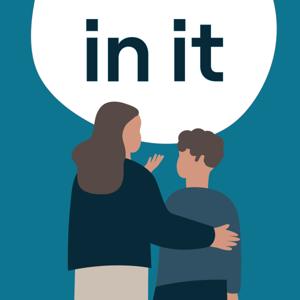


Sibling dynamics are challenging for all families. But when one sibling has a learning and thinking difference and the other one doesn’t, things can be even tougher.
In this episode of In It, hosts Gretchen Vierstra and Rachel Bozek talk with Becca. She’s a mom of two kids, one with ADHD and one without. Becca shares how she’s finding balance in parenting kids with different needs. And how her kids interact with one another.
This is part one of a two-part series. In the next episode, we’ll get tips on managing sibling dynamics from psychologist Dr. Ari Tuckman.
To find a transcript for this episode and more resources, visit the episode page at Understood.
We love hearing from our listeners. Email us at [email protected].
Related resourcesUnderstood is a nonprofit where millions of people who are navigating neurodivergence find clear guidance, practical tools, and people who get it. To help us continue this work, donate at u.org/give
Hosted by Simplecast, an AdsWizz company. See pcm.adswizz.com for information about our collection and use of personal data for advertising.
If your child is struggling at school or at home, and you think it may be related to ADHD or a learning difference, communication is key. Talking with your child’s pediatrician can be a first step to getting support. But sometimes it’s hard to know what to say to your child’s doctor.
In this episode of In It, hosts Gretchen Vierstra and Rachel Bozek welcome behavioral pediatrician Dr. Nerissa Bauer. Dr. Bauer offers tips and strategies for talking with your child’s pediatrician about ADHD, anxiety, and more. Tune in to get her advice on questions to ask, materials to bring, and how to make the most of your appointment.
To find a transcript for this episode and more resources, visit the episode page at Understood.
We love hearing from our listeners. Email us at [email protected].
Related resourcesUnderstood is a nonprofit where millions of people who are navigating neurodivergence find clear guidance, practical tools, and people who get it. To help us continue this work, donate at u.org/give
Hosted by Simplecast, an AdsWizz company. See pcm.adswizz.com for information about our collection and use of personal data for advertising.
Tantrums and meltdowns are challenges all parents face. But for families of kids who learn and think differently, they can be even more of a struggle.
In this episode, hosts Gretchen Vierstra and Rachel Bozek welcome back Dr. Andrew Kahn, the host of the first season of Understood’s What Now? A Parent’s Guide to Tantrums and Meltdowns. Tune in to get his expert advice on dealing with tantrums and meltdowns. Learn how practicing strategies ahead of time can help you manage outbursts in the moment. And find out what calming techniques can help.
To find a transcript for this episode and more resources, visit the episode page at Understood.
We love hearing from our listeners. Email us at [email protected].
Related resourcesUnderstood is a nonprofit where millions of people who are navigating neurodivergence find clear guidance, practical tools, and people who get it. To help us continue this work, donate at u.org/give
Hosted by Simplecast, an AdsWizz company. See pcm.adswizz.com for information about our collection and use of personal data for advertising.
Most parents start their parenting journey with ideas of what it will be like, and what their kids will be like. But what happens when your expectations don’t match reality? How do things change when you find out your child has a learning or thinking difference?
In this episode, hosts Gretchen Vierstra and Rachel Bozek welcome Suzie Glassman, a writer and mom of two kids. Suzie shares how her parenting changed after her daughter was diagnosed with ADHD and dyslexia.
Find out how she parents to meet the needs of the kids she has, rather than the kids she thought she’d have. Learn how she celebrates her kids for who they are, and how she’s letting go of parenting shame.
To find a transcript for this episode and more resources, visit the episode page at Understood.
We love hearing from our listeners. Email us at [email protected].
Related resourcesUnderstood is a nonprofit where millions of people who are navigating neurodivergence find clear guidance, practical tools, and people who get it. To help us continue this work, donate at u.org/give
Hosted by Simplecast, an AdsWizz company. See pcm.adswizz.com for information about our collection and use of personal data for advertising.
Puberty can be a challenging time for kids and their families. But what about if your child going through puberty has ADHD?
In this episode, hosts Gretchen Vierstra and Rachel Bozek take a deep dive into puberty and ADHD. First, they hear from three parents of teens with ADHD to find out what it’s like to be “in it.”
Then, they welcome returning guest Dr. Roberto Olivardia, a clinical psychologist and Understood expert. Listen in as he explains how ADHD and puberty can affect each other.
To find a transcript for this episode and more resources, visit the episode page at Understood.
We love hearing from our listeners. Email us at [email protected].
Related resourcesUnderstood is a nonprofit where millions of people who are navigating neurodivergence find clear guidance, practical tools, and people who get it. To help us continue this work, donate at u.org/give
Hosted by Simplecast, an AdsWizz company. See pcm.adswizz.com for information about our collection and use of personal data for advertising.
From the talk-to-text feature on a phone to a lap desk, many people use assistive technology (AT) every day. For kids who learn and think differently, assistive tech can make learning easier. But how do you know if it’s something your child needs?
In this episode, hosts Gretchen Vierstra and Rachel Bozek welcome returning guest Shira Moskovitz. Shira, a special education teacher and technology specialist, shares some of the ways assistive tech can help. Tune in to learn about the different types of AT, how they work, and how to figure out if they’re right for your child.
To find a transcript for this episode and more resources, visit the episode page at Understood.
We love hearing from our listeners. Email us at [email protected].
Related resourcesUnderstood is a nonprofit where millions of people who are navigating neurodivergence find clear guidance, practical tools, and people who get it. To help us continue this work, donate at u.org/give
Hosted by Simplecast, an AdsWizz company. See pcm.adswizz.com for information about our collection and use of personal data for advertising.
While the holiday season can be exciting, it can also stimulate the senses in a way that makes it less fun for some kids. For kids with sensory processing challenges, the holidays can be overwhelming.
In this episode, hosts Gretchen Vierstra and Rachel Bozek welcome returning guest Keri Wilmot. Keri, a pediatric occupational therapist, shares some of the ways the holidays can bring on sensory overload. From costumes to new foods and more, Keri has strategies to help you and your child enjoy the holidays.
To find a transcript for this episode and more resources, visit the episode page at Understood.
We love hearing from our listeners. Email us at [email protected].
Related resourcesUnderstood is a nonprofit where millions of people who are navigating neurodivergence find clear guidance, practical tools, and people who get it. To help us continue this work, donate at u.org/give
Hosted by Simplecast, an AdsWizz company. See pcm.adswizz.com for information about our collection and use of personal data for advertising.
Bonus episode! Introducing Understood’s newest podcast: What Now? A Parent’s Guide. Tune in for a peek at Season 1, which is all about tantrums and meltdowns. Listen to host Dr. Andrew Kahn as he shares practical tips on how to project calm, even when you don’t feel it.
Get a transcript of this show and check out more episodes from What Now? A Parent’s Guide at u.org/podcasts.
We love hearing from our listeners. Email us at [email protected].
Understood.org is a resource dedicated to shaping the world so the 70 million people in the U.S. with learning and thinking differences can thrive. Learn more about In It and all our podcasts at u.org/podcasts. Copyright © 2023 Understood for All, Inc. All rights reserved.
Understood is a nonprofit where millions of people who are navigating neurodivergence find clear guidance, practical tools, and people who get it. To help us continue this work, donate at u.org/give
Hosted by Simplecast, an AdsWizz company. See pcm.adswizz.com for information about our collection and use of personal data for advertising.
Why do some kids bully others? And why do some kids seem to be targets of bullying, time and time again?
In this episode, hosts Gretchen Vierstra and Rachel Bozek talk with parenting coach Caroline Maguire, author of Why Will No One Play with Me?: The Play Better Plan to Help Children of All Ages Make Friends and Thrive. She specializes in social-emotional learning and raising kids with ADHD.
Tune in to learn about both sides of bullying, and what families can do to help. Plus, hear Caroline share her own story of being bullied, and how that experience shapes her work.
To find a transcript for this episode and more resources, visit the episode page at Understood.
We love hearing from our listeners. Email us at [email protected].
Related resourcesUnderstood is a nonprofit where millions of people who are navigating neurodivergence find clear guidance, practical tools, and people who get it. To help us continue this work, donate at u.org/give
Hosted by Simplecast, an AdsWizz company. See pcm.adswizz.com for information about our collection and use of personal data for advertising.
Why do kids sometimes refuse to go to school? And what can families do about it, both in the moment and to help avoid it in the future?
In this episode, hosts Gretchen Vierstra and Rachel Bozek hear from Erin, a returning guest whose family has struggled with school refusal challenges for years.
The hosts also talk with psychologist and Understood expert Dr. Andrew Kahn, who shares some of the reasons that could be behind a child’s school refusal. He also offers tips and strategies for turning the situation around.
To find a transcript for this episode and more resources, visit the episode page at Understood.
We love hearing from our listeners. Email us at [email protected].
Related resourcesUnderstood is a nonprofit where millions of people who are navigating neurodivergence find clear guidance, practical tools, and people who get it. To help us continue this work, donate at u.org/give
Hosted by Simplecast, an AdsWizz company. See pcm.adswizz.com for information about our collection and use of personal data for advertising.
From the publisher's feed

1,327 Listeners

3,636 Listeners

961 Listeners
118 Listeners

1,426 Listeners

413 Listeners

3,386 Listeners

1,903 Listeners

469 Listeners

85 Listeners

4,531 Listeners

323 Listeners

19 Listeners

173 Listeners

29 Listeners
28 Listeners

142 Listeners
9 Listeners
378 Listeners
53 Listeners
81 Listeners

2 Listeners
25 Listeners

378 Listeners
2 Listeners