
Sign up to save your podcasts
Or

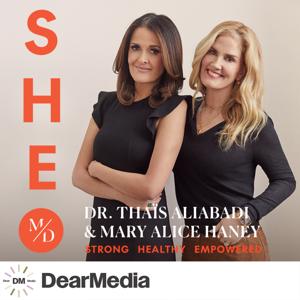
By Dear Media
SHE MD is a weekly podcast hosted by world-renowned OBGYN, Dr. Thais Aliabadi, “Dr. A,” and women's advocate and influencer, Mary Alice Haney. Their candid conversations with celebrity guests and t
... more

4.6
157157 ratings


The podcast currently has 167 episodes available.
The most played episodes among Podcast App listeners.
The frozen shoulder. The 3 a.m. anxiety. The brain fog and the rage that come out of nowhere. For decades, women were told it was "just stress" and sent home with an antidepressant. This week, Dr. A and Mary Alice welcome back the woman changing that — Dr. Mary Claire Haver, the OB-GYN The New York Times calls the "Menopause Queen" — for a full masterclass on perimenopause. It can start in your late 30s, it lasts 7 to 10 years, and almost no one warned us. Dr. Haver explains what's really happening in your body and brain, why so many women are dismissed, and what you can actually do about it — HRT, progesterone, vaginal estrogen, sleep, mood, and the myth that you have to wait until it's "bad enough" to get help. Because suffering isn't the price of admission. Subscribe to SHE MD Podcast for expert tips on PMOS, endometriosis, fertility, hormonal balance, mental health, and more. Share with friends and visit SHE MD website and Ovii for research-backed resources, holistic health strategies, and expert guidance on women’s health and well-being. Sponsors Talkiatry: Head to talkiatry.com/shemd to complete the short assessment and get matched with an in-network psychiatrist in just a few minutes. Babbel: Right now, Babbel is offering listeners up to 60% off. Go to Babbel.com/SheMD Egglife: Find Egglife chillin' in the fridge at Aldi, Whole Foods, Kroger, Target, Walmart & more. Visit egglifefoods.com to find a retailer near you. Acely: Visit Acely.com and use code SHE MD for 20% off. Ladder: If you have an iPhone, head to ladder.fit/SHEMD and take a quick quiz to find your perfect Ladder plan. Use our link and get a free 7-day trial with NO credit card, and $10 off your first month if you join. Skylight Frames: Right now, Skylight is offering our listeners $30 off their 15-inch calendars by going to myskylight.com/shemd. What You’ll LearnWhat perimenopause actually is and how it differs from menopauseWhy perimenopause can begin in your late 30s or 40sWhy brain fog, sleep disruption, anxiety and mood changes can be early symptomsWhen hormone therapy may be considered during perimenopauseThe difference between HRT/MHT, birth control and vaginal estrogenWhat we know, and still don't know, about HRT and cardiovascular and bone healthHow GLP-1 medications can affect muscle and bone healthThe role of protein, resistance training, vitamin D, omega-3s, fiber and creatineWhat declining estrogen can mean for vaginal and urinary healthWhat women should know about HRT and breast cancer riskWhy listening to your symptoms and advocating for yourself mattersKey Timestamps 00:00 Why Every Vagina Needs Estrogen 01:32 Welcome Back Dr. Mary Claire Haver 05:44 What Perimenopause Actually Is 08:44 The "Zone Of Chaos" And Brain Glitching 18:08 How To Evaluate A Perimenopausal Patient 20:01 All Vaginas Need Estrogen 24:50 Why Perimenopause Is The Best Time To Start HRT 32:13 GLP-1s, Muscle Loss, And Bone Health 36:41 Patches, Pellets, Creams: What Actually Works 40:23 Debunking The HRT-Breast Cancer Myth 50:33 Creatine, Vitamin D, And Key Supplements 54:56 The Histamine-Hormone Connection 58:12 Vulvar Changes Nobody Warns You About 1:04:37 Lightning Round: Hormone Myths Busted 1:07:19 Three Takeaways For Every Woman Key TakeawaysPerimenopause is a years-long biological transition, not simply the period immediately before menopause.Symptoms can appear before periods become irregular or hot flashes begin.Brain fog, sleep disruption and mental health changes can be among the earliest signs of fluctuating hormones.Hormone therapy does not necessarily have to wait until a woman is fully menopausal; treatment should be individualized based on symptoms, risks and benefits.Bone health, cardiovascular health, muscle mass and metabolic health all deserve attention during the menopause transition.If using GLP-1 medications, Dr. Haver emphasizes adequate protein, resistance training and monitoring body composition rather than focusing solely on the number on the scale.Vaginal and urinary symptoms can be related to declining estrogen and may be treated with local estrogen therapy.The goal of understanding perimenopause is not simply to get through it, but to enter the next stage of life informed, healthy and empowered.Guest Bio: Dr. Mary Claire Haver Dr. Mary Claire Haver is a board-certified OB-GYN and a leading voice in menopause and women's health. She has dedicated her career to helping women better understand the biological changes that happen during midlife and has been called the “Menopause Queen” by The New York Times. She is the author of the bestselling The New Menopause and her newest book, The New Perimenopause, which focuses on the years leading up to menopause. She also hosts the podcast Unpaused and shares women's health education across social media. See Privacy Policy at https://art19.com/privacy and California Privacy Notice at https://art19.com/privacy#do-not-sell-my-info.

What if your health is about more than your lab results? In this episode of SHE MD, Mary Alice sits down with Dr. Lucy McBride, physician and author of Beyond the Prescription, to talk about how women can become better advocates for their health while navigating an overwhelming medical system. They discuss HRT and perimenopause, GLP-1s, cortisol, alcohol, health misinformation, vaccines, AI, and how to know which medical information you can actually trust. Dr. McBride shares how to make the most of a 10- or 15-minute doctor’s appointment and why sometimes the most important health question isn’t the one you think you should be asking. Subscribe to SHE MD Podcast for expert tips on PMOS, endometriosis, fertility, hormonal balance, mental health, and more. Share with friends and visit SHE MD website and Ovii for research-backed resources, holistic health strategies, and expert guidance on women’s health and well-being. Sponsors Midi Health: Book your first virtual visit today at joinmidi.com. Opill: Opill is birth control in your control. Check out Opill to see if it is right for you. You can find Opill at most major retailers in store and online at opill.com. Olly: Shop Precise Probiotics with Skin, Stress Response, or Metabolism Support at a Walmart near you. Figs: So if you're in healthcare - or know someone who is - get 15% off your first order at wearfigs.com with code FigsRx. Ka'Chavaa: Go to kachava.com and use code SheMD for 15% off your first order. Blueland: If you're looking to make a small change in your routine, you can get 15% off your first order at blueland.com/SheMD. What You’ll LearnWhy your health is about more than what shows up on a blood testHow to prepare for a short doctor’s appointment and advocate for yourselfWhat Dr. McBride wants women to understand about HRT and perimenopauseHow she approaches GLP-1 medications and the growing conversation around “microdosing”Why cortisol has become a misleading catch-all explanation for women’s health concernsHow to think about your relationship with alcohol rather than simply how much you drinkHow to identify misinformation and evaluate medical claims onlineHow to use AI tools like ChatGPT or Claude more thoughtfully when researching your healthWhat questions women should ask when thinking about preventive healthWhy finding the right doctor and building an ongoing relationship with them matters Key Timestamps 00:00 Welcome Dr. Lucy McBride 04:02 How to Advocate for Yourself at the Doctor's Office 07:33 What Women Need to Know About HRT 10:58 Testosterone in Women: Benefits, Risks & When to Consider It 12:20 The Truth About the "Cortisol" Wellness Myth 14:19 Alcohol, Women's Health & Your Relationship With Drinking 21:10 What Preventive Health Really Looks Like 23:51 The Pandemic & Why Dr. McBride Wrote Her Book 25:24 How to Navigate Health Information in the Age of AI 27:50 Spotting Misinformation & Finding Trusted Medical Sources 30:23 How to Use AI to Ask Better Health Questions 36:05 How to Read Medical Studies & Spot Misleading Headlines 38:24 Dangerous Wellness Trends & Medical Misinformation 39:39 Vaccines, COVID-19 & What the Data Shows 41:36 Understanding Long COVID 43:27 Dr. Lucy McBride's Three Takeaways for Patients 45:52 Final Thoughts & SHE MD Takeaways Key TakeawaysHow to advocate for yourself during a short doctor’s appointmentWhy your health is about more than your lab resultsWhat women should know about HRT during perimenopause and menopauseHow to think about GLP-1 medications and who they may be right forThe truth about cortisol and chronic stressHow alcohol can impact women’s physical and mental healthHow to spot health misinformation onlineHow to use AI to ask better questions about your healthWhat preventive health questions women should be asking their doctorsWhy finding the right doctor can make all the difference Guest Bio: Dr. Lucy McBride Dr. Lucy McBride is a physician, author, and medical communicator whose public-facing work grew during the COVID-19 pandemic, when she began sharing evidence-based information and helping people separate medical facts from misinformation. She has written for The Atlantic, appeared regularly on MSNBC, and testified before congressional committees. Her book, Beyond the Prescription, draws on her own experience as a patient and more than 25 years of medical experience to explore a more holistic approach to health. She is also the author of the weekly Substack newsletter Are You Okay?, which focuses on cutting through medical noise and helping people better understand their health. See Privacy Policy at https://art19.com/privacy and California Privacy Notice at https://art19.com/privacy#do-not-sell-my-info.
Kim Kardashian joins Mary Alice Haney and Dr. Thais Aliabadi on SHE MD for an honest conversation about living with psoriasis and psoriatic arthritis. Kim opens up about her first flare, the challenges of managing psoriasis in the public eye, the treatments and lifestyle changes she’s tried, and what finally helped get her symptoms under control. Alongside Dr. Wallace, Mary Alice and Dr. Thais break down what psoriasis actually is, how it can affect the joints and other parts of the body, how it’s diagnosed, and when it’s time to see a dermatologist or rheumatologist. They also discuss genetics, stress, self-care, and why understanding what’s happening beneath the skin is so important. Kim also shares why she’s chosen to be open about her health and use her platform to bring more awareness to psoriasis and help others feel less alone. Subscribe to SHE MD Podcast for expert tips on PMOS, endometriosis, fertility, hormonal balance, mental health, and more. Share with friends and visit SHE MD website and Ovii for research-backed resources, holistic health strategies, and expert guidance on women’s health and well-being. Sponsors Smile Set: Listeners of our show get an additional 35% off discount when they go to smileset.com/shemd. With this discount, you can get the smile of your dreams for under 1,300 bucks. Ladder: If you have an iPhone, head to ladder.fit/shemd. Take the quick quiz and find your plan. You'll get a free seven-day trial, no credit card required, and $10 off your first month when you join. BEAM Minerals: Get 20% off your first order at beamminerals.com/shemd with code SheMD. Gusto: Try Gusto today at gusto.com/shemd and get three months free when you run your first payroll. Acely: If your student is heading into testing season and you wanna help them achieve a life-changing score, go to acey.com and use code SheMD for 20% off today. Skylight Frames: Go to myskylight.com/shemd for $30 off your 15-inch calendar. What You’ll LearnWhat psoriasis is and how it affects the skinWhy psoriasis is considered an immune-mediated conditionThe different types of psoriasis and how they can presentHow psoriasis can be connected to psoriatic arthritisWhy diagnosing psoriasis and psoriatic arthritis can sometimes be complicatedWhen topical treatments may be enough and when systemic therapy may be consideredWhy certain topical steroids need to be used carefullyHow stress and the mind-body connection may relate to psoriasisWhat Kim Kardashian experienced throughout her own psoriasis journeyWhy seeking medical care is important instead of relying solely on social media or home remedies Key Timestamps 00:00 Welcome Kim Kardashian & Dr. Daniel J. Wallace 02:25 Kim's First Psoriasis Flare at Age 30 09:04 What Exactly Is Psoriasis? 15:05 When to See a Dermatologist or Rheumatologist 22:25 How Doctors Diagnose & Evaluate Psoriasis 26:22 Topical Steroids & How to Use Them Safely 29:32 Kim's Psoriatic Arthritis & Flare-Up Experience 33:45 Kim's Skincare & Self-Care Routine 35:45 Kim on Living With Psoriasis in the Public Eye 38:13 Kim's Workout, Supplements & Wellness Routine 41:04 Kim's Advice to Her Younger Self 43:48 5 Things to Know If You Think You Have Psoriasis 44:39 Final Thoughts & Goodbye Key TakeawaysPsoriasis can look different from person to person and may range from localized skin lesions to more extensive disease.Psoriasis can affect more than the skin, including the joints and potentially other parts of the body.Psoriatic arthritis can develop in people with psoriasis and may cause joint pain and swelling.Treatment depends on the type and severity of psoriasis, and some people may require systemic therapy.Strong topical steroids can be effective but need to be used carefully, particularly on the face.Stress, self-care, exercise, and overall lifestyle can be important parts of managing health, although individual triggers and experiences vary.Medical evaluation is important when psoriasis is suspected, especially when joint symptoms are present. Guest Bio: Kim Kardashian Kim Kardashian is a cultural trailblazer, actress, fashion icon, activist, entrepreneur, and devoted mother of four. She revolutionized the shapewear market with her cult-favorite brand SKIMS and has significantly transformed the beauty industry through her highly successful cosmetic and fragrance lines, KKW Beauty and KKW Fragrance. Beyond her business acumen, Kim is a powerful advocate for criminal justice reform and is currently pursuing a law degree. Her influence on contemporary culture is unparalleled, making her a defining figure of our time. See Privacy Policy at https://art19.com/privacy and California Privacy Notice at https://art19.com/privacy#do-not-sell-my-info.
NOTE: PCOS is now called PMOS, or Polycystic Metabolic Ovarian Syndrome. PMOS is about so much more than irregular periods or fertility. In this episode of SheMD, Dr. Thaïs Aliabadi breaks down the four major pillars of PCOS, and explains how they can all be connected. This is a deep dive into why PCOS is so often missed, the symptoms that can look different from woman to woman, the role insulin resistance can play, and why you don’t necessarily need high testosterone or polycystic appearing ovaries to meet the criteria for PCOS. Dr. A also explains how PCOS can affect weight, acne, hair growth, mood, brain fog, ovulation, fertility, and long-term health, plus what women and parents of teenage girls should know about getting properly evaluated. If you’ve ever wondered whether your symptoms could be connected, this episode is your PCOS deep dive. See Privacy Policy at https://art19.com/privacy and California Privacy Notice at https://art19.com/privacy#do-not-sell-my-info.
Muscle is having its moment, and the woman leading the charge trains one of the most famous bodies in the world. Senada Greca, Kim Kardashian's trainer, joins Dr. A and Mary Alice to make the case that strength is a woman's birthright, and that lifting heavy will not make you bulky. It will make you powerful, capable, and built to last. Senada shares how she went from using exercise to punish her body to using it to build herself, and how strength training became a tool that helped her heal. She and the hosts get into why so many of us were taught to fear the weight rack, what strength really does for your bones, your brain, and your longevity as you age, and how to start moving from a place of love instead of punishment. Her advice for every woman listening: move, move mindfully, and move heavy. Follow SheMD and share this with a woman who's ready to feel strong. @SheMDPodcast, shemdpodcast.com Content note: this conversation includes an honest discussion of disordered eating and recovery. If you're struggling, please reach out to someone you trust or a qualified professional. This podcast is for educational and entertainment purposes only and is not a substitute for medical advice. Some products or services discussed may involve sponsorships or paid advertising.. Sponsors Sera: You can visit PreTRM.com to learn more and talk with your provider about whether the PreTRM test might be right for you. Momentous: If you want to try Momentous Signature Spec Creatine, head to livemomentous.com and use code sheMD for up to 35% off your entire first order. Opill: Preventing pregnancy is as easy as Opill. You can find Opill at most major retailers, in-stores and online. Egglife: Find egglife wraps chillin' in the fridge at Aldi, Whole Foods, Kroger, Target, Walmart & more. Visit www.egglifefoods.com to find a retailer near you. Ladder: If you have an iPhone, head to ladder.fit/shemd and take a quick quiz to find your perfect Ladder plan. You'll get a free seven-day trial, no credit card required, and $10 off your first month when you join. What You’ll LearnWhy women shouldn’t be afraid of lifting heavy weights and why strength training won’t automatically make you bulkyHow strength training can support muscle mass, bone health, cognitive health, and longevity as women ageHow to start strength training safely, from mastering basic movements to gradually increasing weightWhy progressive overload and proper form matter more than how much weight you can liftHow protein, carbohydrates, and creatine can support strength, muscle, and overall healthHow to shift your relationship with exercise from punishment to a way of caring for and building your bodyHow strength can translate beyond the gym into greater confidence, capability, and trust in yourself Key Timestamps 00:00 Welcome to SHE MD Podcast 01:29 Her Battle With Anorexia & Binge Eating 03:35 The Shift From Punishment to Strength 07:04 Kim's 5x a Week Heavy Lifting Revealed 07:51 Why Women Are Terrified of Weights 10:14 Progressive Overload Explained 19:01 How Beginners Should Start Lifting 23:18 "Will Lifting Make Me Bulky?" Myth Busted 25:35 Muscle, Bone Density & Alzheimer's Link 25:46 Why Protein Is Non-Negotiable 28:11 Sonata's Daily Protein & Creatine Ritual 40:41 Free Resources for Beginners 47:46 Farmer's Carries, Age & Menopause Key TakeawaysStart where you are. Even five minutes of movement can help build a consistent habit.Focus on moving well and mindfully before adding more weight.Strength training is about becoming stronger and more capable, not shrinking yourself.Gradually increasing the challenge, while maintaining good form, is key to building strength.Aim for consistency over perfection. Three intentional strength-training sessions per week can be effective.Protein is an important part of supporting muscle growth and strength, particularly as women get older.Strength training becomes increasingly important for supporting muscle and bone health as we age and move through perimenopause and menopause.Movement can be an act of self-care: move to protect your future self, support your longevity, and build trust in your body.As Senada puts it: move, move mindfully, and move heavy. Guest Bio - Senada Greca Senada Greca is a certified personal trainer, breathwork and meditation teacher, and the strength coach behind Kim Kardashian's viral heavy-lifting transformation. After overcoming her own struggle with anorexia, binge eating, depression, and anxiety, she built her career around helping women reframe fitness as a tool for strength rather than punishment. She holds an MBA and is the founder of We Rise, a fitness and self-development platform and app that combines strength training with mental health support, career development, and community-building for women. See Privacy Policy at https://art19.com/privacy and California Privacy Notice at https://art19.com/privacy#do-not-sell-my-info.
The podcast currently has 167 episodes available.

14,911 Listeners
2,019 Listeners

4,869 Listeners
9,170 Listeners

9,697 Listeners

2,712 Listeners

34,111 Listeners
132 Listeners

4,079 Listeners

13,935 Listeners

2,017 Listeners
612 Listeners

3,154 Listeners
1,408 Listeners
1,139 Listeners

741 Listeners

1,050 Listeners
123 Listeners
1,479 Listeners

1,059 Listeners
1,261 Listeners

835 Listeners
1,211 Listeners

1,456 Listeners

847 Listeners

3,480 Listeners

593 Listeners

271 Listeners
381 Listeners

1,086 Listeners

61 Listeners
131 Listeners

47 Listeners