
Sign up to save your podcasts
Or

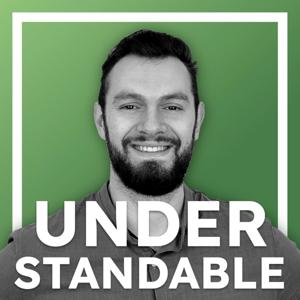


► Join Our Skool-Community: https://understandable.net/join/ (Ad)
► Download the Free Workbook full of Re-Regulation Resources & Writing techniques: https://understandable.net/book/ (Ad)
Pssst.
Not everyone's childhood trauma is obvious to see.
In fact, the signs can be subtle… or the person is very trained in hiding them.
BUT, if you know what to look for, you can identify pretty reliably that someone had a rough childhood.
In the past episode, I presented to you 10 obvious signs that someone had a traumatic childhood. Today, we take a look at 10 subtle, more hidden signs.
As we go through them, you might recognize these signs in yourself, a close friend, or even a family member. So in the end, we talk about what you should do in such a situation.
► Links and Resources:
10 Obvious Signs of Childhood Trauma Episode: https://youtu.be/8YBmH74w584?si=6KwI6_XqCAVJJZUB
The 4 Attachment Styles Episode: https://youtu.be/1S-YK065XLA?si=dDN-IrHOpdseCczu
► Subscribe On Your Favorite Platform!
YouTube: https://www.youtube.com/channel/UCGiJdF0yeTyRJanW_uSICDw?sub_confirmation=1
Spotify: https://open.spotify.com/show/2gaheQLxBwByM9txVzlpI6
Apple Podcasts: https://podcasts.apple.com/gb/podcast/understandable/id1399616905
Amazon Music: https://music.amazon.de/podcasts/ee3580cb-61c5-4aa1-9ad4-1204014078e7/understandable
► Episode Timestamps:
00:00 Intro
0:39 Why Is It Hard To Tell, Someone Had A Traumatic Childhood?
3:00 Sign 1: They’re “So Mature For Their Age”
4:36 Sign 2: They’re Conspiracy Theorists
5:59 Sign 3: They’re High-Performers And Achievers
8:04 Sign 4: They’re Highly Independent
10:06 Sign 5: They Rarely Share What Happens At Home
10:59 Sign 6: They Seek Every Kind Of Attention
12:48 Sign 7: They Take On A Lot Of Responsibility
14:53 Sign 8: They Have A Fear Of Being Hugged Or Touched
15:53 Sign 9: They Overcompensate With Laughter
16:31 Sign 10: They Seem Like They Have It All Together
17:34 What To Do, If You Identified That Someone Had A Rough Childhood?
► Reach Out To Me :)
E-Mail: [email protected]
► Hi, my name is Robert! I create videos about CPTSD & attachment theory for highly sensitive & neurodivergent people.
My content aims to help you transform trauma-driven reactions that block you, so you can embrace a life full of happiness, safe & loving relationships, and self-confidence. :)
► Disclaimer: None of the contents are therapeutic or medical recommendations. The contents are not to be understood as therapeutic-medical instructions and are neither intended as professional health advice nor as education.
I am not a health professional myself. My content is based on research and my personal experiences working with various therapists as a client for three years.
► Join Our Skool-Community: https://understandable.net/join/ (Ad)
What do you think, how easy is it to tell, that someone had a traumatic childhood?
The answer is: It’s often very obvious to recognize from the outside…
BUT: for those who are affected, it’s not that easy to tell at all
This is why today we zoom out a bit and explore 10 signs together, that immediately tell you, that someone had a traumatic childhood
And maybe this someone might be you, yourself, or your brother, partner or best friend.
► Links and Resources:
Download the Free Workbook full of Re-Regulation Resources & Writing techniques: https://understandable.net/book/ (Ad)
CPTSD Episode: https://youtu.be/rc4NqZQV5hA?si=6W9RDdSZ8BGlgwXB
Toxic Shame Episode: https://youtu.be/9XpiOkHSpjI
4 Attachment Styles Episode: https://youtu.be/1S-YK065XLA?si=3GwVJIm8uC0ibSsO
► Subscribe On Your Favorite Platform!
YouTube: https://www.youtube.com/channel/UCGiJdF0yeTyRJanW_uSICDw?sub_confirmation=1
Spotify: https://open.spotify.com/show/2gaheQLxBwByM9txVzlpI6
Apple Podcasts: https://podcasts.apple.com/gb/podcast/understandable/id1399616905
Amazon Music: https://music.amazon.de/podcasts/ee3580cb-61c5-4aa1-9ad4-1204014078e7/understandable
► Episode Timestamps:
00:00 Intro
03:42 Sign 1: They Normalize Abuse And Maltreatment
05:48 Sign 2: They Suddenly Feel Vigilant/Alert/Scared
10:39 Sign 3: They Go Out Of Their Own Way To Make/Keep Everyone Happy
12:06 Sign 4: They Are Always Apologizing
13:42 Sign 5: They Have An Unhealthy/Insecure/Unstable Relationship With Their Parents
16:07 Sign 6: They Have No Sense Of Achievement
17:30 Sign 7: They Have A Major Lack In Self-Confidence/Self-Esteem
18:34 Sign 8: They Can’t Accept Compliments
20:13 Sign 9: They Seek Unreachable Partners & Relationship-Drama
21:28 Sign 10: They Catastrophize / Always Think About The Worst Case Scenario
23:18 Solutions
► Reach Out To Me :)
E-Mail: [email protected]
► Hi, my name is Robert! I create videos about CPTSD & attachment theory for highly sensitive & neurodivergent people.
My content aims to help you transform trauma-driven reactions that block you, so you can embrace a life full of happiness, safe & loving relationships, and self-confidence. :)
► Disclaimer: None of the contents are therapeutic or medical recommendations. The contents are not to be understood as therapeutic-medical instructions and are neither intended as professional health advice nor as education.
I am not a health professional myself. My content is based on research and my personal experiences working with various therapists as a client for three years.
► Join Our Skool-Community & Download the Full List: https://understandable.net/join/ (Ad)
People with a tough childhood often have a buffet full of negative beliefs that they tell themselves every day.
That can make our lives pretty hard.
But, luckily, sometimes just being reminded to specific positive beliefs, is enough to wake us up from the illusion we’re living.
This is why I created this list of 99 positive beliefs, that can shake you up and remind you, that life is beautiful, and that you are worthy and lovable.
► Links and Resources:
Download the Free Workbook full of Re-Regulation Resources & Writing techniques: https://understandable.net/book/ (Ad)
► Subscribe On Your Favorite Platform!
YouTube: https://www.youtube.com/channel/UCGiJdF0yeTyRJanW_uSICDw?sub_confirmation=1
Spotify: https://open.spotify.com/show/2gaheQLxBwByM9txVzlpI6
Apple Podcasts: https://podcasts.apple.com/gb/podcast/understandable/id1399616905
Amazon Music: https://music.amazon.de/podcasts/ee3580cb-61c5-4aa1-9ad4-1204014078e7/understandable
► Episode Timestamps:
00:00 Intro
1:30 99 Positive Beliefs
09:48 Final Thoughts
► Reach Out To Me :)
E-Mail: [email protected]
► Hi, my name is Robert! I create videos about CPTSD & attachment theory for highly sensitive & neurodivergent people.
My content aims to help you transform trauma-driven reactions that block you, so you can embrace a life full of happiness, safe & loving relationships, and self-confidence. :)
► Disclaimer: None of the contents are therapeutic or medical recommendations. The contents are not to be understood as therapeutic-medical instructions and are neither intended as professional health advice nor as education.
I am not a health professional myself. My content is based on research and my personal experiences working with various therapists as a client for three years.
► Join Our Skool-Community: https://understandable.net/join/ (Ad)
Do you feel, think, and behave the same way around other people as you do when you are alone?
Or do you feel the need to pretend, to play a role and act very differently than normal?
This behavior could be a result of toxic shame, that may hold back your true authentic self and chains you to an exhausting role-play you have to perform on a daily basis.
Especially insecurely attached people and CPTSD survivors are often affected by toxic shame.
But, they are often not aware, that they behave out of a shame-bound self and identity.
This is why, in today’s episode, we will explore and understand what toxic shame actually is.
I will share 5 typical signs of toxic shame with you.
And in the end, I will give you a 3-step solution plan on how you can finally break that cycle of toxic shame and start healing your wounds.
► Links and Resources:
Download the Free Workbook full of Re-Regulation Resources & Writing techniques: https://understandable.net/book/ (Ad)
John Bradshaw - Healing The Shame That Binds You: https://amzn.to/3TwcCQU (ad)
Tim Fletcher: https://www.youtube.com/@TimFletcher
Heidie Priebe: https://www.youtube.com/@heidipriebe1
Toxic Shame Persona by Tim Fletcher: https://youtu.be/IOQTfqUdypc?si=OGEV5odgbyj0G-KT
Re-Regulation Tools Episode: https://youtu.be/i05BWtgjYRw?si=miV_L3NIbbTqXHsU
Dissociation Episode: https://youtu.be/UZsTUS_jlYg?si=b1RNIGTpEuCQlrJf
Limerence Episode: https://youtu.be/LZ-IFevq90o?si=tFtBoRjvXRPBAhRl
Codependency Episode: https://youtu.be/OSeR88YWwhU?si=vljpHGm7mCtcN6Xj
► Subscribe On Your Favorite Platform!
YouTube: https://www.youtube.com/channel/UCGiJdF0yeTyRJanW_uSICDw?sub_confirmation=1
Spotify: https://open.spotify.com/show/2gaheQLxBwByM9txVzlpI6
Apple Podcasts: https://podcasts.apple.com/gb/podcast/understandable/id1399616905
Amazon Music: https://music.amazon.de/podcasts/ee3580cb-61c5-4aa1-9ad4-1204014078e7/understandable
► Episode Timestamps:
00:00 Intro
02:41 What Is Shame?
04:18 What Is Toxic Shame?
15:56 Toxic Shame And The Central Nervous System
18:55 5 Signs That You Suffer From Toxic Shame
19:29 Sign 1: You Regularly Lose The Connection With Yourself
21:55 Sign 2: You Avoid Close Relationships
22:27 Sign 3: You Often React Defensive & Guarded
25:15 Sign 4: You Are Confusing Between Your True And Your Persona Self
26:47 Sign 5: You Have Addictive Behaviors
28:08 How To Break The Cycle
34:38 Final Thoughts
► Reach Out To Me :)
E-Mail: [email protected]
► Hi, my name is Robert! I create videos about CPTSD & attachment theory for highly sensitive & neurodivergent people.
My content aims to help you transform trauma-driven reactions that block you, so you can embrace a life full of happiness, safe & loving relationships, and self-confidence. :)
► Disclaimer: None of the contents are therapeutic or medical recommendations. The contents are not to be understood as therapeutic-medical instructions and are neither intended as professional health advice nor as education.
I am not a health professional myself. My content is based on research and my personal experiences working with various therapists as a client for three years.
► Join Our Skool-Community: https://understandable.net/join/ (Ad)
The need to be alone is felt by many of us.
But is it because there are suddenly a lot of introverts among us?
Or is it because many of us use isolation to cope with our distrust in other people and the world?
In other words: Isn’t isolation just another sign of a learned avoidant attachment style?
In today’s episode, I’d like to find that out.
So we compare avoidance and introversion
I talk you through 5 signs it’s actually avoidance, not introversion
And in the end, we look for an answer to the question, if we NEED or more LIKE to be alone and what we can do about it.
► Links and Resources:
Download the Free Workbook full of Re-Regulation Resources & Writing techniques: https://understandable.net/book/ (Ad)
Shadow Work Episode: https://youtu.be/xPSEl9sOd9I?si=zwGwdZGhOBD_SIk4
Adult Survivors of Childhood Trauma Paper: https://www1.racgp.org.au/getattachment/79710ca4-e98e-46aa-8f8f-d5f763ea8ef4/Adult-survivors-of-childhood-trauma.aspx
The Muse Article: https://www.themuse.com/advice/the-scientific-answer-that-explains-why-introverts-need-and-cherish-their-space
► Subscribe On Your Favorite Platform!
YouTube: https://www.youtube.com/channel/UCGiJdF0yeTyRJanW_uSICDw?sub_confirmation=1
Spotify: https://open.spotify.com/show/2gaheQLxBwByM9txVzlpI6
Apple Podcasts: https://podcasts.apple.com/gb/podcast/understandable/id1399616905
Amazon Music: https://music.amazon.de/podcasts/ee3580cb-61c5-4aa1-9ad4-1204014078e7/understandable
► Episode Timestamps:
00:00 Intro
01:31 Introversion
02:30 Avoidance
04:33 The Need To Be Alone
11:15 Do Introverts Need Alone Time?
15:12 Sign 1: You Believe That People & Relationships Mean Pain
17:37 Sign 2: Other People Trigger You Emotionally
18:21 Sign 3: You Can’t Set Healthy Boundaries
19:26 Sign 4: You Are A Self- Or Autoregulator
20:31 Sign 5: You Feel Panic If There Is No Place To Withdraw
20:59 Solutions
23:26 Final Thoughts
► Reach Out To Me :)
E-Mail: [email protected]
► Hi, my name is Robert! I create videos about CPTSD & attachment theory for highly sensitive & neurodivergent people.
My content aims to help you transform trauma-driven reactions that block you, so you can embrace a life full of happiness, safe & loving relationships, and self-confidence. :)
► Disclaimer: None of the contents are therapeutic or medical recommendations. The contents are not to be understood as therapeutic-medical instructions and are neither intended as professional health advice nor as education.
I am not a health professional myself. My content is based on research and my personal experiences working with various therapists as a client for three years.
► Join Our Skool-Community: https://understandable.net/join/ (Ad)
A member of our community recently did a post on our skool platform asking if Low Level Dysregulation exists and what you can do to re-regulate.
Well, there are mild, moderate and severe forms of dysregulation and there are thousands of re-regulation tools, skills and resources.
BUT, not all Re-Regulation tools work for everyone.
So, in today’s video, I tried to summarize and rank 12 groups of effective re-regulation tools, skills & resources, that I tried myself during therapy and/or researched in the past years.
I will rank them using a tierlist from S for super to F for fail, having the goal in mind to stop or reduce acute dysregulation as an effect of complex trauma or neurodivergence.
And in the end of the video I will crown one as the best tool and one as the worst of worst according to that goal.
► Links and Resources:
Download the Free Workbook full of Re-Regulation Resources & Writing techniques: https://understandable.net/book/ (Ad)
CPTSD Treatments Tier List: https://youtu.be/UaslCkvMpws?si=d3FWuAPcaTaAmAMk
Self-Administered EMDR: https://www.youtube.com/watch?v=DALbwI7m1vM&t=218s
Self-Hypnosis By Andrew Major: https://www.youtube.com/@andrewmajor-strongerminds
► Subscribe On Your Favorite Platform!
YouTube: https://www.youtube.com/channel/UCGiJdF0yeTyRJanW_uSICDw?sub_confirmation=1
Spotify: https://open.spotify.com/show/2gaheQLxBwByM9txVzlpI6
Apple Podcasts: https://podcasts.apple.com/gb/podcast/understandable/id1399616905
Amazon Music: https://music.amazon.de/podcasts/ee3580cb-61c5-4aa1-9ad4-1204014078e7/understandable
► Episode Timestamps:
00:00 Intro
01:15 The Tierlist Explained
02:06 Criteria
02:52 What Is Dysregulation?
04:36 Skill 1: Feeling And Touching
06:05 Skill 2: Mind Skills
07:29 Skill 3: Bilateral Skills
09:29 Skill 4: Seeing
11:03 Skill 5: Listening
13:13 Skill 6: Smelling
14:25 Skill 7: Sense Of Balance
15:33 Skill 8: Pain
18:37 Skill 9: Social Skills
21:42 Skill 10: Tasting And Eating
23:27 Skill 11: Movement
26:06 Skill 12: Soft Skills
27:58 The Best And The Worst Tool
► Reach Out To Me :)
E-Mail: [email protected]
► Hi, my name is Robert! I create videos about CPTSD & attachment theory for highly sensitive & neurodivergent people.
My content aims to help you transform trauma-driven reactions that block you, so you can embrace a life full of happiness, safe & loving relationships, and self-confidence. :)
► Disclaimer: None of the contents are therapeutic or medical recommendations. The contents are not to be understood as therapeutic-medical instructions and are neither intended as professional health advice nor as education.
I am not a health professional myself. My content is based on research and my personal experiences working with various therapists as a client for three years.
► Join Our Skool-Community: https://understandable.net/join/ (Ad)
“Noone understands me..”
“I can’t trust anyone!”
“Isolation feels safe.”
I read a ton of core beliefs like these on YouTube.
Many times, those are a direct result of a shattered childhood.
But often people have no clue how much these core beliefs hold them back from recovering their early trauma.
This is why today I made a list of 7 of the most common core beliefs that hinder your CPTSD healing journey.
We also discuss what you can do if you feel that you have such core beliefs
And in the end talk about how to break them to get a new, more positive set of core beliefs and finally embrace your full potential for healing.
► Links and Resources:
Download the Free Workbook full of Re-Regulation Resources & Writing techniques: https://understandable.net/book/ (Ad)
Tim Fletcher Model: https://www.youtube.com/watch?v=IOQTfqUdypc
Episode CPTSD & Isolation: https://youtu.be/PP9dvNWZ8p4?si=D3z3LChESNRIov1P
Episode 4 Attachment Styles: https://youtu.be/1S-YK065XLA?si=TaOdW7rQyPXeh-1S
Episode Fear of Commitment: https://youtu.be/Xf1iuvoO0lM?si=7h5urduKZ7mMgW_T
Episode Shadow Work: https://youtu.be/xPSEl9sOd9I
► Subscribe On Your Favorite Platform!
YouTube: https://www.youtube.com/channel/UCGiJdF0yeTyRJanW_uSICDw?sub_confirmation=1
Spotify: https://open.spotify.com/show/2gaheQLxBwByM9txVzlpI6
Apple Podcasts: https://podcasts.apple.com/gb/podcast/understandable/id1399616905
Amazon Music: https://music.amazon.de/podcasts/ee3580cb-61c5-4aa1-9ad4-1204014078e7/understandable
► Episode Timestamps:
00:00 Intro
00:59 Why Can Core Beliefs Hinder Your Healing Journey?
05:34 Where Do Unfavorable Core Beliefs Come From?
08:13 Belief 1: Other People Only Love Me, If…
11:10 Belief 2: I Am Bad/Wrong/Not Ok.
14:39 Belief 3: Isolation Is Safe.
17:37 Belief 4: A Harmonious Relationship Is A Secure (Good) Relationship
22:46 Belief 5: Other People Don’t See/Hear Me
24:53 Belief 6: Other People Demand From Me
27:13 Belief 7: I Shouldn’t Do/Feel/Need…
30:00 Contrary Positive Core Beliefs
36: 21 Final Thoughts
► Reach Out To Me :)
E-Mail: [email protected]
► Hi, my name is Robert! I create videos about CPTSD & attachment theory for highly sensitive & neurodivergent people.
My content aims to help you transform trauma-driven reactions that block you, so you can embrace a life full of happiness, safe & loving relationships, and self-confidence. :)
► Disclaimer: None of the contents are therapeutic or medical recommendations. The contents are not to be understood as therapeutic-medical instructions and are neither intended as professional health advice nor as education.
I am not a health professional myself. My content is based on research and my personal experiences working with various therapists as a client for three years.
► Join Our Skool-Community: https://understandable.net/join/ (Ad)
Are you struggling with the same recurring triggers in your relationships for years?
You feel that your partner is not showing their emotions and is holding back, or your partner is too close and doesn't have their own social life.
Now, in order to fix this, have you seen couples counselor after couples counselor and yet hardly make any progress?
Well, then classical therapy is probably not the solution to your problems.
But, there is an alternative, which I see popping up more and more often. And it’s called shadow work.
Today, I will show you why classic couples counselling is 1) not the right approach for many people who have those conflicts. And 2) is often not even promoting healing of attachment problems.
Today's episode is like peeling an onion.
We will slowly bring the blind spots of anxious and avoidant attachment to light.
And in the end, you will be left with a clear understanding of the core, which displays the actual patterns that are the hidden cause of your triggers.
► Links and Resources:
4 Attachment Styles: https://youtu.be/1S-YK065XLA?si=3srOnSywlQezz1uF
Shadow Work on Reddit: https://www.reddit.com/r/Jung/comments/gnoo76/the_opposite_of_the_shadow/
The Pleasure Principle: https://en.wikipedia.org/wiki/Pleasure_principle_(psychology)
Download the Free Workbook full of Re-Regulation Resources & Writing techniques: https://understandable.net/book/ (Ad)
► Subscribe On Your Favorite Platform!
YouTube: https://www.youtube.com/channel/UCGiJdF0yeTyRJanW_uSICDw?sub_confirmation=1
Spotify: https://open.spotify.com/show/2gaheQLxBwByM9txVzlpI6
Apple Podcasts: https://podcasts.apple.com/gb/podcast/understandable/id1399616905
Amazon Music: https://music.amazon.de/podcasts/ee3580cb-61c5-4aa1-9ad4-1204014078e7/understandable
► Episode Timestamps:
00:00 Intro
01:45 Why Are Anxious And Avoidant Attachment Styles So Problematic?
06:45 What Is Shadow Work?
13:04 The Anxious Shadow
14:55 The Avoidant Shadow
19:03 Why Do Anxiously And Avoidant Attached People Attract Each Other?
32:18 Shadow Work To Heal
39:30 Solutions To Start Healing Now
40:49 Final Thoughts
► Reach Out To Me :)
E-Mail: [email protected]
► Hi, my name is Robert! I create videos about CPTSD & attachment theory for highly sensitive & neurodivergent people.
My content aims to help you transform trauma-driven reactions that block you, so you can embrace a life full of happiness, safe & loving relationships, and self-confidence. :)
► Disclaimer: None of the contents are therapeutic or medical recommendations. The contents are not to be understood as therapeutic-medical instructions and are neither intended as professional health advice nor as education.
I am not a health professional myself. My content is based on research and my personal experiences working with various therapists as a client for three years.
► Join Our Skool-Community: https://understandable.net/join/ (Ad)
There are a ton of treatments, therapies, techniques and eventual solutions for healing early trauma.
BUT, not many of them work well.
PLUS we’re all individuals and therefore may need different approaches.
So, in today’s video, I tried to analyze and rank 15 popular CPTSD treatments & solutions, that I tried myself and/or researched in the past years.
I will rank them using a tier list from S for super to F for fail, having the goal in mind to achieve the MOST EFFECTIVE long term trauma recovery.
And in the end of the video I will crown one as the best treatment and one as the worst of worst according to that goal.
► Links and Resources:
Download the Free Workbook full of Re-Regulation Resources & Writing techniques: https://understandable.net/book/ (Ad)
EMDR & PTSD Article: https://www.ncbi.nlm.nih.gov/pmc/articles/PMC5623122/
EMDR on Reddit: https://www.reddit.com/r/CPTSD/comments/14won79/what_are_the_most_effective_types_of_therapy_for/
Self-Administered EMDR: https://www.youtube.com/watch?v=DALbwI7m1vM&t=218s
Adult Survivors of Childhood Trauma: https://www1.racgp.org.au/getattachment/79710ca4-e98e-46aa-8f8f-d5f763ea8ef4/Adult-survivors-of-childhood-trauma.aspx
Psilocybin & PTSD: https://med.nyu.edu/departments-institutes/population-health/divisions-sections-centers/medical-ethics/education/high-school-bioethics-project/learning-scenarios/ptsd-treatment-psychedelics
IFS-Therapy Episode: https://youtu.be/xNViG2xhHGg?si=lCrpcReq8El3wnoa
► Subscribe On Your Favorite Platform!
YouTube: https://www.youtube.com/channel/UCGiJdF0yeTyRJanW_uSICDw?sub_confirmation=1
Spotify: https://open.spotify.com/show/2gaheQLxBwByM9txVzlpI6
Apple Podcasts: https://podcasts.apple.com/gb/podcast/understandable/id1399616905
Amazon Music: https://music.amazon.de/podcasts/ee3580cb-61c5-4aa1-9ad4-1204014078e7/understandable
► Episode Timestamps:
00:00 Intro
01:02 The Tierlist Explained
02:10 Ranking-Criteria
03:57 Top Down & Bottom Up Strategies Explained
06:01 Psychoanalytic Therapy
08:36 Cognitive Therapy
11:49 Classic Talk Therapy
13:59 EMDR
17:24 Hypnotherapy & Self Hypnosis
26:08 Somatic Therapy
29:15 Exposure Therapy
33:04 Systemic Therapy
36:36 Safe Community & Relationships
40:08 Art And Music (Therapy)
44:08 Writing And Journaling Techniques
47:44 Re-Regulation Skills & Resources
50:16 MBSR (Mindful Based Stress Reduction)
52:17 Psychedelics
55:03 Medication & Prescription Drugs
57:26 The Best And Worst Treatment
► Reach Out To Me :)
E-Mail: [email protected]
► Hi, my name is Robert! I create videos about CPTSD & attachment theory for highly sensitive & neurodivergent people.
My content aims to help you transform trauma-driven reactions that block you, so you can embrace a life full of happiness, safe & loving relationships, and self-confidence. :)
► Disclaimer: None of the contents are therapeutic or medical recommendations. The contents are not to be understood as therapeutic-medical instructions and are neither intended as professional health advice nor as education.
I am not a health professional myself. My content is based on research and my personal experiences working with various therapists as a client for three years.
► Join Our Skool-Community: https://understandable.net/join/ (Ad)
Do you often feel that you are not seen or heard by other people? By your partner, your friends or someone you are currently dating?
And you don’t know why, because your parents were always there for you?
Well, then this is maybe not exactly the truth..
Because today I will present to you 10 signs, that your parents might have ignored you in your childhood, even if you think they were always there for you.
I will also show you, how those hidden early memories can drastically influence your relationship life as an adult.
And the big question. What if multiple of these signs actually match with you. Can you do something to feel more seen and heard? Well, let’s find out at the end.
► Links and Resources:
The 4 Attachment Styles Episode: https://youtu.be/1S-YK065XLA?si=X4cEsUF4i9Dmnr-o
Codependency Episode: https://youtu.be/OSeR88YWwhU?si=lOzqXVpQ24hd6KEN
Download the Free Workbook full of Re-Regulation Resources & Writing techniques: https://understandable.net/book/ (Ad)
► Subscribe On Your Favorite Platform!
YouTube: https://www.youtube.com/channel/UCGiJdF0yeTyRJanW_uSICDw?sub_confirmation=1
Spotify: https://open.spotify.com/show/2gaheQLxBwByM9txVzlpI6
Apple Podcasts: https://podcasts.apple.com/gb/podcast/understandable/id1399616905
Amazon Music: https://music.amazon.de/podcasts/ee3580cb-61c5-4aa1-9ad4-1204014078e7/understandable
► Episode Timestamps:
00:00 Intro
01:38 Why Is It So Important That Parents Listen To Their Children?
03:35 Sign 1: You Over-Assert Your Needs, To Get Them Met
04:59 Sign 2: You Use Protest Behaviors And Strategies
07:46 Sign 3: “You Are Not Good Enough, But Others Are”
08:57 Sign 4: You Often Are Codependent
13:07 Sign 5: You Can’t Be Alone
15:21 Sign 6: You Date Self-Sufficient & Independent People
17:56 Sign 7: You Appear Angry Or Sad, When You Talk About Your Needs
19:33 Sign 8: You Are People-Pleasing
22:06 Sign 9: You Struggle With Group Dynamics
24:00 Sign 10: You Have Various Challenges In Your Communication Style
26:53 Solutions
32:25 Final Thoughts
► Reach Out To Me :)
E-Mail: [email protected]
► Hi, my name is Robert! I create videos about CPTSD & attachment theory for highly sensitive & neurodivergent people.
My content aims to help you transform trauma-driven reactions that block you, so you can embrace a life full of happiness, safe & loving relationships, and self-confidence. :)
► Disclaimer: None of the contents are therapeutic or medical recommendations. The contents are not to be understood as therapeutic-medical instructions and are neither intended as professional health advice nor as education.
I am not a health professional myself. My content is based on research and my personal experiences working with various therapists as a client for three years.
From the publisher's feed
493 Listeners
573 Listeners

2,517 Listeners

27,760 Listeners
271 Listeners
311 Listeners
1,146 Listeners

364 Listeners
1,058 Listeners

1,390 Listeners
342 Listeners

5,078 Listeners

51 Listeners
89 Listeners
234 Listeners